REVIEW · KYOTO
Golden Pavilion, Nijo Castle, & Nishiki Market Half day tour
Book on GetYourGuide →Operated by Kyoto Guide · Bookable on GetYourGuide
Kyoto gets busy fast. This half-day tour gives you a tight, story-driven hit of Kinkaku-ji and Nijo Castle, then sends you straight to Nishiki Market to plan lunch. I really like the way the guide uses an iPad with clear, custom explanations, so the meaning of what you see lands quickly.
You’ll get two UNESCO stops plus a local-food payoff in just 4 hours. That makes it a great use of morning time when you’re trying to understand Kyoto’s Edo-era backbone without getting bogged down in details. One consideration: you’ll still pay temple entrance fees on-site, and the walking plus public transport means it’s not the best match if you have mobility limits.
In This Review
- 6 key points that make this half-day tour work
- A smart 4-hour plan for first-time Kyoto understanding
- Meeting at Kyoto Station: easy to find, easy to start
- Golden Pavilion (Kinkaku-ji): what the gold leaf is really saying
- Practical tips at Kinkaku-ji
- Nijo Castle: Edo architecture plus the science of control
- What to watch for at Nijo Castle
- Nishiki Market for lunch: Kyoto’s kitchen in walking distance
- Price and value: $90 for guidance, context, and time saved
- Logistics that matter on a morning tour
- The guide experience: why it feels more personal
- Who should book this tour (and who should skip it)?
- Should you book Golden Pavilion, Nijo Castle, and Nishiki Market?
- FAQ
- How long is the Golden Pavilion, Nijo Castle, & Nishiki Market half-day tour?
- Where is the meeting point?
- What is included in the price?
- Are entrance fees included for the temples?
- Is this tour private?
- What languages are offered?
- What should I bring, and is the tour canceled for rain?
6 key points that make this half-day tour work
- iPad storytelling that explains the Edo Period without info overload
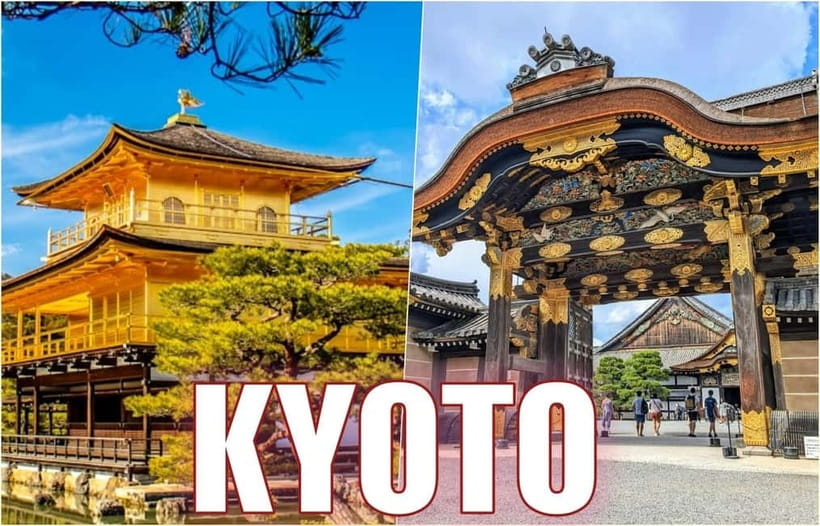
- Golden Pavilion viewing framed by its Ashikaga Yoshimitsu origins and gold-leaf symbolism
- Nijo Castle nightingale floors, used as an early security idea linked to shogun power
- A Kyoto City certified guide who can answer questions on the spot (English and Spanish)
- Photo-friendly pace, with the guide happy to take as many pictures as you want
- Finish at Nishiki Market, so lunch is easy to pick from hundreds of options
A smart 4-hour plan for first-time Kyoto understanding
This tour is built for people who want context, not just snapshots. In about four hours, you cover two major Kyoto landmarks tied to the samurai-and-shogun era, then end at Nishiki Market so you can immediately translate what you learned into a real Kyoto meal.
The timing also helps your overall trip. Starting at 8:30 AM means you’re not spending your whole day commuting or stuck in a slow sightseeing loop. Instead, you come away with a mental map of how Kyoto’s power structures evolved—then you can use that knowledge on the rest of your itinerary.
And because it’s a private group, the pace stays practical. You can ask questions, and the guide’s explanations are designed to match what you’re actually looking at—especially helpful at places where the buildings are impressive but the story can be confusing if you go in cold.
You can also read our reviews of more shopping tours in Kyoto

Meeting at Kyoto Station: easy to find, easy to start
You meet in front of a 7-Eleven at JR Kyoto Station, Building 1F, using the Kyoto Tower side exit. The guide holds an iPad and a red card marked RBRT, so it’s pretty hard to miss.
This matters more than you might think. Kyoto tours can fail on the tiny stuff—confusing exits, unclear meeting spots, delays caused by people waiting. Here, the meeting point is straightforward and near transit, which helps the morning stay smooth.
Also bring comfortable shoes. This is a walking tour with public bus/train and short walks between areas. It’s not designed as a sit-and-stare museum day.
Golden Pavilion (Kinkaku-ji): what the gold leaf is really saying
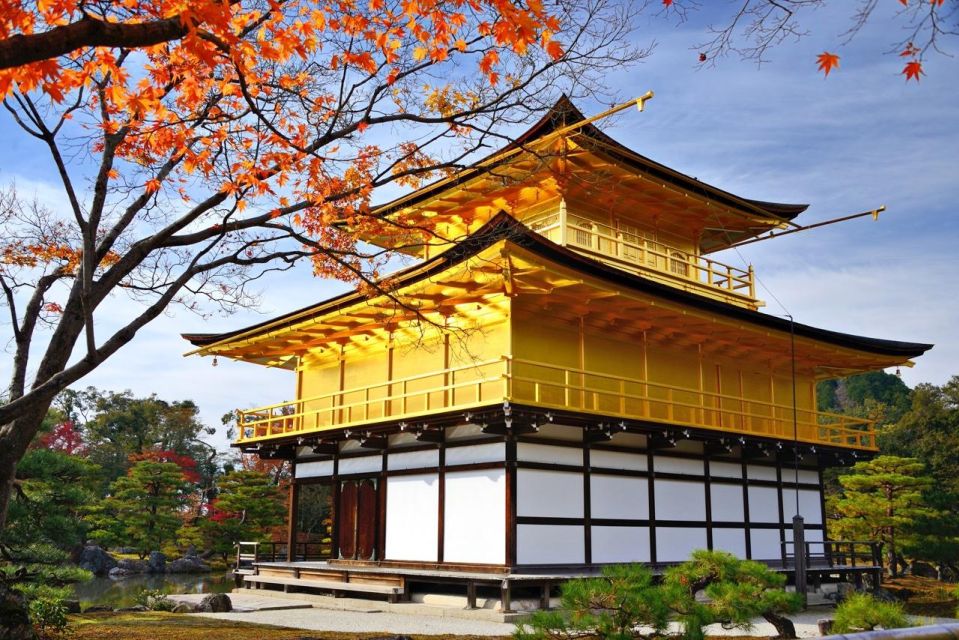
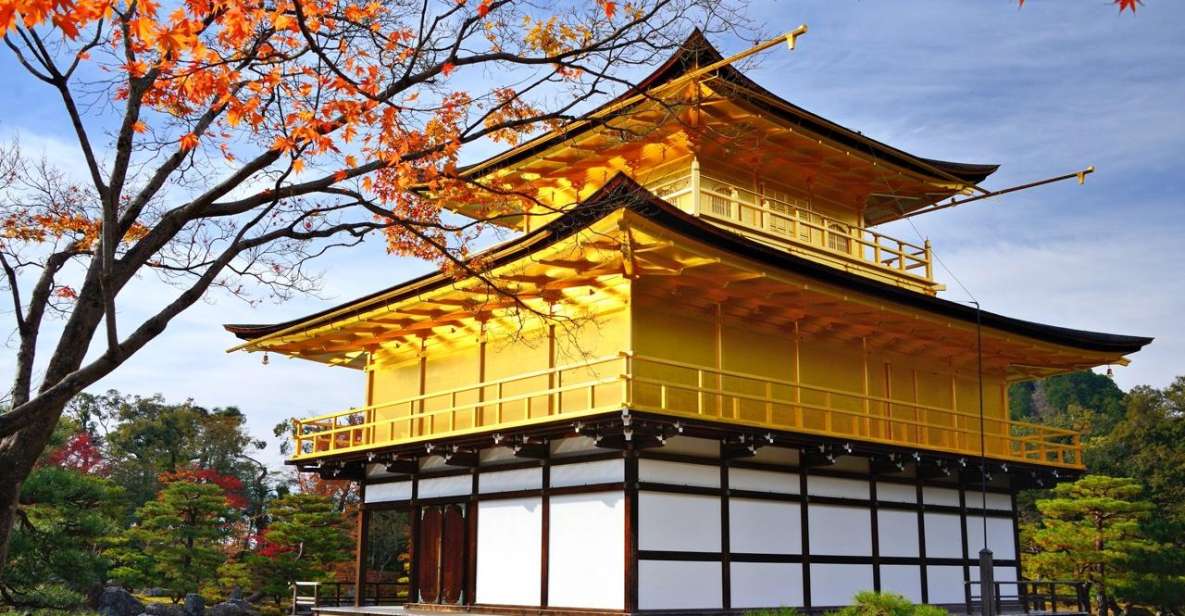
Kinkaku-ji, the Golden Pavilion, is one of Japan’s best-known temples. It’s also one of the most misunderstood if you treat it like a simple photo stop.
This stop is worth your time because you get the background: the pavilion was originally built as a villa for Ashikaga Yoshimitsu, a powerful figure from the 14th century. That’s not trivia fluff. It helps you see why the temple’s design leans toward status, authority, and ceremony.
A key detail is that the pavilion is covered with real gold leaf. The upper two floors use gold leaf, which creates that signature look—especially when the pavilion reflects in the pond nearby. The guide’s explanations focus on what gold leaf meant in that context: wealth, power, and devotion all tied together in one visual statement.
Practical tips at Kinkaku-ji
- Wear shoes you trust. The grounds involve walking and changing paths.
- Photography rules can vary. There are places where taking pictures is forbidden, so keep an eye on signs.
- Let the guide’s iPad explanations set the context first. It helps you notice details you’d otherwise overlook.
Nijo Castle: Edo architecture plus the science of control
If Kinkaku-ji is about visual power, Nijo Castle is about how power was managed day-to-day. This is a UNESCO site with Edo Period architecture and a strong connection to the political struggles between samurai, feudal lords, and shogun authority.
Here’s what makes the experience more than a pretty castle:
- You get a clear explanation of the shogun as a military dictator in this era.
- You connect the dots between the end of the samurai age and the early steps toward Japan’s modernization.
- You learn why the building design matters for security and control.
One of the standout features is the nightingale floors. These are floors that chirp when walked upon—an early warning concept. The point isn’t just the novelty. It shows how architecture and surveillance worked together in the Edo era. When you understand that, the castle feels less like a set and more like a system.
You can also read our reviews of more tours and experiences in Kyoto



What to watch for at Nijo Castle
The guide emphasizes Edo-era design details, including the woodwork and intricate construction. You’ll likely spend your time splitting attention between the big picture (power and politics) and the small craft details (the way the building communicates status and authority).
As with temples, be ready for photo restrictions in specific indoor or sensitive areas.
Nishiki Market for lunch: Kyoto’s kitchen in walking distance
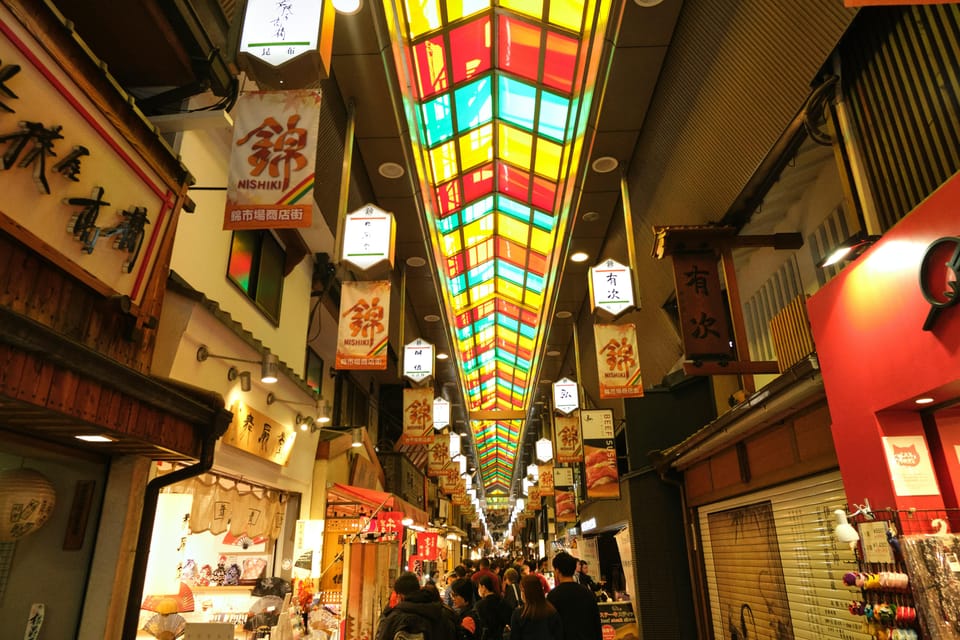
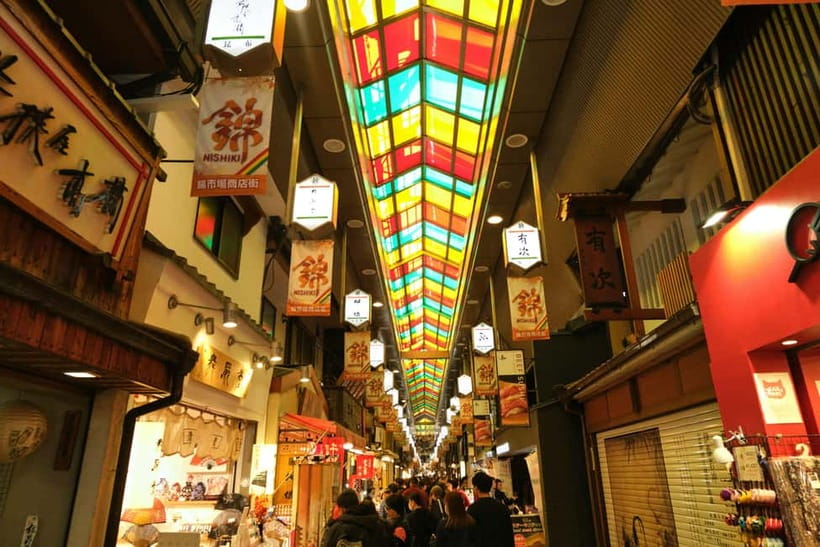
The tour ends at the entrance of Nishiki Market, which is ideal if you want lunch without making another plan. The market is often called Kyoto’s Kitchen for good reason.
It’s a narrow street about five blocks long, packed with over one hundred shops and restaurants. The food selection runs wide: fresh seafood, produce, knives, cookware, and plenty of small bites that let you taste without committing to one big meal.
What I like about finishing here is that the guide explains the market’s origins, then you choose lunch based on your own tastes. That gives you freedom without losing the historical context you just gained at the temples and castle.
And since the explanations are in English for foreign visitors, you’re not left playing translator while hungry.
Price and value: $90 for guidance, context, and time saved
The tour price is $90 per person for about 4 hours. That includes a lot of what actually costs time and energy when you travel: a guide who can steer you through major sites efficiently and explain what matters as you go.
What’s included:
- Kyoto City official certified guide
- iPad explanations with images (built for clearer understanding)
- You don’t need to cover the guide’s entrance and transportation costs
- The guide can take as many pictures of you as you want
What’s not included:
- Golden Pavilion entrance fee: 500 yen (approx. US$3.10)
- Nijo Castle entrance fee: 1,300 yen (approx. US$8.15)
- Food and drinks
- Transportation fee details beyond what’s covered by the tour pricing (you should still expect standard public transit to be part of the experience)
From a value perspective, the math works best if you care about context. Entrance fees alone are not the reason you book this kind of tour. You’re paying for the human navigation and the story that turns buildings into something you can remember. Add the short morning schedule and you get a practical “Kyoto starter set” without using your whole day.
Logistics that matter on a morning tour
This half-day tour runs rain or shine. Kyoto weather can change quickly, so pack for that reality and keep your plans flexible.
Also note the activity fit:
- It’s not suitable for wheelchair users
- Not recommended if you’re pregnant or have back problems
- Not a match if you get seasick
- Not for people with low fitness
- No baby strollers
- Avoid luggage or large bags
None of this is meant to be dramatic. It’s simply the reality of a walking-and-transit morning that passes through temple/castle areas where you need a clear path and steady footing.
The guide experience: why it feels more personal
This tour stands apart because the guide isn’t just reciting facts. Using the iPad with self-made explanations helps you connect details—like why gold leaf was used, or what the nightingale floors were designed to do.
In multiple experiences described with this guide, you also get extra attention with visuals. One person noted a small film at the end as a nice bonus. Another mentioned a guide-made video for their trip. If you like travel souvenirs that feel personal (not mass-produced), that kind of touch is worth your attention.
And because the tour is a private group, you’re not stuck waiting for someone else’s questions to finish before you get your own answers.
Who should book this tour (and who should skip it)?
Book it if you:
- Want two UNESCO sites without losing a whole day
- Like understanding the Edo Period, the shogun, and samurai-era power dynamics
- Prefer a guide who can explain using visuals, not just words
- Are the type who wants history context before you wander off on your own
Skip it if you:
- Need wheelchair access or you’re not able to do moderate walking
- Have mobility limitations that make castle/temple walking uncomfortable
- Are traveling with a baby stroller or bulky luggage
If you’re a solid walker and you want a history-minded morning, this tour fits nicely.
Should you book Golden Pavilion, Nijo Castle, and Nishiki Market?
Yes—if your goal is a high-impact Kyoto morning with strong context and a smooth lunch handoff. The combination of Kinkaku-ji, Nijo Castle, and Nishiki Market is unusually efficient, and the iPad-based explanations make the political and cultural meaning easier to hold onto.
No—if you hate paying extra on-site fees, or if you want a slower, unstructured temple day. This is organized for momentum. You’ll get a lot of meaning quickly, and then you’ll have to choose how you want to spend the rest of your day.
If you’re trying to make Kyoto make sense fast, this is a very practical way to start.
FAQ
How long is the Golden Pavilion, Nijo Castle, & Nishiki Market half-day tour?
It runs for about 4 hours, from 8:30 AM to 12:30.
Where is the meeting point?
Meet in front of the door of 7-Eleven at JR Kyoto Station Building 1F, using the Kyoto Tower side exit. The guide will be holding an iPad and a red card with the words RBRT.
What is included in the price?
You get a Kyoto City official certified guide, iPad explanations with images, and the guide can take as many pictures of you as you want. The guide’s entrance fees and transportation are also covered.
Are entrance fees included for the temples?
No. You pay on-site for Golden Pavilion (500 yen) and Nijo Castle (1,300 yen).
Is this tour private?
Yes. It’s listed as a private group.
What languages are offered?
The live guide is available in English and Spanish.
What should I bring, and is the tour canceled for rain?
Bring comfortable shoes. The tour runs rain or shine.