Kyoto in one day is a sprint. This full-course tour strings together 10 major Kyoto sights with walking, buses, and the kind of local advice that helps you understand the city fast. It’s also designed to teach how Kyoto public transport works, plus everyday etiquette and cultural context along the way.
I especially love the mix of iconic places and simpler neighborhood streets. You’ll hit the big names like the golden pavilion and the torii gates, then slow down for areas such as Kiyomizu-zaka and Sanneizaka where the atmosphere feels more lived-in. The main drawback is physical: you’ll work hard for it, with 20,000+ steps and a strict start time.
In This Review
- Key highlights at a glance
- Quick Snapshot: what you really get in a 9.5-hour Kyoto tour
- Meet at Saga-Arashiyama Station, then follow the rhythm to Gion
- Arashiyama bamboo and the Randen Tram vibe
- Kinkaku-ji golden pavilion: the must-see slot that’s worth it
- Ryoan-ji rock garden and the Queen Elizabeth connection
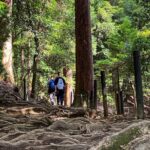
- Fushimi Inari: the torii tunnel walk you’ll feel in your legs
- Kiyomizu-zaka and Sanneizaka: street time that feels like real Kyoto
- Kiyomizu-dera’s nail-free stage: why this temple hits hard
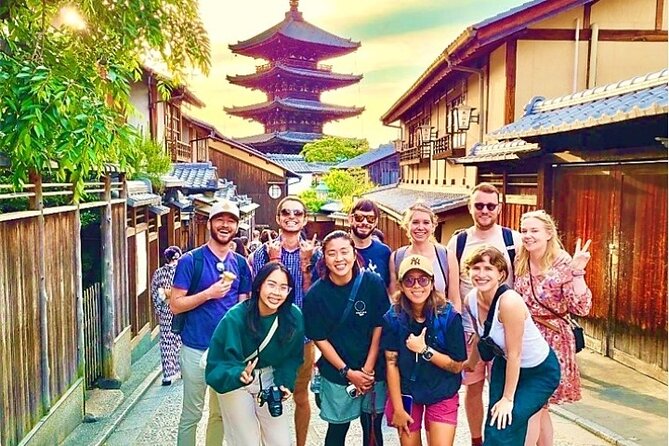
- Hokan-ji and the Yasaka Pagoda symbol
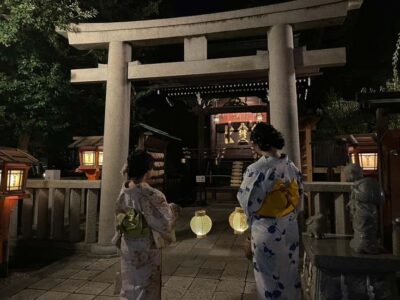
- Gion at the finish line: old-streets energy and geisha culture
- Walking, buses, and the IC card reality in Kyoto
- Lunch at a sushi-go-round: budget-friendly, but check vegetarian fit
- Price and value: when $98.83 is a smart deal
- Who this tour fits best (and who should skip it)
- Final call: should you book this full-day Kyoto sampler?
- FAQ
- What time does the tour start and where do I meet?
- How long is the full tour?
- Is food included in the tour price?
- Are entrance tickets included?
- What about transportation costs within Kyoto?
- How many people are in the group?
- Is it a very walking-heavy tour?
- Is lunch vegetarian-friendly?
- Can I get a refund or change dates if I cancel?
Key highlights at a glance
- Small group size (max 10 travelers) makes it easier to move efficiently across Kyoto
- Randen Tram Line and Arashiyama add local transport flavor, not just temple-hopping
- Kinkaku-ji, Ryoan-ji, Fushimi Inari, Kiyomizu-dera pack Kyoto’s headline sights into one day
- Nail-free Kiyomizu-dera stage and the famous stone garden at Ryoan-ji are standout moments
- Lunch at a sushi-go-round fits the sightseeing pace, but vegetarian options may be limited
- You end in Gion so your day naturally finishes in the most atmospheric old-streets area
Quick Snapshot: what you really get in a 9.5-hour Kyoto tour
This is a one-day sampler of Kyoto, built around seeing a lot without spending your whole day planning. Expect a full day of moving—on foot and by public transit—starting in Saga-Arashiyama and ending in Gion.
The tour price is $98.83 per person, and it includes the tour fee plus consumption tax. What it does not include is a chunk of your day-to-day spending: transport (about $10), food (about $6.8–14), and entrance fees (about $11). So the value comes from saving you the logistics headache and the time it takes to sequence these sights yourself.
Also note the pace: you should have moderate fitness, and you’ll likely log over 20,000 steps. This isn’t a sit-down, museum-style day.
You can also read our reviews of more tours and experiences in Kyoto.

Meet at Saga-Arashiyama Station, then follow the rhythm to Gion
You meet at JR Saga-Arashiyama Station, and the tour starts at 8:50. The day is scheduled to run on time, and late arrivals aren’t accepted—so plan to be there a little early, not with one foot still in the train.
The route is structured like a good day in Kyoto: start with Arashiyama’s scenery, work through several major temples and shrines, then finish in the old-streets mood of Gion. A small group helps here. When you’re moving between far-flung neighborhoods, that group size often matters more than it sounds.
You’ll also use a mobile ticket, which simplifies check-in once the day gets going. And since Kyoto transit can feel like a puzzle, the guide’s role is not just “talking facts.” It’s helping you ride correctly, stay together, and avoid wasting time.
Arashiyama bamboo and the Randen Tram vibe
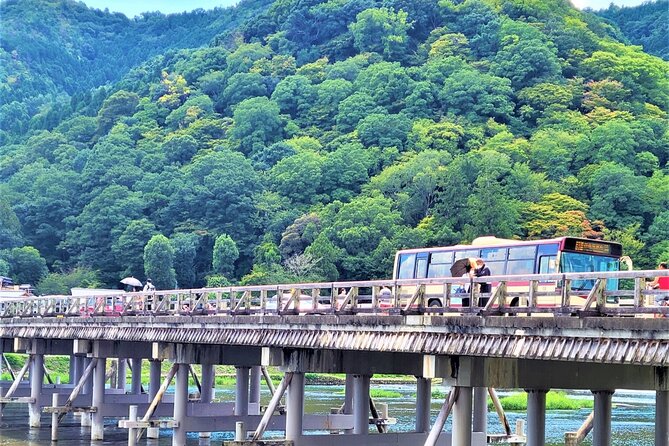
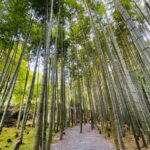
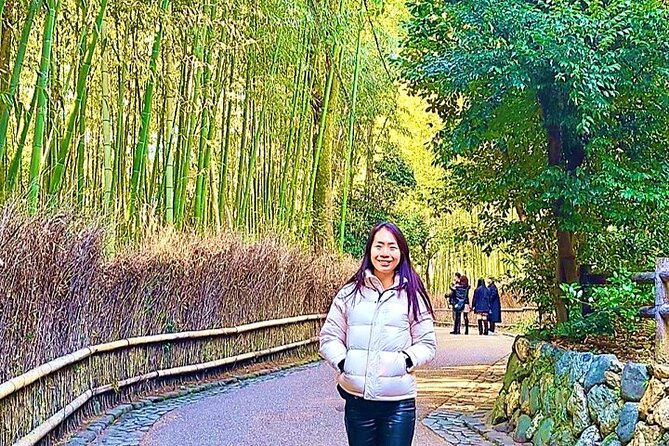
Arashiyama is where Kyoto shows off its scenic side fast. You get time in the bamboo forest area, with the added bonus of being surrounded by mountain greenery and thick forest atmosphere.
What I like about starting here is the contrast it gives the rest of the day. After bamboo and fresh scenery, the later temple courtyards feel like purposeful stops instead of random photo breaks.
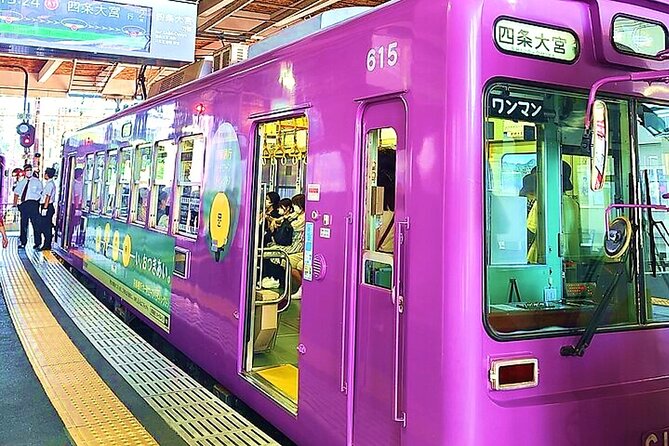
You also connect to Kyoto’s Randen Tram Line as part of the experience. That matters because it helps you experience the city the way locals do—using public transit that feels integrated into daily life, not just a tourist shuttle.
Practical note: even though Arashiyama is visually calm, you’re still on a clock. You’ll have about 30 minutes here, so go in with a plan: pick the shots you care about and leave time to stroll without rushing.
Kinkaku-ji golden pavilion: the must-see slot that’s worth it
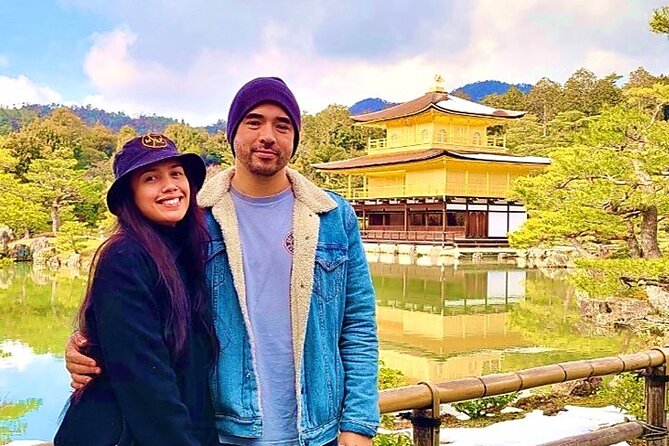
Kinkaku-ji, the golden pavilion, is one of those Kyoto sights you can’t really ignore. This stop is short—about 30 minutes—but it’s the kind of place where your attention switches on immediately.
It’s also one of the few stops where the “headline” reputation holds up. The pavilion’s look is unmistakable, and Kyoto’s setting around it helps the whole thing feel cinematic without you trying too hard.
This stop does have an admission ticket that’s not included in the tour price. Still, the tour’s structure makes sense: you get the big visual anchor of the day, then move on before the crowds and timing start to steal your energy.
Ryoan-ji rock garden and the Queen Elizabeth connection
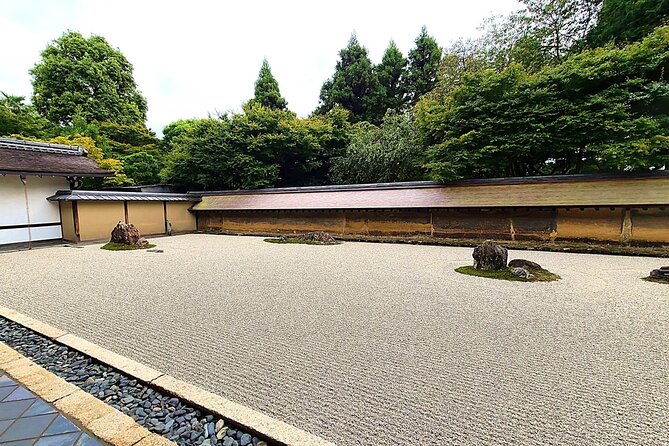
Ryoan-ji gives you a different Kyoto mood: quiet, controlled, and contemplative. You’ll spend about 30 minutes there.
The stone garden is famous for a reason, and you’ll learn the story behind it—like the detail that Queen Elizabeth visited and praised it. That kind of anecdote is useful because it turns the garden from an arrangement of rocks into a cultural moment with real-life context.
Admission is also not included here. The trade-off is that Ryoan-ji is more about how you see than what you buy. If you like slow observation, this stop is a good place to reset mid-day and not just chase the next landmark.

Fushimi Inari: the torii tunnel walk you’ll feel in your legs
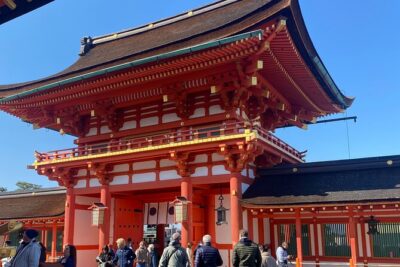
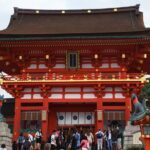
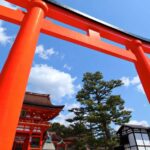
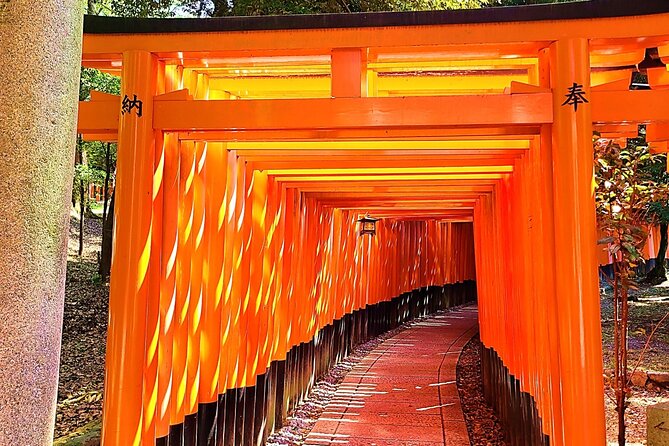
Fushimi Inari-taisha is Kyoto’s torii gate world. You’ll have about 30 minutes here, and it’s enough time to get the core experience: the long path lined with over 1,000 red torii gates.
Here’s the main thing I’d tell you: the torii walk is visually dramatic, but it’s also a steady uphill-style effort. Even if you don’t climb to the very top, your legs will still notice it later.
Admission is not included according to the tour info, and the tour uses a timed stop to keep the schedule moving. That’s good for first-timers. If you want to go deeper, plan to return on another day once you know the area.
Kiyomizu-zaka and Sanneizaka: street time that feels like real Kyoto
After temple-heavy segments, you’ll get some street atmosphere. Kiyomizu-zaka Street is about 30 minutes of souvenir shops and local eats. It’s not just shopping; it’s where you feel the Kyoto “present tense,” with people moving through the same lanes that have fed tourists for generations.
Then you’ll also visit Sanneizaka, another charming slope lined with pedestrian-style storefronts. This is the part of the day that helps the full-day tour avoid becoming a checklist. These slopes give you a human scale and a sensory break between major shrines.
Both of these street segments list admission as free. That’s a small but real value add: you can spend your time looking, walking, and absorbing rather than budgeting another ticket.
Tip for comfort: these areas are walk-heavy and crowded at times. Wear shoes you can hike in all day, not shoes that look good on day one and fail by hour five.
Kiyomizu-dera’s nail-free stage: why this temple hits hard
Kiyomizu-dera is often the emotional center of a Kyoto day. You’ll get about 30 minutes here.
The big detail to look for is the wood stage that does not use a single nail. That’s the kind of practical historical craft fact that makes the structure feel more impressive than a quick glance usually gives it.
This stop is also not included for admission. Still, the tour’s scheduling makes sense: Kiyomizu-dera is a signature Kyoto temple, and it’s positioned after the streets for a reason. You come from the neighborhood lanes, then step into a temple space that feels like it belongs to an older Kyoto rhythm.
The challenge, of course, is that you only have a limited amount of time. Plan your visit so you’re not spending all your time stuck behind other people trying to do the same exact photos.
Hokan-ji and the Yasaka Pagoda symbol
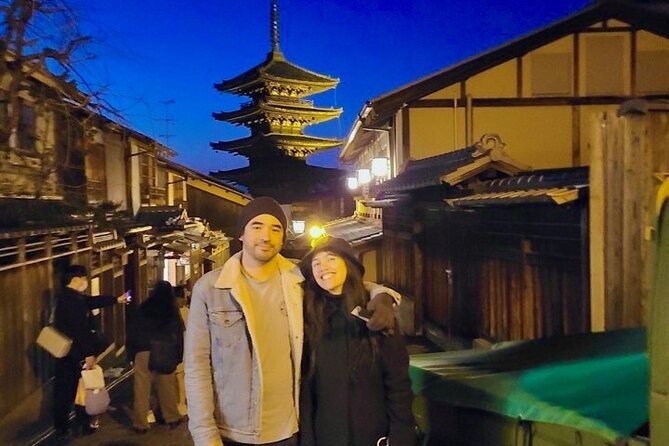
Hokan-ji is where the Yasaka Pagoda appears, and it’s described as one of Kyoto’s major symbols. This stop runs about 30 minutes, and admission is listed as free.
What I like about adding something like this is variety. After the golden pavilion and rock garden, a pagoda view brings back a classic Kyoto silhouette. It also helps you avoid repeating the exact same kind of temple courtyard over and over.
Even in a fast tour day, this kind of stop works because it gives your brain a visual “bookmark.” You’re able to keep the day coherent rather than feeling like you’re sprinting between unrelated points.
Gion at the finish line: old-streets energy and geisha culture
The day ends in Gion, at the Gion Shopping Street Promotion Associates area. Gion is the payoff zone—old-street lanes, classic Kyoto vibe, and an atmosphere that feels different from the main temple circuit.
You’ll only have about 30 minutes here, so think of it as a landing, not a full exploration. It’s ideal if you want to understand where you should spend extra time later.
One review detail I’d echo generally: people often hope to catch a glimpse of geisha culture in Gion. That’s not something you can schedule or promise, but being there at the right time gives you the chance to see the traditions playing out in real life.
Walking, buses, and the IC card reality in Kyoto
The best thing you can do for yourself on this tour is accept the walking upfront. With 20,000+ steps, you’ll want comfortable shoes and clothes you can move in.
Kyoto transit is famous for being confusing. That’s why the guide matters. This tour is designed to handle the city’s routing so you can focus on the sights instead of figuring out which bus is the one you need.
The tour specifically recommends you prepare an IC card like SUICA or PASMO. That’s practical. You’ll be using public transit during the day, and an IC card reduces friction and time spent buying tickets.
Also remember the guide controls the group flow. If you break away, the tour notes that the host cannot look for you. So keep close, ask questions before you wander off, and treat the group like your safety rail.
Lunch at a sushi-go-round: budget-friendly, but check vegetarian fit
Lunch is not included in the tour price, but you do go to a conveyor belt sushi-go-round spot. The expected food cost is about $6.8–14, depending on what you order.
I like that lunch is built into the sightseeing rhythm. You’re not losing the day searching for a meal near each temple. The sushi-go-round format also tends to be quick, which helps keep the schedule realistic.
The only caution is vegetarian planning. The tour info states that not every menu item may work for vegetarians, and it depends on what’s available at the time. If you follow a strict vegetarian diet, you should plan a backup strategy—at minimum, be ready to choose carefully from what’s offered.
Price and value: when $98.83 is a smart deal
At $98.83 per person, this tour isn’t cheap, but it’s also not overpriced for what it accomplishes—especially if it’s your first time in Kyoto and you want to see a lot in a single day.
Here’s the honest math using the figures provided:
- Tour price: $98.83
- Transport: about $10
- Food: about $6.8–14
- Entrance fees: about $11
That puts an expected total around $126–$134, assuming you eat within the typical range and pay entrance where required.
So the value isn’t just the list of temples. It’s the time you save and the stress you avoid. Kyoto is spread out, and building a day plan across Arashiyama, multiple temples, Fushimi Inari, and Gion on your own can be exhausting. This tour does that sequencing for you.
If you already know Kyoto transit well and you have extra days, you might prefer to pick only a couple of areas and explore slowly. But if your calendar is tight, this format can be a practical shortcut.
Who this tour fits best (and who should skip it)
This tour is a strong match if you:
- Want a first-time orientation to Kyoto’s main sights
- Prefer a guided route so you don’t waste hours on transport planning
- Are okay with a fast pace and lots of walking
It may be a rough fit if you:
- Have trouble with long walking days or standing for temple visits
- Want a slow, flexible day where you can linger for an hour at a single viewpoint
- Need guaranteed vegetarian meals at lunch
Because you only get about 30 minutes at most stops, you’re not meant to “master” one temple. You’re meant to sample and understand where you’ll want to go back.
Final call: should you book this full-day Kyoto sampler?
If you want the highlights of Kyoto with a plan already locked in, I think this tour is a good buy. The structure makes sense: Arashiyama for scenery, a sequence of signature religious sites, then streets and Gion to end on atmosphere.
Just go in with the right expectations. This is a workout day as much as it is a sightseeing day. If you can handle 20,000+ steps and you’re ready to use public transit with an IC card, you’ll likely feel like you made excellent use of limited time.
FAQ
What time does the tour start and where do I meet?
You meet at JR Saga-Arashiyama Station, and the tour starts at 8:50.
How long is the full tour?
The tour duration is about 9 hours 30 minutes.
Is food included in the tour price?
No. The tour fee covers the tour and consumption tax, but food is not included. Lunch is at a sushi-go-round, and you pay based on what you order.
Are entrance tickets included?
Some stops are free, but several major sights require separate tickets. Entrance fees are not included in the tour price, with a total estimate of about $11.
What about transportation costs within Kyoto?
Transportation expenses are not included and are estimated at about $10. The tour recommends having an IC card such as SUICA or PASMO.
How many people are in the group?
The tour has a maximum group size of 10 travelers.
Is it a very walking-heavy tour?
Yes. You should expect over 20,000 steps, and the tour recommends moderate physical fitness.
Is lunch vegetarian-friendly?
Lunch is at a sushi-go-round, and the tour info notes that only some menu options might be okay for vegetarian. Vegetarian travelers should plan accordingly.
Can I get a refund or change dates if I cancel?
No. The experience is non-refundable and cannot be changed for any reason.
If you want, tell me your travel dates and your pace (slow/medium/fast). I can help you decide whether this fits your Kyoto schedule—or suggest the best way to pair it with 1–2 slower days nearby.