REVIEW · KYOTO
Kyoto Geisha Show Cultural Hour with an apprentice geisha, Maiko
Book on Viator →Operated by Ken's Tours Kyoto · Bookable on Viator
Seeing Kyoto geisha culture up close is rare. This small-group Kyoto show pairs a live apprentice geisha (maiko) performance with an English-speaking guide who translates so you can actually follow the conversation and training details. Two things I really like about the setup are the guaranteed performance (no street-chasing) and the Q&A that turns the night from watching into understanding.
I also like that the experience is built for comfort: a max group size of 14, a guide who helps you navigate the start, and plenty of time to ask questions. One possible drawback to plan around is that it’s still a short cultural hour, with the performance described as one or two songs, so you’re not signing up for a full-length theater program.
In This Review
- Key Highlights You’ll Care About
- Why a Maiko Show in Kyoto Beats Street Chasing
- Meeting in Honmachi: The Start Feels Grounded, Not Theme-Park
- The Performance Hour: One or Two Songs, Done Up Close
- Q&A With an Apprentice Geisha: What You Actually Learn
- English Translation and Small-Group Comfort (Max 14)
- Price and Value: What You’re Paying For at $105.42
- Timing, Weather, and How to Prepare Without Overthinking It
- Who This Kyoto Maiko Cultural Hour Is Best For
- Should You Book This Kyoto Geisha Show With a Maiko?
- FAQ
- How long is the Kyoto Geisha Show Cultural Hour with an apprentice geisha?
- Do I need Japanese to enjoy the show and Q&A?
- How big is the group?
- Is there a Q&A and will I meet the maiko?
- Is coffee or tea included?
- Does the experience depend on weather?
Key Highlights You’ll Care About
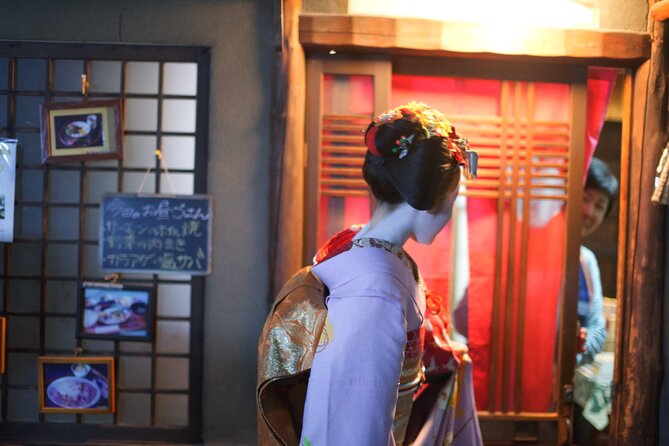
- Guaranteed stage time with an apprentice geisha (maiko), not a hope-and-pray street sighting
- English guide translation so you don’t miss the meaning behind the training and customs
- Q&A after the performance, built for real questions, not just polite nodding
- Small group size (maximum 14) for a calmer experience in Kyoto
- Meet a maiko in person and usually get time for photos at the end
- A guided walk through the geiko/geisha district area, so you know what you’re looking at
Why a Maiko Show in Kyoto Beats Street Chasing
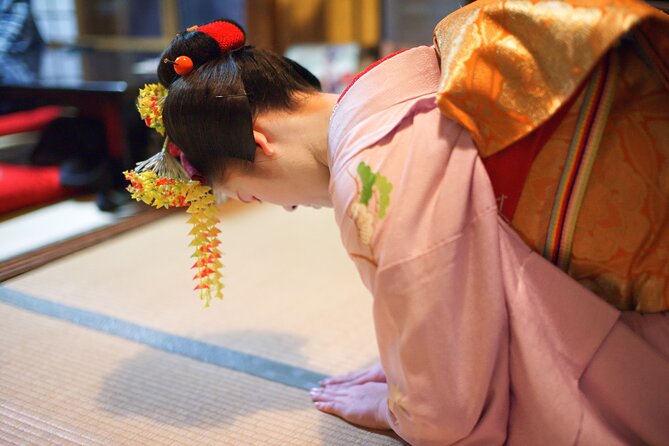
Kyoto’s geisha culture is more visible in photos than it is in real life—especially the closer you look for actual performances. This is why a show centered on a maiko feels like good value: you trade randomness for a planned, guaranteed chance to see traditional dance up close.
What makes this cultural hour work for you is the combination of performance and conversation. Many experiences stop at watching a dance. Here, the program is structured so you hear about daily life and training customs directly from the apprentice, with translation so the details land.
And because it’s small-group (max 14), you’re less likely to get steamrolled by the crowd energy that can happen with bigger theater-style shows. You get a calmer pace—still formal, but not cold.
You can also read our reviews of more tours and experiences in Kyoto


Meeting in Honmachi: The Start Feels Grounded, Not Theme-Park
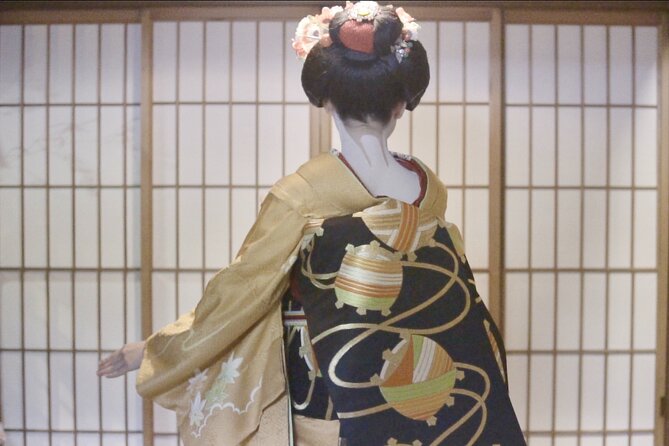
Your session begins at 5-chōme-182 Honmachi, a convenient base near public transportation. In practice, that matters because Kyoto can be confusing when you’re trying to get on time, find the exact entrance, and stay relaxed before a formal cultural moment.
A lot of the value happens right at the start. Your guide meets you, gives context for what you’ll see in the area, and typically walks you through the geiko district atmosphere—explaining the roles around geiko houses and the kind of entertainment spaces you’re passing. That quick orientation helps you understand why the district looks the way it does and what the different buildings and roles mean.
Guides are also part of the experience. Names like Ken and Saya show up in the experience feedback as hosts who keep things professional while also helping you feel comfortable. If you’ve ever had trouble finding a meeting point in Japan, it’s reassuring that the guide support is part of the experience vibe.
The Performance Hour: One or Two Songs, Done Up Close
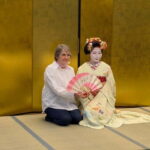
The heart of the show is a live geisha performance by the maiko (apprentice geisha). The program is roughly one hour dedicated to the show-and-meeting portion, and the performance is described as including one or two songs.
That short format is worth understanding. You may think, a one-and-a-half-hour experience sounds small compared with other tours. But in this setting, shorter can be better. You’re seeing an apprentice geisha perform in a controlled, respectful environment where you can also ask questions. The dance isn’t just entertainment—it’s part of training and tradition, and you’ll get more meaning from it because the conversation comes alongside it.
You’ll likely get time to enjoy the setting, too. Some descriptions note tea time as part of the overall experience atmosphere. Just keep expectations realistic: the listing specifically says coffee and/or tea aren’t included, so you should plan as if drinks may be extra (or that the “tea moment” could be more like a small part of the visit rather than a guaranteed drink package).
Q&A With an Apprentice Geisha: What You Actually Learn
The most compelling part for me is the Q&A. You’re not just watching; you’re getting a guided way to ask questions about training and customs, and then receiving answers directly from the maiko.
This matters because geisha culture is easy to misunderstand from movies or stereotypes. In this format, you can ask practical questions about what the training involves, what daily life looks like, and how routines connect to the skills you just watched.
You also get the translation support handled for you. The guide translates for no language barriers, so your questions aren’t reduced to tourist-simplified topics. You can focus on curiosity—how skills are practiced, what the day-to-day feels like, and what’s expected in the world you’re observing.
A strong host quality comes through here, too. Feedback emphasizes that guides balance formality with making you comfortable. That’s important. When the maiko is performing and speaking, you’re in a cultural space where everyone’s behavior and tone matter. A good guide helps you participate in the moment without turning it into awkward chaos.
English Translation and Small-Group Comfort (Max 14)
If you’ve done Japanese tours before, you know the difference between a guide who translates versus a guide who simply talks over you. This experience is built around an English-speaking guide, with translation so the maiko’s answers don’t become a guessing game.
The small group size (maximum 14) is also more than a number. It affects your ability to hear, ask questions, and keep the mood respectful. It’s easier for the guide to manage timing and for you to interact without feeling like you’re competing for attention.
Guides named Ken and Saya are specifically mentioned as supportive translators in the experience feedback. That’s a big deal because you’re meeting a real maiko, not a performer hired for stage banter. You want someone who can maintain the right tone: formal enough for the occasion, friendly enough that you can speak naturally.
Also, you’re near public transportation. That reduces the stress load. And in a short experience, stress is the enemy.




Price and Value: What You’re Paying For at $105.42
At $105.42 per person for about 1 hour 30 minutes, the price can feel high at first glance—until you break down what’s included.
You’re paying for:
- A live maiko performance
- A meeting component with an apprentice geisha
- A Q&A with translation
- An English-speaking guide
- A small-group format (max 14)
That’s not the same value as a general cultural show where you mostly watch and leave. Here, the price covers access and context—especially the translation and the chance to ask questions.
One practical note: coffee and/or tea are listed as not included. So if you love to linger with a drink, bring a little extra budget or plan to keep it simple.
Finally, the booking demand is real. The experience is commonly booked about 44 days in advance on average, which usually means it sells out or changes dates. If you’re set on it, don’t wait until the last minute.
Timing, Weather, and How to Prepare Without Overthinking It
The experience runs about 1 hour 30 minutes. Confirmation happens at booking time, and the session is described as requiring good weather. In other words, if Kyoto is having a rough-weather day, you don’t want to build the rest of your day around this one activity with zero flexibility.
Also, it’s noted that most travelers can participate. So it’s not framed like a strenuous activity. The main “work” is just being on time, staying respectful, and showing up mentally ready for a cultural program.
My practical prep advice:
- Write down 3–5 questions you want answered about training, daily life, or customs (so you’re not blank in the moment).
- Wear comfortable shoes for a short walk in the district.
- Bring cash or a card buffer for drinks, since coffee/tea aren’t listed as included.
Who This Kyoto Maiko Cultural Hour Is Best For

This is an excellent fit if you:
- Want a guaranteed chance to see traditional dance in Kyoto
- Care more about understanding culture than collecting photos
- Want an experience with language support and a real Q&A
- Prefer small groups over crowded theater chaos
It’s less ideal if you’re after a long, multi-stop sightseeing day. This is a concentrated cultural encounter. You’ll leave with questions answered and a clearer picture of training and customs, but you won’t fill an entire afternoon with city wandering.
If you’re the kind of person who likes to know what you’re looking at before you look at it, the guided district context at the start will help you get more out of the whole hour.
Should You Book This Kyoto Geisha Show With a Maiko?
Yes—if your goal is a meaningful Kyoto cultural moment with real interaction. The value is in the access: a maiko performance plus a translated Q&A, in a small group where you can actually participate.
I’d particularly recommend booking if you’re worried about missing geisha culture because Kyoto sightings are inconsistent. This experience swaps uncertainty for a planned program, and it does it with thoughtful hosting.
If you’re sensitive to short experiences or you want drinks included, plan around that. But for most people visiting Kyoto for the first time, this is one of the clearest ways to understand what you’re seeing—and ask why it matters—without getting lost in guidebook myths.
FAQ
How long is the Kyoto Geisha Show Cultural Hour with an apprentice geisha?
It lasts about 1 hour 30 minutes.
Do I need Japanese to enjoy the show and Q&A?
No. An English-speaking guide translates, so there are no language barriers.
How big is the group?
The experience has a maximum of 14 travelers.
Is there a Q&A and will I meet the maiko?
Yes. The session includes a Q&A and a meeting with the apprentice geisha (maiko) alongside the performance.
Is coffee or tea included?
No. Coffee and/or tea are not included.
Does the experience depend on weather?
Yes. It requires good weather. If it’s canceled due to poor weather, you’ll be offered a different date or a full refund.