REVIEW · KYOTO
Kyoto: Gion Night Walking Tour with Geisha Insight
Book on Viator →Operated by With Japan · Bookable on Viator
Gion at night is pure atmosphere. This easy, guided stroll takes you through the geisha district’s lantern-lit alleys without the stress of getting lost, plus you’ll get on-the-ground context for what you’re seeing. I especially liked how the guide turns the streets into a story, from traditional wooden teahouses to the side lanes you’d probably miss on your own.
The second thing I liked: the tour feels personal. With a maximum of 15 people, you’re not stuck in a crush, and you can actually pay attention as you learn geisha insight and pick up insider recommendations for where to eat later. The nighttime timing also helps you enjoy Gion when it feels more calm and local.
One possible drawback to plan for: a geisha sighting is never guaranteed. The tour sets expectations around learning how to spot geisha and maiko and then, with some luck, seeing one heading to an evening appointment—so if your whole goal is photos, you may find the lighting low light makes pictures harder.
In This Review
- Key highlights you’ll feel fast
- Walking the lantern-lit heart of Gion at night
- Stop 1: Hanamikoji Street, Shirakawa Canal, and Tatsumi Daimyojin Shrine
- Geisha and maiko spotting: what you can realistically expect
- Stop 2: Shijo-Kawaramachi and the backstreets locals actually use
- The food ideas that make your night easier
- Price and value: what $25 buys you in Kyoto
- Logistics that matter on a night walk
- Who should book this tour, and who might skip it
- Should you book this Kyoto Gion Night Walking Tour?
- FAQ
- How long is the Kyoto Gion night walking tour?
- How much does the tour cost?
- How big is the group?
- Where does the tour start, and does it end nearby?
- Is seeing a geisha or maiko guaranteed?
- What’s included in the price?
Key highlights you’ll feel fast
- Gion navigation without stress: your guide keeps you moving through the right streets at night
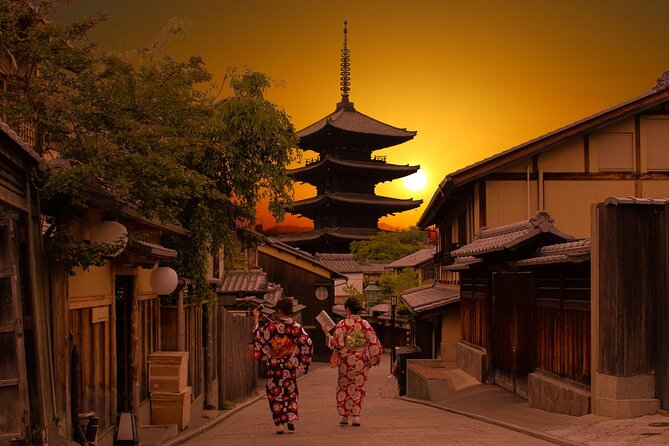
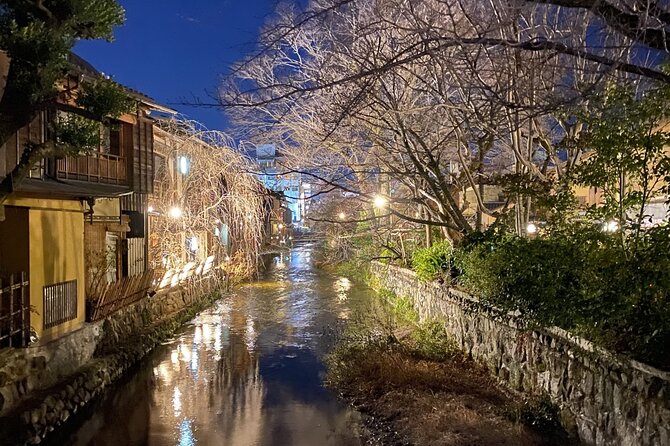
- Lantern-lit Gion scenery: Hanamikoji Street and the Shirakawa Canal area look especially good after dark
- Culture explanations, not just sightseeing: you’ll learn how to spot real geisha and maiko
- Shrine visit on backstreets: Tatsumi Daimyojin Shrine adds a quieter, off-the-main-route stop
- A second dose of Kyoto contrast: Shijo-Kawaramachi and nearby lanes show modern city energy side by side with old machiya houses
Walking the lantern-lit heart of Gion at night
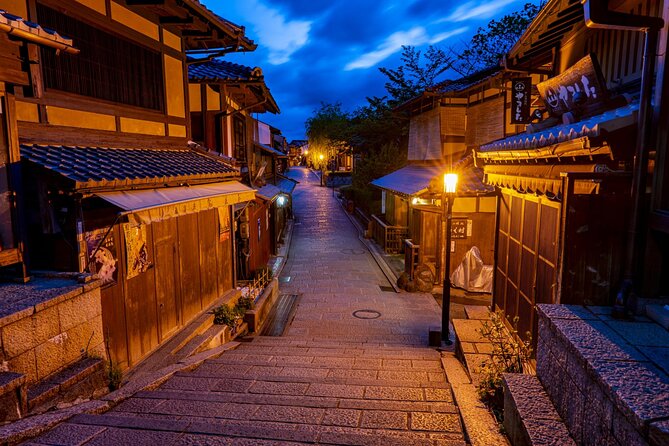
This tour is built for one thing: making a short night in Kyoto feel like you understood the place, not just walked through it. You cover about two hours, and the pace is steady enough to enjoy the details—while still feeling like a real, purposeful walk rather than a checklist.
The route is mostly in the Higashiyama area, centered on Gion and then shifting toward Shijo-Kawaramachi. That matters because Kyoto can be confusing after dark. Streets branch, alleys twist, and signage isn’t always obvious. Here, you’re not left to figure it out while you’re hungry and tired. You simply follow your guide and absorb what the neighborhood is saying.
I also like the group size. A maximum of 15 travelers means you’re less likely to get separated from your guide, and it’s easier to hear the explanations. If you’re the type who likes asking questions mid-walk, a small group keeps things human.
The tour uses a mobile ticket, which is convenient. You’ll meet back at the starting point at the end, so you don’t have to worry about transportation puzzles right when you want to relax and eat.
You can also read our reviews of more walking tours in Kyoto

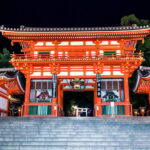
Stop 1: Hanamikoji Street, Shirakawa Canal, and Tatsumi Daimyojin Shrine
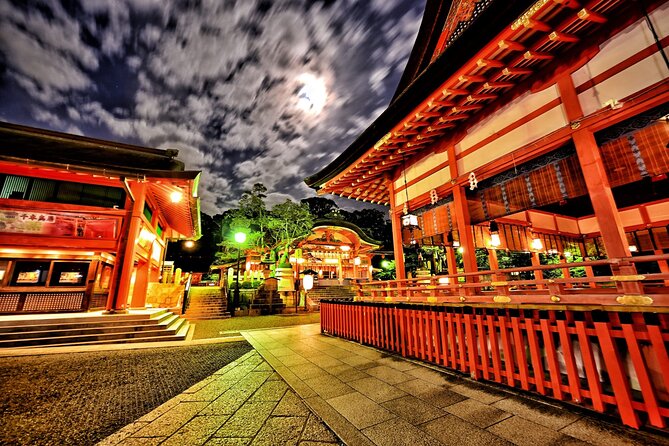
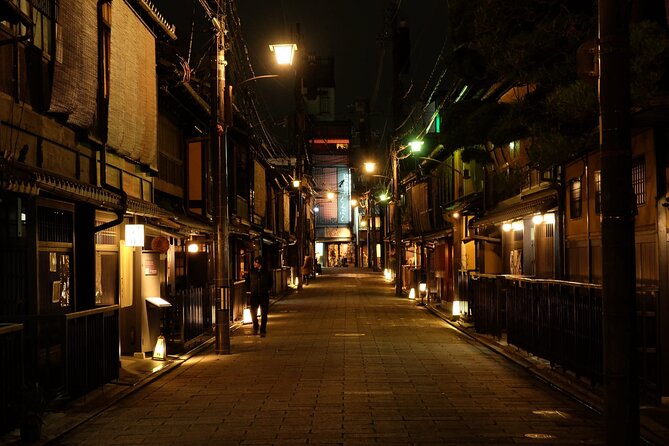
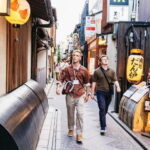
Your first hour is classic Gion, starting on Hanamikoji Street, often described as the heartbeat of Kyoto’s geisha district. It’s lined with traditional wooden teahouses (ochaya). At night, the street has a different mood than daytime views—more intimate, more textured, and easier to enjoy without tour-group chaos.
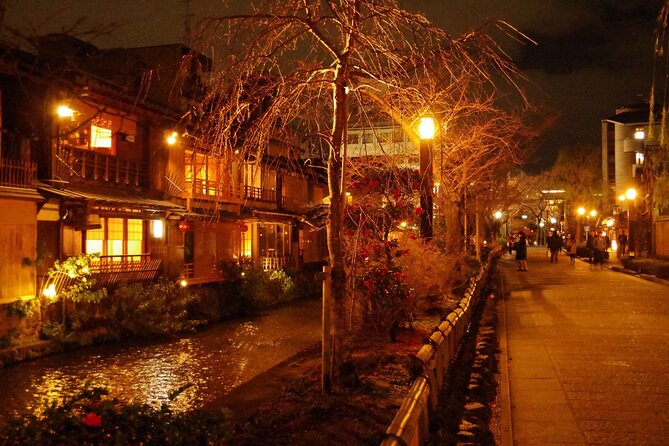
A big visual payoff here is the Shirakawa Canal area. You’ll walk through stone-paved lanes with red bridges and willow trees. Even if you’ve seen canal photos before, the nighttime atmosphere makes it feel less like a postcard and more like a real neighborhood corner. The stone, the bridges, and the water edge all create “pause here” moments, especially when your guide points out what you’re looking at.
Then comes a quieter change of pace: Tatsumi Daimyojin Shrine. This is a small spot tucked into the backstreets. I like this kind of stop because it gives you a breather from the main streets. It also adds a cultural layer to the night walking theme: yes, you’re in Gion, but you’re also seeing how shrine space fits into daily life and neighborhood rhythm.
Geisha and maiko spotting: what you can realistically expect
This is the part most people care about, so let’s keep it honest. During this stop, you’ll learn how to spot real geisha and maiko. The tour also aims for the possibility of seeing one gracefully heading to an evening appointment—wording that matters, because it signals chance, not a guarantee.
What you get that’s genuinely useful is the guidance itself. Instead of “look for a person in traditional dress,” the tour focuses on helping you understand what to look for while you’re walking through the area. That guidance is where you’ll get value even if you don’t catch sighting luck.
One detail that stands out from how this tour is described and experienced: a guide named Ryu has been praised for explaining geisha tradition and practice clearly. When someone can translate a cultural world into plain, respectful context, you’ll enjoy the neighborhood more—whether or not you spot a geisha on your particular night.
And if you’re thinking about photos: consider that you’re outside at night in lantern-lit lanes, which can be very pretty but also very dark depending on where you stand. So don’t build a plan around perfect picture conditions. Build it around seeing how the district works after dark.
Stop 2: Shijo-Kawaramachi and the backstreets locals actually use
After Gion, the walk shifts into a different side of Kyoto: the lively area around the Shijo-Kawaramachi intersection (often called Kawaramachidori in this context). This is where modern Kyoto shows up more strongly—shops, streets with more movement, and that sense that the city is still actively living, not just preserved.
But the tour doesn’t stop at the busy main lanes. You venture into hidden backstreets and alleys known for cozy bars, eateries, and older machiya houses. That combination is the point. You get to see how Kyoto’s historic architecture sits next to nightlife and everyday urban life, all within a walkable radius.
This second half is also where the guide stories become more important. The tour shares how the area evolved, giving you context so you’re not just seeing “old buildings plus people.” You’re understanding how a place like this keeps changing while still holding onto its visual identity.
The food ideas that make your night easier
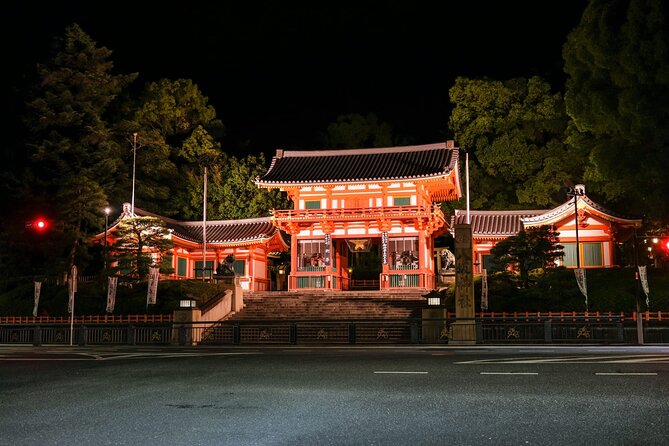
One of the smartest parts of this tour is that it doesn’t treat dining like a separate task you figure out later. You’ll receive insider recommendations on great places to eat in Kyoto. That’s included, and it’s the kind of value that can save you time and second-guessing.
Here’s how to use those food tips well. Don’t just ask what sounds good. Ask what kind of dinner fits the mood you want for tonight—something casual after a walk, or something more Kyoto-typical. Then, based on what your guide suggests, you can line up dinner without losing precious evening time searching.
Also, night walking changes appetite. After two hours moving through lantern-lit streets and back lanes, you’ll likely want food that’s close, quick, and satisfying. A local recommendation helps you choose something that fits the energy you already built up.
You can also read our reviews of more evening experiences in Kyoto

Price and value: what $25 buys you in Kyoto
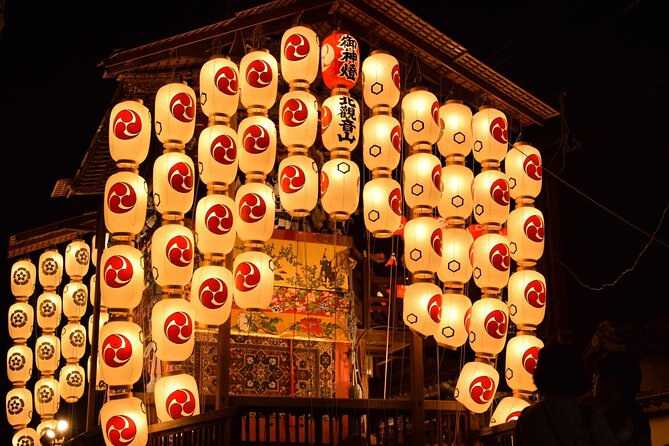
At $25 per person for about two hours, this tour is priced like a practical experience, not a luxury add-on. The value comes from three things that tend to matter most in Kyoto:
First, you’re paying for direction. Getting lost in the dark is no fun, and Kyoto’s street layout can be sneaky. A guide prevents that waste.
Second, you’re paying for interpretation. Geisha culture is easy to misunderstand if you treat it like a performance you can simply “catch.” The tour is structured to explain tradition and practice and help you learn how to spot geisha and maiko with the context that makes it meaningful.
Third, you’re paying for time. You also get dinner guidance, so you’re not spending your night juggling “see sights” and “hunt food.”
One check before you book: if seeing a geisha is your only goal, remember the tour frames it as with some luck. If you want the best odds of a rewarding experience, go in for the whole package—Gion at night, culture context, and a smoother evening plan.
Logistics that matter on a night walk
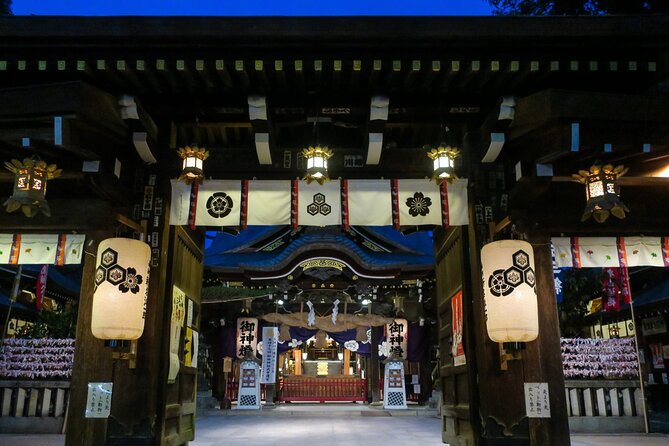
You meet at Tanaka Coffee GionJapan, located at 605-0085 Kyoto, Higashiyama Ward, 新地末吉町993. You’ll end back at the same starting point, which keeps things simple when you’re done.
The max group size is 15, and the tour uses a mobile ticket, so you won’t have to fuss with printouts. Confirmation happens at booking time, and the tour is meant for most travelers.
If you’re sensitive to darkness and low-light conditions, take note: this is a night walk, and the experience includes lantern-lit alleyways. That’s part of the charm, but it can be tougher for photography.
Who should book this tour, and who might skip it
This is a strong fit if you’re a first-timer in Kyoto or you’ve been to a few areas but still want a guided way to understand Gion. You’ll like it if you enjoy walking with a plan, and you want geisha culture explained in a way that’s accessible—not just “look at costumes.”
It also fits couples and small groups who want a calm night without feeling herded. Because it’s a small group, the tour is easier to experience at your own pace while still benefiting from the guide.
I’d be more cautious if your plan is mainly photo hunting with strict expectations. Since the tour explicitly frames sightings as luck, you might walk away a little frustrated if you’re holding your evening’s success to one visual moment.
Should you book this Kyoto Gion Night Walking Tour?
Yes—if you want Gion at night with a guide who helps you understand what you’re seeing and who gives you practical dinner ideas. The $25 price makes it easy to justify, especially when you factor in the small group size and the fact that you get cultural context and local food direction in one smooth 2-hour loop.
Book it a bit ahead if you can. It’s commonly reserved about a month in advance, which suggests it fills up with people who know this is a good “first night in Kyoto” style experience.
If you do book, go with flexible expectations about geisha sightings. The real win is the route, the shrine stop, the canal atmosphere, and the guide’s explanations that make the neighborhood feel less mysterious and more real.
FAQ
How long is the Kyoto Gion night walking tour?
It lasts about 2 hours.
How much does the tour cost?
The price is $25.00 per person.
How big is the group?
The maximum group size is 15 travelers.
Where does the tour start, and does it end nearby?
It starts at Tanaka Coffee GionJapan and ends back at the same meeting point.
Is seeing a geisha or maiko guaranteed?
No. The tour teaches you how to spot real geisha and maiko, and it mentions that with some luck you may see one heading to an evening appointment.
What’s included in the price?
The tour includes the walking tour and insider recommendations on local eateries.