REVIEW · KYOTO
Private Japanese Calligraphy in Kyoto – Learn Shodō with a Master
Book on Viator →Operated by SAKURA Experience Japanese Culture Nijo Home · Bookable on Viator
A brushstroke can say more than words. This private Japanese calligraphy class in Kyoto puts you one-on-one with an experienced master, right in a calm home setting, so you learn shodō fundamentals and leave with a finished piece. The big upsides for me are the teacher’s full attention and the chance to write your own kanji and name as a true keepsake. The main thing to watch: the home location can be a little tricky to find, and the start time is strict if you’re late.
You’ll spend about one hour learning correct brush movements, practicing in ink, and getting guided feedback without pressure. The session runs in English and Japanese, and you’ll want clean socks for the tatami room—small detail, big vibe.
In This Review
- Key things to know before you book
- Entering a Kyoto home lesson near Nijo Castle
- What you’ll learn in shodō: strokes, pressure, and mindset
- The one-hour flow: choosing your kanji and writing your name
- Your finished keepsake: what you take home
- Price and value: is $77.51 worth it?
- Who this is best for (and who should think twice)
- Should you book this Kyoto shodō class?
- FAQ
- How long is the private calligraphy class in Kyoto?
- How much does it cost per person?
- Is the lesson private or shared with other groups?
- What languages are available for the instruction?
- Do I need to bring calligraphy tools or paper?
- Are children allowed to join?
- What happens if I’m late or I need to cancel?
Key things to know before you book
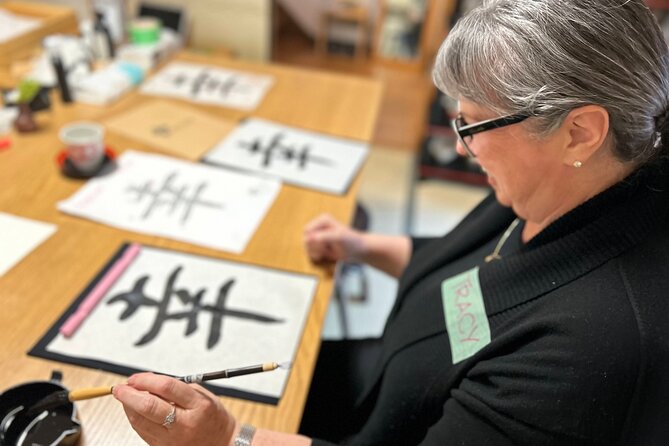
- A private, quiet home studio near Nijo Castle makes this feel less like a tourist stop and more like a cultural class
- Shodō practice focused on brush technique (not just watching) even if you’re starting from zero
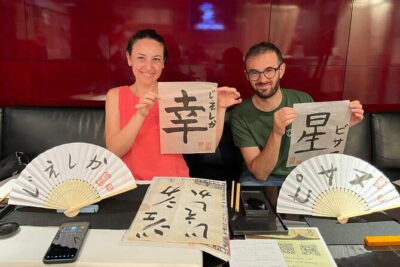
- You choose a kanji character and add your name in Japanese, then take the artwork home
- Tools and paper are provided, so you’re not hunting for supplies
- Age limits matter: kids under 12 can’t be accommodated to keep the atmosphere calm
- Socks for tatami aren’t optional if you want to be respectful in the room
Entering a Kyoto home lesson near Nijo Castle
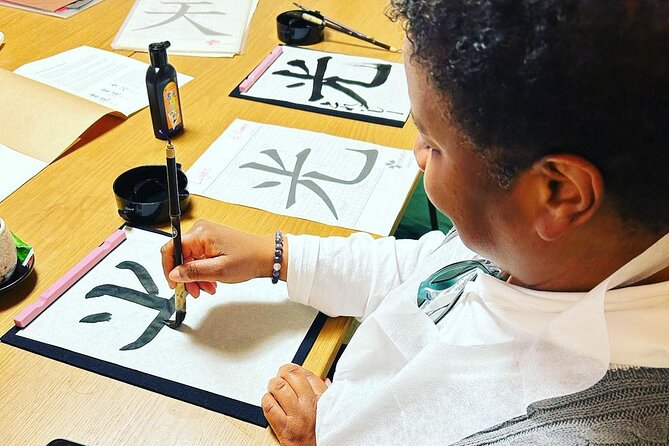
This class is set in a private home in central Kyoto, near Nijo Castle (the meeting point is Sakura Experience Japanese Culture Nijo Home, 660 Izumichō, Nakagyo Ward). That matters more than it sounds. Kyoto’s best cultural experiences often happen outside the big sightseeing circuits—smaller rooms, fewer interruptions, and a teacher who can slow down because it’s just your group.
Most of the time, you can reach the area using public transportation, and the meeting point is close to that network. Still, here’s the practical reality: home addresses in older Kyoto can be easy to misread on a map pin and confusing when you’re standing on the street in rainy weather or unfamiliar alleys. Plan extra time to locate the entrance, and consider saving any confirmation message with the exact directions.
Once you’re inside, you’ll move through a tatami room setup. The rule is simple: wear or bring clean socks. Barefoot entry into the tatami room isn’t permitted, and it’s the kind of thing that can instantly make the whole experience feel awkward if you forget. If you’re traveling light, this is one place where it pays to have a spare pair of socks in your day bag.
You can also read our reviews of more private tours in Kyoto

What you’ll learn in shodō: strokes, pressure, and mindset
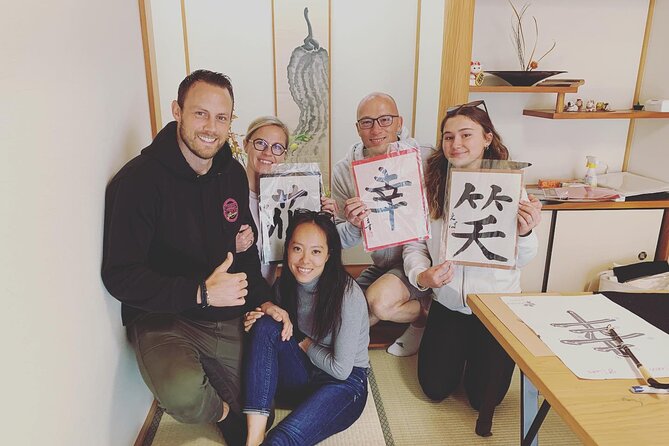
Shodō is often sold as art. It is art—but it’s also a kind of physical discipline. The class is designed to teach you how to use the brush with the right movements so the kanji looks like it belongs in Japanese calligraphy, not like a foreign doodle.
You start with fundamentals: how to hold the brush, how to control pressure, and how to guide the line as it flows. Even if you’ve never held a brush before, you’ll be shown what to do and what to avoid. The teacher’s approach is patient, and the lesson is structured so you can build success step by step.
One of the best parts is the way the instructor connects technique to intention. You’re taught that brushwork is affected by your state of mind. That’s not just poetic talk—it changes how you move. When you’re told to slow down, breathe, and commit to each stroke, your work improves fast. You’ll feel it when the line gets steadier and the character starts looking more balanced.
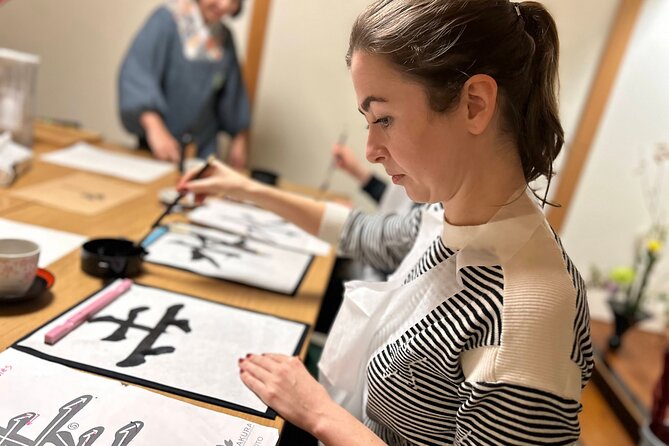
Also, don’t expect a lecture-only class. You’re meant to practice. Your teacher guides you while you write, and you’ll learn the difference between trying hard and writing with control. That’s the shift that turns calligraphy from frustrating to enjoyable.
A small note on comfort: some sessions include conversational sharing beyond calligraphy, and you may be offered tea and traditional sweets as part of the home welcome. Even if that part isn’t your focus, it helps the lesson feel natural instead of transactional.
The one-hour flow: choosing your kanji and writing your name
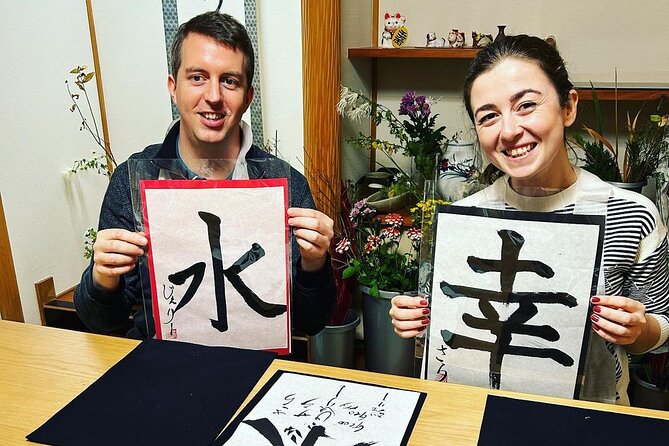
The heart of the experience is your own character. You’ll choose a favorite kanji to write, then you’ll add your name in Japanese. For many people, this is the moment they realize calligraphy isn’t about copying perfectly—it’s about expressing the character’s structure with proper form.
In practice, you’ll go through a loop:
1) Learn the strokes for the character
2) Practice them while your instructor watches and corrects
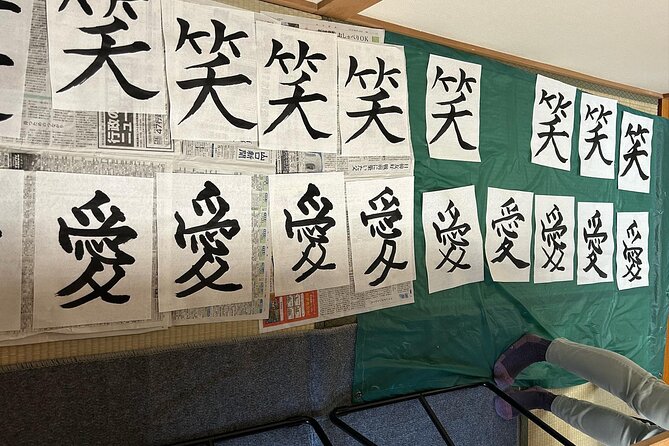
3) Write your finished version (or versions) with guidance
4) Complete the keepsake with your name in Japanese
The key benefit of a private setup shows up right here. You’re not waiting for the instructor to move across a room. You can ask questions, and corrections can happen while the brush is still in your hand. That’s how you improve quickly, even in a single session.
Time is the only real constraint. One hour is not long, and some students find they want more space to write their name as fully as they pictured or to slow down and refine strokes. If your goal is a super-elaborate piece, you might leave wishing you had a longer class length. If your goal is a solid introduction plus a beautiful keepsake, the one-hour format works well.
Your finished keepsake: what you take home
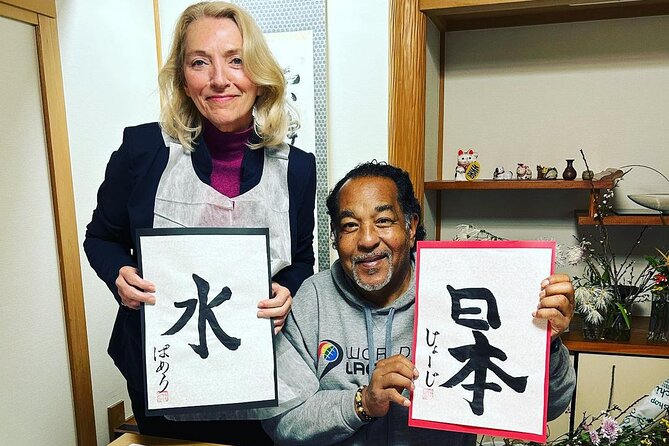
At the end, you don’t leave empty-handed. You get your completed artwork to take home, along with the satisfaction of having written it yourself. That’s huge value. In most Kyoto activities, you pay and then you hope the souvenir looks good in photos. Here, the piece becomes personal.
The tools and paper are included, so you’re not doing the last-minute scramble for brushes or specialized ink. You also get guidance on selecting and writing your chosen kanji. In other words, you’re not stuck with a character you don’t understand.
What you’ll notice when you look at your final piece is the difference between a rushed attempt and a controlled stroke. Calligraphy rewards patience. Even when you’re a beginner, your piece will look more intentional than you expected—especially once you’ve practiced the stroke flow a few times.
One more nice detail: your instructor may take photos during the session and share them with you afterward. That’s handy for remembering how the work progressed and for showing your family back home what you actually did.
Price and value: is $77.51 worth it?
At $77.51 per person for about one hour, the price isn’t about being cheap. It’s about being efficient.
Here’s what makes it feel like good value:
- Private instruction means you’re paying for attention, not for a seat in a group.
- Included supplies (tools and paper) remove extra costs and friction.
- You get a finished artwork keepsake, which you’d otherwise have to buy as a framed product.
- The class is centered in Kyoto, so you’re not sacrificing hours of commute time to reach a distant workshop.
If you’re comparing this to group workshops, you can see the tradeoff immediately. Group classes can be cheaper, but they often move faster and give less individualized correction. If you care about learning correct brush movement rather than just doing a quick craft, the private format makes the price feel fair.
There’s also a subtle value boost: calligraphy is one of those experiences that sticks. You can’t unlearn how you held the brush or how pressure changes a line. It’s a skill moment, not just a memory moment.

Who this is best for (and who should think twice)
This class fits best if you want:
- A beginner-friendly intro to Japanese calligraphy (shodō)
- A quiet, respectful cultural experience in a non-touristy home setting
- A meaningful souvenir that you made, not just bought
- Time to ask questions and get corrections while you practice
It may feel less ideal if:
- You hate strict timing. The class starts promptly, and being more than 15 minutes late can mean the class can’t start.
- You want a kids-and-family free-for-all. The rules say children under 12 can’t be accommodated to maintain a calm learning environment.
If you’re traveling with older kids or teens who are genuinely curious, it can work. But this is still a learning-focused session, not an entertainment show.
For language: the class is offered in English and Japanese, so you won’t be left completely on your own. That matters if you’re nervous about cultural activities where you can’t read the cues.
Should you book this Kyoto shodō class?
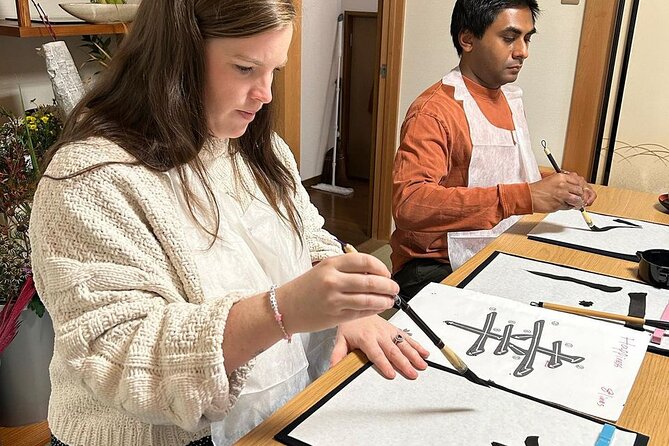
Book it if you want a private Japanese calligraphy experience that feels like meeting a teacher, not a factory tour. The best reason is simple: you’ll learn technique while making something you can actually bring home—your own kanji and your name in Japanese—within a single focused hour.
Don’t book it if your priority is a flexible schedule or you’re likely to arrive late, because the start time is strict and the home location needs a bit of attention. Also, if you’re traveling with younger children, follow the under-12 rule and ask questions early rather than assuming exceptions.
If you can handle punctuality and you bring clean socks, you’re set up for a calm, rewarding Kyoto afternoon.
FAQ
How long is the private calligraphy class in Kyoto?
The class lasts about 1 hour.
How much does it cost per person?
The price is $77.51 per person.
Is the lesson private or shared with other groups?
It’s a private class, meaning only your group participates.
What languages are available for the instruction?
The class is offered in English and Japanese.
Do I need to bring calligraphy tools or paper?
No. All calligraphy tools rental and paper are included.
Are children allowed to join?
Children under 12 cannot be accommodated to maintain a quiet learning environment.
What happens if I’m late or I need to cancel?
If you arrive more than 15 minutes late, the class cannot be offered. Cancellation for a full refund is available if you cancel at least 24 hours in advance.