REVIEW · KYOTO
Kyoto: Japanese Koto Musical Instrument Class
Book on GetYourGuide →Operated by Gojo Paradiso · Bookable on GetYourGuide
Kyoto’s calm sounds are real here. This Koto class at Gojo Paradiso starts with a live performance, then teaches you to play the folk song Sakura Sakura with a patient, friendly instructor, and it connects you to centuries of Japanese musical tradition without any prior experience. The one drawback: it’s a beginner lesson, so you won’t leave playing like a concert pro in just 90 minutes.
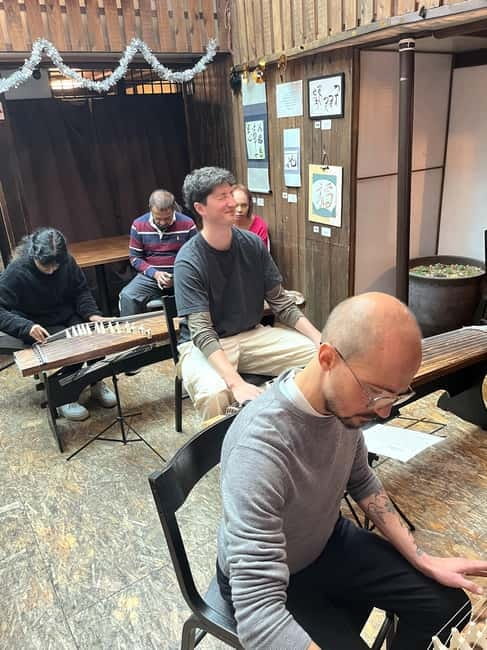
I like that the structure keeps things simple: listen first, then pick up your own koto and follow along step by step. You get a small group setting (up to 10 people), the lesson runs for 90 minutes, and you’re working with provided materials right there on site.
In This Review
- Key highlights worth showing up for
- Gojo Paradiso on Kiyamachi Street: the quiet Kyoto start
- 90 minutes in Kyoto: listening, then playing your first notes
- Sakura Sakura on a real koto: the beginner win that sticks
- After Sakura Sakura: trying more songs when you’ve got the feel
- Instruction style that actually helps first-timers
- Price and value: what $32 gets you in Kyoto
- Where this Koto class fits your Kyoto travel day
- Who should book this Koto lesson (and who might skip it)
- Should you book the Kyoto Koto Musical Instrument Class?
- FAQ
- How long is the Kyoto Koto musical instrument class?
- Where is the meeting point?
- Is prior experience required?
- What song will I learn?
- How big is the group?
- What languages are available for instruction?
- Can I take photos or videos during the lesson?
- Is the activity suitable for children?
- Is it wheelchair accessible?
Key highlights worth showing up for
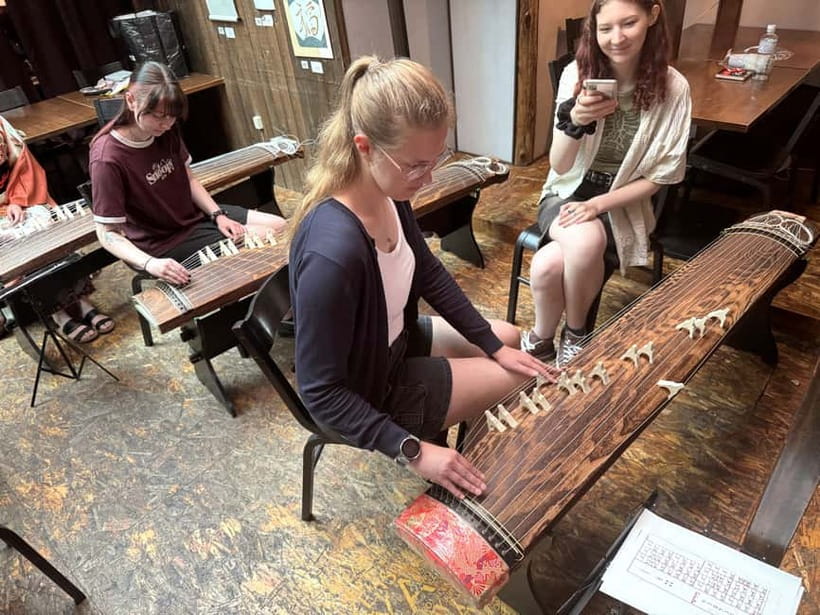
- Live performance first, then hands-on playing
- Sakura Sakura is your fast path to a real song
- Small group instruction with up to 10 participants
- Materials and koto are provided, no experience needed
- You can take photos and videos to remember it
- English and Japanese instruction available
Gojo Paradiso on Kiyamachi Street: the quiet Kyoto start
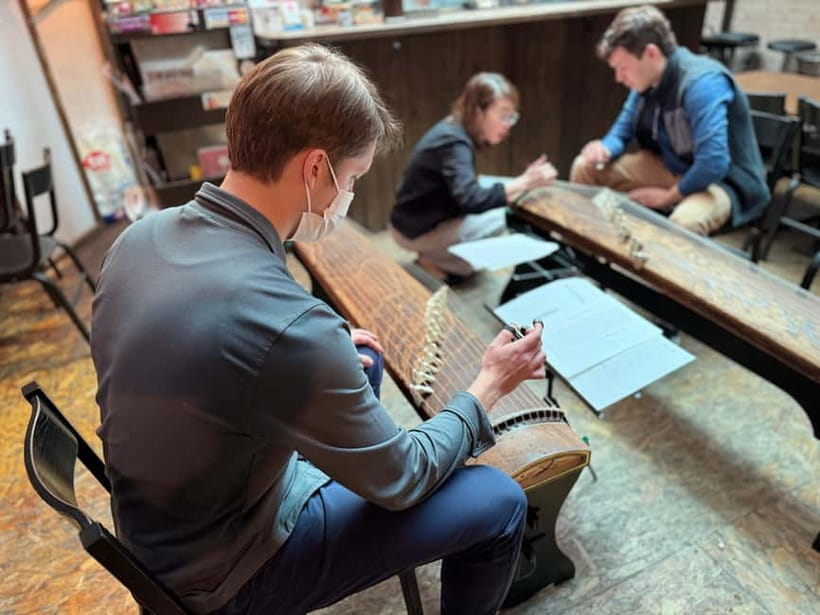
This class meets at Gojo Paradiso, along the Takase River on Kiyamachi Street. If you’re staying in the central Kyoto area, that location is handy: it’s about a 5-minute walk from Keihan Kiyomizu Gojo Station and roughly 10 minutes from Keihan Shichijo Station.
What I like about meeting here is the vibe you get before the lesson even starts. The whole experience is built around calm, focused attention. You’re not racing between stops or trying to read a complex brochure. You arrive, settle in, and the sound of koto becomes the main event.
Also, the lesson is designed for real people, not just seasoned musicians. Beginners are welcome, and the setup includes the koto and all the materials you need. That means you’re not spending your precious Kyoto time figuring out how to handle an unfamiliar instrument.
If you prefer learning in English, that’s covered too. Instruction is available in English and Japanese, and the teacher is there to guide you through what to do next.
You can also read our reviews of more tours and experiences in Kyoto

90 minutes in Kyoto: listening, then playing your first notes
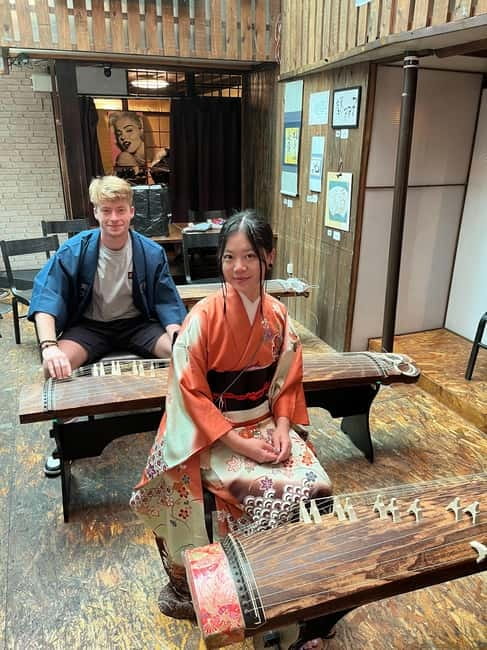
The class moves in a way that makes sense for first-timers. You begin by listening to a live koto performance. That first step matters more than it sounds. Hearing the music in real time helps you understand what you’re trying to make happen before you start doing it yourself.
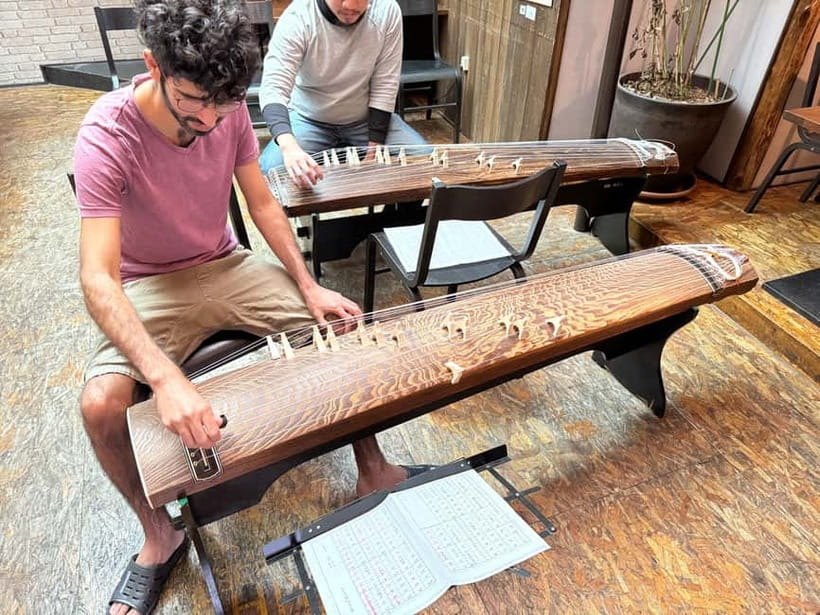
Then you shift from watching to doing. You’ll learn the song Sakura Sakura with your own hands, not just by observing. This is where the lesson earns its keep: you’re not stuck in a long lecture, and you’re not forced to copy complicated techniques on day one.
The timing is built around momentum. A 90-minute session is long enough to feel progress, but short enough that you can keep your energy up. And because the group is limited to 10 participants, it’s easier for the instructor to correct issues and keep you moving forward instead of getting lost in the crowd.
One more practical detail: photos and videos are part of the experience. So while you’re learning, you’re also capturing the moment. It’s a simple way to turn the lesson into a souvenir you can revisit later (especially if you’re the type who forgets what things sounded like once the trip moves on).
Sakura Sakura on a real koto: the beginner win that sticks
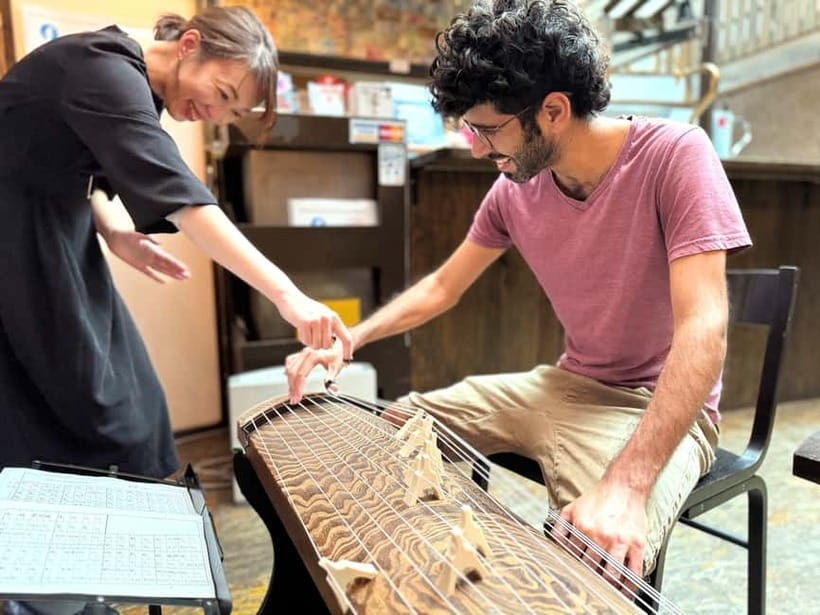
You’re not learning a random sound pattern. The lesson uses the famous Japanese folk song Sakura Sakura as your main entry point. That choice is smart for value and confidence. A recognizable melody gives you a target that feels meaningful, and it helps your brain connect the lesson to something you can remember.
In practice, you’ll be guided step by step until you can play the song. This is the part that tends to create that wow moment: you hear the music, then suddenly you’re making it. And because the class is beginner-friendly, you don’t need prior instrument experience to participate.
What I’d watch for, though, is expectations. This isn’t a “learn everything about koto” class. It’s a focused introduction. If you go in expecting the instrument to feel perfectly familiar after one lesson, you may get frustrated. If you go in expecting a real first experience, you’ll likely feel proud fast.
The best way to get the most out of it is to treat it like a skill session, not a performance rehearsal. Follow the instructor’s cues, keep your attention on what you’re doing in the moment, and don’t worry about sounding perfect right away. The goal is to leave with a playable song and the confidence that you can build from there.
After Sakura Sakura: trying more songs when you’ve got the feel
Once you’ve worked through Sakura Sakura, the class allows you to try other songs. That structure is great for different learning styles. Some people are happy once they’ve achieved the first main song. Others want more time with additional material.
Trying more than one song also changes the experience from “one-and-done” into a mini musical practice. It gives you variety without stretching the session longer than 90 minutes. And it keeps the lesson feeling fresh, especially if you’re the kind of person who gets bored doing the same thing repeatedly.
You’ll still be a beginner at the end of the session. But you can leave knowing you’re not locked into only one melody. That can make it easier to seek out more koto experiences later if you want to keep going.
Instruction style that actually helps first-timers
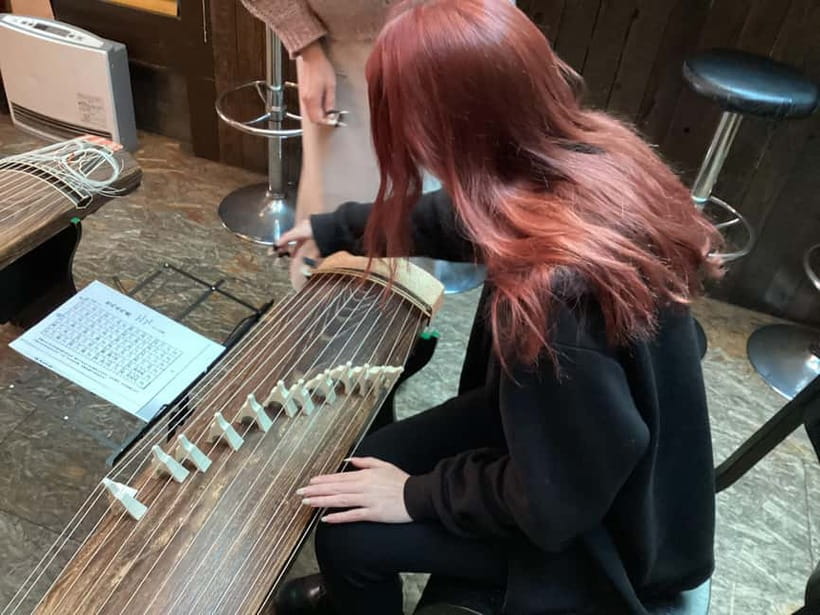
The thing that keeps this class at a high rating is simple: the instruction seems to fit beginners. One person even described feeling like this was something they could learn the basics of, despite never being able to play an instrument before. Another praised the teacher’s friendliness and clarity. In one account, the instructor was specifically named Natsuko, and the lesson was described as both great and patient.
That matters because a koto lesson can feel intimidating if you’re thinking too hard about your mistakes. Here, the guidance is the point. The instructor’s job is to help you hear what you’re doing, understand what to adjust, and keep going without steamrolling your confidence.
You also benefit from the small group size. With a maximum of 10 participants, you’re less likely to get stuck waiting while others finish. It’s easier to ask questions, and you’re more likely to get feedback that’s tailored to what you’re actually doing.
If you’re traveling solo, or you’re worried you won’t know what to do, this setup is reassuring. You’re not there to audition. You’re there to learn.
And because the class runs in English or Japanese, you can follow along comfortably even if your Japanese is limited. That’s a huge advantage in Kyoto, where a lot of cultural experiences are wonderful but not always easy to understand on the first try.
Price and value: what $32 gets you in Kyoto
At $32 per person for 90 minutes, you’re paying for more than a classroom. You’re paying for a trained instructor, the koto and necessary materials, and a structured lesson that helps you move from listening to playing.
Here’s why that value works well in real trip terms. In Kyoto, time is tight and the best cultural experiences take effort to find, coordinate, and understand. This one gives you the essential pieces in one booking:
- A skilled instructor guiding your hands
- The instrument and materials provided
- A fixed-length lesson built for beginners
- A small group setting that supports attention
- A memorable song you can take home as a personal achievement
Could you theoretically learn on your own later? Sure. But that’s not the same experience. The cost here buys you momentum and clarity. It removes the guesswork and replaces it with an organized path and immediate feedback.
If you’re deciding whether this is worth it, think like this: would you pay for an hour-and-a-half of calm, guided hands-on practice with a traditional Japanese instrument? If yes, then the price makes sense.
And if you’re the type who loves music but doesn’t want to spend your Kyoto days in museums all afternoon, this is a strong change of pace.
Where this Koto class fits your Kyoto travel day
Because it’s 90 minutes and in a central neighborhood, you can slot it into a busy day without it taking over your schedule. You don’t need a whole morning or afternoon. You just need to show up ready to focus for a bit.
Gojo Paradiso’s location near Kiyamachi Street and the Takase River is also useful. Before or after, you can walk the river area and enjoy the atmosphere of the neighborhood. This kind of lesson tends to pair well with a lighter day where you want to feel the city rather than sprint through it.
One note on age: the class isn’t suitable for children under 10. If you’re traveling with kids, this is something to check carefully before booking so the experience stays comfortable for everyone in the room.
Who should book this Koto lesson (and who might skip it)
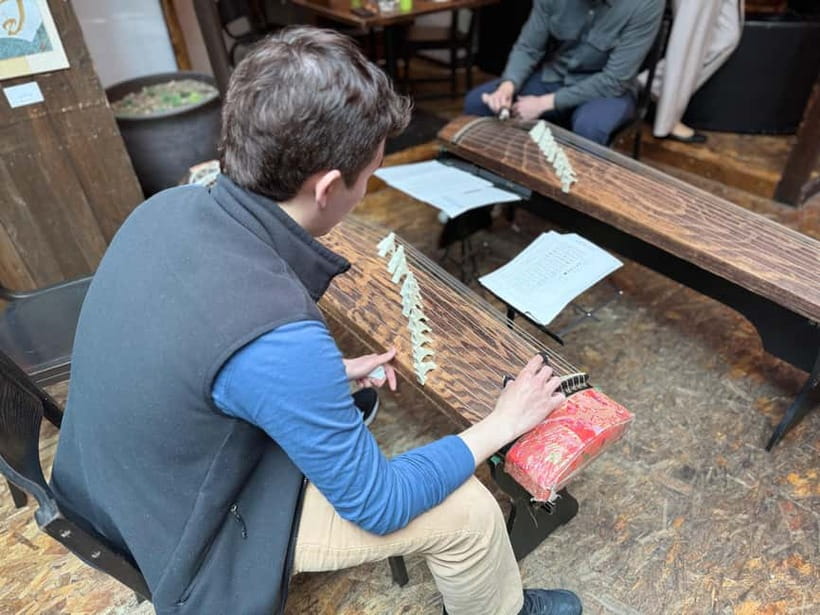
You should book this if any of the following are true:
- You’re curious about Japanese culture through music, not just through photos
- You want a hands-on activity that fits a beginner level
- You enjoy “listen, then try” lessons
- You like small-group experiences where you’re not lost in the shuffle
- You want a take-home memory that isn’t only a souvenir shop receipt
You might skip it if:
- You’re only interested in advanced technique and long practice sessions
- You expect to master multiple pieces to a performance level in one sitting
- You’re bringing children under 10
Also, if you plan carefully, this is a great way to turn a standard Kyoto day into something personal. Music is hard to fake through reading or watching online. Here, you actually touch the instrument and play a song.
Should you book the Kyoto Koto Musical Instrument Class?
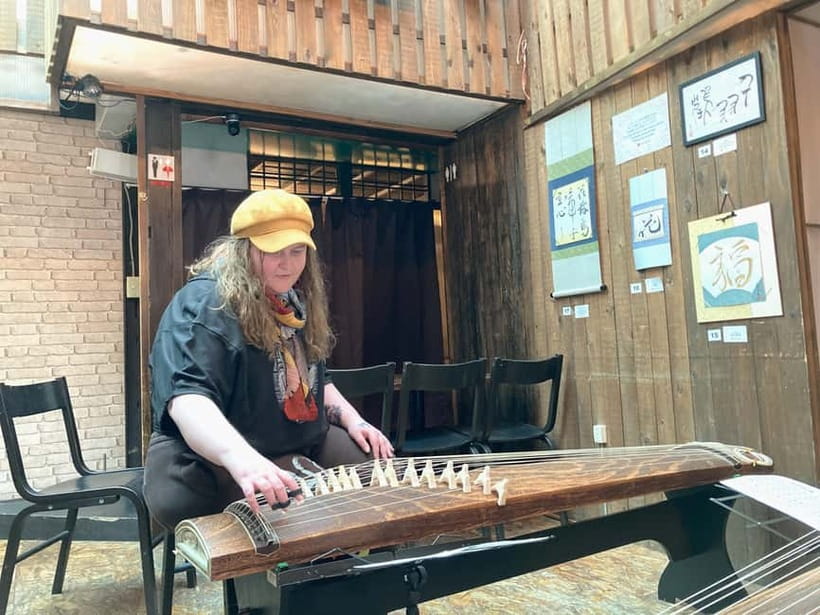
I think you should book it if you want a straightforward, beginner-friendly way to experience a traditional instrument in Kyoto. The lesson structure makes sense, the group size stays small, and the price covers instruction plus materials—so you’re not paying to figure out logistics.
If your main travel goal is a hands-on cultural moment, this one checks the boxes. You’ll hear koto music up close, play Sakura Sakura, and leave with photos or video of what you managed to do in 90 minutes. For many people, that’s exactly the kind of “I can’t believe I did that” memory that lasts longer than another sightseeing photo.
FAQ
How long is the Kyoto Koto musical instrument class?
The class lasts 90 minutes.
Where is the meeting point?
You meet at Gojo Paradiso along the Takase River on Kiyamachi Street.
Is prior experience required?
No. No prior experience is required and all necessary materials are provided.
What song will I learn?
You’ll learn the folk song Sakura Sakura. After that, you can also try other songs.
How big is the group?
It’s a small group limited to 10 participants.
What languages are available for instruction?
The instructor teaches in English and Japanese.
Can I take photos or videos during the lesson?
Yes, photos and videos are part of the experience.
Is the activity suitable for children?
It is not suitable for children under 10 years old.
Is it wheelchair accessible?
Yes, the venue is listed as wheelchair accessible.