REVIEW · KYOTO
No. 1 E-Bike Tour for Up to 5 Guests in Kyoto with a Local!
Book on Viator →Operated by Discovery Bicycle Tours Okinawa / e-CHARIty Naha · Bookable on Viator
Cycling Kyoto by electric bike feels smart and easy. In a small group, you’ll roll between landmark sights at a relaxed pace while your local guide connects the dots with street-level stories. I especially like how the route mixes major temples with everyday neighborhoods, so the city feels lived-in, not staged.
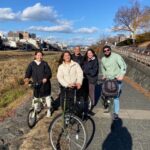
Two standouts: small-group riding (up to 5) and the guide-fueled storytelling led by Yuki, with lots of fun, practical historical context along the way. One thing to consider: this is still cycling time in an urban setting, so you’ll want to feel comfortable on a bike and keep an eye on weather, since the tour requires good conditions.
In This Review
- Key points before you go
- Kyoto’s e-Bike Rhythm: why this route works so well
- Getting set up at the Clew bike port near Seikouin Wagatazizou
- Nishi Honganji: a calm temple start with big architectural payoff
- Kagiyacho pass-by: local neighborhood energy and a Nintendo landmark
- Gion and the river-side feel: old streets, tea-house history, and timing
- Lake Biwa Canal stops near Nanzenji: water engineering you can actually see
- Heian Shrine’s big red torii, then Nanzen-ji Temple’s presence
- Kamo River wind-down: cooling your feet and resetting your legs
- Price and value: is $99.08 worth 4 hours of Kyoto?
- Guide quality matters: the Yuki factor
- Who should book this e-bike tour (and who should think twice)
- Should you book it? My decision checklist
- FAQ
- How long is the Kyoto e-bike tour?
- What’s the group size limit?
- What’s included in the price?
- Where do we meet, and when does it start?
- Are the temple and stop admissions covered?
- Is there time at the river during the tour?
- Can children join the tour?
Key points before you go
- Up to 5 riders keeps the pace calm and the stops more conversational.
- E-bike + helmet included means less strain than walking or traditional cycling.
- Major sights without heavy ticket hassle since the stops listed are admission free.
- Nanzen-ji area gets a water-history focus via the Lake Biwa Canal.
- Gion and Kamo River downtime give you photo time plus a real breather.
- Yuki’s vibe shows up in the top ratings: fun, clear explanations, and lots of site coverage.
Kyoto’s e-Bike Rhythm: why this route works so well
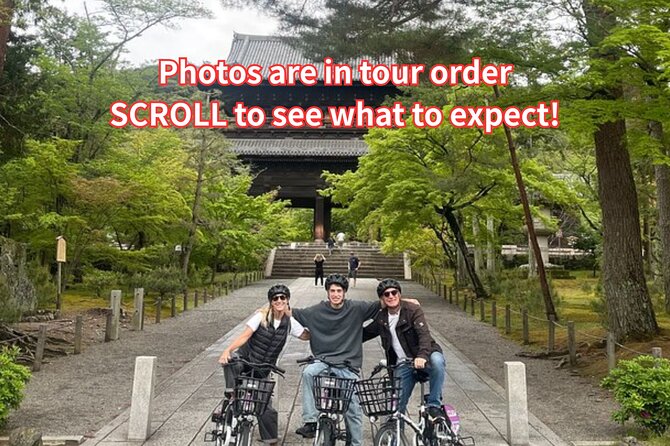
Kyoto has a way of making you feel like you’re always running. This tour fights that with an e-bike and a plan that strings together iconic places without turning your day into a sprint.
What I like is the balance. You get big-name stops like Nishi Honganji, Heian Shrine, and Nanzen-ji, but you also spend real time in the spaces between them—where you can sense the city’s texture. The ride is also timed so you don’t feel stuck in one place for too long, which helps if you’re trying to pack Kyoto into limited days.
The tour runs about 4 hours, starting at 1:00 pm, and keeps things manageable by sticking to a tight circuit in central Kyoto. That matters, because Kyoto traffic and pedestrian crowds can easily steal your energy. Here, you’re moving whenever you’d otherwise be standing in line—or stuck in a slow walk.
You can also read our reviews of more cycling tours in Kyoto
Getting set up at the Clew bike port near Seikouin Wagatazizou
The meeting point is in Shimogyo Ward at 570 Higashishiokōjichō (near a share-cycle port called Clew). You meet the guide at the port located in front of Seikouin Wagatazizou, behind the hotel at the same address area.
Before you roll, you’ll get a short briefing on cycling hand-signals and the basics of riding together. It’s a small detail, but it’s huge for confidence. Even if you’re an experienced cyclist, it helps you understand how the group moves—especially when you’re threading through busy areas.
You’ll also use a mobile ticket, so you don’t need to hunt for paper. And right before departure, your guide sends a message via Viator (Tripadvisor)—make sure you check that so you don’t waste time looking around.
Nishi Honganji: a calm temple start with big architectural payoff
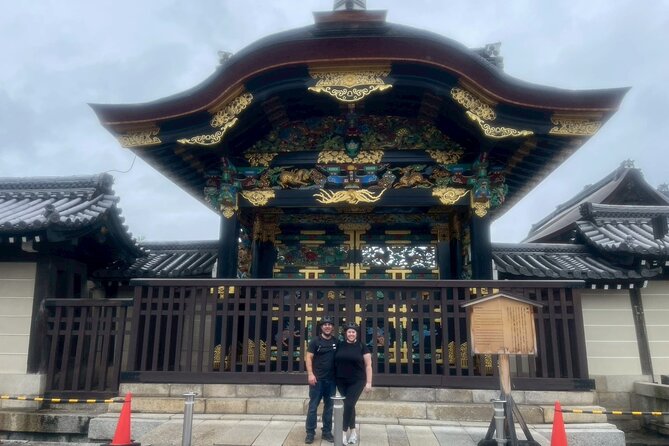
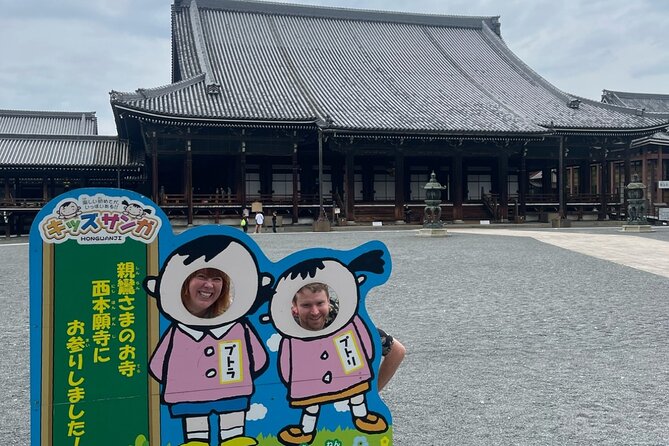
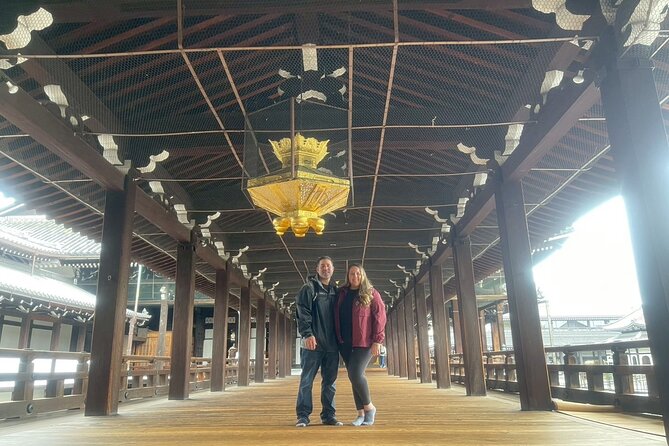
Stop one after the meetup is Nishi Honganji. You’ll have around 30 minutes here, and it’s framed as a World Heritage–level temple with historic buildings that reflect the Jodo Shinshu Hongwanji-ha tradition.
This first temple stop works because it’s a breather. Instead of charging straight into the busiest heritage streets, you start with a place where the atmosphere makes you slow down naturally. You also get an early hit of Kyoto’s spiritual side without burning time.
Admission for this stop is listed as free, so you’re not forced into extra ticketing steps before you’re fully into the tour flow.
Kagiyacho pass-by: local neighborhood energy and a Nintendo landmark
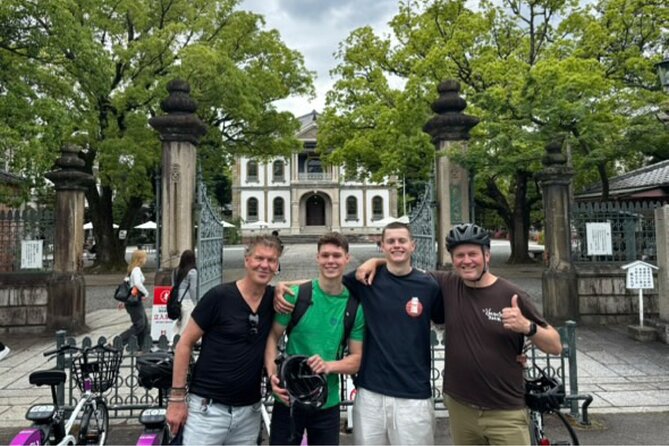
Next comes Kagiyacho—not just a photo stop, but a ride through a more everyday slice of Kyoto. A standout along this stretch is a huge building connected to Nintendo’s old headquarters.
This is the kind of stop that makes the tour feel current. Kyoto isn’t frozen in time, and these moments add contrast to the temples and traditional streets. You’ll have about 20 minutes at this segment, which is just enough for you to look around and get the context without dragging the schedule.
If you like Kyoto that’s both old and modern, this is a nice breather between the heavier temple moments.
Gion and the river-side feel: old streets, tea-house history, and timing
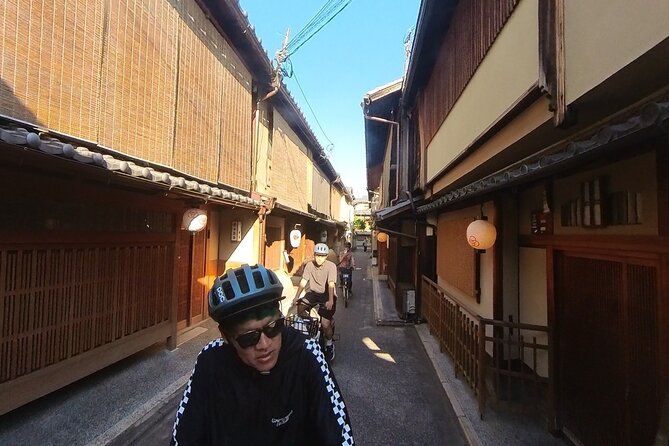
Then you head into Gion, specifically the Gion Shirakawa area. The tour gives you about 30 minutes here, with a focus on the tea-house street history and old-style buildings along the river.
Gion is one of those places where walking crowds can make photos frustrating. Coming in by e-bike with a guide who keeps the timing steady helps you feel less trapped in the crush.
This is also where seasonal atmosphere tends to show up—think cherry blossoms when they’re in season, and the general Kyoto-lantern vibe when the light hits right. The tour also connects you to the area around Kiyamachi Street, which is part of that classic river-side look people travel for.
You can also read our reviews of more tours and experiences in Kyoto

Lake Biwa Canal stops near Nanzenji: water engineering you can actually see
One of the most interesting parts of this tour is the Nanzen-ji area, where you visit spots tied to the Lake Biwa Canal. You’ll ride through two segments connected to the canal system:
- 17 Nanzenji Kusakawachō (about 20 minutes)
- 13 Nanzenji Fukuchichō (about 50 minutes)
The key idea here is that this waterway helped shape Kyoto by supplying water, and the canal design dealt with elevation differences in a clever way. Instead of hearing this as a random fact, you can stand near the waterways and picture how the system worked.
The long stop (the 50 minutes segment) is especially valuable because it gives you room to notice details. If temples are your main goal, this might still be your favorite “education with scenery” moment.
Admission for these canal-related stops is also listed as free, so the time isn’t weighed down by ticket logistics.
Heian Shrine’s big red torii, then Nanzen-ji Temple’s presence
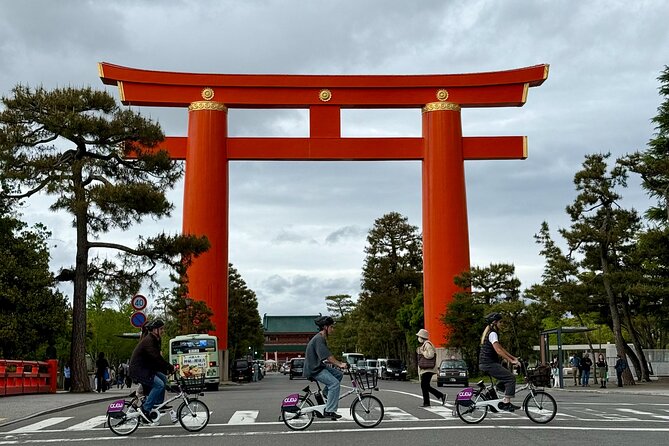
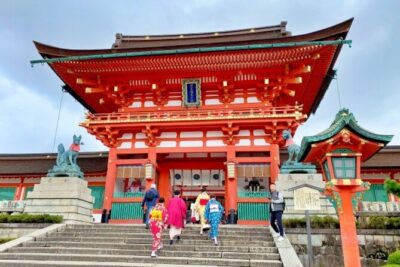
After the canal segments, the tour includes Heian Shrine. The listing highlights its purpose—connected to the transfer of the capital to Heian-kyo—and it calls out the large red torii gate as a major visual highlight.
Heian Shrine is a great middle point: it’s dramatic and photo-friendly, but it also helps you break up the day so the next temple visit doesn’t feel like nonstop “temple mode.”
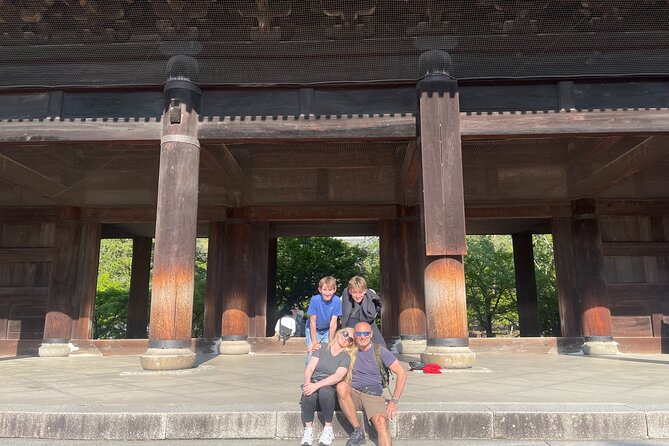
Finally, you’ll reach Nanzen-ji Temple, listed as one of the particularly special sites among Kyoto’s Five Mountains. You get about 20 minutes here, with attention on the main temple and gate, plus the feeling that the precinct has its own gravity.
Admission at Nanzen-ji is listed as free as part of this tour experience, which keeps the day smooth.
Kamo River wind-down: cooling your feet and resetting your legs
To finish, you head to the Kamogawa (Kamo River) area for a short relaxation moment—about 10 minutes. This is where the tour earns its “electric bike sanity” reputation. Your legs are done, and you get a chance to slow your pace for a bit.
There’s even a built-in cooling moment: you’re invited to get your feet in the water at the end to cool down. It’s a small thing, but it makes the tour feel like more than a checklist.
Then you return the bicycle and end back near the start point at 570 Higashishiokōjichō, with about 15 minutes allocated to wrap up.
Price and value: is $99.08 worth 4 hours of Kyoto?
At $99.08 per person, this tour sits in the “reasonable for what you do” category, especially because you’re not paying extra for admissions at the stops listed. The tour includes:
- Helmet
- Bike rental / use of bicycle
- Cycling guide
- A guided route linking multiple major sights
Here’s how I think about value with a tour like this. You’re paying for three things: movement (the e-bike), translation and local context (the guide), and time saved (less backtracking and fewer slow stretches). With Kyoto, those savings add up fast.
You’re also getting a group limit of up to 5 travelers, which usually means less waiting and more direct attention. That can matter as much as the sights themselves.
One more practical value point: most of the tour is structured around short-to-medium stops (like the 20 to 50 minute windows), so you’re unlikely to spend your whole afternoon standing in a single line or fighting crowd flow.
Guide quality matters: the Yuki factor
One theme that pops from the best-rated feedback is the guide experience. Yuki (spelled a few ways in the notes, but the guide name is Yuki) comes across as someone who makes history understandable without turning it into a lecture.
That’s exactly what you want in Kyoto: the facts are interesting, but what you really need is meaning you can use while you’re looking at the gate, the canal, or the old streets. On this tour, the guide stories and pacing are what turn a string of stops into a coherent Kyoto day.
If you care about learning while you move, this tour is built for that.
Who should book this e-bike tour (and who should think twice)
This fits best if:
- You want to see multiple top Kyoto sights in one afternoon without burning your legs.
- You’d rather ride between places than shuffle through crowd-heavy streets.
- You enjoy guided history told in a friendly way while you’re still in motion.
You might think twice if:
- You don’t feel comfortable riding a bicycle in city conditions.
- You’re hoping for long, unstructured wandering at each site. Most stops are time-boxed, so this is more “guided highlight ride” than “stay all afternoon at one temple.”
Also keep in mind the tour requires good weather. If Kyoto’s doing its wet-weather thing, the experience may be moved or refunded depending on conditions.
Should you book it? My decision checklist
Book this tour if you want a Kyoto day that’s efficient without feeling rushed. The combination of e-bike ease, small group size, and a guide who keeps things fun and understandable is a strong formula—especially at the $99.08 price point.
Skip it (or consider another style of tour) if you’re the type who needs lots of unplanned time, or if you’re uncomfortable cycling. Kyoto rewards patience, but you also need a plan that keeps your energy intact.
If you want a guided route that hits the major highlights—Nishi Honganji, Gion, Heian Shrine, Nanzen-ji, and the river reset—this is a smart way to get there.
FAQ
How long is the Kyoto e-bike tour?
It’s about 4 hours (approx.).
What’s the group size limit?
The tour has a maximum of 5 travelers.
What’s included in the price?
The tour includes a cycling helmet, bike rental (use of the bicycle), and a cycling guide.
Where do we meet, and when does it start?
You meet near the Clew share-cycle port in front of Seikouin Wagatazizou, located behind the hotel at 682 Higashishiokōjichō (Times Car Rental area). The start time is 1:00 pm.
Are the temple and stop admissions covered?
The stops in the schedule are listed as admission ticket free.
Is there time at the river during the tour?
Yes. You spend time at the Kamogawa River/Kamo River area, and at the end you can cool down by putting your feet in the water.
Can children join the tour?
Children under 10 can participate if they are taller than 140 cm and they can ride a bicycle, and the same fee applies.