REVIEW · KYOTO
Kyoto: Kintsugi Jewelry Workshop with Natural Stones
Book on GetYourGuide →Operated by Kintsugi Jewelry engrace · Bookable on GetYourGuide
Gold repairs in a quiet Kyoto townhouse. This Kintsugi jewelry workshop turns broken ceramics into wearable art using synthetic lacquer and gold powder, plus a colorful mix of natural stones. I like that you’re not just watching a demo—you’re shaping a one-of-a-kind piece. One drawback to plan for: it is not suitable for wheelchair users and the atelier is tucked into a narrow alley with no vehicle access.
What really wins me over here is the calm, hands-on pace. You work in a small group of up to 10, with an instructor who can teach in English and Japanese (often identified as Natsuka/Natsuko in participant notes). You’ll also be close to the big Kyoto sights, but this feels like a pause from them, especially when you want something creative to do without chasing tickets.
In This Review
- Key Things You’ll Actually Notice
- Why Kintsugi Jewelry Makes a Better Souvenir Than a Postcard
- Finding the Atelier Near Fushimi Inari (Without Stress)
- Walk In, Pick Your Materials, and Start Designing
- The Kintsugi Method: Synthetic Lacquer and Gold Powder
- How Your Piece Becomes Wearable (Not Just a Repaired Fragment)
- The 150-Minute Flow: Small Group Pace, Real Help
- Price and Value: What $106 Gets You in Kyoto Craft Time
- Where This Fits in Your Kyoto Day (Including Rainy Days)
- Who Should Book This Kintsugi Workshop—and Who Should Skip It
- Should You Book It?
Key Things You’ll Actually Notice
- A 100-year-old townhouse setting: workshop atmosphere matters, and this one is in a traditional Kyoto home near Fushimi Inari.
- Upcycled pottery meets natural stones: you pick shards and gems to build your design, not just apply a preset look.
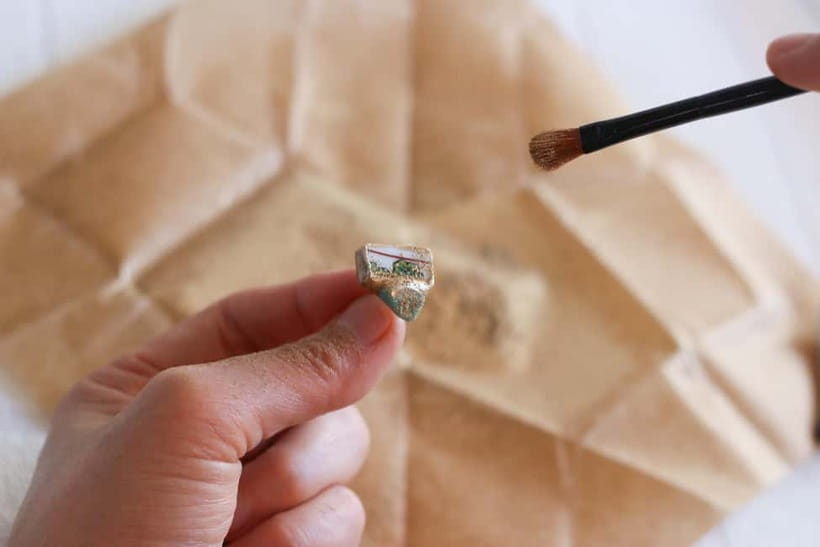
- Gold-lacquer technique for jewelry: the method is kintsugi, but the result is wearable accessories.
- Pick your accessory shape: earrings, rings, necklaces, brooches, tie pins, cufflinks, and more.
- Small-group attention: with a group cap of 10, you get real guidance as you go.
- Take-home same day: you leave with your handmade piece(s) the same day you make them.
Why Kintsugi Jewelry Makes a Better Souvenir Than a Postcard
Kintsugi is built on a simple idea: damage doesn’t have to erase the story. Instead of hiding cracks, you “repair” with lacquer and gold powder so the break becomes part of the design. In this workshop, that philosophy lands in a practical way—you make jewelry that wears your chosen materials and the repaired history of the pottery shard.
That’s what I find refreshing for visitors. Kyoto has plenty of beautiful things to buy. But a crafted piece you build yourself usually feels more personal, and it’s easier to justify the weight in your suitcase.
You’ll also get context around the cultural meaning of kintsugi and related Japanese concepts like wabi-sabi. The goal isn’t to turn it into a lecture—it’s to help you understand why the gold shows up where you might expect it to vanish.
You can also read our reviews of more tours and experiences in Kyoto

Finding the Atelier Near Fushimi Inari (Without Stress)
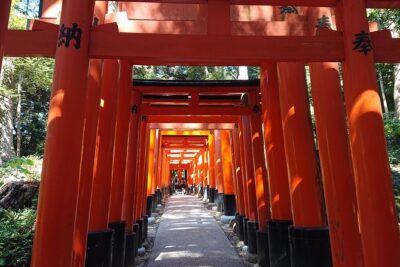
The workshop happens in a traditional 100-year-old Kyoto townhouse, just a short walk from Fushimi Inari Taisha (about a 3-minute walk, so it’s close enough to pair with shrine time). You’ll meet near Keihan Ryukoku Daimae-Fukakusa Station (about a 5-minute walk) or JR Inari Station (also about a 5-minute walk).
A practical heads-up: there’s no parking, and the street in front of the atelier is a narrow alley that isn’t set up for cars. If you’re coming by taxi, plan on walking the last stretch. Also look for the entrance feature—there’s a white engrace curtain hanging at the front.
If you’re trying to time it with your Kyoto day, this is handy. You can do the workshop even on days when you don’t want to spend hours in lines, then stroll toward Fushimi Inari before or after you create.
Walk In, Pick Your Materials, and Start Designing
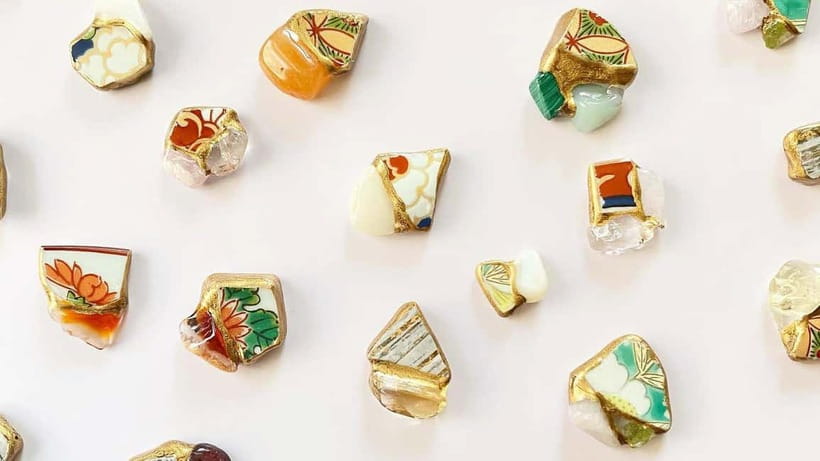
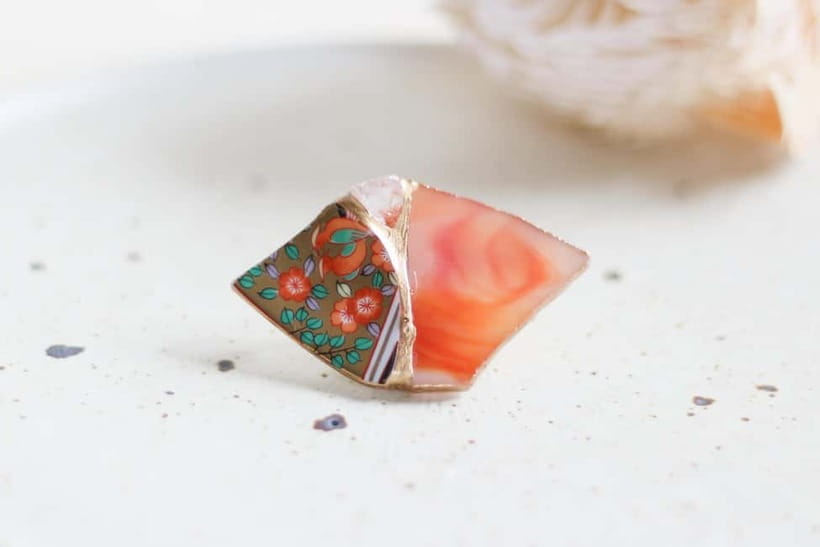
Once you’re inside, the experience moves fast in a good way: you choose what you’ll build with. You’ll work with broken pottery shards and combine them with colorful natural stones (plus options like shells and pearls, and even stained glass). It’s upcycling, but it doesn’t feel like a craft project that looks “recycled.” It feels like art you can wear.
You’ll also be able to choose from pottery types such as:
- Arita
- Karatsu
- Oribe
- Kyoto
- Shigaraki
- Hagi
That matters because each pottery style has its own visual personality—glazes, shapes, and color patterns that affect how your final jewelry looks once the gold lines highlight the repaired edges.
Then you choose the accessory style. Options include earrings, rings, necklaces, brooches, tie pins, cufflinks, and more. The practical advantage is that you can aim for a souvenir you’ll actually wear or gift. Earrings make great travel keepsakes, and brooches are surprisingly versatile if you like styling your outfits with one special piece.
The Kintsugi Method: Synthetic Lacquer and Gold Powder
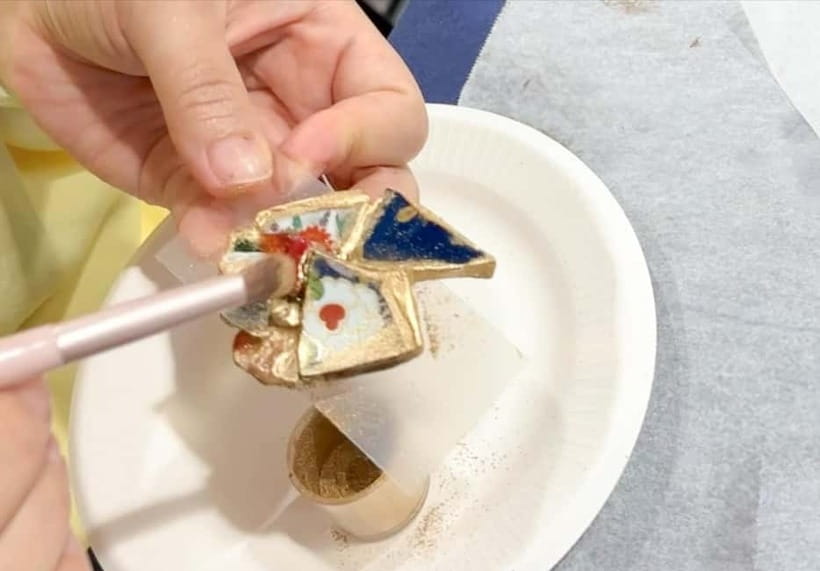
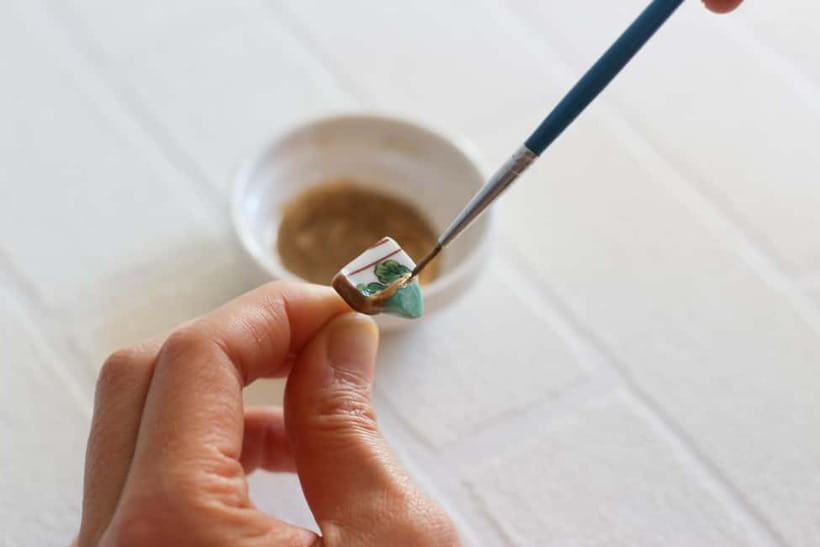
Kintsugi is usually associated with ceramic repair. Here, the same repair logic becomes the decorative frame for jewelry. You’ll use synthetic lacquer (not natural resin) and gold powder to join and finish the pieces.
That synthetic detail is more than trivia. It’s used to reduce the risk of allergic reactions, which is important if you’re sensitive to materials you might not usually handle on vacation.
In terms of what you’ll do during the 150 minutes: you’ll follow instructor guidance through the steps to prepare the shard joins and apply the lacquer-and-gold finish where the break needs to be “repaired.” The workshop is structured so you’re not guessing. You get step-by-step help, and the pacing is relaxed rather than rushed.
And yes, you’re working with tiny, precious-feeling components. That’s part of the charm. It makes the time feel focused, almost meditative—especially in a calm Kyoto townhouse setting.
How Your Piece Becomes Wearable (Not Just a Repaired Fragment)
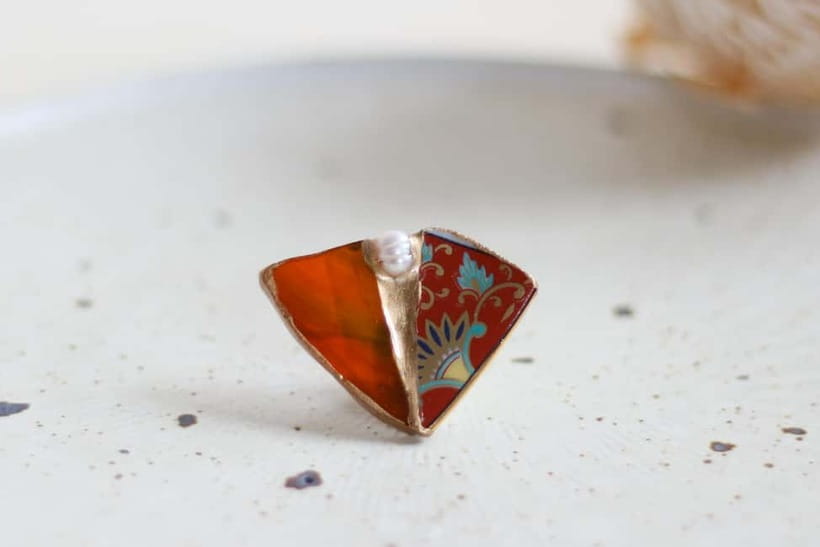
The workshop’s biggest trick is turning a repaired ceramic fragment into a finished accessory. You’re not leaving with a “fix-it” ceramic look. You’re making jewelry designed to sit on a body—something that can be a ring, earring, necklace pendant, brooch, or cufflink.
Because you pick:
- the pottery shard character
- the stone colors (and other accents like pearls or shells)
- the accessory type
…your final piece is genuinely one-of-a-kind. Even if two people choose similar materials, the way the shard breaks (and how the gold traces it) changes the result.
This is also where the teaching style matters. A patient instructor helps you slow down and make design choices that look intentional, not accidental. In notes from participants, Natsuka/Natsuko is described as calm and giving plenty of time for design work.




The 150-Minute Flow: Small Group Pace, Real Help
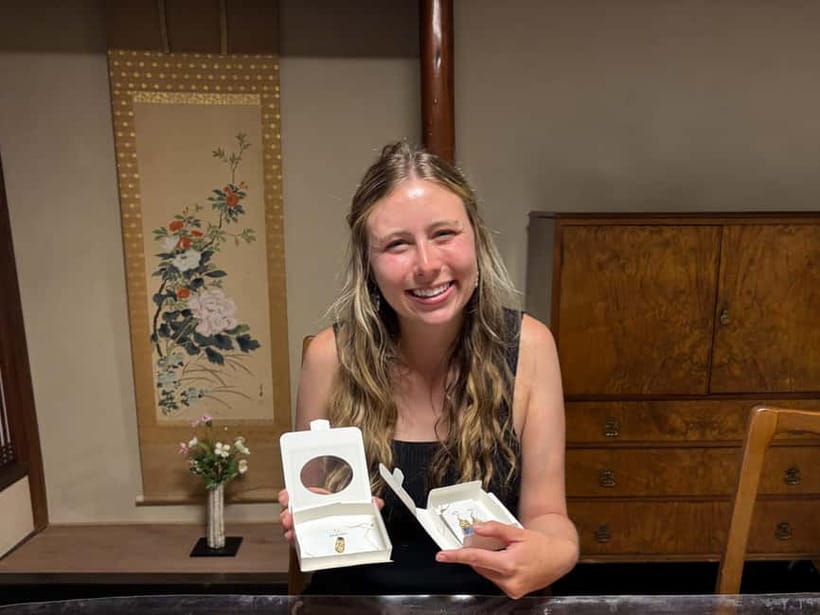
This class runs 150 minutes and is capped at 10 participants, which is a sweet spot for craft work. With a larger group you’d spend half the time waiting. Here, you’re more likely to get the one-on-one nudges you need as you handle materials and decide where to place stones.
Language support is practical: the instructor teaches in English or Japanese, so you’re not stuck playing charades with craft supplies.
You’ll also have a workshop rhythm that feels break-friendly. Some participants mention refreshments, and the overall tone is relaxed rather than production-line. For Kyoto, that’s a win. After you’ve walked Fushimi Inari in crowds (or stood through museum lines), it’s nice to sit down somewhere quiet and make something with your hands.
Price and Value: What $106 Gets You in Kyoto Craft Time
At $106 per person for 150 minutes, this is not the cheapest thing you can do in Kyoto. But you’re buying more than entertainment.
You’re paying for:
- guided instruction (including history and meaning of kintsugi)
- materials like synthetic lacquer and gold powder
- choice of upcycled pottery shards and natural stones (plus pearls/shells/stained glass options)
- a finished take-home jewelry souvenir made in the session
One detail that strongly affects value: participants often leave with more than one piece. Your workshop results depend on design choices and time you spend, but the format is clearly designed so you don’t just make a single tiny accent. You get to create jewelry you’ll actually use as jewelry.
So for the money, you’re getting a craft experience with real materials and a wearable outcome—plus a story you can explain in seconds.
Where This Fits in Your Kyoto Day (Including Rainy Days)
This workshop is a great “slot” activity because it’s close to Fushimi Inari Taisha and takes about 2.5 hours. You can:
- pair it with early shrine time before it gets heavy
- treat it as an afternoon plan if the weather is turning
- use it as your calmer option when you’re already Kyotoed out
Several people describe it as a good way to step away from the bustle of Kyoto and slow down. That checks out based on what the workshop actually does: it’s hands-on, guided, and structured around design time—not just observation.
If you’re thinking about what to wear, go for comfy clothing you don’t mind getting a little craft-dust around (even if the workshop is careful). You’ll be handling small pieces and concentrating, so comfort beats fashion here.
Who Should Book This Kintsugi Workshop—and Who Should Skip It
This is a strong match if you:
- want a Kyoto souvenir with a personal connection
- like hands-on crafts more than museum-style experiences
- enjoy jewelry making or are curious about it
- want a cultural craft lesson that’s tied to what you create (history plus making)
It’s also a good choice for couples or friends who enjoy creating together in a small group—150 minutes is long enough to feel productive, but not so long it becomes a chore.
Skip it (or at least think hard) if:
- you use a wheelchair, since it is not suitable for wheelchair users
- you need parking or step-free access that can handle vehicles near the front door (the alley and lack of parking make that difficult)
If you have allergies or sensitivities, the use of synthetic lacquer to avoid allergic reactions is a positive detail. Still, if you have major chemical sensitivities, it’s smart to ask the provider what’s used and what precautions are in place before you commit.
Should You Book It?
I think you should book this workshop if you want a Kyoto experience that’s calm, creative, and actually produces something you can wear or gift. The mix of upcycled pottery shards plus natural stones gives your piece a look that feels distinctly Japanese and personal, not generic.
It also works well if you’re tired of chasing the same tourist circuit. You’ll be near the famous shrine area, but you’ll spend your time in a quiet workshop where you control the design.
If you want the absolute cheapest activity, you might pass. If you want a thoughtful craft experience with real materials, guidance in English or Japanese, and a take-home jewelry outcome from a small group—this is a very solid pick.