REVIEW · KYOTO
Kyoto Magical Night English Tour: Gion & Fushimi Inari Shrine
Book on Viator →Operated by OTAKU hopper · Bookable on Viator
Torii gates glow after dark. This Kyoto Magic Night walk strings together Fushimi Inari torii and the quieter lanes of Gion, with an English guide who turns the usual sightseeing list into meaningful stops and photos along the way.
Two things I really like: the focus on shrine-and-temple context (so you understand what you’re seeing), and the fact that professional photos are taken during the walk.
One drawback to plan for: it’s a walking experience. You’ll be on your feet for the full 2.5 hours, so wear good shoes if your legs run short.
In This Review
- Key Highlights Worth Marking on Your Kyoto Map
- Kyoto After Dark: Why This Walk Works Better Than a Day Tour
- Meeting Point and Getting Around (Without Stress Spirals)
- Fushimi Inari-taisha at Night: Torii Gates, Sacred Rhythm, and Photos
- Gion on Foot: Hanamikoji Street and the Geisha District at Night
- Yasui-Konpiragu and Yasaka Pagoda: Big Sacred Energy in Small Stops
- Sannenzaka, Ninenzaka, and Nene-no-Michi: The Walk That Feels Like a Time Machine
- Yasaka Shrine Finale: Prosperity Prayers and the Meaning Behind the Headquarters
- Price and Value: What $26.43 Really Covers in Kyoto
- Guides You Might Meet: What Makes Them Feel Worth It
- Who This Tour Fits Best (And Who Might Want Something Else)
- Should You Book the Kyoto Magical Night English Tour?
- FAQ
- How long is the Kyoto Magical Night English Tour?
- Is admission to the shrines included?
- What’s included in the tour price?
- What is not included?
- Is the tour mostly walking?
- Where do we meet, and where does the tour end?
- Is it private, and what’s the cancellation window?
Key Highlights Worth Marking on Your Kyoto Map
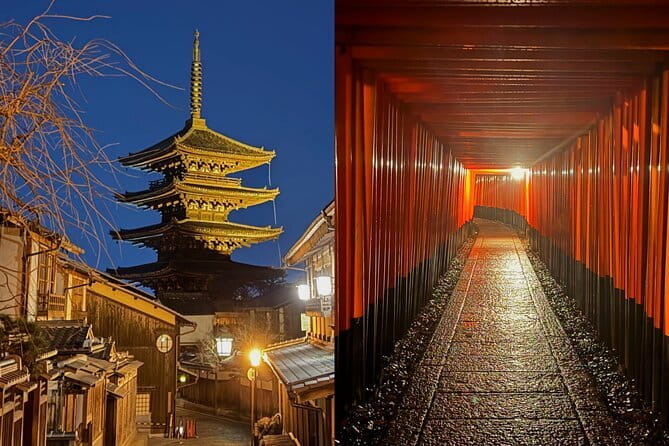
- Fushimi Inari at night (about 1 hour) to experience the torii tunnel with a calmer pace than daytime.
- Gion’s Hanamikoji Street for a quick look at historic machiya houses and a chance to spot geisha or maiko.
- Shrine etiquette explained as you go, including practical ways to pay your respects.
- Yasui Konpiragu + the bad-relationship theme, with a stop tied to breaking negative ties.
- Yasaka Pagoda (Hokanji Temple), including the wow factor of Japan’s famed nail-less wooden construction story.
- End-to-end photo help, with the guide taking professional shots during the tour.
Kyoto After Dark: Why This Walk Works Better Than a Day Tour
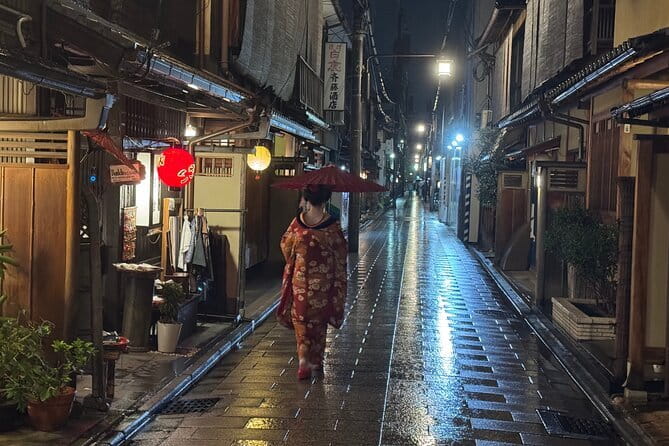
Kyoto is a different city when the sun goes down. The big sights still matter, but the mood shifts from line-waiting to wandering. This tour is built for that night feeling: glowing shrine spaces, softer street lighting, and the kind of guided pace that helps you actually notice details.
The structure matters too. Instead of cramming in ten major temples, you get fewer stops with time to look up, read the scene, and understand what you’re seeing. That is the difference between a photo-collecting trip and a trip where Kyoto sticks with you.
I also like that the tour is designed around walking. You’re not stuck staring out a bus window. You’re moving through Higashiyama’s streets in a way that feels like you’re being shown the neighborhood, not transported through it.
You can also read our reviews of more evening experiences in Kyoto


Meeting Point and Getting Around (Without Stress Spirals)
You meet at the Statue of Izumo-no-Okuni in Kawabatacho, Higashiyama Ward, Kyoto. The tour also ends back at the same meeting spot, which is handy if you plan to eat nearby after the walk.
A big practical note: public transportation is not included, and the fare is listed as ¥480 per person. So if you’re budgeting, treat this as a guided walking tour plus transit cost. The upside is you get “real” Kyoto movement—short transfers and lots of time on foot.
It’s also a private tour/activity, meaning it’s only your group. Even when the usual tour runs with a group setup, the private nature keeps things calmer and easier to manage, especially for questions or slower moments.
Finally, the tour uses a mobile ticket. That tends to be simpler than juggling paper receipts in a crowded station.
Fushimi Inari-taisha at Night: Torii Gates, Sacred Rhythm, and Photos
Fushimi Inari is the reason a Kyoto night walk sounds worth it. The stop runs for about 1 hour, and that length is just right. You’re not rushing through the famous torii gates, and you’re not stuck in one exact spot either.
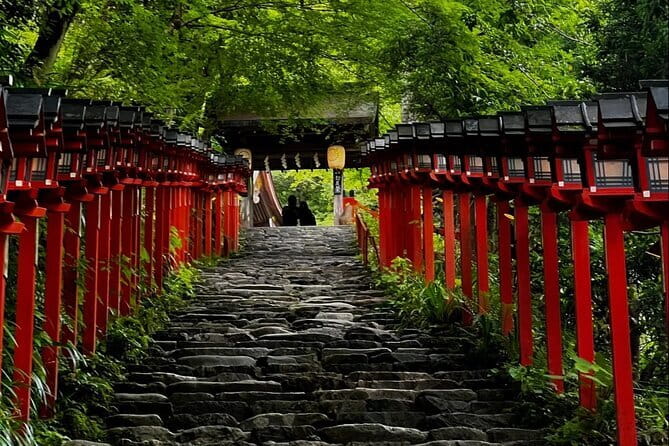
At Fushimi Inari-taisha, you’re stepping into a shrine complex dedicated to Inari, the god of rice and prosperity. The standout feature is the famous chain of vibrant red torii gates that form paths up Mount Inari. At night, those gates glow and create a strong sense of depth—so the location doesn’t just look iconic, it feels like you’re inside a story.
What I love about having a guide here: it’s not only about where to stand for photos. You also learn how to approach the space respectfully—what you might notice, how the shrine space works, and what the place means beyond the postcard.
One extra tip from past guests: if there’s a wishing custom at the spot, it can be worth bringing a few coins. (That kind of small detail is the difference between seeing the shrine and doing the shrine.)
Gion on Foot: Hanamikoji Street and the Geisha District at Night
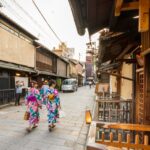
After Fushimi Inari, the tour pivots into Gion. You stop at Hanamikoji Street first, then move through Gion itself. Hanamikoji is known for traditional teahouses and the wooden machiya houses that line the area. It’s also one of the best places in Kyoto to look for geisha and maiko appearances, even though sightings are never guaranteed.
This is a great moment for night photos. During the day, Gion can feel crowded and loud. At night, the street lighting softens the scene and your photos tend to look more like Kyoto and less like a parade route.
Practical reality check: this portion is short—about 10 minutes at Hanamikoji and another 10 minutes for Gion. That’s enough time to get oriented, walk the main flow, and absorb the vibe, but it’s not a long alley-hunt session. If you want deeper wandering, think of this tour as the setup that makes independent exploration easier.
Yasui-Konpiragu and Yasaka Pagoda: Big Sacred Energy in Small Stops

Next up, you’ll hit Yasui-Konpiragu, a Yasui Konpira Shrine stop focused on ending bad relationships. The idea is simple: you come to pray for severing negative ties and creating better ones going forward. Even if you’re not super into spiritual rituals, the meaning adds weight to the visuals.
There’s also a specific story guests often bring up here: the relationship stone at Yasui Konpiragu. If you see an opportunity to interact with it, do it carefully and calmly. It’s the kind of moment that turns a pass-by shrine into a memorable stop.
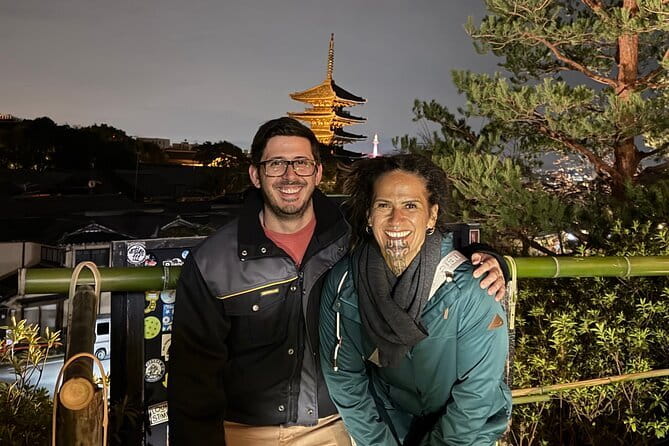
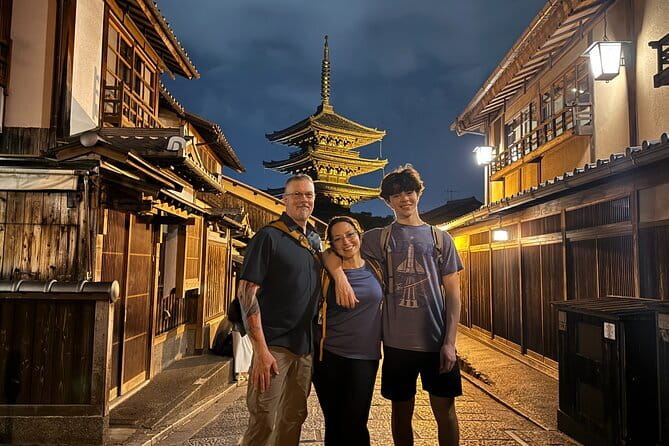
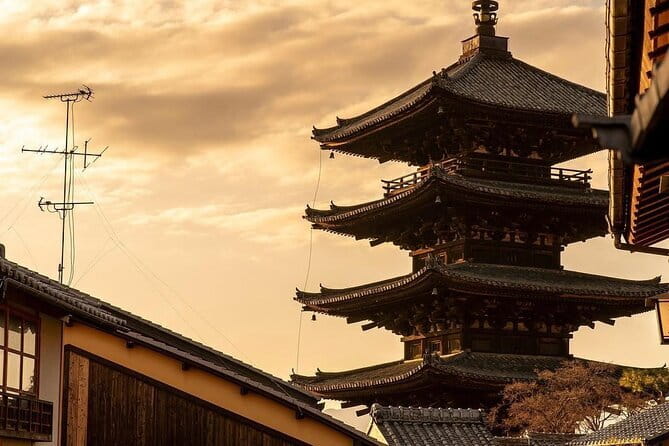
After that, the tour moves to Yasaka Pagoda (Hokanji Temple). The pagoda is famous for its scale, and the tour framing includes the detail that it’s known as Japan’s oldest wooden structure built without using nails. Whether or not that claim is the first thing you notice, it’s a good detail to keep in mind when you look up. The size becomes the point.
This is a stop where your guide’s pacing helps. You don’t just walk by; you get a moment to look at the structure and understand why locals treat it like a Kyoto symbol.




Sannenzaka, Ninenzaka, and Nene-no-Michi: The Walk That Feels Like a Time Machine
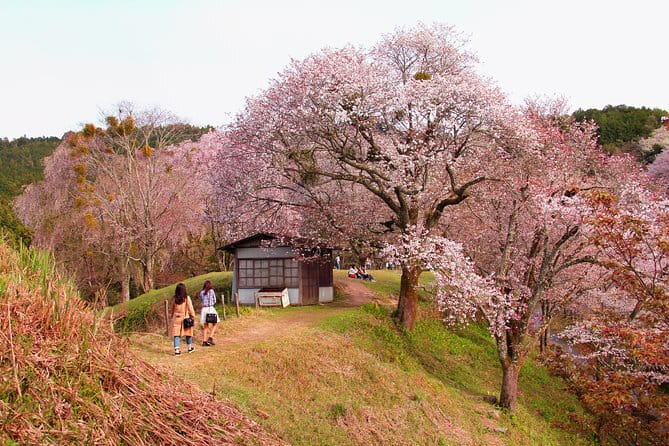
Here’s where the tour turns from major landmark mode into old-street mode.
You’ll walk the Sannenzaka and Ninenzaka stone-paved paths (about 15 minutes). These streets are lined with traditional shops and restaurants housed in historic-style wooden buildings. The key thing I like: the street isn’t just pretty. It’s also a physical reminder that Kyoto’s culture often lives in the ordinary routes people used every day.
Then the tour continues to Nene-no-Michi (about 15 minutes). Nene no Michi is named after Nene, wife of a powerful Japanese shogun. The path is described as a calmer route, past historic temples, and it works well as a breather after the more shopping-focused lanes.
What you’ll get from these sections is momentum with purpose. You’re not only seeing shrines; you’re seeing the kind of streets that connect them. This matters because Kyoto’s culture isn’t trapped inside gateways. It’s in the walking paths between them.
One note for comfort: these areas are great for photos, but they involve steady walking on uneven or textured surfaces. So again: shoes matter.
Yasaka Shrine Finale: Prosperity Prayers and the Meaning Behind the Headquarters
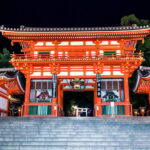
The tour ends at Yasaka Shrine (about 15 minutes). It’s the headquarters of about 2,300 related shrines across Japan, which is a scale detail that helps the final stop feel bigger than a single location. Yasaka Shrine is also dedicated to gods of prosperity and protection, so your final prayers are about more than a tourist photo.
If you want a simple takeaway, it’s this: the final stop gives you a sense of closure. You started with Inari and the torii gates, you moved through Gion and the historic walkways, and now you land at a major shrine with a broader network across Japan. It feels like the tour’s themes come together.
The time here is long enough for a calm look, not long enough to drag. That’s a good balance when you’re on a tight night schedule.
Price and Value: What $26.43 Really Covers in Kyoto
At $26.43 per person, this tour sits in the budget-friendly category for guided Kyoto nights. Here’s why it can feel like good value:
- You get a passionate local English-speaking guide who explains what you’re seeing, not just where to go.
- The tour includes admission fees for all temples and shrines. Many shrine visits are free in practice, but having it bundled reduces friction.
- You get professional photos taken during the tour, which can save time and effort later. Multiple guests commented that the photo turnaround was quick, and one guest specifically noted they received many photos within about an hour.
The main extra cost is transit: ¥480 per person for public transportation. Food is also not included. So if you’re comparing to a self-guided walk, you’re paying for guidance, context, and photo help.
My honest take: if you like understanding the places you visit, a guided night walk at this price is a strong deal. If you mainly want to wander for hours with zero structure, you might feel limited by the 2.5-hour format.
Guides You Might Meet: What Makes Them Feel Worth It
A major reason this tour earns such high scores is the guides. Names that show up in recent experiences include Ikki, Yui, Yuri, Yuki, Mariko, and Joi.
Across those guide stories, the common themes are practical:
- Guides are friendly and easy to talk to.
- Explanations are delivered in a way that helps you understand the difference between shrines and temples.
- Guides don’t just point. They show how to pay respects.
- Many guides focus on photo spots and take photos during the walk, including groups in low light.
One more detail I like: some guides use visual aids, such as laminated charts with explanations and graphics. That turns tricky shrine rules into something you can follow without anxiety.
Who This Tour Fits Best (And Who Might Want Something Else)
This tour is built for people who want a strong Kyoto orientation fast. You’ll see major sights in Higashiyama, get context for shrine culture, and finish ready to keep exploring.
It’s also a good fit if you want your night to feel efficient. With about 2 hours 30 minutes total, you can build in dinner plans right afterward without needing a second plan.
Where you should consider alternatives:
- If you dislike walking and prefer slow, long exploring with lots of breaks, the packed stop timing may feel a bit intense.
- If you already know shrine customs and just want free-form wandering, you may not need the guided structure.
But if you’re like most first-timers—curious, a little overwhelmed by the choices, and wanting Kyoto to make sense—this format is a smart way to start.
Should You Book the Kyoto Magical Night English Tour?
Book it if you want:
- Fushimi Inari at night without rushing through it
- A guided walk that helps you understand shrines, rituals, and what to look for
- A Gion night stroll that feels calmer than daytime
- Professional photos without managing a camera yourself
Skip it or consider a different style if:
- You’re expecting long, slow exploration at each street
- You want food included, because it isn’t
- You hate paying separate transport costs
For most people, this tour hits a sweet spot: iconic Kyoto after dark, guided context that makes it more meaningful, and photos to take home.
FAQ
How long is the Kyoto Magical Night English Tour?
It runs for about 2 hours 30 minutes.
Is admission to the shrines included?
Yes. Admission fees for all temples and shrines are included, and the tour lists admission as free for each stop.
What’s included in the tour price?
You get a passionate local English-speaking guide, admission fees for temples and shrines, and professional photos taken during the tour.
What is not included?
Public transportation fare is listed as ¥480 per person, and food and drinks are not included.
Is the tour mostly walking?
Yes. It’s designed as a walking experience with plenty of time on foot, and it recommends moderate physical fitness.
Where do we meet, and where does the tour end?
You meet at the Statue of Izumo-no-Okuni in Kawabatacho, Higashiyama Ward, Kyoto, and the tour ends back at the same meeting point.
Is it private, and what’s the cancellation window?
It’s private, with only your group participating. You can cancel for a full refund up to 24 hours in advance.