REVIEW · KYOTO
Nara 8hr Private Tour – Kyoto DEP. with Licensed Guide
Book on Viator →Operated by Japan Guide Agency · Bookable on Viator
Nara can feel like a blur on your own. This private 8-hour Kyoto-to-Nara tour gives you a focused hit of the city’s top sights with a guide who plans around what you want. The goal is simple: pick 3 to 4 stops, then spend the day walking smarter, not just moving faster.
What I like most is the way the itinerary turns huge “must-sees” into an actual plan. With a guide, you’re not guessing where to go next or how to group places, and you get history tied to what you’re looking at. On days when the main temple is packed, a good guide helps you still find the quiet details.
My other big win is how much you can fit in without feeling like a sprint. The day is built around a set pace (about 30 minutes per stop), and people consistently praise guides for being organized and ready—names that come up include Junichi, Haru, Ken, Yuka, and Taku. One thing to consider: entrance fees and lunch are not included, and it’s a walking day with transit you’ll pay for, plus big sites like Todaiji can be crowded with school groups.
In This Review
- Key things that make this Nara tour work
- Why Nara feels bigger with a guide
- Getting there from Kyoto: walking meetup and paying transit your way
- Stop-by-stop: what you can see in Nara (and what to watch for)
- Todai-ji (Great Eastern Temple)
- Nara Park
- Kasuga Taisha Shrine
- Wakakusayama Hill
- Horyu-ji Temple
- Naramachi (Edo-era merchant district)
- Kofuku-ji Temple
- Yakushiji Temple
- Shin-Yakushiji Temple
- Nara National Museum
- Heijō Palace Site Historical Park
- Toshodai-ji
- Isuien Garden
- Yoshikien Garden
- The biggest advantage: your guide shapes the day
- Crowds, rain, and the reality of 30-minute stops
- Lunch and tickets: where your budget can quietly add up
- Price and value: what $201.51 buys you
- Who this Nara tour suits best
- Should you book this private Nara day trip?
- FAQ
- How long is the Nara private tour from Kyoto?
- Is this tour customizable?
- How many people are on this tour?
- Where do we meet the guide?
- Is pickup available?
- Are entrance fees included?
- What about transportation to and from Nara?
- Is lunch included?
- Is there a mobile ticket?
- Can I cancel for free?
Key things that make this Nara tour work
- Custom route: choose 3 to 4 sites from a menu of temples, shrines, gardens, museums, and old town streets
- Licensed, English-speaking guidance: you’ll get real context at each stop, not just directions
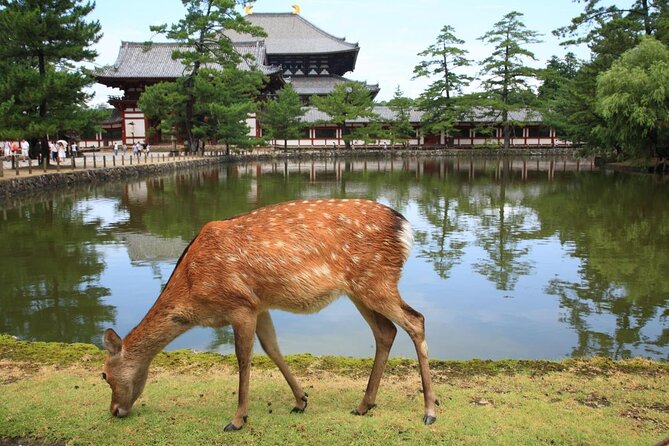
- Nara Park deer time: built in, so you don’t have to plan around it
- Time-saving navigation: a guide helps you squeeze more meaning into the same hours
- Garden options included: if you like calm settings, you can trade in a garden stop for another temple
- Private setup: only your group, so your interests can genuinely drive the day
Why Nara feels bigger with a guide
Nara is only a short trip from Kyoto, but it packs layers: ancient capitals, Buddhist temples, Shinto shrines, and that very Nara flavor of deer roaming near the main sights. If you self-plan, you end up bouncing between disconnected locations and losing time to trains, ticket lines, and “wait, where do we go next?”
Here, the tour is designed around your attention span. You select a small number of stops, and the guide’s job is to make those stops add up. If you care about architecture and how temples evolved, that changes what you should prioritize. If you just want the biggest icons plus a stroll through old streets, the guide can shape the day around that too.
You can also read our reviews of more guided tours in Kyoto
Getting there from Kyoto: walking meetup and paying transit your way
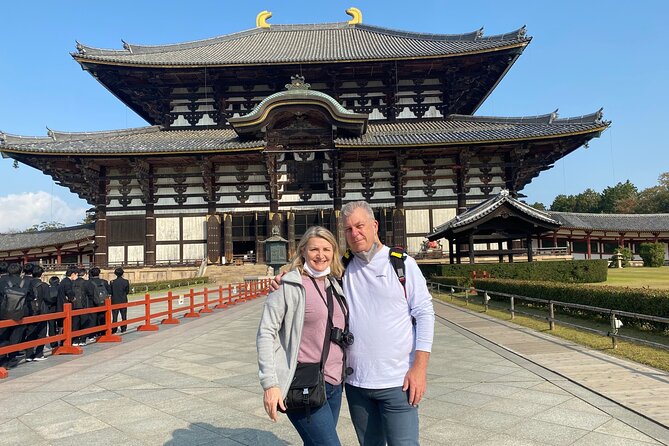
This is a walking tour, and you meet your guide on foot within a designated area in Kyoto. Pickup is offered, but the tour isn’t described as a private vehicle service. Transportation fees aren’t included.
So the practical mindset is: plan to use public transportation, and budget for those transit costs on top of the tour price. The upside is you’re not tied to a car schedule, and the guide can still handle the route logic once you’re in place.
I’d also treat the start time as important. Since you’ll only have about eight hours total and each stop is timed, leaving Kyoto with enough buffer for trains makes the whole day feel relaxed.
Stop-by-stop: what you can see in Nara (and what to watch for)
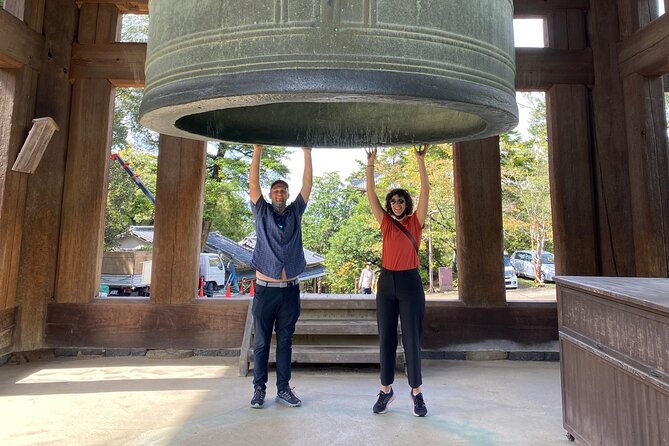
You’ll choose 3 to 4 from this list, so think of these as your menu. Each stop is generally allotted about 30 minutes, which is great for highlights—just know it’s not long enough for a slow, sit-and-stare day at every site.
Todai-ji (Great Eastern Temple)
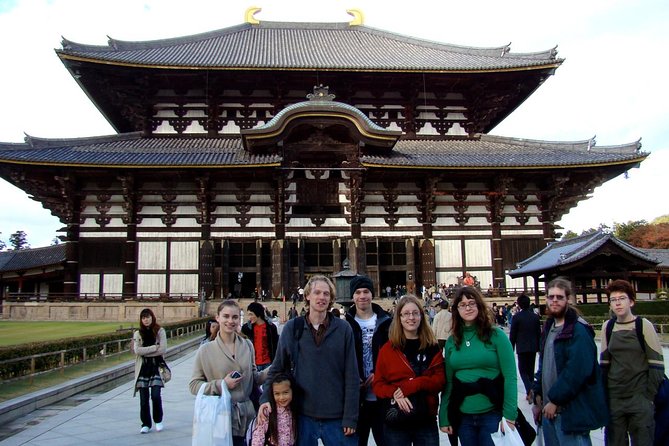
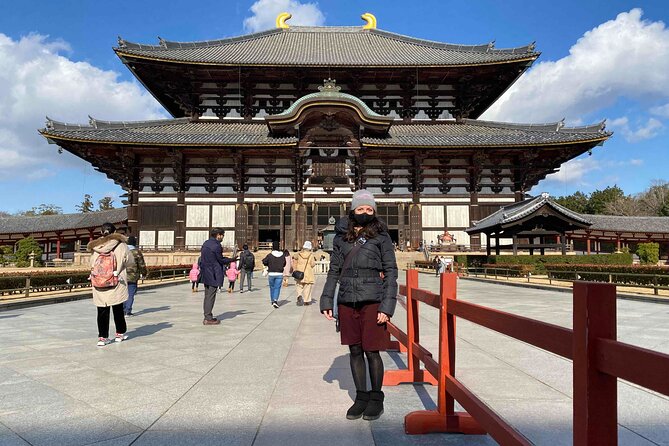
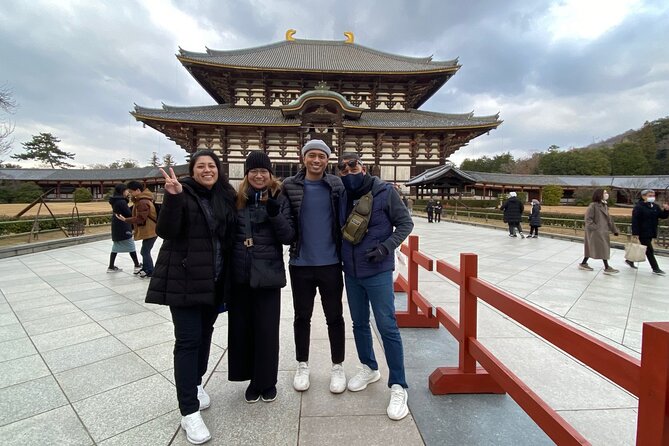
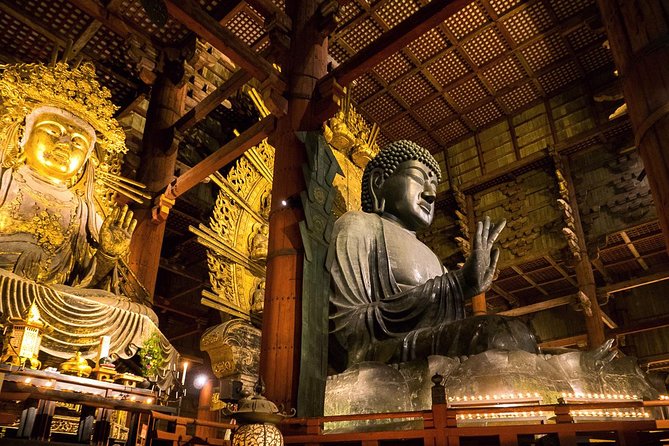
Todai-ji is famous for being one of Japan’s most important historical temples, originally built in the 700s as a major Buddhist landmark. This is the stop where your brain goes from photos to scale—especially once you reach the main hall area. It’s also one of the more popular spots, and it can get crowded, including with school groups, so you may want to arrive ready to move efficiently.
Admission ticket is not included, so check your spending for this one.
Nara Park
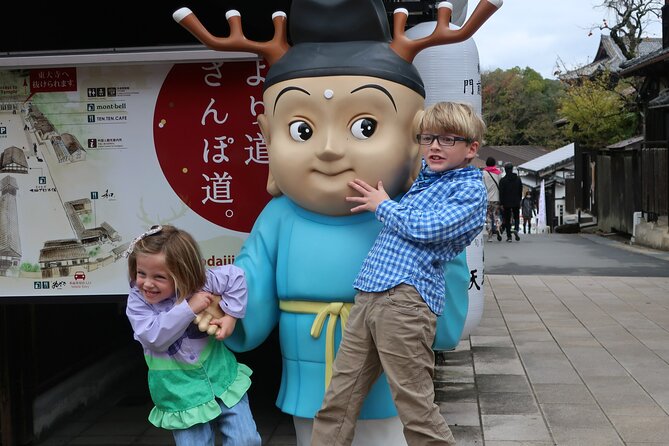
This is where Nara does its best trick: free-roaming deer in the middle of central Nara’s main sightseeing zone. Even if you’ve seen deer before, it’s different here because the animals are part of the setting around the temples.
Nara Park is listed as free, so it’s an easy win for value. It’s also a good place to take a breather between major temple stops.
You can also read our reviews of more private tours in Kyoto

Kasuga Taisha Shrine
Kasuga Taisha is one of Nara’s best-known shrines, dedicated to the deity seen as a protector of the city. The shrine is timed into the classic Nara circuit, and a guide helps you notice what’s meaningful beyond the postcard look.
Admission is free for this stop, which helps keep the day’s costs under control.
Wakakusayama Hill
Mount Wakakusayama is the grass-covered hill behind Nara Park, and it’s basically the “views and pacing” option. If you want a break from temple interiors and a chance to see Nara spread out, this is a natural choice.
Admission ticket is not included. Also, because it’s a hill, wear shoes that handle uneven ground and consider how much time you want for walking versus photo stops.
Horyu-ji Temple
Horyu-ji is one of Japan’s oldest temples and is tied to Prince Shotoku and early Buddhism in Japan. If you love early architecture and history, this is a strong addition because it’s a different “era feeling” compared with the big Nara icons.
Admission ticket is not included. It’s a top pick if your group wants more depth on early Buddhism rather than only the most famous Buddha views.
Naramachi (Edo-era merchant district)
Naramachi is where you slow down and see Nara as a lived-in city, not only a religious monument. Traditional houses and preserved structures make it easier to understand how the city’s merchant past shaped its streetscape.
Admission is free. It’s a good choice if your group includes people who enjoy strolling, cafés, and photos more than museum-style reading.
Kofuku-ji Temple
Kofuku-ji connects to the powerful Fujiwara clan and the aristocratic era of Nara and Heian Japan. It’s also known for major temple structures like pagodas, so it works well if you want visual variety beyond one main hall.
Admission ticket is not included.
Yakushiji Temple
Yakushiji was built in the late 700s, connected to Emperor Tenmu and the recovery of his wife. The temple’s strictly symmetric layout makes it a great place for architectural observation—look for how the space is organized rather than treating it like just another “temple photo.”
Admission ticket is not included.
Shin-Yakushiji Temple
This is the Shin-Yakushiji option, also tied to Yakushi Buddha, the patron of medicine in Japanese Buddhism. If you like thematic religion (medicine, healing beliefs, how shrines and temples focus on specific figures), this stop can add context.
Admission ticket is not included.
Nara National Museum
If your group wants to understand what you’re seeing, this museum can be a helpful anchor. It focuses primarily on Japanese Buddhist art and was established in the late 1800s.
Admission ticket is not included. It’s also a smart swap if you want fewer outdoor crowds and more interpretation.
Heijō Palace Site Historical Park
This is the “capital history” option. Nara served as Japan’s capital for much of the Nara period, known as Heijō-kyo, and the palace site is the reminder that this was once a full political hub.
Admission ticket is not included. It’s a good choice if you’re interested in why temples and shrines were placed where they were.
Toshodai-ji
Toshodai-ji is tied to Ganjin, a Chinese priest invited to Japan who helped train priests and strengthen Buddhist practice. If you like the cross-cultural side of early Japan—people, ideas, and routes moving across borders—this stop gives that angle.
Admission ticket is not included.
Isuien Garden
Isuien is a Japanese garden that uses borrowed scenery, including views tied to Todaiji’s Nandaimon Gate and Mount Wakakusayama. If you want a calmer change of pace between temples, gardens are one of the best places to recharge.
Admission ticket is not included.
Yoshikien Garden
Yoshikien is another garden option, named after the nearby Yoshikigawa River. It’s a straightforward pick if your group wants green space and gentle walking rather than major buildings.
Admission ticket is not included.
The biggest advantage: your guide shapes the day
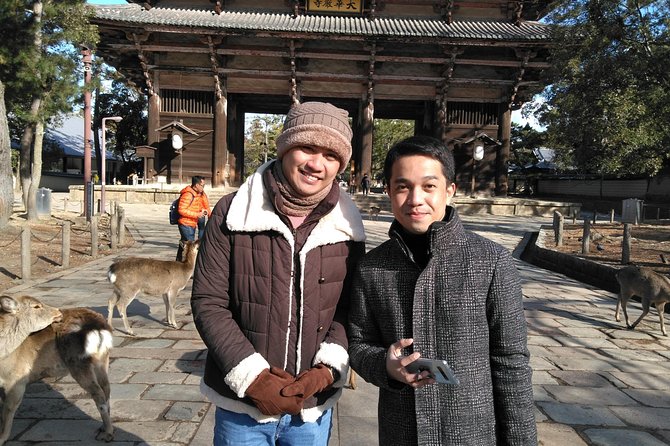
Here’s what the best guides do on this kind of Nara route: they connect the dots. The stops are famous, but the meaning can feel scattered unless someone explains the thread—Buddhism, Shinto protection, how the capital era shaped sacred sites, and why specific temples matter.
In the standout stories from past tours, guides like Junichi and Haru are praised for organization and preparation. Ken is repeatedly described as making history click for American visitors, while Taku is credited with doing more than just facts—sharing maps, helping explain how to navigate, and even being flexible when guests want to tweak plans. Yuka and Momoyo get called out for tailoring stops around preferences, including taking people to a less popular area when it matched what was wanted.
One small caution: not every guide experience is identical. One earlier account complained about English clarity and another mentioned confusion around the day plan. The business-side response states the guides are government-certified interpreters, but if clear communication is a top concern for you, it’s smart to message your interests and priorities before the day.
Crowds, rain, and the reality of 30-minute stops
This itinerary structure is a blessing and a constraint. The 30-minute per stop rhythm keeps the day moving and prevents “one site ate the whole day.” It also means you’ll want to pick your must-sees carefully.
Todai-ji is a good example of how crowds can change your experience. Even with a guide, it can be busy with school trips. If your priority is seeing the big Buddha area in a calm way, timing and pacing matter—this is where a skilled guide’s choices help.
Weather matters too. The area can be rainy, and guides have handled it by keeping the tour going and focusing on what you can still see in bad conditions. If you’re scheduling this on a season with frequent showers, bring a compact umbrella and plan for uneven outdoor walking.
Lunch and tickets: where your budget can quietly add up
This tour price covers the guide and the customized route. It does not include:
- entrance fees (many sites)
- lunch
- transportation fees
- other personal expenses
- a private vehicle
That means your “total cost” depends heavily on which 3 to 4 stops you choose. Nara Park, Kasuga Taisha, and Naramachi are listed as free. But the big temples and gardens are not, so if you choose a heavy “temples plus gardens” day, expect higher on-the-spot spending.
My practical advice: decide your stop mix based on your budget. If you want to control costs, balance ticketed sites with the free core areas (deer park, shrine, old streets).
Price and value: what $201.51 buys you
At $201.51 per person for about eight hours, the value is best when you want more than just sightseeing. This price buys a private setup with a licensed, English-speaking guide who can customize your day and manage transitions across multiple sites.
It’s also value-friendly if your group would otherwise do a DIY day with: trains plus multiple paid entrance tickets plus time lost searching for the right order. The guide’s biggest payoff is not just the sites themselves—it’s the efficiency of seeing the right parts in the right order.
If you’re traveling with someone who likes structure and explanation, this is a strong match. If you prefer total freedom with no schedule and you love figuring things out solo, then you might find less value here.
Who this Nara tour suits best
This works great if you:
- want a first-time “Nara overview” with meaningful context
- care about history, religious tradition, and how temples relate to each other
- like having a plan but still want customization
- want time-efficient deer park + temple highlights from Kyoto
It may be less ideal if you:
- want long, unhurried time at every major site (the stops are timed)
- hate walking or are very sensitive to crowds
- want food-focused planning, since lunch isn’t included and you’ll still need to choose where to eat
Should you book this private Nara day trip?
If you’re short on time in Kansai and you want your Nara day to feel intentional, I’d book it. The combination of custom 3–4 stops, a licensed guide, and a structure that prevents wasted hours makes it one of the smarter ways to experience Nara in a single day from Kyoto.
Choose your stops with a simple rule: pick one “big iconic temple,” one “park or shrine,” and one “choice based on your personality” (garden, museum, old streets, or an extra temple for deeper history). That decision turns an eight-hour day into a story you’ll remember, not just a list of places you checked off.
FAQ
How long is the Nara private tour from Kyoto?
The tour is about 8 hours.
Is this tour customizable?
Yes. You choose 3 to 4 sites from the available list.
How many people are on this tour?
It’s private, so only your group participates.
Where do we meet the guide?
You meet the guide on foot within a designated area in Kyoto.
Is pickup available?
Pickup is offered, and the tour is described as a walking tour with meeting on foot.
Are entrance fees included?
No. Entrance fees are not included. Some stops are listed as free, while others are not.
What about transportation to and from Nara?
Transportation fees are not included, and the tour does not include a private vehicle.
Is lunch included?
No. Lunch is not included.
Is there a mobile ticket?
Yes, mobile ticket is listed as a feature.
Can I cancel for free?
Yes. Free cancellation is available up to 24 hours in advance for a full refund.