REVIEW · KYOTO
Kyoto: 1.5-Hour Guided Tour of Fushimi Inari Shrine
Book on GetYourGuide →Operated by DeepExperience, Inc. · Bookable on GetYourGuide
Torii gates feel like a story you can walk. This Fushimi Inari guided tour hits the main shrine first, then walks you into the famous red torii tunnel with context you can actually use. I especially love how an English-speaking guide explains what you’re looking at, not just where to go. One caution: at just 90 minutes, you may feel a little rushed if you want extra wandering time.
My second favorite part is the shift from the crowded main area toward the quieter feeling around Okusha Back Shrine. The tour also includes the Omokaruishi stone-lifting ritual, so you’re doing something hands-on instead of only watching. If you need a bathroom break, build in extra pacing, because the tour’s time is tight by design.
In This Review
- Key highlights to know before you go
- First stop: Inari Station and a bright yellow sign
- Fushimi Inari Taisha: the main shrine in a guide-led order
- Walking the torii gates: why the timing is worth it
- Okusha Back Shrine: a quieter tone shift
- Omokaruishi stone-lifting: the fortune test you can actually do
- The guide experience: what you should look for
- Price and value: is $32 worth 90 minutes?
- Timing reality: the short tour can feel short
- Who should book this tour
- Should you book this 1.5-hour Fushimi Inari tour?
- FAQ
- How long is the Kyoto tour of Fushimi Inari?
- Where is the meeting point for the guided tour?
- How much does the tour cost?
- What language is the guide speaking?
- What areas of Fushimi Inari does the tour include?
- Is the tour private or in a small group?
- Is the guide only English, or are other languages offered?
- Is there free cancellation?
- Can I reserve and pay later?
Key highlights to know before you go
- A real guide for Fushimi Inari: you get story and meaning, not just directions.
- Main shrine to the torii pathway: you’ll see the big sights in a logical order.
- Okusha Back Shrine: a smaller, more intimate spiritual stop.
- Omokaruishi stone-lifting ritual: a practical, memorable fortune-test moment.
- Small group or private tour options: better question time than a crowd tour.
First stop: Inari Station and a bright yellow sign
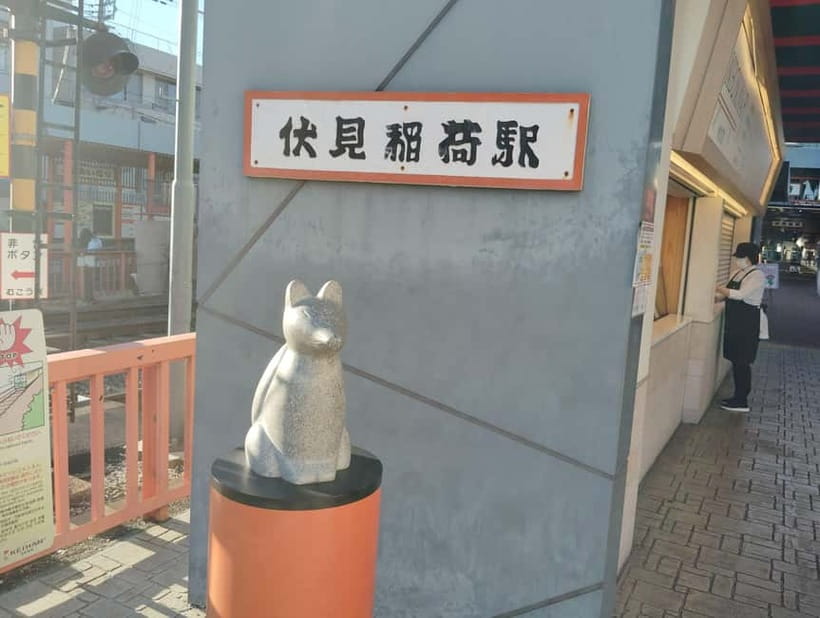
You’ll start at Inari Station. Your guide meets you outside, across from the main entrance to the JR station, holding a bright yellow DeepExperience signboard. This matters more than it sounds. Fushimi Inari is a high-traffic area, and arriving confused is the easiest way to lose momentum.
I like that the meeting point is tied to a major train stop instead of some vague side street. If you’re coming in by train, it’s straightforward to get to the correct place and start on time.
Also, the tour runs with an English-speaking local expert guide (English, Japanese available). If you’re tired of explaining your own pronunciation and just want clear answers, this is the format to choose.
You can also read our reviews of more guided tours in Kyoto

Fushimi Inari Taisha: the main shrine in a guide-led order
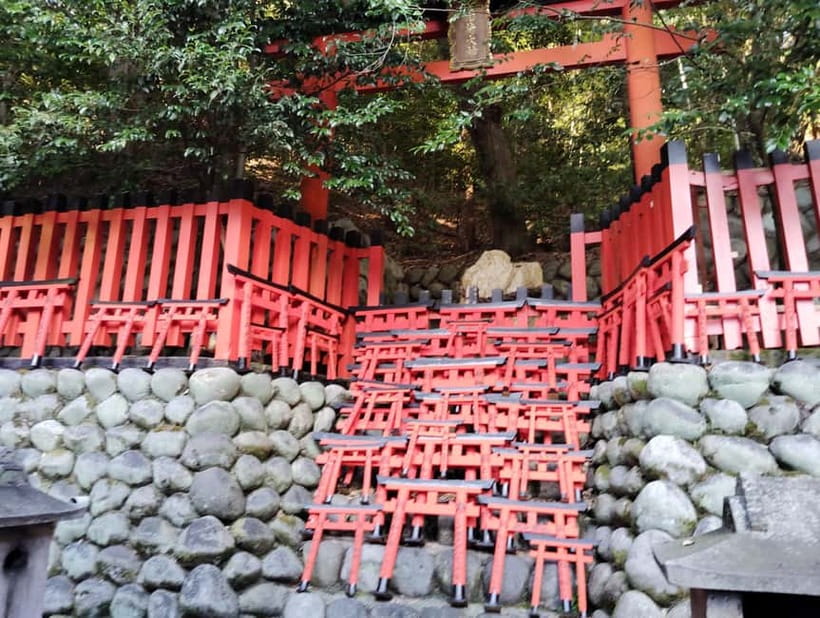
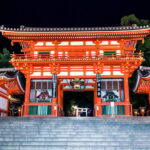
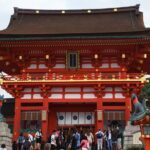
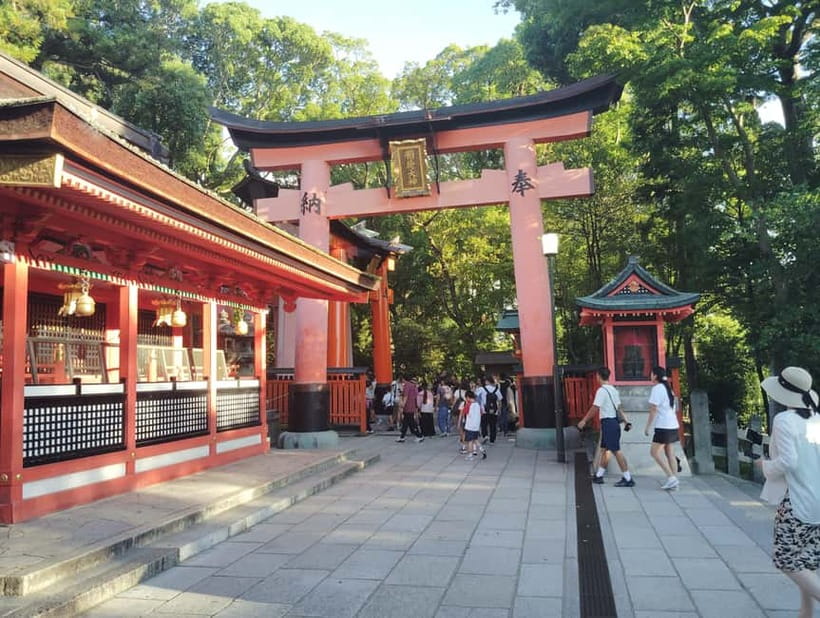
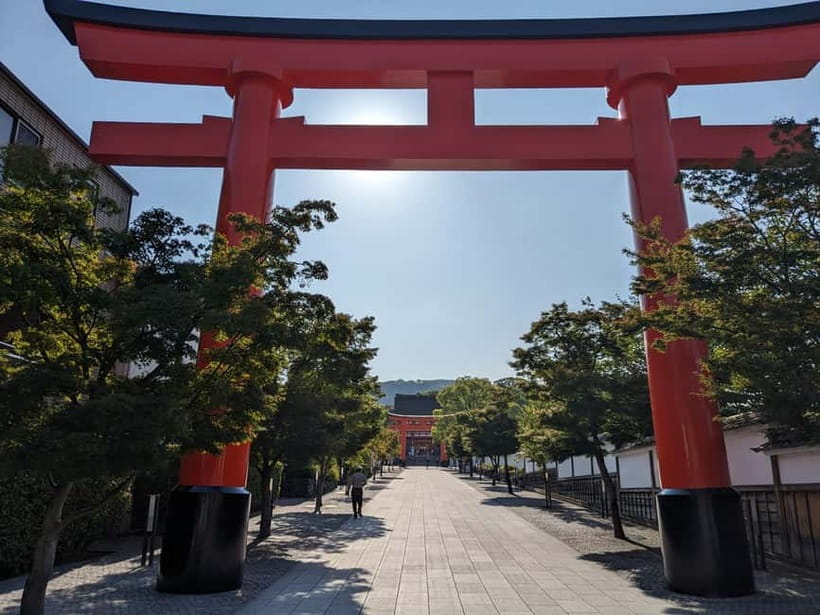
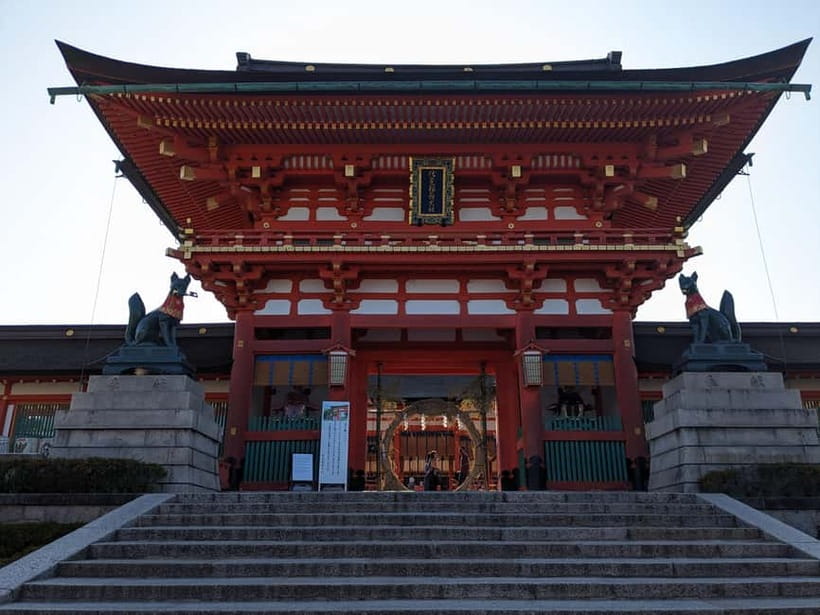
The tour begins at Fushimi Inari Taisha, the shrine associated with rice and prosperity. That opening stop is smart. Before you walk into the torii gates, you understand the purpose of the whole place. Otherwise, the gates can feel like a photo-only attraction.
With a guide, you also hear how the torii are part of a longer story—why they’re red, and what their presence means historically. I like this approach because it changes how you look. You stop treating the red gates like a background and start noticing patterns: spacing, direction, and the way people move through the space.
The guide also gives you cultural context about Kyoto’s spiritual life. That’s useful even if you’re not into religion. You’re learning the local logic for what people are doing and why it keeps pulling them back.
Walking the torii gates: why the timing is worth it
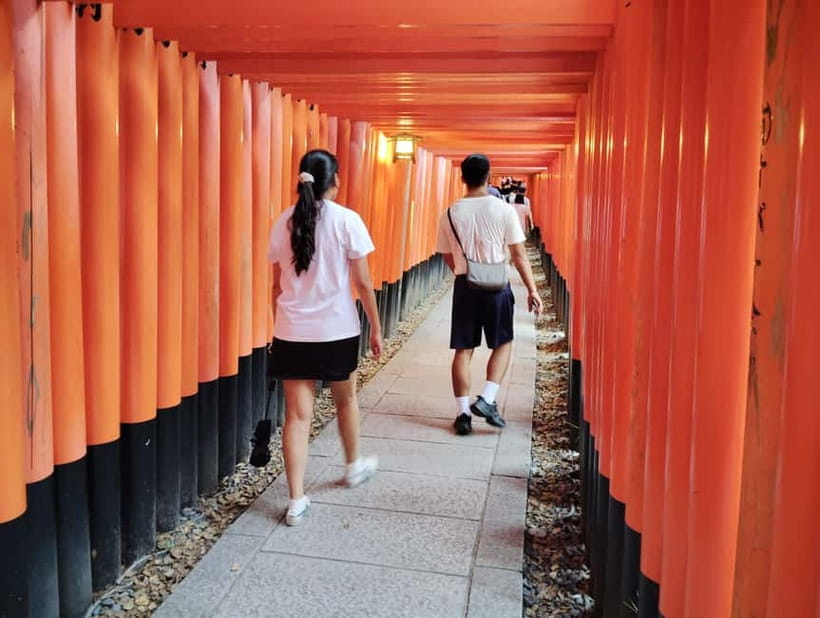
After the main shrine, you head along the iconic torii pathway lined with thousands of red gates. You’re not trying to cover every staircase and distant bend on a self-guided marathon. Instead, you’re getting a focused walk with explanations along the way.
For first-time visitors, this pacing is often a win. The gates can be emotionally intense when you’re doing it alone and guessing what matters. With a guide, you can pay attention while still keeping your energy.
Here’s the reality check: 90 minutes isn’t enough to “complete” Fushimi Inari in the sense of reaching every far point. That’s not a flaw; it’s the trade. If you want a deep, slow hiking day, you’d probably plan longer on your own. But for people who want the core experience with meaning, this tour fits well.
Okusha Back Shrine: a quieter tone shift
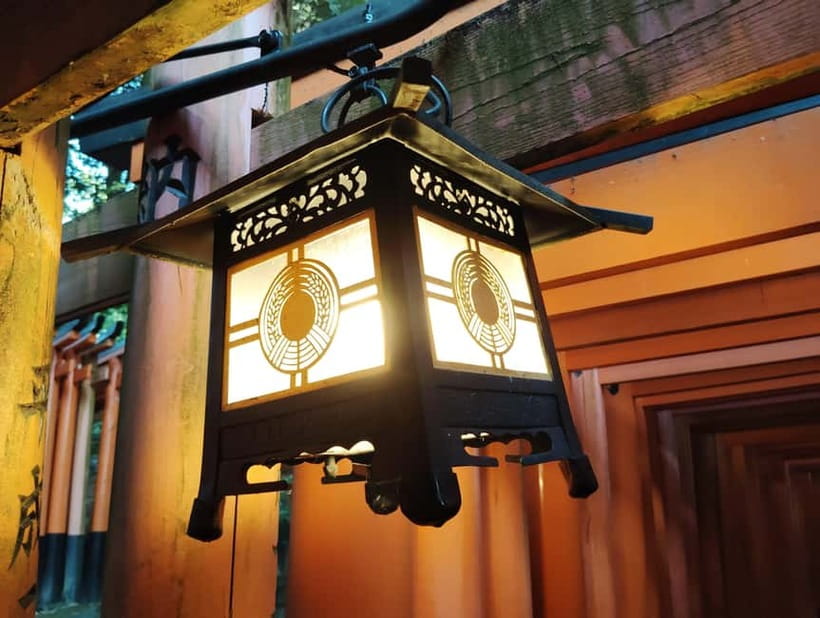
The tour doesn’t stop at the headline sights. It continues to Okusha Back Shrine, which is where the atmosphere changes. The main torii areas can feel crowded and fast. The Okusha stop is more intimate, and that changes the whole mood of the visit.
I like having this included because it saves you from having to decide on the spot whether to keep going. Once you start climbing and turning into quieter stretches, you can feel whether you want more depth. The tour basically offers you a structured on-ramp into that part of the shrine complex.
It’s also a good reminder that Fushimi Inari is not just scenery. It’s a living place where people show up with intentions—visiting, praying, and doing traditions that connect them to Kyoto’s spiritual culture.
Omokaruishi stone-lifting: the fortune test you can actually do
One of the most memorable moments is the Omokaruishi stone-lifting ritual. You get to participate instead of watching from the sidelines. The basic idea is a fortune test: lift the stone and see what it feels like, which the ritual uses to reflect your fortune and inner strength.
This matters because it turns your visit into a personal moment. You’ll remember the weight and the feeling long after you forget the name of a street nearby. Even if you’re not trying to predict your future, doing the ritual is a simple way to slow down.
It’s also an activity that works across language barriers. The guide’s job here is to set expectations and keep things respectful, so you can focus on the moment rather than on logistics.




The guide experience: what you should look for
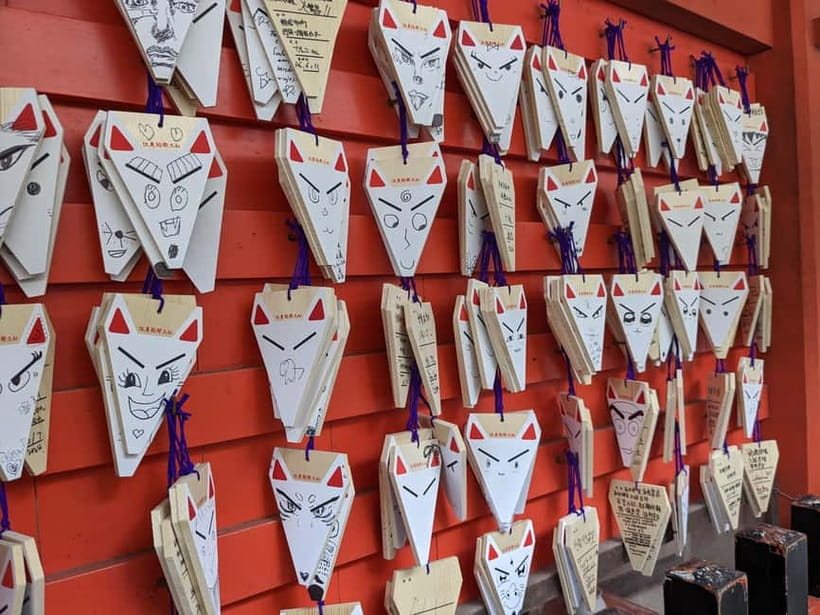
This tour is built around the guide’s explanations. In particular, Yoshi is mentioned as a guide who explains not only history but also Japanese culture, and who stays available if you have questions. That combo is exactly what you want at a shrine like this. You’re dealing with symbolism, traditions, and local references that don’t always translate cleanly.
So when I think about value here, I don’t just think about walking through gates. I think about what the guide gives you in real time:
- clearer meaning for what you’re seeing
- context that helps you understand how shrine visits work
- a safe pacing plan for a limited time window
If you like tours that explain the why, not just the where, this style tends to work.
Price and value: is $32 worth 90 minutes?
At $32 per person for about 90 minutes, this isn’t a bargain “wander and listen” tour. It’s a short guided experience. The price makes sense only if you value the guide’s explanations enough to justify paying rather than going solo.
Here’s how I’d frame the value:
- If you want history and cultural context while walking the torii route, the guide saves you time and confusion.
- If you’re the type who enjoys reading signs and exploring at your own pace, you might prefer to do it independently and spend less.
- If you care about the included ritual at Okusha Back Shrine, paying for the structure can be worthwhile.
Also, the group format helps. The tour offers private or small group options. Even though the exact size isn’t stated, small-group setups usually mean fewer waiting moments and more chance to ask questions.
So the real question isn’t the number. It’s whether you want guided meaning in a tight time window.
Timing reality: the short tour can feel short
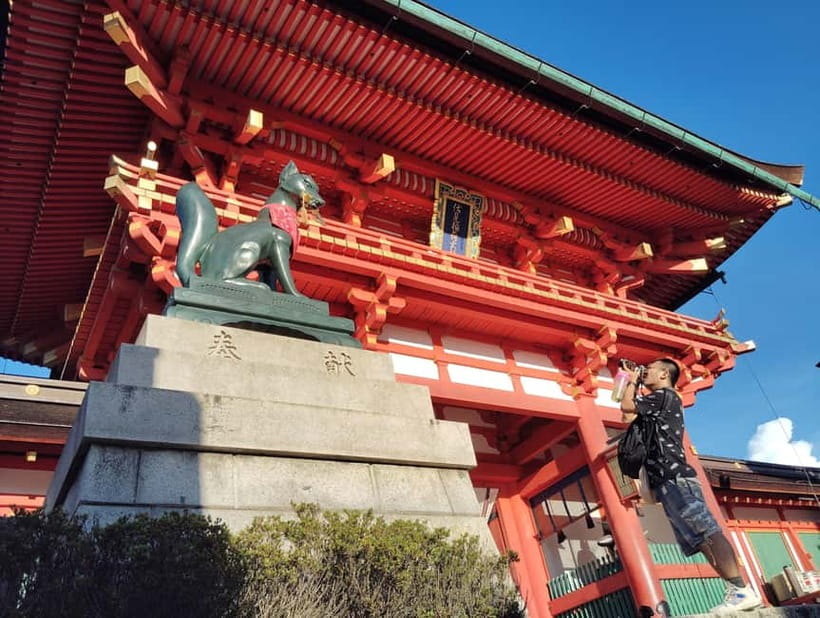
There’s one criticism that comes up for a reason: the tour is short. At 90 minutes, you’re moving efficiently through the main shrine, torii pathway, Okusha Back Shrine, and the Omokaruishi ritual. That’s the full recipe.
If you need a bathroom break, you may feel the squeeze. The good news is the tour includes the main components you probably came for. The drawback is that there isn’t much slack for detours.
My practical advice: if your body needs a moment, tell the guide early. Don’t wait until you’re already uncomfortable. With a timed walk, early communication gives the guide the best chance to adjust.
Who should book this tour
This tour is a strong fit if you:
- are short on time in Kyoto and want the key Fushimi Inari experience
- want a guide to explain the shrine’s symbolism and torii history
- like hands-on moments, especially the Omokaruishi ritual
- prefer small groups or private tours for better interaction
It’s less ideal if you:
- want to hike far beyond the most famous routes
- plan to spend long stretches wandering with no schedule
- need lots of extra breaks for pacing
If your goal is a structured “best of” visit with culture in the walk, this hits the mark.
Should you book this 1.5-hour Fushimi Inari tour?
I think it’s worth booking if you want guided meaning and a clear plan. The tour gives you the main shrine, the torii pathway, a quieter shrine stop at Okusha Back Shrine, and the Omokaruishi ritual. That’s a lot for 90 minutes, and it’s exactly why it works for many Kyoto schedules.
Skip it or consider a longer self-guided visit if you know you’ll want hours of wandering. Fushimi Inari rewards slow walking, and the red gates can easily eat up time. In that case, you might rather spend your day exploring freely and using a shorter guided option only if you want help with what things mean.
FAQ
How long is the Kyoto tour of Fushimi Inari?
The tour duration is about 90 minutes.
Where is the meeting point for the guided tour?
Meet your guide outside Inari Station, across from the main entrance to JR Inari Station. The guide holds a bright yellow DeepExperience signboard.
How much does the tour cost?
The price is $32 per person.
What language is the guide speaking?
The live tour guide is available in English, and Japanese.
What areas of Fushimi Inari does the tour include?
You’ll visit Fushimi Inari Taisha, walk through the red torii gate pathway, go to Okusha Back Shrine, and do the Omokaruishi stone-lifting ritual.
Is the tour private or in a small group?
Private or small groups are available.
Is the guide only English, or are other languages offered?
The tour lists English and Japanese as available languages for the live guide.
Is there free cancellation?
Yes. You can cancel up to 24 hours in advance for a full refund.
Can I reserve and pay later?
Yes. You can reserve now and pay later, with no payment today.
If you tell me your travel dates and whether you’re in Kyoto for one day or a few, I can suggest the best time of day to do Fushimi Inari around your schedule.