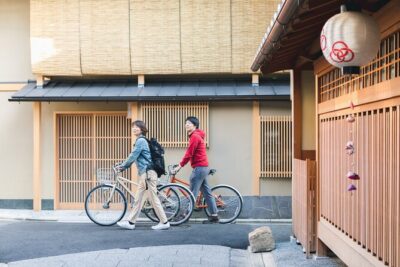
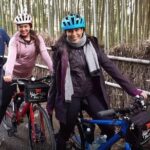
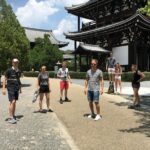
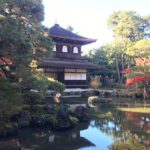
Kyoto by bike turns history into motion. This Shogun-themed cycling tour is built around an easy downhill feel, with stops at the Golden Pavilion, Toji-in Temple, and Nijo Castle. I like that you get a guided visit to major Kyoto landmarks plus time in calm temple spaces, and I also like that the route keeps you moving without making you work for every viewpoint. One potential drawback: you’ll be on city streets for stretches, so if you’re sensitive to traffic sounds or riding in heat, you’ll want to plan timing and hydration.
You’ll also want to think about the matcha situation. The tour includes temple/castle admissions, but matcha service is not included, so if you’re hoping for a tea moment, you may need to pay extra. The good news is the pace still leaves room for breaks, plus you get helmet and rainwear if weather turns.
Finally, the guide quality seems to be a real highlight. People mention guides like Seiya, Makoto, Nozomi, Yutaka Kaneda, Kaz, JJ, and Yasunobu Yagyu, with strong English and smart routing through the city’s different vibes—temples, gardens, and palace history.
In This Review
- Key highlights worth aiming for
- Why this Shogun-style cycling route fits Kyoto
- The ride plan: 3.5 hours, private group vibe, and street reality
- Stop 1: Kinkakuji Golden Pavilion Temple gardens (about one hour)
- Stop 2: Toji-in Temple for Wabi-Sabi calm (about one hour)
- Stop 3: Nijo Castle and the Tokugawa Shogunate showdown (about 1.5 hours)
- What’s included (and what you still pay for)
- Rain plan that actually helps: poncho bikes or transit walking
- The guide factor: English, humor, and route smarts (Seiya, Makoto, Nozomi and more)
- Price and value: why $153.50 can make sense
- Who should book this Kyoto Shogun Cycling Tour
- Should you book it?
- FAQ
- How long is the Kyoto Shogun Cycling Tour?
- What does the price include?
- Is matcha included?
- Is the tour private?
- How many people can join per guide?
- Does the tour run in the rain?
- What are the age and height requirements for children?
- Where does the tour start and end?
Key highlights worth aiming for
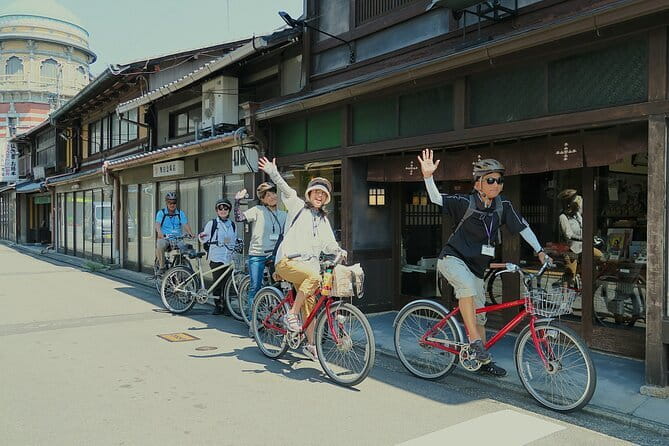
- Golden Pavilion (Kinkakuji) gardens with the Ashikaga Shoguns in the background
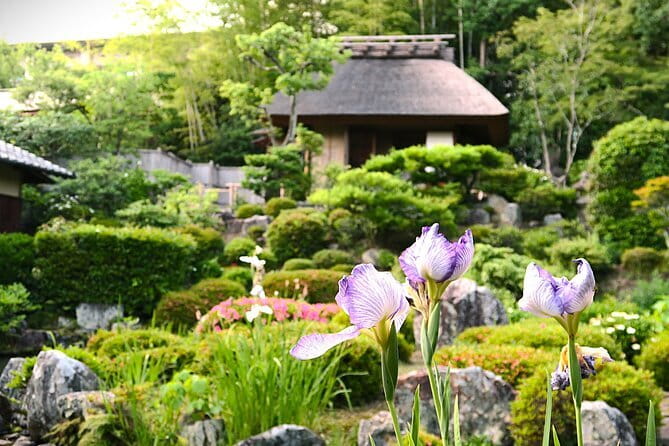
- Toji-in Temple’s Wabi-Sabi feel: a quiet garden and a tea house setting for Zen-style calm
- Nijo Castle and the shift from Shogunate power into the endgame of an era
- Easy downhill rhythm that works for most people who can ride safely
- Rain plan built in with poncho support or a switch to a transit-based walking option
- Guides with clear English and practical Kyoto storytelling (Seiya, Makoto, Nozomi, and more)
Why this Shogun-style cycling route fits Kyoto
Kyoto can feel like a lot of standing in lines and crossing busy streets. This tour tries to solve that by using a bike as the “between places” tool, while still keeping the focus on heritage sites. You’re not just passing monuments; the idea is to connect each stop to a specific era of power and culture.
The storyline is the draw. You start with the Ashikaga world at Kinkakuji, move into a quieter temple setting tied to that tradition at Toji-in, then end with a fortress-palace angle at Nijo Castle. Even if you’re not a history nerd, the Shogun framing helps you look longer—at roofs, gardens, and interior details—because you know what each place meant.
Also, the route is described as easy downhill, which matters. In a city with lots of stairs and walking circuits, a gentle grade keeps the experience from turning into a workout. You still ride, but you should feel like you can enjoy the scenery instead of fighting the route.
You can also read our reviews of more cycling tours in Kyoto
The ride plan: 3.5 hours, private group vibe, and street reality
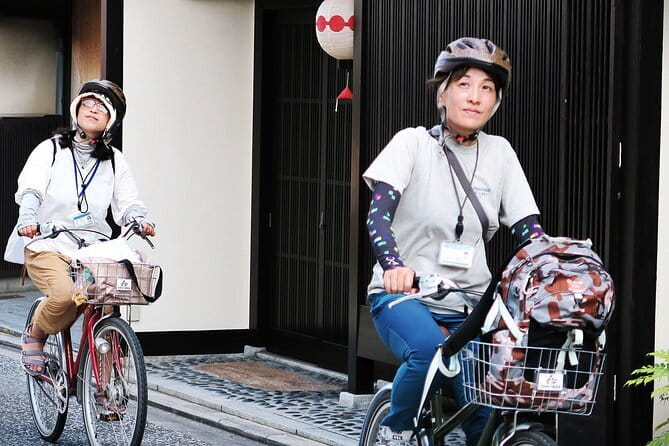
Plan for about 3 hours 30 minutes total. The stops are timed like this: one hour at Kinkakuji, one hour at Toji-in, and about 1 hour 30 minutes at Nijo Castle. That structure helps you pace the day: you won’t feel rushed at every location, but you also won’t be stuck in a single place too long.
This is a private tour/activity, so it’s only your group. Group size is kept small per guide (minimum 2, maximum 6 per guide), and if a group grows to 7–12 people, an extra guide can be arranged. That usually means better attention and easier conversation—especially helpful in a Kyoto tour where the details matter.
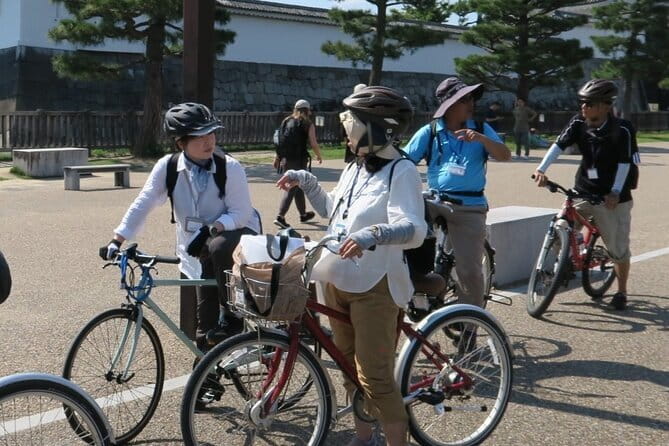
One practical consideration: you will ride on roads between sites. The tour notes that children must be at least 10 years old, 145 cm or taller, and able to ride safely unassisted. If your comfort level with traffic is low, you’ll want to judge whether cycling is your kind of sightseeing.
Stop 1: Kinkakuji Golden Pavilion Temple gardens (about one hour)
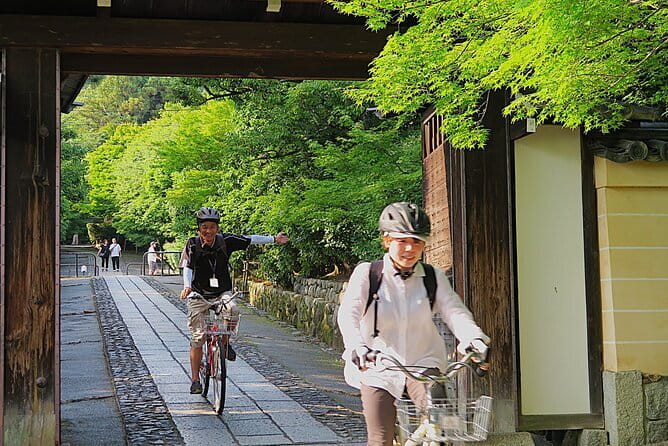
Kinkakuji, the Golden Pavilion, is the headline stop for a reason. It’s iconic, yes, but the tour context makes it more interesting: it was once described as a center of government for the Ashikaga Shoguns. That’s not just trivia—it gives you a lens for what you’re seeing while you walk the surrounding gardens.
Expect a guided visit plus time wandering the gardens around the pavilion building. The temple experience here is built around stillness and symmetry, so slow steps are part of the point. Even if the “gold” is what pulls most people in, the garden walk is what helps you see why this place is so often photographed.
A small watch-out: crowds can happen at famous spots like this. The tour’s guided pacing and city navigation help, but you’ll still be sharing the space with other people who know Kinkakuji is a must.
Stop 2: Toji-in Temple for Wabi-Sabi calm (about one hour)
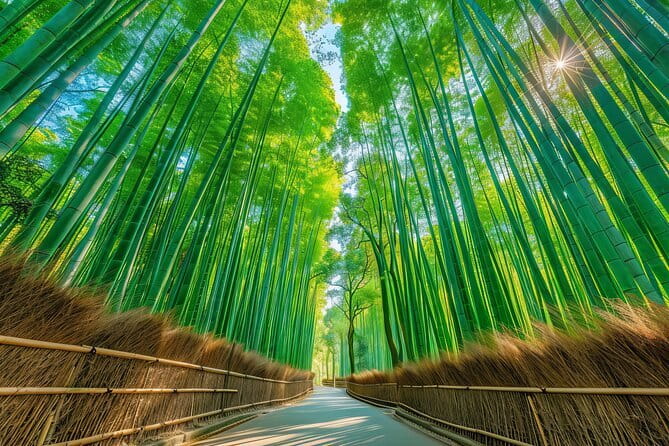
Toji-in Temple shifts the mood. Instead of big landmark energy, you get quieter interiors and a slower feel. The tour description highlights the garden and a quaint tea house, and it leans into Wabi-Sabi—that Zen-adjacent aesthetic of simple, imperfect, lived-with beauty.
You’ll get a guided walk through the temple interior areas, then time related to the garden setting and tea house atmosphere. The tour frames it with the idea that Zen masters once would have contemplated the world from within, looking out over a groomed garden. Whether you’re deep into Zen philosophy or just enjoy quiet architecture, this is a “pause” stop.
If you’re the kind of traveler who likes a break in the middle of a busy city day, this stop is a smart middle anchor. It gives your brain a reset after a major visual attraction.
Stop 3: Nijo Castle and the Tokugawa Shogunate showdown (about 1.5 hours)
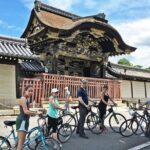
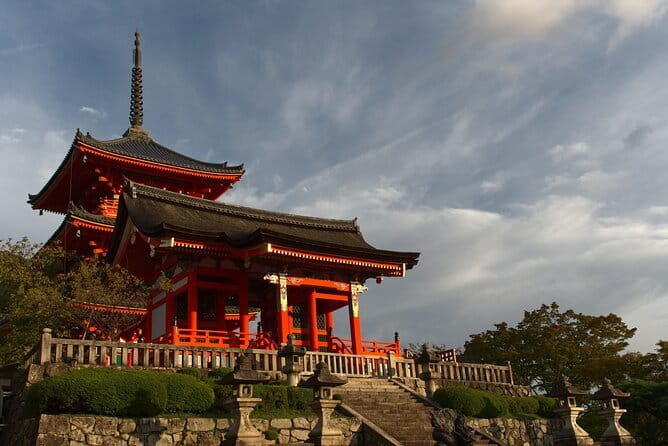
Nijo Castle is the big finale, and it’s not subtle. The tour positions it as a magnificent fortress tied to the Tokugawa Shogunate and the late stage of Shogun rule. It’s described as a residence in Kyoto for the final Shoguns, and as the scene of historical events that helped shape Japan’s destiny.
Practically, you’ll walk the grounds with your guide. The experience leans into ornament and scale—ornamental carvings, magnificent buildings, and the overall “palace-fortress” vibe. The official tour timing gives you enough room to take photos and read details without feeling like you’re sprinting.
If you’ve visited Kyoto temples but you’re craving something more political and architectural, this stop tends to land well. Temples show you belief; a castle shows you power. Together, they tell a fuller story about how rule and culture shaped the city.




What’s included (and what you still pay for)
This is the kind of tour where the extras really matter, because admissions and gear are handled for you.
Included:
- Bicycle use
- Helmet
- Rainwear
- Admission tickets for all three stops
Not included:
- Matcha service
That means you’re not scrambling for entry tickets right before each site, and you’re not stuck wondering whether you can handle rain on the fly. The helmet and rainwear are also a big practical win in Kyoto, where weather can shift quickly.
Rain plan that actually helps: poncho bikes or transit walking
Kyoto weather can be unpredictable, and this tour has a straightforward approach. It operates in rain, and you can choose between two options:
- Continue on bikes with rain poncho support (free of charge)
- Switch to a walking tour using public transportation (bus or metro), included in the tour fee
I like that you get a choice. If you don’t want wet-road cycling, you’re not forced to push through. And if you’d rather keep the bike rhythm, the tour provides rainwear and keeps you on the planned path.
If you’re deciding what to wear, bring breathable layers. Rainwear helps, but your comfort still depends on what you have on underneath.
The guide factor: English, humor, and route smarts (Seiya, Makoto, Nozomi and more)
On a tour like this, the guide is the difference between seeing buildings and understanding what you’re looking at. The reviews attached to this experience repeatedly highlight strong English and guiding skills that keep the pace fun and readable.
Names that come up often include:
- Seiya, praised for deep Kyoto knowledge and excellent English, plus keeping a 12-year-old engaged
- Makoto, described as personable and knowledgeable, with a sense of flexibility to allow extra time when a local festival was happening at a stop
- Yanai-San, noted for guiding through temples, shrines, and a generally lively experience
- Nozomi, mentioned for clear explanations around Shinto and Buddha sites as well as Gion and the imperial palace area during broader cycling coverage
- Yutaka Kaneda and Yasunobu Yagyu, highlighted for insider tips and variety beyond the big-ticket sights
Even without knowing which guide you’ll get, the pattern is consistent: you should expect city logic, good timing, and explanations that help you connect the Shogun theme to real spaces.
Price and value: why $153.50 can make sense
At $153.50 per person for about 3.5 hours, this isn’t the cheapest option in Kyoto. But it’s also not just bike rental.
You’re paying for:
- Guided visits at all three major stops
- Admission tickets included
- Bike, helmet, and rainwear
- A route plan that reduces the hassle of getting between sites
For people who want a low-stress day, that value adds up fast. If you tried to DIY this yourself, the costs you’d likely hit include entrance fees, bike logistics, and the time cost of figuring out how to move efficiently across multiple districts.
This tour can be especially worth it if:
- You want a guided interpretation of Shogun-era Kyoto
- You prefer structured sightseeing over self-navigation
- You want a weather-backed plan so the day doesn’t collapse
Who should book this Kyoto Shogun Cycling Tour
This tour is designed for broad participation: it’s described as easy downhill and suitable for everyone, with the condition that kids can ride safely.
I’d suggest it if you:
- Like history, but also want a physical way to see the city without exhausting yourself
- Enjoy gardens, temple interiors, and palace-scale architecture
- Want a guided day that keeps you on track and moving
You might look at a different style of tour if you:
- Don’t feel comfortable riding on city roads
- Want only minimal riding time and no bike breaks between sights
- Are traveling with someone who can’t meet the child height/age riding requirements
Should you book it?
If you want Kyoto with less walking fatigue and more story, this tour is a strong choice. The best reason to book is the mix: one hour at Kinkakuji’s Golden Pavilion gardens, a calmer Wabi-Sabi pause at Toji-in Temple, then Nijo Castle to end with scale and power. Add included admissions and practical gear, and you get a day that feels planned without feeling rigid.
If you’re flexible about how much you enjoy riding in traffic, you’ll likely have a memorable afternoon. And if you get a guide like Seiya, Makoto, Nozomi, or Yasunobu Yagyu, the explanations and pacing can turn “famous places” into a connected, easier-to-remember Kyoto map.
FAQ
How long is the Kyoto Shogun Cycling Tour?
It runs for about 3 hours 30 minutes.
What does the price include?
The price includes bicycle use, helmet, rainwear, and admission tickets for Kinkakuji Temple, Toji-in Temple, and Nijo Castle.
Is matcha included?
No. Matcha service is not included.
Is the tour private?
Yes. It’s a private tour/activity, and only your group will participate.
How many people can join per guide?
The minimum is 2 guests and the maximum is 6 guests per guide. If the group is 7–12 people, an extra guide can be arranged.
Does the tour run in the rain?
Yes, it operates in rain. You can choose to continue by bike with rain poncho, or switch to a walking tour using public transportation, with the alternative included in the tour fee.
What are the age and height requirements for children?
Children must be at least 10 years old, be 145 cm or above, and be able to ride a bicycle safely on the road unassisted.
Where does the tour start and end?
It starts at Wara Tenjin mae in Kyoto (Kyita Ward area) and ends at Kyoto Cycling Tour Project (Kyoto Station Cycle Terminal) near Kyoto Station in Shimogyo Ward.