REVIEW · KYOTO
Experience Japan’s Traditional Culture Night Tour in Kyoto
Book on Viator →Operated by JTB Global Marketing & Travel Inc. · Bookable on Viator
Kyoto at night can feel like a stage. This tour strings Gion Corner performances, lantern-lit streets, and a candlelit ryokan tea moment into one easy 4-hour plan. You also get a walk through preserved old-Gion lanes, led by a National Government Licensed English Guide who helps you understand what you’re seeing as the evening unfolds.
I especially like the way this night focuses on performance arts you can’t easily “shop around” for on your own. Gion Corner bundles Kyoto dance, tea ceremony, flower arrangement, koto music, bugaku, kyogen, and (depending on season) either bunraku or noh into one scheduled program. Second, I like the food plan: you finish with a Zen-style vegetarian dinner served at the ryokan, instead of hunting for something “nearby” after the shows.
One thing to consider is logistics: the tour begins at Good Nature Hotel Kyoto, and even though public transport is nearby, the meeting-to-venue timing matters during rush. Also, the dinner is vegetarian, but the tempura dipping sauce can include bonito stock, so you’ll want to clarify if you avoid fish.
In This Review
- Key highlights before you go
- Why this Kyoto evening starts at 5:05 and feels “made for nights”
- Gion Corner: where Kyoto arts come in a single program
- What you’ll likely see there
- A practical tip for enjoying it
- The Hanamikoji-to-Gion Shimbashi stroll: classic streets, guided meaning
- What you’re looking at (and why it helps)
- Candlelit tea at Ryokan Yoshi-Ima (Kurenaitei): the quiet center of the night
- What makes this different from a “tea demo”
- Zen-style vegetarian dinner: good value, but read the sauce notes
- The important dietary reality check
- Drinks are not included
- Price and logistics: what $175.60 covers, and what can trip you up
- The main logistics consideration
- Group size, mobile ticket, and how to set yourself up for a smooth night
- Who this is best for
- Should you book this Kyoto Traditional Culture Night Tour?
- FAQ
- FAQ
- What time does the tour start?
- How long is the experience?
- Where does the tour start and end?
- What performances happen at Gion Corner?
- Is the dinner vegetarian?
- Are drinks included with dinner?
- Are special dietary requests like allergy-friendly meals supported?
Key highlights before you go
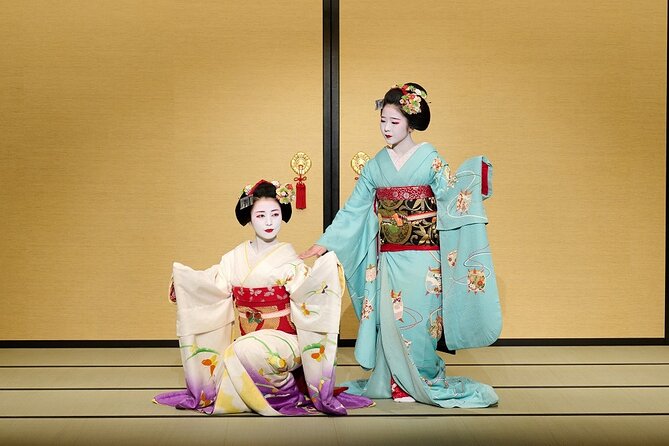
- Gion Corner in one sitting: dance, tea ceremony, koto music, bugaku, kyogen, plus bunraku or noh depending on season
- Lantern-lit Gion walk: a guided route from Hanamikoji-dori toward Gion Shimbashi, a traditional-buildings preservation area
- Candlelit private tea at Kurenaitei in ryokan Yoshi-Ima
- Zen-style vegetarian dinner included, with clear notes on tempura sauce ingredients
- Small group limit (max 24) and a mobile ticket for smoother entry
Why this Kyoto evening starts at 5:05 and feels “made for nights”
This is a late-day, start-on-time kind of tour. It kicks off at 5:05 pm from Good Nature Hotel Kyoto, then you spend the evening moving through Gion’s best-known atmospheres: performance rooms, preserved streets, and a quiet tea space inside a traditional ryokan.
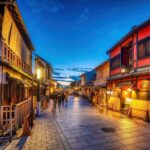
What makes the timing work for you is that the tour uses the evening light on purpose. In Gion, daylight makes things look historical. Night makes them feel like living theatre, with paper lanterns and the kind of slow walking pace that lets you actually notice details instead of racing.
You’ll be in a group capped at 24 people, which usually helps keep the experience from feeling like a conveyor belt. The flip side is that 4 hours can feel like a lot if you get tired in crowds, so plan to keep your day easy beforehand.
You can also read our reviews of more evening experiences in Kyoto

Gion Corner: where Kyoto arts come in a single program
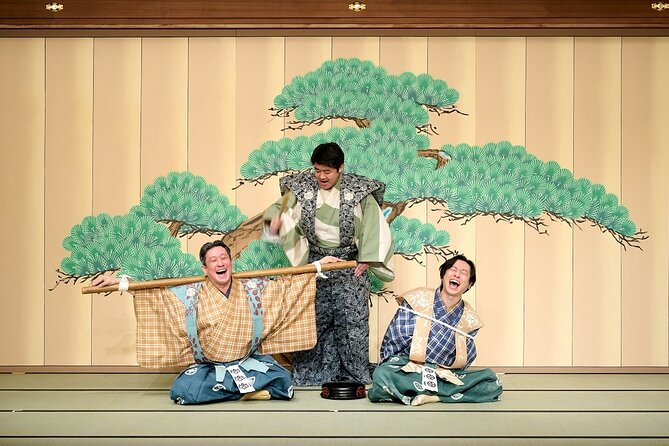
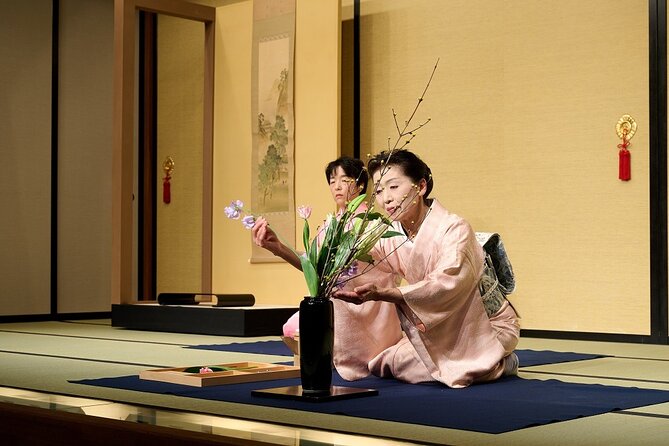
Gion Corner is the centerpiece. You get about 50 minutes there, and admission is included. The big win for most visitors is convenience: multiple traditional arts happen in one location, in a format designed for an audience that’s watching, learning, and then moving on.
What you’ll likely see there
The program changes by season, so here’s the key idea: you’ll get a mix of performing arts plus tea-related presentation and music, but the seasonal element shifts.
Mar 15 – Nov 30 (Regular Performance) often includes:
- Kyoto dance and tea ceremony
- Flower arrangement
- Koto music
- Bugaku (court dance and music)
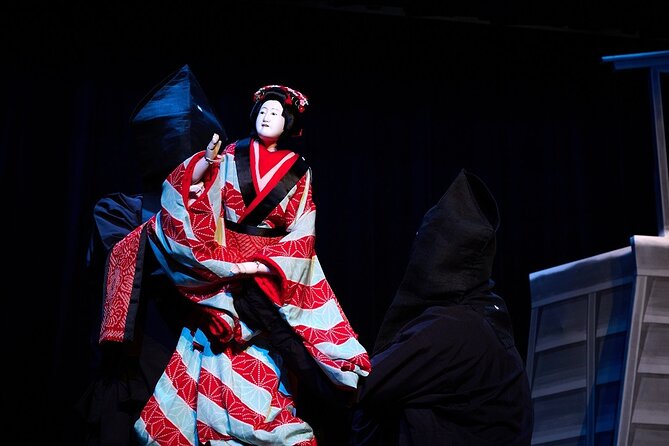
- Kyogen (traditional Japanese comic theatre)
- Plus either bunraku or noh, depending on the season
Dec 1 – Mar 14 (Winter Performance) includes:
- Kyoto dance and tea ceremony
- Flower arrangement
- Koto music
- Bugaku
- Kyogen
One nice detail: during winter performance, there’s a commemorative photo with a maiko (with the note that content can change). If that’s the kind of souvenir you actually want, the winter run may be the stronger fit.
A practical tip for enjoying it
Because the show is structured, you’ll enjoy it most if you focus on rhythm and transitions rather than trying to “translate everything.” Your English guide will explain what each part is and why it matters, so you can sit back and let the evening connect the dots.
Also, plan to take your photo at the moments offered rather than trying to shoot constantly. Performance spaces often have their own pacing and photo rules, and you’ll get more out of watching closely.
The Hanamikoji-to-Gion Shimbashi stroll: classic streets, guided meaning
After Gion Corner, you move into a guided walk along Hanamikoji Street (Hanamikoji-dori). This leg is about 30 minutes, and it doesn’t include any admission fees.
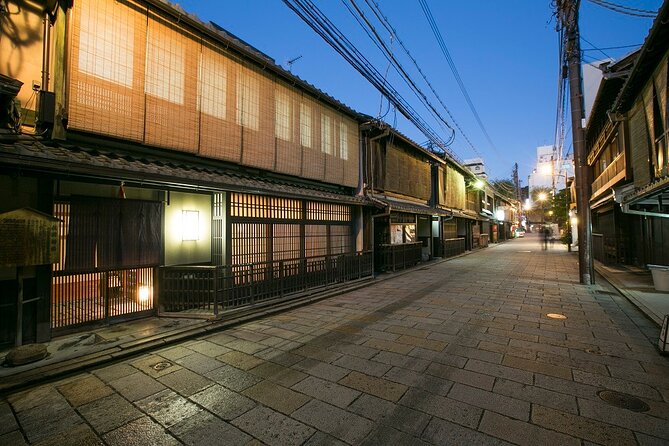
Here’s what this segment does well: it slows you down after the dense show schedule. You’ll pass historic teahouses and restaurants, then head toward Gion Shimbashi, described as an Important Preservation District for Groups of Traditional Buildings.




What you’re looking at (and why it helps)
It’s easy to treat Hanamikoji as a “pretty street.” With a guide, you start seeing the deeper layer: why the area is preserved, how old architecture shapes street life, and how that shapes the atmosphere you’re enjoying right now.
One more reason I like this part: it’s the calm after the show. Your eyes adjust from indoor performance focus to lantern-lit outdoor viewing, which makes the next ryokan tea moment feel like a natural continuation.
A drawback is that if it’s cold or rainy, you’ll still be outside for that short stretch. Bring a jacket that can handle a Kyoto evening.
Candlelit tea at Ryokan Yoshi-Ima (Kurenaitei): the quiet center of the night
Your next major moment happens at Ryokan Yoshi-Ima, in the tea ceremony room called Kurenaitei. You get about 1 hour 30 minutes here, and this part also includes admission.
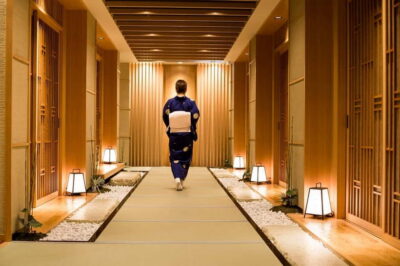
The tour describes it as a private evening tea ceremony with candlelight. That candlelit detail matters. In a busy sightseeing day, this kind of setup gives you a chance to slow your pace and actually watch hands, cups, and gestures as part of the experience rather than just as a show for photos.
What makes this different from a “tea demo”
A tea ceremony tour can sometimes feel like a lecture with tea at the end. This one is positioned as a dedicated moment at a ryokan setting, which tends to make the experience feel more like a ritual you’re participating in, even if you’re not doing everything yourself.
The dinner comes right after, but the tea ceremony is paced first, so you don’t feel rushed into eating. For many people, that order is the secret sauce: tea gives your senses a reset before dinner.
Zen-style vegetarian dinner: good value, but read the sauce notes
Dinner is included, and it’s described as Zen-style vegetarian and “simple but well-balanced,” with a nod to Buddhist culinary traditions. You’ll also be served miso soup and rice along with the meal.
The important dietary reality check
Here’s the part you should pay attention to. Even though it’s Buddhist vegetarian, the notes explain that bonito stock is used in the tempura dipping sauce. It also says salt can be used instead of the tempura dipping sauce.
What this means for you:
- If you avoid fish entirely, you should raise the issue with your guide or confirm in advance how the salt substitution would be handled.
- If you need an allergy-friendly plan, the tour states requests for allergy-friendly meals are not accepted, so you should decide whether this matches your risk tolerance.
The tempura ingredients listed are tofu, namafu wheat gluten, yuba tofu skin, and seasonal vegetables (like eggplant, lotus root, ginger, and shiitake). That’s helpful context if you’re trying to understand what’s actually in front of you, not just that it’s vegetarian.
Drinks are not included
Dinner time drink charges are not included. If you like pairing tea or food with something fizzy or alcoholic, budget separately.
Price and logistics: what $175.60 covers, and what can trip you up
At $175.60 per person, this isn’t a budget evening. But when you break down what’s included, the price starts to look more like paying for access and structure than paying just for sightseeing.
You get:
- Gion Corner admission (included)
- Ryokan Yoshi-Ima tea ceremony admission (included)
- A Japanese-style dinner
- A National Government Licensed English Guide interpreter fee
- A group experience capped at 24
What you’re paying for, practically, is the whole night being handled: you don’t have to coordinate show schedules, find the right room at a ryokan, or translate what the arts are doing. That’s real value in a city where evening plans can turn into messy “maybe we’ll find it” wandering.
The main logistics consideration
Your meeting point is Good Nature Hotel Kyoto, and the start time is 5:05 pm. The distance to the first venue can matter. There’s also a note that the operator changed the mode of transportation to walking from taxi starting December 2024 based on feedback—so in many cases you’ll likely just walk to Gion Corner rather than ride across town.
Still, if you’re sensitive to timing, arrive a few minutes early and keep your phone ready in case you need to check the exact meeting location for your group.
Group size, mobile ticket, and how to set yourself up for a smooth night
This tour runs with a maximum of 24 travelers. Smaller than the mass-group vibe, which tends to help with pacing and getting explanations without feeling lost.
You’ll use a mobile ticket, which can save time at entry. It also means you should make sure your phone has enough battery and you can access the ticket without hunting for signal.
The total experience is listed as about 4 hours, though the timed activities add up to less. That extra time is for travel and waiting for performance timing at Gion Corner. So don’t schedule a tight last stop later that evening. Build in breathing room.
Who this is best for
- People who want a planned cultural night without building it themselves
- Visitors who care about understanding traditional arts, not only snapping pictures
- Anyone who likes the idea of a ryokan tea moment in a real setting
It may be less ideal if you dislike seated shows or you need a lot of downtime between stops.
Should you book this Kyoto Traditional Culture Night Tour?
If your goal is an organized Kyoto evening that actually connects traditional performance + street atmosphere + a ryokan tea moment + dinner, I’d lean toward booking. The value comes from the included admissions and the fact that you’re not cobbling together separate experiences across town.
I’d think twice if:
- You avoid fish and need strict vegetarian proof beyond the tempura sauce note
- You’re nervous about meeting location timing and prefer to start directly at a venue of your choosing
- You want a tour that’s only outdoor sightseeing (this one is performance-focused)
If you’re happy with a structured 4-hour plan and you want your Gion night to feel intentional rather than random, this is a strong choice.
FAQ
FAQ
What time does the tour start?
It starts at 5:05 pm.
How long is the experience?
The tour duration is about 4 hours.
Where does the tour start and end?
It starts at Good Nature Hotel Kyoto and ends at Ryokan Yoshi-Ima in Gion.
What performances happen at Gion Corner?
You can expect a program that includes traditional arts such as Kyoto dance, tea ceremony, flower arrangement, koto music, bugaku, and kyogen. Depending on the season, bunraku or noh is performed.
Is the dinner vegetarian?
Dinner is described as Buddhist vegetarian cuisine, but the tempura dipping sauce can include bonito stock. Salt can be used instead of the tempura dipping sauce.
Are drinks included with dinner?
No. Dinner time drink charges are not included.
Are special dietary requests like allergy-friendly meals supported?
The tour notes that requests for allergy-friendly meals are not accepted, and it also does not accept requests for Muslim-friendly meals or Indian thali meals.