REVIEW · KYOTO
Gion and Fushimi Inari Shrine Kyoto Highlights with Government-Licensed Guide
Book on Viator →Operated by Japan Guide Agency · Bookable on Viator
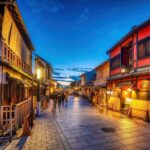
Gion can feel like a maze at night. This evening walk links Gion with major nearby sights so you don’t waste time guessing. You’ll also get clear explanations of geisha history, including how Maiko and Geiko fit into Kyoto’s traditions.
I especially like that the walk is built for small lanes and car-free streets—perfect for getting your bearings fast. I also like the practical flow: you start at Fushimi Inari for instant atmosphere, then shift into Gion’s side streets, Shirakawa-area views, and temple stops that most first-timers skip or cram into the wrong order.
One possible drawback: it’s a walking tour for about 6 hours, and at least one big temple stop (Kiyomizu-dera) is not included in the price, so you’ll want to budget for admissions along the way.
In This Review
- Key Points You’ll Actually Use
- Starting at Tatsumi-jinja: the calm gateway to Gion
- Fushimi Inari Taisha: vermilion torii energy before the crowds
- Gion streets, Shirakawa Canal, and the geisha-story you can actually follow
- Yasaka Shrine and Tatsumi Daimyojin: quick stops that anchor the evening
- Kiyomizu-dera: worth it, but plan your time and budget
- Kennin-ji’s grounds: short visit, strong atmosphere
- Price and logistics: is $154.37 good value?
- Who this tour fits best (and who should skip it)
- Should you book this Gion and Fushimi Inari evening tour?
- FAQ
- How long is the tour?
- Where does the tour start?
- Are tickets included for all the attractions?
- Is this tour walking-only?
- How big is the group?
- Can I cancel for a full refund?
Key Points You’ll Actually Use
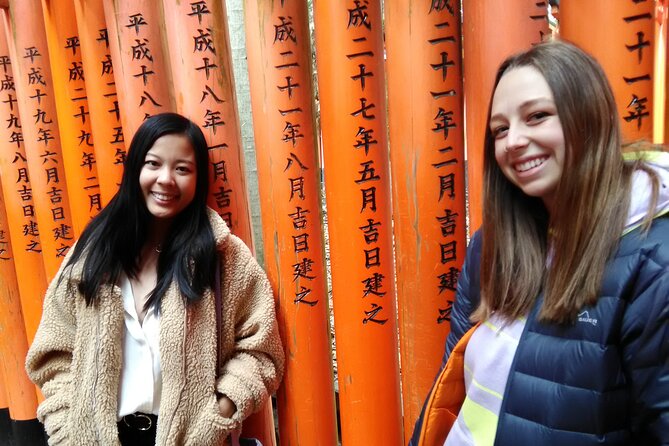
- Max 10 people means you can hear your guide without craning your neck.
- Licensed local English guide helps you read the city like a map, not a scavenger hunt.
- Car-free Gion lanes and Shirakawa Canal area are much better on foot than by taxi.
- Geisha basics, explained with distinctions like Maiko vs Geiko and what you’re seeing in the streets.
- Mobile ticket convenience helps you keep moving once you’re in Kyoto.
- Some admissions aren’t covered (notably Kiyomizu-dera and Kennin-ji), so bring a little extra cash/card.
Starting at Tatsumi-jinja: the calm gateway to Gion
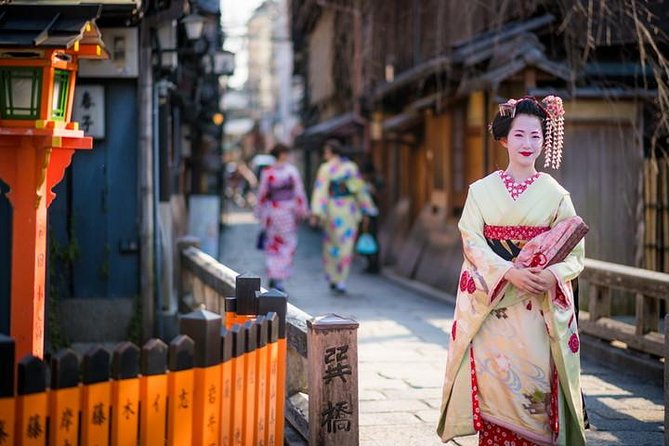
This tour begins at Tatsumi Dai-myojin (Tatsumi-jinja). I like this start because it’s close to the Higashiyama-side approach to Gion, where the streets tighten and the vibe turns more intimate. You’re already in the right mood before you hit the famous photo corridors.
Because pickup and drop-off are on foot, you won’t be dealing with a big vehicle meetup. That sounds minor, but in Kyoto it matters. Less wandering before the tour starts means more time for the sights that feel like Kyoto, not like a transit problem.
You can also read our reviews of more guided tours in Kyoto

Fushimi Inari Taisha: vermilion torii energy before the crowds
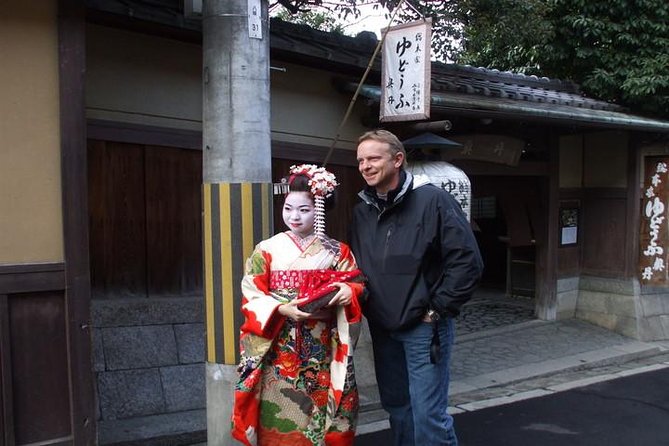
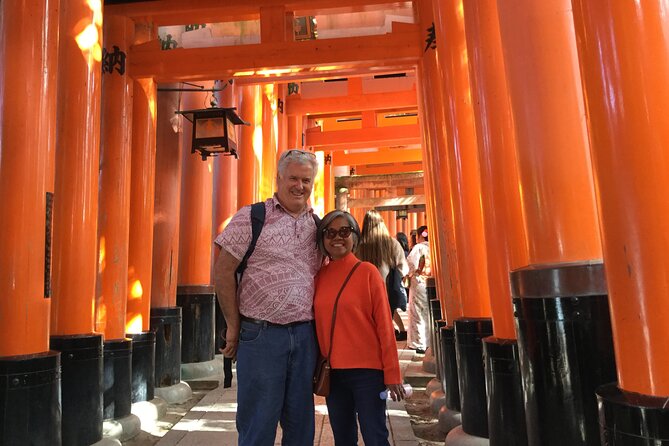
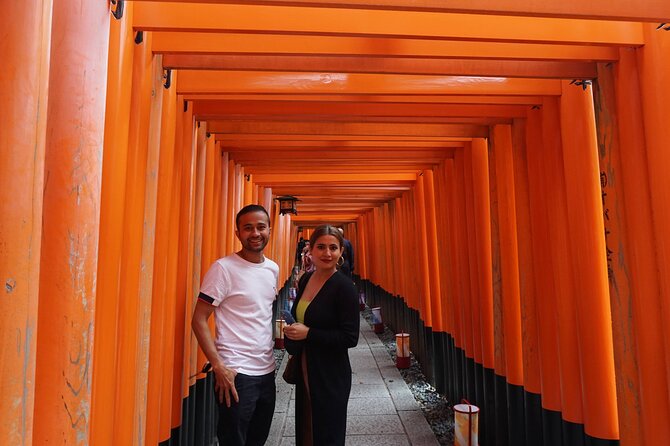
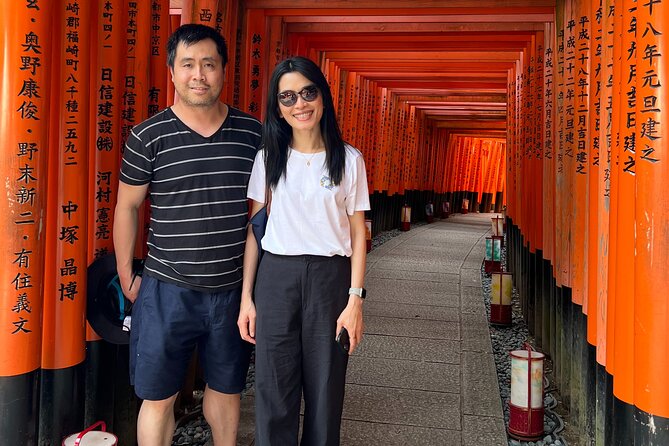
You’ll head to Fushimi Inari Taisha first, where thousands of vermilion torii gates create that unreal tunnel effect. Admission there is free, and that’s a big plus for value. You get a major Kyoto landmark without the ticket-cost sting.
What I like about starting here is the contrast. Fushimi Inari gives you the spiritual baseline, then the evening transitions into geisha-district mood where the details shift from sacred to social. Your guide also helps you understand why the torii network matters beyond the postcard look—so you’re not just counting gates.
Practical note: even if you don’t do a long hike into the deeper trails, you still want comfortable shoes. The ground and the stair-like paths around the complex add up over an evening.
Gion streets, Shirakawa Canal, and the geisha-story you can actually follow
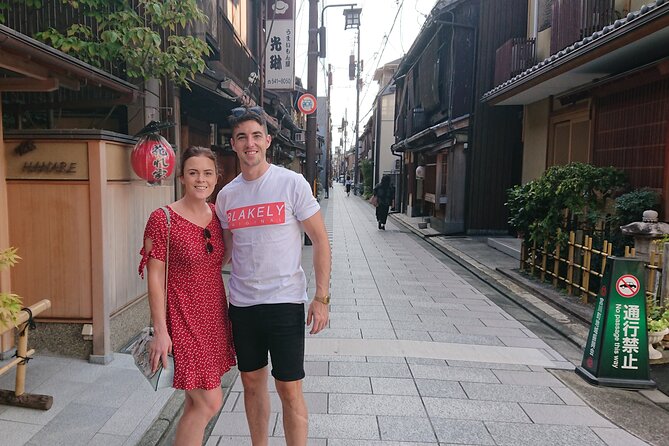
Then the tour turns into Gion—the part people travel for and also the part that can overwhelm you. Gion’s streets are narrow, signs can be subtle, and it’s easy to wander in the wrong direction if you’re trying to do it solo.
This is where the guide earns their fee. You’re not just told where to go. You’re taught how to read what you see: the role of ochaya (teahouses), the history behind geisha culture, and what you might notice in the rhythm of the streets.
One detail I’d highlight from guides who are praised on this route: explanations that keep Maiko vs Geiko clear. That helps you recognize what you’re looking at instead of guessing from a distance. If you end up with a guide like Mari san—mentioned as especially informative—you’ll likely leave with a sharper sense of what these figures mean in Kyoto, not just that they appear in the background.
You’ll also see the Shirakawa area along the canal. Even when you’re not aiming for a perfect photo, that canal side gives you a calmer, more atmospheric version of Gion than the main streets. And because you’re walking, you can slow down when something catches your eye—without waiting for a car to pass.
Yasaka Shrine and Tatsumi Daimyojin: quick stops that anchor the evening
You have a short visit to Yasaka Shrine (Gion Shrine). The good part about a timed stop like this is focus. You’ll get the key shrine atmosphere—open spaces, gates, and that familiar Shinto energy—without losing an hour you could spend later in Gion lanes.
Yasaka Shrine is also a mental anchor. It sits in the area that connects major Higashiyama sights with Gion, so it helps stitch the evening together. Think of it as a landmark that explains the geography and not just the religion.
Just before or after, you’ll also pass through Tatsumi Daimyojin Shrine time (yes, you start there, but there’s also a stop described near the Gion area). That matters because shrines in this part of Kyoto aren’t random. They act like neighborhood markers, and your guide can point out how that tradition shapes everyday routes.
Kiyomizu-dera: worth it, but plan your time and budget
Next is Kiyomizu-dera, a huge draw and one of Kyoto’s most famous temple complexes. The tour includes about an hour here, and it’s time you’ll feel. Kyoto’s main attractions can tempt you into a rushed circuit, but Kiyomizu is big enough that you’ll need a steady pace.
Admission for Kiyomizu-dera is not included, so you should expect to pay your own entry fee. I like that the tour still includes the stop—this is the kind of world-class sight that’s hard to replace with smaller temples. But don’t let the price headline fool you. The guiding value is real; the temple admissions are part of the overall cost you should budget.
If you go during busy hours, you may not get solitude. Still, your guide’s job here is to help you move efficiently through what matters. You’ll also benefit from a guide if you want context for what you’re seeing at Kiyomizu instead of just taking photos and leaving.




Kennin-ji’s grounds: short visit, strong atmosphere
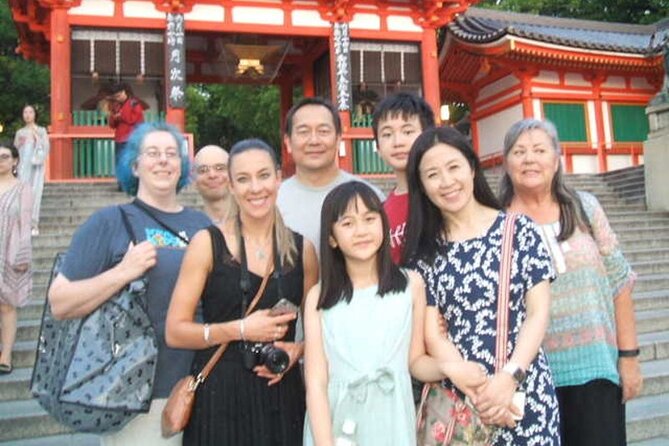
After Kiyomizu-dera, you’ll end up at Kennin-ji Temple. This is one of those stops that can be easy to undervalue if you only look at the name. The grounds are more of a walking experience than a checklist, and the tour keeps the visit short (entry is noted as not included).
Even with limited time, you can catch why people like Kennin-ji: the gardens and quiet temple feel. You’ll also likely notice the karesansui (dry landscape gardens), which are part of what makes this temple special for many visitors. If you’re the type who enjoys atmosphere over volume, this is a good pairing with the earlier shrine-and-street moments.
Because the visit isn’t long, I’d focus on slowing down for a few key views instead of trying to see every corner.
Price and logistics: is $154.37 good value?
At $154.37 per person for around 6 hours, this tour sits in the higher mid-range for Kyoto walking experiences. The value comes from a few clear factors:
- A licensed local English speaking guide for a long evening window.
- A small group (up to 10), which usually makes a bigger difference in Kyoto than you’d think.
- Efficient linking of multiple top areas: Fushimi Inari, Gion, Yasaka Shrine, Tatsumi area, Kiyomizu-dera, and Kennin-ji.
- Mobile ticket convenience and a route that works on foot where cars can’t.
The main cost consideration is that some admissions aren’t included (Kiyomizu-dera and Kennin-ji are listed as not included). If you’re already planning to visit these anyway, the guided route becomes easier to justify because you’re paying for direction, context, and time-saving.
So I’d judge it like this: if you’re the kind of traveler who gets lost easily, loves explanations, and wants a structured evening, this price starts to feel fair. If you’d rather roam freely and already know Kyoto well, you might feel boxed in by a set schedule.
Who this tour fits best (and who should skip it)
This is a good match if you:
- Want a guided Gion evening and don’t want to stress about navigating narrow streets.
- Care about understanding geisha culture beyond the surface photos.
- Like temple stops but also want them connected into a plan you can follow.
It may be less ideal if you:
- Really dislike walking. The tour is on foot and lasts about 6 hours.
- Prefer deep time at major sites. Kiyomizu-dera and Kennin-ji are meaningful, but the tour pace doesn’t aim for hours of solitude.
Should you book this Gion and Fushimi Inari evening tour?
I think it’s a strong choice if you’re visiting Kyoto for the first time and want your evening to feel purposeful. You’ll get major landmarks, a guided route through Gion and Shirakawa, and enough temple time to make the whole arc feel coherent.
Book it if you want help interpreting the city—especially Gion—so you can walk through the alleys with more confidence than curiosity. Skip it if you’re a hardcore “see it all alone” type or if you expect admissions to be fully covered in the base price.
If you do book, bring good walking shoes and go into it ready to learn. Kyoto is at its best when you slow down just enough to notice the details your guide points out.
FAQ
How long is the tour?
The tour runs for about 6 hours.
Where does the tour start?
It starts at Tatsumi-jinja Shrine (Tatsumi Dai-myojin), Higashiyama Ward, Motoyoshichō in Kyoto.
Are tickets included for all the attractions?
Admission is free for Fushimi Inari-taisha Shrine and Yasaka Shrine, while Kiyomizu-dera Temple and Kennin-ji Temple are listed as not included.
Is this tour walking-only?
Yes. Pickup and drop-off are on foot, and the tour is described as a walking experience.
How big is the group?
The group size is capped at 10 travelers.
Can I cancel for a full refund?
Yes—free cancellation is offered if you cancel up to 24 hours in advance of the experience start time.