REVIEW · KYOTO
Kyoto: Half-day Guided Bike Tour with Fushimi Inari
Book on GetYourGuide →Operated by Cycle Kyoto · Bookable on GetYourGuide
Kyoto looks like a postcard, but riding through it makes it feel real. This half-day guided bike tour threads South Kyoto in a smooth loop: temples, canals, Gion backstreets, then the famous orange torii at Fushimi Inari. Two things I really like: you get a guide who connects the sights to local life, and the route gives you classic highlights without wasting your whole day in transit.
I also appreciate that the group is small (up to 8), so you’re not stuck watching everyone else while you try to take photos. The main drawback to think about is simple: it’s biking. If your legs aren’t up for a bike ride, or if you have back issues, this is probably not the right Kyoto plan for you.
In This Review
- Key takeaways before you book
- South Kyoto by Bike: what this route gives you in 3.5 hours
- Toji and Higashi-Honganji: starting with UNESCO weight, not small talk
- Takase Canal and the Kamo River: a breather between temples
- Gion backstreets: geisha district views with less chaos
- Tofukuji photo stop: you get time, not just a quick peek
- Fushimi Inari Taisha: torii gates you reach with momentum
- Bikes, pacing, and what the small group really changes
- Who should take this, and who should skip it
- Finding Cycle Kyoto near Kyoto JR Station
- What to bring for comfort (and fewer grumpy moments)
- Price and value: why $77 can make sense in Kyoto
- Should you book this Kyoto half-day bike tour to Fushimi Inari?
- FAQ
- How long is the Kyoto half-day guided bike tour with Fushimi Inari?
- What’s included in the price?
- Are meals included?
- Where is the meeting point?
- How big is the group?
- Do I need to bring anything?
- Is there a minimum age?
- Can I request an e-bike?
- What should I do about weather?
- Is the tour suitable if I have back problems or can’t ride a bike?
Key takeaways before you book
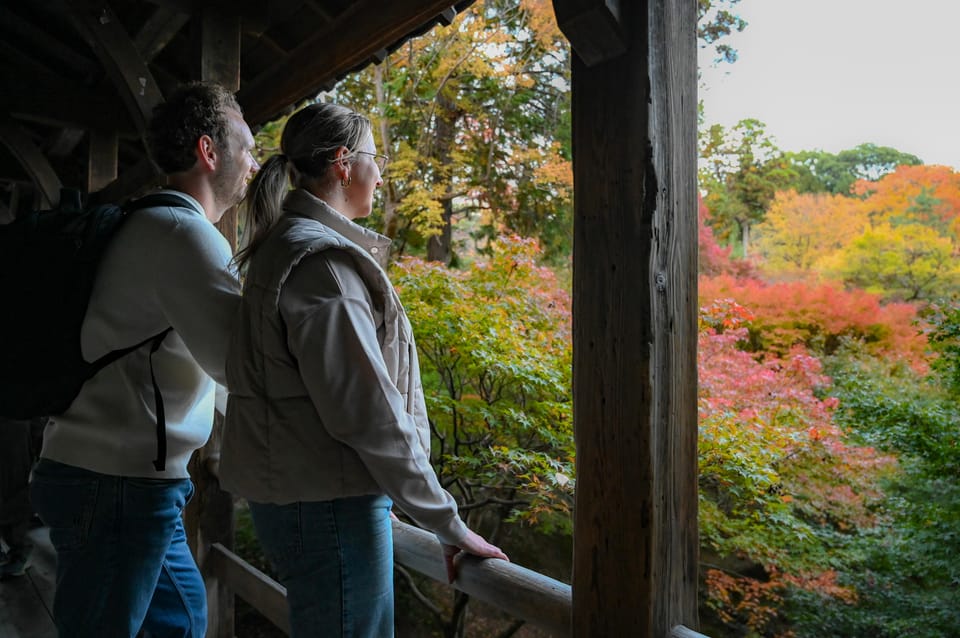
- UNESCO Toji starts the tour with Kyoto’s oldest temple energy, then the ride keeps rolling south.
- Gion backstreets are part of the experience, not just a quick stop at the main lanes.
- Tofukuji gets a dedicated photo stop, so you’re not rushing.
- Fushimi Inari is reached by bike, which feels smoother than arriving only on foot.
- Small-group pacing (max 8) helps the guide manage comfort and questions.
South Kyoto by Bike: what this route gives you in 3.5 hours
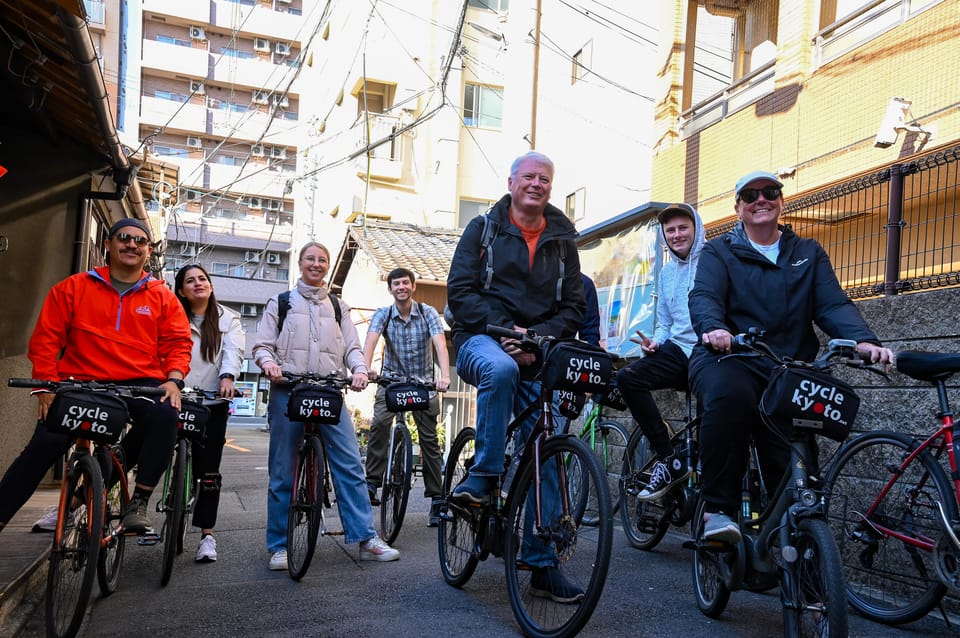
This tour is built for people who want Kyoto’s big names, but also want a ride that feels like you’re moving through real neighborhoods—not just hopping between landmarks. The timing is tight enough to be efficient, but not so rushed that every stop becomes a mad scramble.
You start with a short safety briefing, then you’re rolling. A bike makes Kyoto’s spacing easier. Temples and shrines that would take ages by foot suddenly connect into one coherent morning.
Also, the “south Kyoto” focus matters. North and central Kyoto get plenty of attention from first-timers. This route adds a different slice of the city: canals, river edges, Gion’s quieter lanes, and the approach to Fushimi Inari.
One more practical win: you get water, and you spend most of the time outdoors. That’s great in Kyoto when the weather is decent, and it helps you plan your day around the tour instead of around constant transport.
You can also read our reviews of more cycling tours in Kyoto
Toji and Higashi-Honganji: starting with UNESCO weight, not small talk
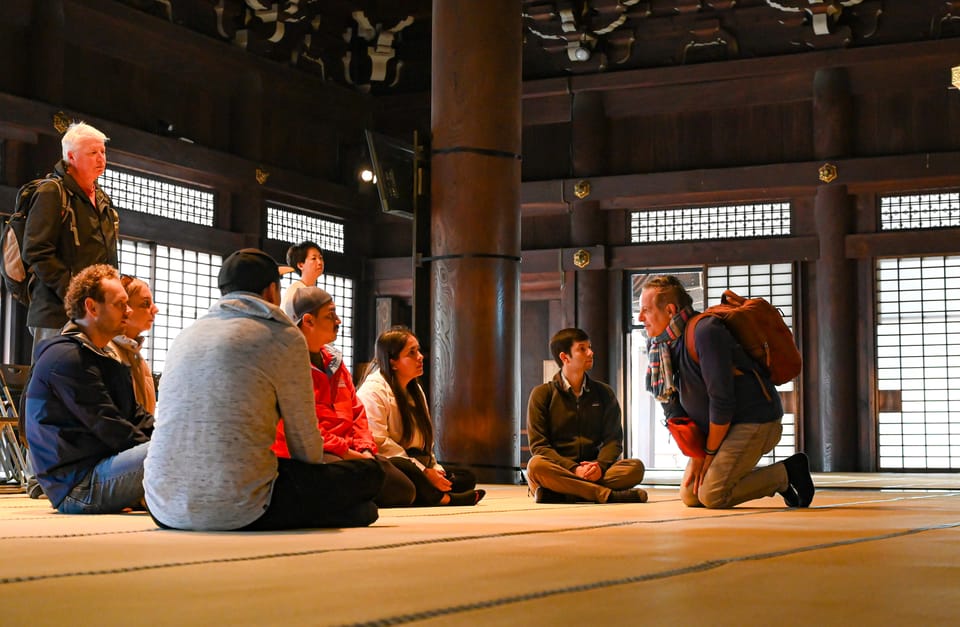
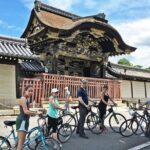
The ride begins at Toji, Kyoto’s oldest temple and a UNESCO heritage site. Starting here is smart because it sets the tone right away. Toji isn’t just a photo stop; it’s a foundation for understanding how Kyoto’s religious life works.
From there, the tour moves to Higashi-Honganji Temple, one of Japan’s largest temples. This is a good contrast: you’re not bouncing between tiny shrines that all feel the same after a while. Instead, you get scale—big temple grounds, a sense of how these places function within the city.
Why this pairing works: you get both historical significance (Toji) and monumental temple presence (Higashi-Honganji). By the time you reach the canals and Gion, your eyes feel “trained” for the architecture and layout.
If you like temples but hate feeling lost, this is the kind of guided start that helps. Your guide can point out what you’re looking at while you’re there, so you don’t end up staring at signs wishing you knew what they meant.
Takase Canal and the Kamo River: a breather between temples
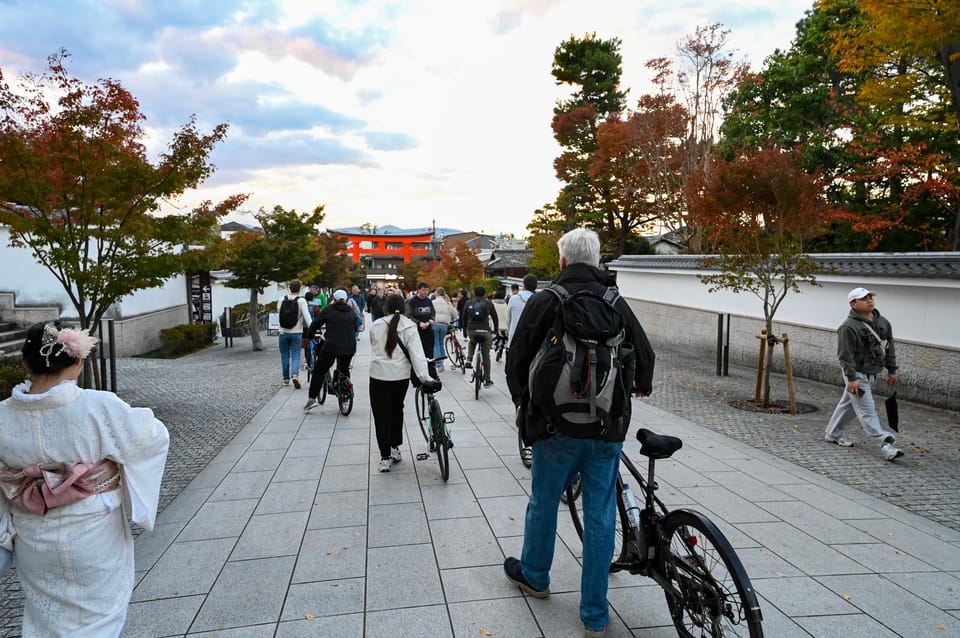
After temple time, you get a change of pace with the Takase Canal and then the Kamo River. These stops are brief, but they matter.
They’re like the tour’s reset button. When you’re biking, a little open space helps your legs and your attention. You’re not just stacking “more temples.” You’re getting a Kyoto rhythm: sacred space, then water and city edges, then the famous streets of Gion.
Even if it’s not the main headline of your trip, the river sections add atmosphere. You’ll see how Kyoto breathes outside the landmark zones. That’s often what makes a guided route feel more satisfying than a DIY checklist.
Gion backstreets: geisha district views with less chaos
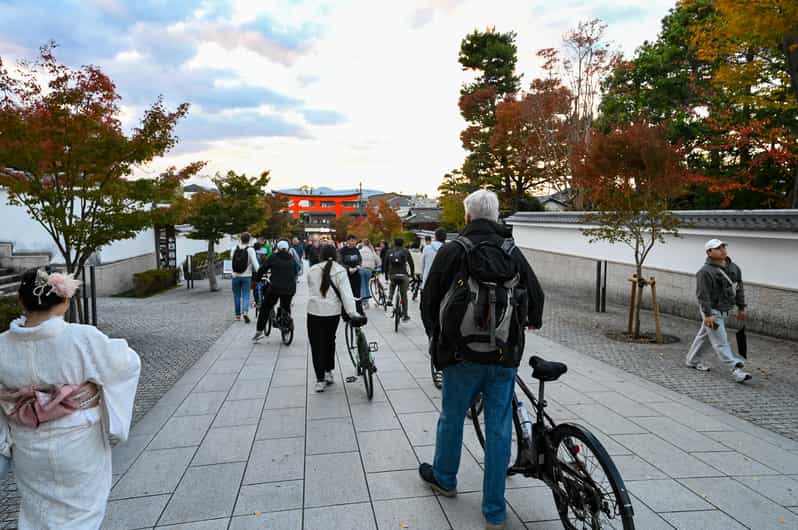
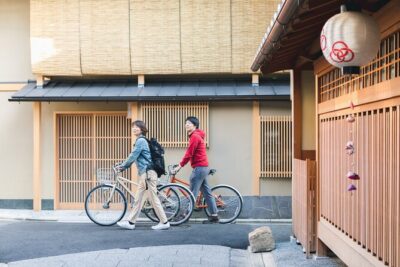
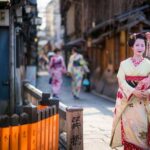
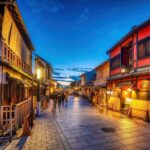
Next up is Gion, Kyoto’s famous geisha and teahouse area. The key here is not just that you enter Gion—it’s that you get time on backstreets rather than only the busiest lanes.
That makes a difference for two reasons. First, it feels more local. Kyoto’s main sights can be crowded, but the side lanes let you notice the small details: street geometry, the way buildings sit close to the road, and the quiet flow of pedestrians.
Second, biking through these areas is a practical advantage. You can cover ground without turning your day into a walking-only marathon. You still get the atmosphere, but you’re not exhausted before you reach Fushimi Inari.
I also like the order. Gion comes after two temple stops and a river pause, so you’re ready to switch from architecture to street-level Kyoto. It keeps the morning from turning into one long museum visit.
Tofukuji photo stop: you get time, not just a quick peek
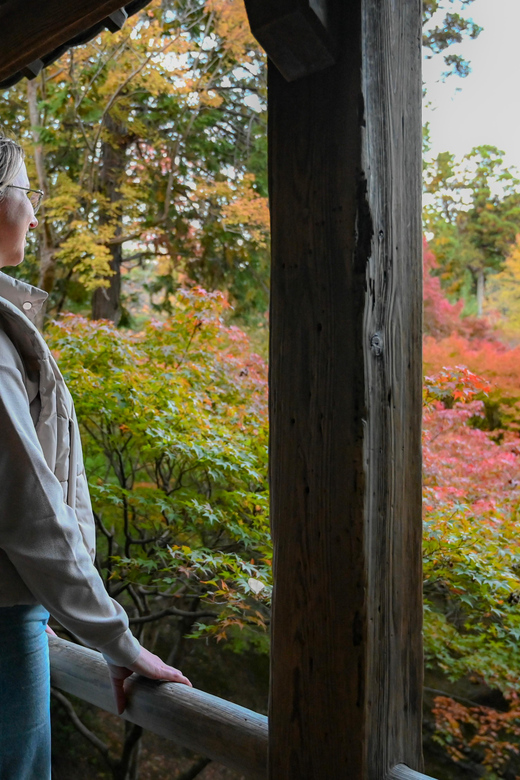
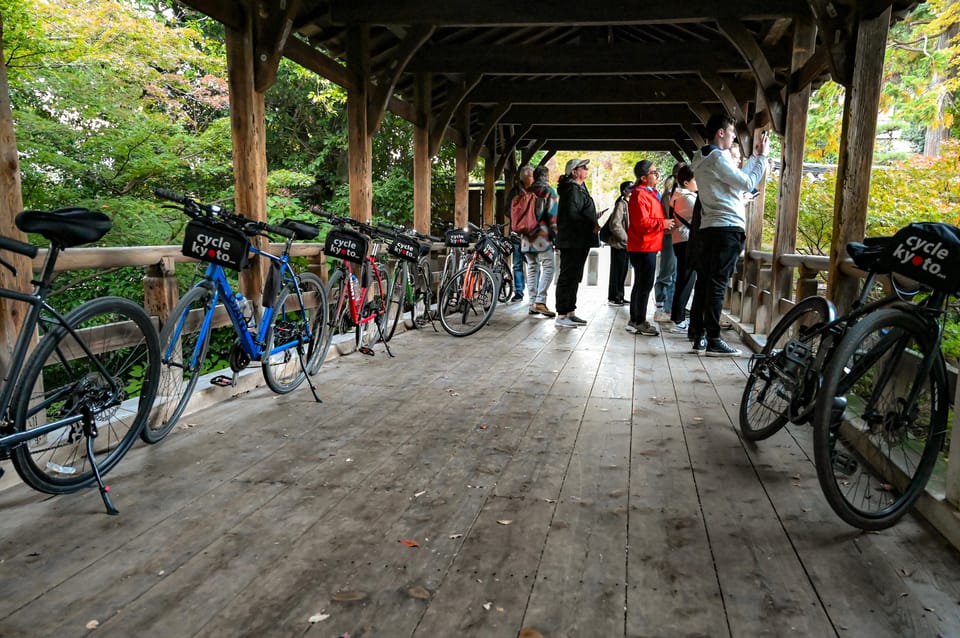
Then comes Tofukuji Temple, with a dedicated photo stop. This is the kind of stop that’s easy to underestimate until you’re there. When a guide gives you time to step back, frame shots, and actually look around, you walk away with better photos and a calmer experience.
Tofukuji is also strategically placed. After Gion, your brain is likely craving a moment that feels different—something still, scenic, and temple-focused. A photo stop gives you that shift without requiring a full, exhausting exploration session.
One consideration: if you’re the type who loves lingering in temples for an hour or two, a photo stop may feel short. But if you want a strong highlight without blowing your schedule, this is a sweet spot.
You can also read our reviews of more guided tours in Kyoto

Fushimi Inari Taisha: torii gates you reach with momentum
At Fushimi Inari Taisha, you’ll see the famous orange torii gates. This is the most visited attraction in Japan, and the tour handles it in the way you’d want if you hate wasting time: you arrive as part of a guided plan, then you do a tour-style walk around the area.
You get a guided experience here, then time for your own wandering among the gates. The bike ride in helps the experience feel like an event. You’re not just dropped at a crowded entrance and told good luck.
Practical tip: bring a camera and set expectations. You’ll likely want photos at multiple angles, and the torii corridor encourages repeat shots from different positions. The tour gives you a structured visit, but you’re still free to move at your pace during the time for the gates.
Bikes, pacing, and what the small group really changes
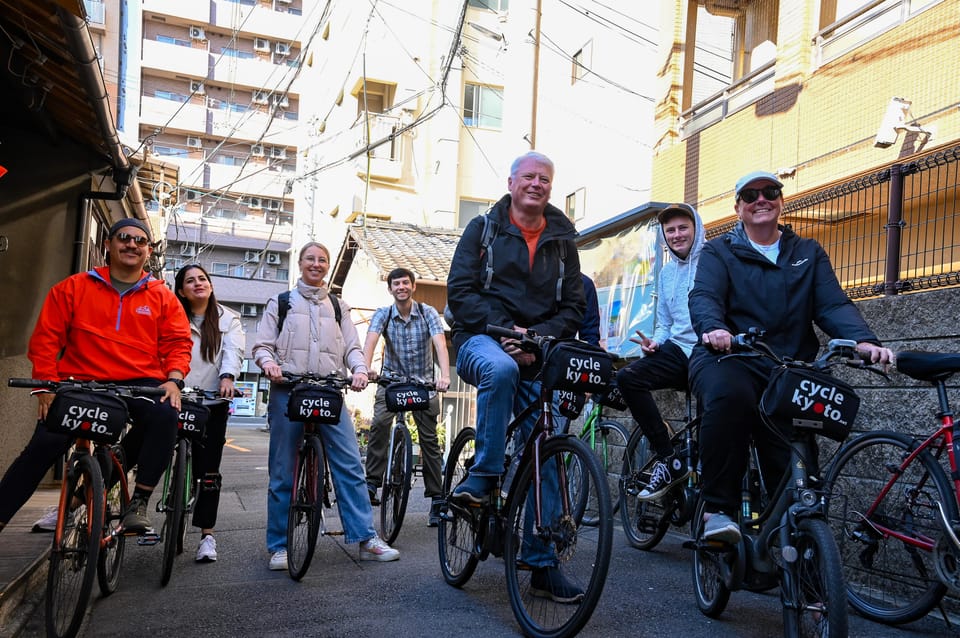
This tour runs with a small group limited to 8 participants, and it’s led in English. That size is the whole point. Big groups struggle to pause for questions and can’t always control the flow around narrow areas. A smaller group makes the guide’s job easier and makes the experience feel more personal.
You also get bicycle rental, a helmet, and water. That’s value you don’t have to calculate in your budget or logistics. And bikes are offered in a variety of sizes, which matters because a good fit makes biking in Kyoto far more comfortable.
Pacing is another quiet win. I like that the tour is designed as a guided ride with short visits, not a full-day endurance test. That said, it’s still a bike tour. You’ll want to wear comfortable clothes suitable for biking and have comfortable shoes—especially if your feet will be doing photos on temple stone paths.
About guides: English-speaking guides like Jay, Julian, Indra, Juan, Sean, and Mayco appear in recent bookings. In practical terms, what stands out is the recurring theme of guides who keep things easygoing, answer questions well, and adapt when weather is awkward—rain included.
If you’re offered an e-bike upgrade for an additional 3000 yen, it can be a smart choice if you want to focus more on sights and less on leg burn.
Who should take this, and who should skip it
This tour fits best if you want a compact Kyoto plan with a mix of religion, streets, and scenery. It’s especially good if you:
- want to see iconic places like Toji and Fushimi Inari without spending all day in transport
- enjoy walking through historic sites but prefer not to do every kilometer on foot
- like structured guidance when you’re in dense areas like Gion
It’s not for everyone. It requires you to be able to ride a bike comfortably. It’s also not suitable for people with back problems, and the minimum age for public tours is 13.
One more note: not allowed are smoking and alcohol and drugs. That keeps the vibe family-friendly and practical.
Finding Cycle Kyoto near Kyoto JR Station
The meeting point is at Cycle Kyoto near Kyoto JR Station. The directions are clear:
- From Kyoto JR Station, go past Avanti
- Cross one set of traffic lights
- After the Daily Yamazaki convenience store, take the next left
If you like to arrive early (and you should), give yourself a few extra minutes for street navigation. Kyoto stations are busy, and small streets can feel confusing at first—especially if it’s raining or you’re carrying a camera bag.
What to bring for comfort (and fewer grumpy moments)
You’re out for about 210 minutes, so don’t pack like it’s a museum only. Bring:
- comfortable shoes
- warm clothing (Kyoto can surprise you, even when days look mild)
- a camera
- sunscreen
- comfortable clothes suitable for biking
You’ll also get a small pouch on the bicycle for personal items. That’s useful for essentials like a phone, a light layer, or small water-related items (even though you’re also provided water).
Weather matters here because you’ll be biking outdoors. Check conditions before you go, and dress for the ride, not for the photo.
Price and value: why $77 can make sense in Kyoto
At $77 per person for about 3.5 hours, this isn’t the cheapest way to see Kyoto, but it often feels fair when you add up what’s included. You’re paying for:
- a bike rental
- a helmet
- an English-speaking guide
- water
- a planned route that connects multiple major sights efficiently
The value gets stronger if you’re short on time or if you’d otherwise spend a lot of money and energy figuring out transportation plus finding a coherent route. With a guided bike plan, you trade some freedom for smoother logistics and better “what am I looking at” context.
Also, the small group size (max 8) is part of the price justification. You’re not sharing attention with a huge crowd.
If you’re someone who enjoys DIY wandering more than structured sightseeing, you might feel constrained. But if you want Kyoto’s highlights in one morning with less hassle, this price usually works.
Should you book this Kyoto half-day bike tour to Fushimi Inari?
I’d book it if you want a focused South Kyoto hit: Toji + Higashi-Honganji, then water edges, then Gion backstreets, finishing with Tofukuji and the torii gates at Fushimi Inari. It’s the kind of tour that helps first-time visitors avoid the common mistake of seeing too many stops in the wrong order—or spending half the day commuting.
Skip it if you’re not confident on a bike, you have back problems, or you hate spending time in the saddle even if the sights are great. Also, if you need a long temple-only day, the tour’s structure may feel a bit tight.
If conditions are decent and you’re comfortable biking, this is a strong, efficient way to get Kyoto to “click” fast.
FAQ
How long is the Kyoto half-day guided bike tour with Fushimi Inari?
It runs for about 210 minutes.
What’s included in the price?
You get bicycle rental, a helmet, an English live guide, and water.
Are meals included?
No, meals are not included.
Where is the meeting point?
Meet at Cycle Kyoto near Kyoto JR Station. Go past Avanti, cross one set of traffic lights, then after the Daily Yamazaki store take the next left.
How big is the group?
The tour is limited to a small group of up to 8 participants.
Do I need to bring anything?
Bring comfortable shoes, warm clothing, a camera, sunscreen, and comfortable clothes suitable for biking.
Is there a minimum age?
Yes. The minimum age for a public tour is 13.
Can I request an e-bike?
Yes. E-bikes are available upon request for an upgrade fee of 3000 yen.
What should I do about weather?
Check weather conditions before departure, since the tour is outdoors and involves biking.
Is the tour suitable if I have back problems or can’t ride a bike?
No. It’s not suitable for people with back problems or for people who can’t ride a bike.