REVIEW · KYOTO
Kyoto Early Morning Private Tour with Government-Licensed Guide
Book on Viator →Operated by Japan Guide Agency · Bookable on Viator
Kyoto gets magical before the city fully wakes up. This private early-morning tour helps you hit major shrines and temples with fewer crowds, plus a licensed English-speaking guide who can explain what you’re seeing (and what to skip next).
Two things I especially like: the flexibility to choose 2–3 stops from a big menu, and the way the guide turns Kyoto sights into real context—history, daily life, and cultural habits you’d miss if you just follow maps.
One drawback to plan around: it’s a walking tour, and within about 4 hours you’ll need to choose wisely. Also, several big-name sites have admission not included, so the total cost can creep up if you select multiple paid attractions.
In This Review
- Key highlights you’ll feel right away
- Why Kyoto’s early hours change everything
- Price and time: what you’re really paying for
- What private guiding feels like (and what it doesn’t)
- Your pick-your-stops Kyoto menu: how to choose well
- Stop-by-stop guide: what each choice is like
- Fushimi Inari-taisha Shrine (Free)
- Nijo Castle (Admission not included)
- Gion (Free)
- Nishiki Market Shopping District (Free)
- Kiyomizu-dera Temple (Admission not included)
- Kyoto Imperial Palace (Admission not included)
- Pontocho (Free)
- Higashiyama Ward (Free)
- Ginkakuji Temple (Admission not included)
- Nanzenji Suirokaku (Admission not included)
- Tofuku-ji Temple (Admission not included)
- Toji (Free)
- Kinkakuji Temple (Admission not included)
- Ninna-ji Temple (Admission not included)
- Shugakuin Imperial Villa (Admission not included)
- Kibune River (Admission not included)
- Kurama-dera (Admission not included)
- Ryoan-ji Temple (Admission not included)
- Arashiyama (Admission not included)
- Katsura Imperial Villa (Admission not included)
- Daikaku-ji Temple (Admission not included)
- Tenryu-ji Temple (Admission not included)
- Togetsukyo Bridge (Free)
- Bamboo Forest Street (Free)
- Okochi Sanso Garden (Admission not included)
- Jojakkoji Temple (Admission not included)
- Nisonin (Admission not included)
- Gioji Temple (Admission not included)
- Adashino Nenbutsu-ji Temple (Admission not included)
- Otagi Nenbutsu-ji Temple (Admission not included)
- Notes on duplicates in the menu
- The guide component: what you’re paying for beyond tickets
- Logistics you should plan around (so nothing surprises you)
- Tips for choosing your 2–3 stops in 4 hours
- Who this tour suits best
- Should you book this Kyoto early-morning private tour?
- FAQ
- How long is the tour?
- What kind of stops can I choose?
- Are entrance fees included?
- Do I get pickup from my hotel?
- Is this a walking tour?
- Is the tour private?
- What language is the guide?
- Can I cancel for a full refund?
- Are service animals allowed?
Key highlights you’ll feel right away
- Early start for calmer sights like Fushimi Inari-taisha Shrine and Kiyomizu-dera Temple
- Pick 2–3 favorites instead of committing to a fixed, exhausting route
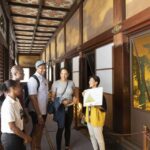
- Government-licensed, English-speaking guide with practical storytelling and on-the-ground guidance
- Walking-first format with meet-up on foot and no private vehicle included
- Free neighborhoods vs paid temples so you can mix-and-match based on your budget
Why Kyoto’s early hours change everything
Kyoto’s crowds don’t just make lines longer. They flatten the whole experience. At peak times, you spend more energy dodging people than noticing details—carved wood, subtle shrine rules, or why one path feels different from the next.
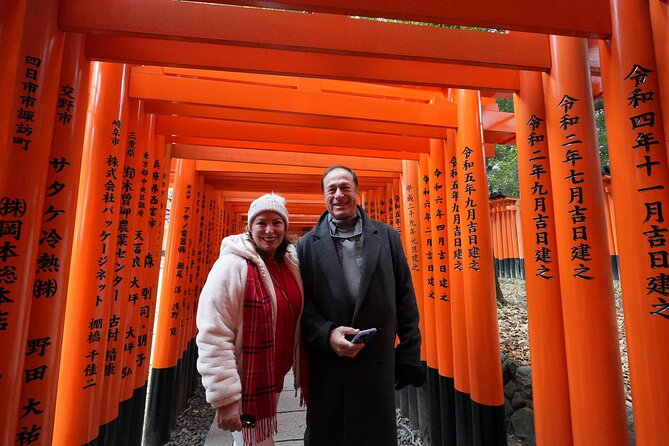
An early start time matters because it buys you breathing room. You can walk through areas like Fushimi Inari-taisha with torii gates in your peripheral vision instead of fighting shoulder-to-shoulder congestion. It also makes guide talk easier to follow: when the area is calmer, you can actually hear the stories and ask questions.
You can also read our reviews of more guided tours in Kyoto
Price and time: what you’re really paying for
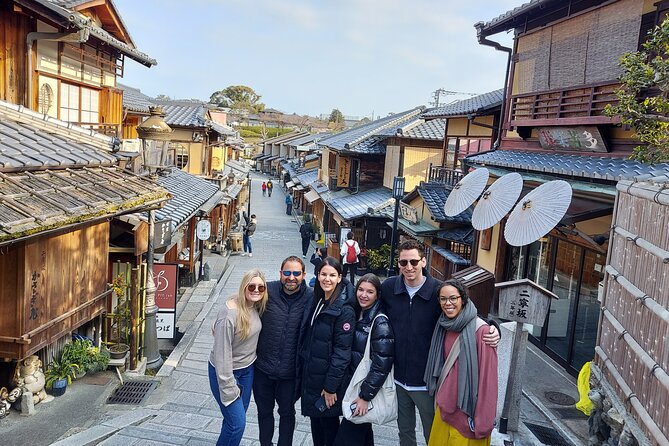
The price is $101.82 per person for about 4 hours, and the value depends on how you travel.
If you’re a couple or a small group, the private setup means you’re paying for:
- a real human guide (not audio)
- smarter routing between nearby areas
- the confidence of knowing what you’re looking at
- less wasted time on dead ends
The trade-off is that you don’t get a driver or a big-van “see everything” experience. This is walking, and admissions vary by stop. If you choose multiple paid sites (castle, major temples), you’ll likely pay extra tickets on your own for those places.
What private guiding feels like (and what it doesn’t)
Private tours sound fancy, but the practical benefit is simple: you control the rhythm. Want to linger at a shrine detail? You can. Want to skip the longest queue path? You can usually adjust on the fly, as long as you stay within the chosen 2–3 stops.
Your guide is also there to help your day after the tour. Several guides associated with this company are known for strong English and helpful orientation—things like where to go next, how to move efficiently, and what to prioritize once you’re on your own.
One more note: your tour is private, so it’s only your group. That’s great for pacing, but it also means there’s no merging into other groups if you’re hoping to “share a ride” or tag along with strangers.
Your pick-your-stops Kyoto menu: how to choose well
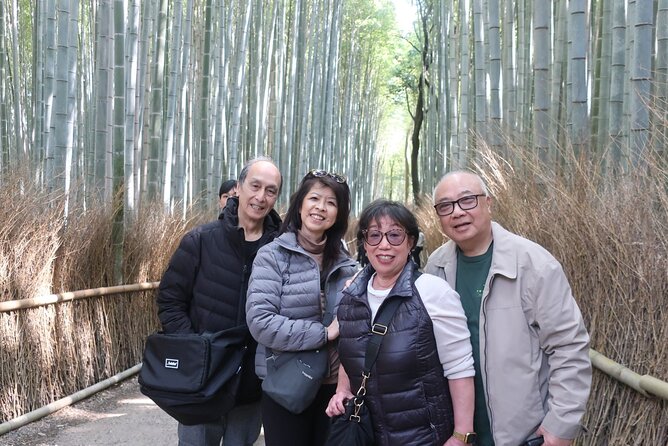
You’ll choose 2–3 sites from the big menu of options. So instead of thinking “what’s the route,” think “what mood do I want in 4 hours?”
Here are the smart ways people usually shape the morning:
- Iconic Kyoto hits: Fushimi Inari + Gion + Kiyomizu-dera (or Higashiyama nearby)
- Temple and garden focus: Ginkakuji + Nanzenji + a calmer eastern temple area
- West Kyoto scenery: Arashiyama + Tenryu-ji area + Togetsukyo Bridge/bamboo
- Quiet hillside add-on: a temple tucked into the hills (where early timing really helps)
Now, let’s break down what each major stop is best for, plus practical considerations.
Stop-by-stop guide: what each choice is like
Below are the places you can select. Some are free to visit (based on what’s listed), while others have admission not included, so check the totals when you build your 2–3 stop plan.
You can also read our reviews of more private tours in Kyoto
Fushimi Inari-taisha Shrine (Free)
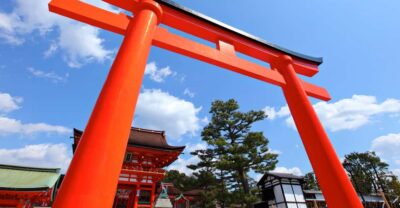
This is the torii-gate icon of Kyoto. The famous tunnel look is real, but what I like most is the sense of stepping into a shrine world that feels layered—ritual spaces, side paths, and viewpoints as the gates continue.
Consideration: It’s popular even early, because the “best photo angle” draws people fast. Still, the early start helps a lot.
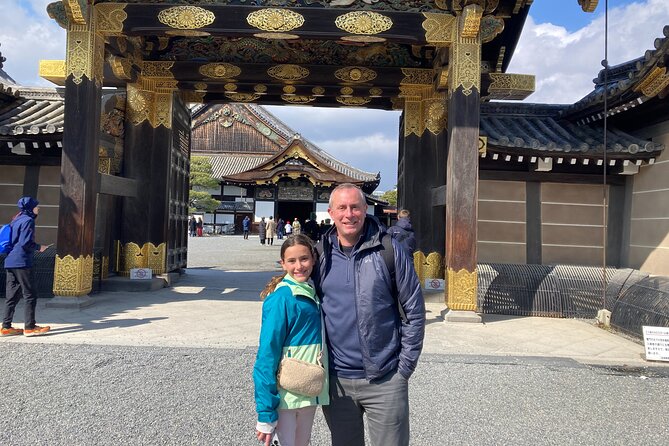
Nijo Castle (Admission not included)
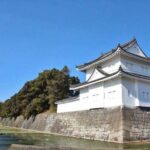
A UNESCO-listed site tied to the Tokugawa-era residence of Tokugawa Ieyasu. It’s the kind of stop where a guide makes a big difference, because you’re not just looking at buildings—you’re reading power, design, and period life.
Consideration: Paid entry plus time needed inside means it can eat a chunk of a 4-hour window. Great choice if you love architecture and Edo history.
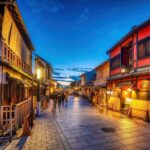
Gion (Free)
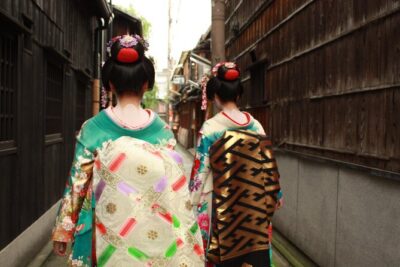
This is the classic Kyoto streetscape: narrow lanes, old-style neighborhood feel, and the vibe of tradition. It’s less about one “thing” and more about atmosphere.
Consideration: If you only have 4 hours, Gion is a good add-on, but don’t pair it with too many distant temples unless your guide can keep you efficient.
Nishiki Market Shopping District (Free)
Known as a food-and-kitchen style market street. Even if you don’t buy much, it’s useful for seeing how everyday food culture shows up in Kyoto.
Consideration: It’s lively. Even early, it can get busy, and shopping slows walking speed.
Kiyomizu-dera Temple (Admission not included)
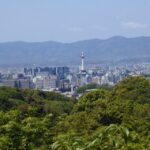
One of Kyoto’s best-known temples. It’s scenic, but the value is how it connects viewpoints and sacred spaces. With a guide, you’re more likely to notice why people move where they do.
Consideration: This is a paid stop and also a major crowd magnet, so early timing is key.
Kyoto Imperial Palace (Admission not included)
If your interest leans toward governance and the imperial timeline, this is a meaningful choice. It reflects the shift of Japan’s capital story, and it’s spread out enough that you don’t just rush through.
Consideration: Paid entry plus the time to walk the grounds means it works best as one of your main picks.
Pontocho (Free)
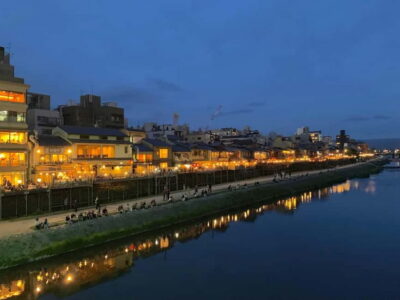
A narrow dining alley area along the river. Early morning gives you a calmer version of the atmosphere, and your guide can help you spot what makes it feel old Kyoto rather than just a restaurant street.
Consideration: It’s more of a stroll/ambience stop than a “must-see building” stop.
Higashiyama Ward (Free)
This is the “historic lanes on the slope” zone. Think of it as a backdrop that makes Kyoto feel like Kyoto—walkable streets, old-town feel, and views that pop as you change elevation.
Consideration: It’s easy to wander. If you’re short on time, use it as a transition zone or wrap it around one anchor temple.
Ginkakuji Temple (Admission not included)
The Silver Pavilion temple area, linked to Zen-era aesthetics and design. It’s a strong choice if you like quiet spaces and garden-minded sightseeing.
Consideration: Paid entry and time inside. Pair it with something nearby in eastern Kyoto to avoid rushing.
Nanzenji Suirokaku (Admission not included)
Nanzenji temple grounds plus the famous aqueduct-style structure (Suirokaku). It adds variety: not only temples, but dramatic stonework you can’t get from photos alone.
Consideration: This can be a “photo + walk” stop. It’s worth it if you enjoy structure and scale.
Tofuku-ji Temple (Admission not included)
A large Zen temple known for spectacular autumn color. Even if you visit outside fall, the temple grounds still offer space and a sense of importance.
Consideration: If you’re visiting in a different season, ask your guide what to focus on for that time of year, since not everything peaks year-round.
Toji (Free)
Toji is listed as free here, and it’s a good choice when you want a temple stop without adding another ticket cost. It’s also a great “add-on” anchor if you’re trying to manage budget.
Consideration: Works best if the rest of your route stays in the same side of town.
Kinkakuji Temple (Admission not included)
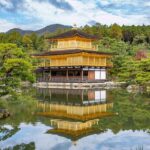
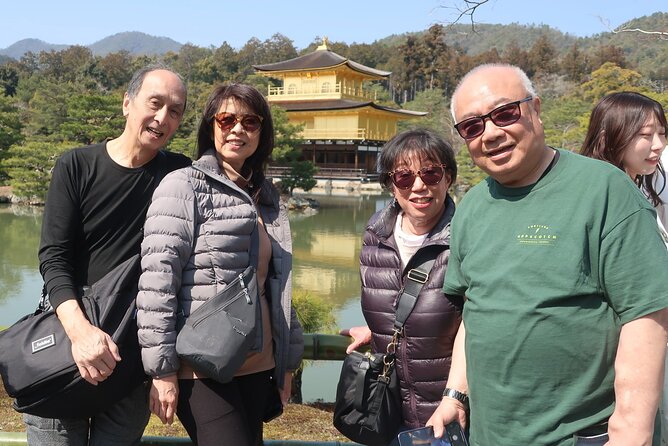
The Golden Pavilion temple. It’s visually striking in a way that makes it one of Kyoto’s most recognizable stops.
Consideration: Paid entry plus popularity. Early timing helps, but this is still a top pick for crowds compared to lesser-known hillsides.
Ninna-ji Temple (Admission not included)
A World Heritage listed temple with strong historical ties. If you want Kyoto that feels less like a tourist checklist, this is a decent option.
Consideration: Paid entry and walking inside can make it harder to fit with far-apart choices.
Shugakuin Imperial Villa (Admission not included)
An imperial villa complex managed by the Imperial Household Agency. It’s the kind of stop that suits travelers who like gardens and estate layouts.
Consideration: Paid entry. Also, estate-style sightseeing can take more time than you think if you’re photo-heavy.
Kibune River (Admission not included)
A small valley town vibe around Kibune, tied to shrine legend and mountain scenery. This is a very different Kyoto look than the central districts.
Consideration: It’s more “place” than “single landmark.” It can be perfect if you want a quieter mood.
Kurama-dera (Admission not included)
A mountain temple area in the northern Kyoto region. If you’re trying to escape the densest crowds, pairing a mountain temple feel with the early start can work nicely.
Consideration: Not included admission and extra travel time from central Kyoto means it works best when you choose it as one of your main 2–3 stops.
Ryoan-ji Temple (Admission not included)
Famous for its rock garden. This is the kind of stop where a guide’s framing helps you see why visitors obsess over composition and viewpoints.
Consideration: Admission cost plus time spent looking. It’s worth it, but it’s not a quick photo stop.
Arashiyama (Admission not included)
A major west Kyoto district with scenic appeal and historic roots. Even when it’s touristy, the natural setting gives you a “slow down” feel.
Consideration: It can still get busy. Early morning helps, but your pacing matters.
Katsura Imperial Villa (Admission not included)
A garden-and-architecture standout. If you like design and curated landscapes, this choice fits.
Consideration: Paid entry means budget planning matters.
Daikaku-ji Temple (Admission not included)
A large temple in the Sagano area, tied to imperial history (detached palace roots). It’s good if you want a temple stop that’s also about place and period.
Consideration: Paid entry and time inside—pair it smartly.
Tenryu-ji Temple (Admission not included)
One of the key Arashiyama temples and a head temple for one Zen tradition link. With its grounds, it’s a classic “walk and see” stop.
Consideration: Paid entry. Also, Arashiyama can be a crowd magnet even early.
Togetsukyo Bridge (Free)
The iconic bridge over the river in Arashiyama. It’s a strong photo spot and a clean geographic anchor.
Consideration: Free, but you’ll share the space with other photographers if the timing isn’t perfect.
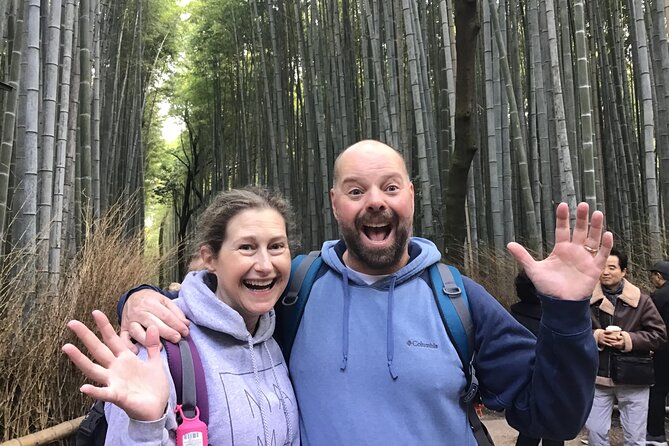
Bamboo Forest Street (Free)
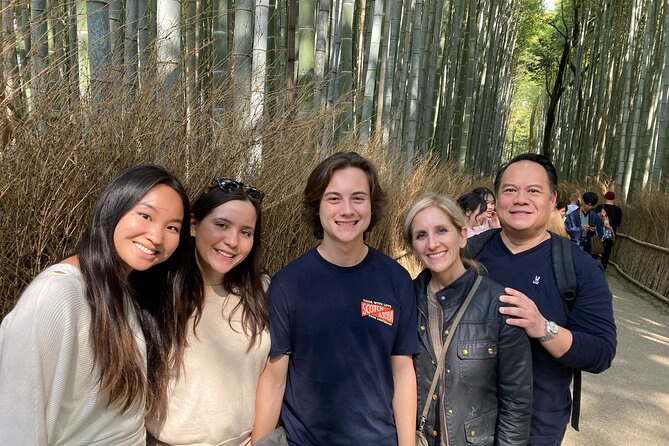
A walk through bamboo groves. Early morning can make this feel almost cinematic compared to later in the day.
Consideration: It’s free, but it’s also one of the busiest “top view” areas, so go early and keep moving.
Okochi Sanso Garden (Admission not included)
A former villa garden area inside Arashiyama’s bamboo zone. This is a good choice if you want a garden experience with a paid entry that likely includes curated space.
Consideration: Paid entry; it works best if your other selections are near Arashiyama.
Jojakkoji Temple (Admission not included)
A hillside temple feel with small buildings and a quiet atmosphere. It can offer a calmer break from big central landmarks.
Consideration: Paid entry and steps can slow your pace—plan for a slower rhythm if you choose this.
Nisonin (Admission not included)
Another hillside option with a slightly more imposing presence. It’s listed here for a reason: it tends to feel like Kyoto’s quiet side.
Consideration: Paid entry and time spent walking uphill paths.
Gioji Temple (Admission not included)
A forested, moss-forward mood with thatched-roof style character on the entrance and main hall.
Consideration: Paid entry and it can feel tucked away, so give it the attention it deserves.
Adashino Nenbutsu-ji Temple (Admission not included)
A temple connected to old statue traditions and memorial style stonework. This option fits travelers who like off-the-radar temple mood.
Consideration: Paid entry, plus it’s not a “one building and done” stop.
Otagi Nenbutsu-ji Temple (Admission not included)
Known for its large collection of stone statues of rakan, each with different features. This is a memorable stop if you like visual patterns and quiet wandering.
Consideration: Paid entry; the walk among statues is part of the point.
Notes on duplicates in the menu
Some sites appear more than once in the provided stop list (like Tenryu-ji, Katsura Imperial Villa, and Shugakuin Imperial Villa). Practically, you should treat them as selectable options, not separate destinations.
The guide component: what you’re paying for beyond tickets
A good guide does three things fast:
1) helps you understand what matters at each stop
2) prevents time-wasting detours
3) turns “I saw it” into “I got it”
Several guides associated with this agency stand out in the way they communicate and adjust pace. People have been guided by Rie, Tomy, Kay, Yasu, Mayumi, Nabet, Yoji, and Yoshi Tanizawa. Common themes include clear English, strong local knowledge, and reaching out ahead of time.
One practical example from this company’s history: some guides start early enough that major sites feel surprisingly calm, making it easier to enjoy temple grounds rather than rush through them.
Logistics you should plan around (so nothing surprises you)
- It’s a walking tour, and meet-up is on foot within a designated Kyoto area.
- A private vehicle is not included, so don’t expect a driver.
- Many stops list admission not included, so you should budget for entrance tickets for the temples/castles you pick.
- Your guide entry fees are only covered for sights listed in the tour’s expectation set—so your plan should focus on selecting from the places that fit your interests.
Also, there’s a specific rule: you can’t combine multiple tour groups. So if you’re traveling with friends and want to merge, you’ll need to coordinate within your own booking group.
Tips for choosing your 2–3 stops in 4 hours
If you’re unsure, use this quick decision rule:
- Pick one anchor temple/shrine (Fushimi Inari, Kiyomizu-dera, Kinkakuji, Ryoan-ji, Tenryu-ji, etc.).
- Add one neighborhood mood (Gion, Higashiyama Ward, Pontocho, Nishiki Market).
- Add one garden or architectural stop only if it’s close to the anchor.
If you try to stack three heavy “paid entry + lots of walking” sites, you’ll start rushing. Better to mix intensity: one major landmark, one calmer area, then one more structured visit.
Who this tour suits best
This is a good fit if you:
- want Kyoto without the crush of big bus tours
- like temples and shrines but also want context
- value a plan that can flex when you feel like lingering
- prefer a morning pace before the day gets hot and crowded
It may not be the best fit if you want to see a huge checklist of many distant sights, because the tour is walking-based and you’ll have only about 4 hours.
Should you book this Kyoto early-morning private tour?
Yes, you should book if your goal is: calmer Kyoto + smart guidance + a short list you actually enjoy. The early start is the whole point, and the private format lets you shape the experience around your interests instead of copying someone else’s itinerary.
I’d hesitate only if you want a transport-heavy sightseeing day with minimal walking, or if you’re trying to pack three major paid temples far apart. For most people, the best approach is one iconic anchor (like Fushimi Inari or Kiyomizu-dera) plus one neighborhood vibe (Gion, Higashiyama, Nishiki) and one optional temple or garden close by.
FAQ
How long is the tour?
It’s about 4 hours.
What kind of stops can I choose?
You can choose 2–3 sites from the tour’s listed options, including places such as Fushimi Inari-taisha Shrine, Nijo Castle, Gion, Nishiki Market, Kiyomizu-dera Temple, Arashiyama, Tenryu-ji Temple, Togetsukyo Bridge, and more.
Are entrance fees included?
Admission is not included for several attractions (many are marked Admission Ticket Not Included). Some stops are marked free (for example, Fushimi Inari-taisha, Gion, Nishiki Market, Toji, Togetsukyo Bridge, and bamboo forest street).
Do I get pickup from my hotel?
Pickup is offered, but the tour is a walking tour with a meet-up on foot within a designated Kyoto area.
Is this a walking tour?
Yes. The experience is described as a walking tour, and you should expect to be on foot.
Is the tour private?
Yes. It’s a private tour/activity, and only your group participates.
What language is the guide?
You get a licensed local English-speaking guide.
Can I cancel for a full refund?
Free cancellation is available up to 24 hours before the experience start time for a full refund.
Are service animals allowed?
Yes, service animals are allowed.
If you tell me your dates and which 2–3 sights you’re leaning toward (for example Fushimi Inari + Gion + Kiyomizu-dera, or Arashiyama + bamboo + Tenryu-ji), I can help you pick the best combo for the smoothest morning.