REVIEW · KYOTO
Itajime Shibori Scarf Class
Book on Viator →Operated by Kyoto Shibori Museum · Bookable on Viator
Kyoto has a special kind of calm for crafts. This Itajime shibori scarf class pairs hands-on dyeing with museum time, so you learn the technique and also see the art that came before. It is the kind of activity that feels both creative and quietly educational.
What I like most is how hands-on it is, with clear, step-by-step help as you create your scarf. I also love the small-group feel (max 10), which makes it easier to ask questions and actually get the technique right—especially if you are not an artsy person. Instructors like Kenji and the teacher some groups meet (including June) are patient and focused on helping you succeed.
One thing to consider: the class runs about 30 minutes to 1 hour, so if you hate waiting while fabric dries, plan to stay a bit longer for that part of the process.
In This Review
- Key highlights you should know
- Itajime shibori in Kyoto: a craft you can actually use
- Timing, price, and group size that make it feel personal
- Getting to Kyoto Shibori Museum without wasting time
- Step-by-step: how the scarf class actually works
- The museum bonus: history, displays, and process film
- What you take home: a real Kyoto-made souvenir
- Who should book this shibori scarf class in Kyoto
- Price value check: is $43.60 actually worth it?
- Should you book this Itajime shibori scarf class?
- FAQ
- How long is the itajime shibori scarf class?
- Where does the class take place?
- What is included with the class?
- Can I choose the fabrics?
- What is the minimum age to participate?
- What is the group size limit?
- Is a mobile ticket provided?
- Is the museum easy to reach using public transportation?
- Is there parking available?
- What is the cancellation policy?
Key highlights you should know
- Small group size (max 10) keeps the class personal and question-friendly
- Itajime shibori technique taught with traditional tools and a real process focus
- Choose from Japanese fabrics, then dye and finish your scarf to take home
- Museum admission included, so you can explore exhibits while your scarf sets
- Mobile ticket makes check-in simple
- Museum studio is on the 2nd floor, so give yourself a minute to find it
Itajime shibori in Kyoto: a craft you can actually use

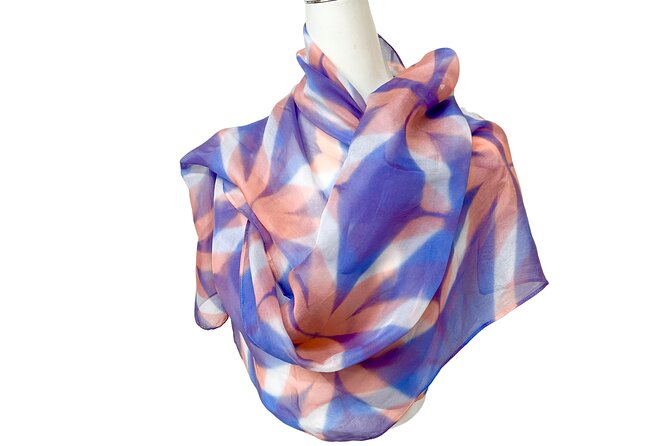
Shibori is one of those Japanese words you keep hearing once you start paying attention to textiles. It is a resist-dyeing method, which basically means you control the pattern by how you clamp, fold, or bind the fabric before dye hits it. With Itajime shibori, that resist technique can create bold, crisp shapes—less like random tie-dye and more like designed pattern work.
In Kyoto, that matters. You are not just making something cute; you are learning a craft that connects to kimono fabric culture and long-running dye traditions. And because your scarf is the product of that craft, you get a tangible souvenir, not a disposable keepsake.
This class also has a good pacing trick: while dyeing happens, you can shift your brain to museum viewing. That makes the time feel balanced, not rushed. Even better, the atmosphere tends to be serene, so you can slow down for an hour in the middle of sightseeing.
You can also read our reviews of more tours and experiences in Kyoto


Timing, price, and group size that make it feel personal
The experience runs 30 minutes to 1 hour, so it fits into a normal Kyoto day without turning into a half-day project. You also get flexibility in real life—dyeing and drying times vary a bit depending on what you make, but the overall session stays within that window.
Now the money question: $43.60 per person. On paper, that is not free. But here is the value logic. You are paying for (1) an instructor guiding you through a traditional technique, (2) materials and tools used for the scarf, and (3) museum admission included with your visit. For many craft workshops, you mostly pay for materials and instruction. Here you also get a museum component built in, which helps justify the price.
Group size is another big value piece. With a maximum of 10 travelers, you are more likely to get hands-on coaching instead of being watched from across the room. The vibe in the class comes through in feedback: people describe it as interactive and genuinely welcoming, with help that stays patient as you work.
You should also note the age rule: minimum age is 6, and adult pricing applies to all ages. If you are traveling with kids, this is a rare craft that seems built for families, not only for adults who can follow instructions in Japanese.
Getting to Kyoto Shibori Museum without wasting time
The class is at the Kyoto Shibori Museum, and it is near public transportation, which is a real lifesaver in Kyoto where walking can add up fast. Parking is available too: two car parking spaces and bicycle parking spaces.
One practical heads-up from past participants: the classroom is on the 2nd floor, and it may not be super obvious from the street. The simplest fix is to plan a little extra buffer time and ask staff where the workshop room is when you arrive. Once you are inside, the steps and setup tend to feel organized and friendly.
Also, you get a mobile ticket, which reduces hassle on the day. Have it ready on your phone so you can move fast and start the craft portion sooner.
Step-by-step: how the scarf class actually works
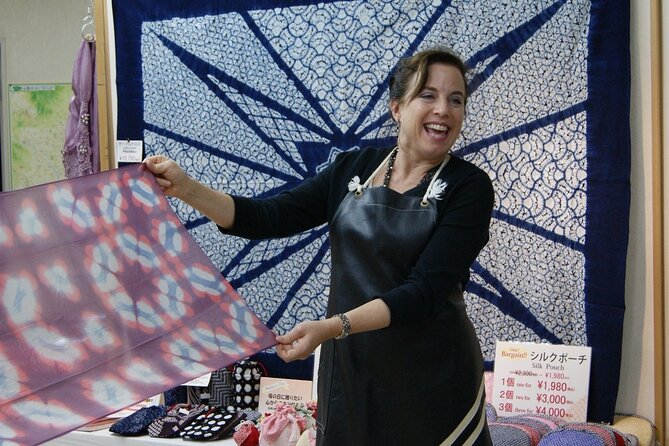
This workshop is built around learning how shibori creates patterns through resist dyeing. You start by choosing your scarf approach and materials. People often mention selecting colors and patterns first, so do not treat that part like a formality. The choices you make at the beginning shape the look you will end up with.
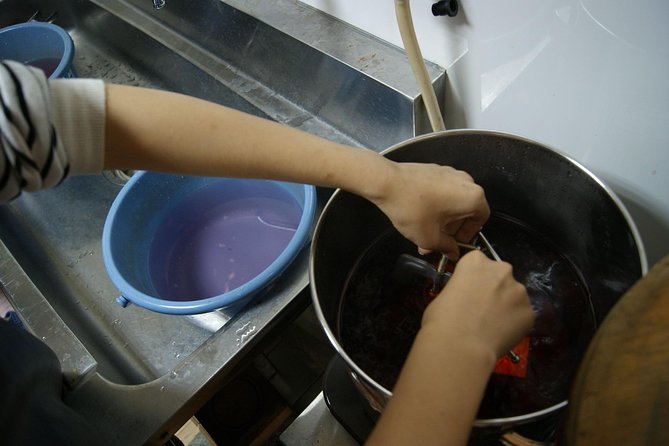
Then comes the hands-on part. You use traditional tools and the teacher helps guide the process of preparing the fabric so dye behaves the way it should. The class is described as clear in its instructions, which matters because shibori is one of those crafts where small details change the final effect.
After the resist setup, you dye the fabric. Once it is dyed, you need time for it to set and dry. This is where the workshop timing turns from frustrating to satisfying: instead of being stuck waiting with nothing to do, you can move into museum time while your scarf dries.
Finally, you get that satisfying end moment: the scarf reveal. You take your finished textile home as your memento. Multiple people mention a fun end-of-class reveal and packaging the scarf so it is ready to go.
If you want one travel tip: bring your patience for the drying stage. It is not just downtime; it is part of the process, and it is what makes the result look like real craft work instead of a rushed dye.
The museum bonus: history, displays, and process film

Your itinerary includes Kyoto Shibori Museum admission, and this is not just a hallway tour. The museum experience tends to be a key part of why the class feels worth it.
The museum focuses on shibori as one of Japan’s earliest dyeing methods, and it helps you understand what you just did. When you are sitting there waiting for fabric to dry, you can watch a process film and explore exhibits showing the craft in action. That matters because shibori is not only about the final pattern. It is about tools, technique, and how different resist methods produce different results.
Past experiences highlight that the 2nd floor has stunning displays. People also mention learning more about the techniques and seeing “masterpieces” on display while the scarf sets. Even if you only have about an hour total, that museum time adds depth fast.
Another small detail worth valuing: staff are described as friendly and willing to answer questions. That is where your museum viewing becomes more than passive looking. If you ask what you are seeing or why a step matters, you get a richer understanding of the craft.




What you take home: a real Kyoto-made souvenir
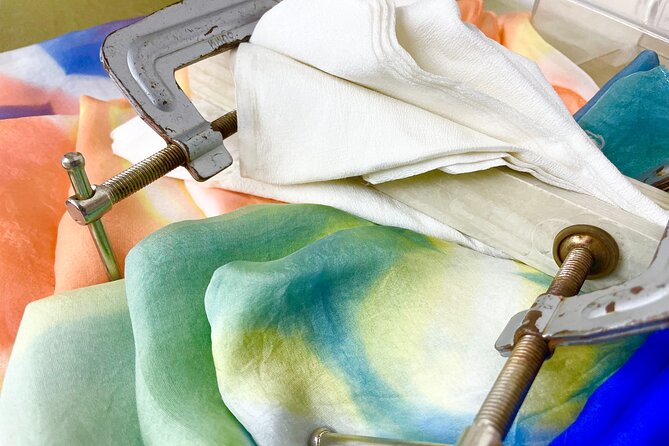
The big promise is straightforward: you take the scarf home. But the way it is set up makes the souvenir feel earned. You are not buying a pre-made scarf off a shelf and calling it a day. You made it with traditional technique, and you watched (or learned) the process alongside the museum exhibits.
Many people are surprised by how much they enjoy the making itself. Even people who do not think of themselves as artistic describe it as relaxing and rewarding—because the steps are guided and because the outcome is visible as you go from resist to dye to reveal.
There are also finishing touches that can make the experience feel extra thoughtful. One example mentioned is a certificate for a child after they complete their scarf. That is a small thing, but it is the kind of detail that helps families remember the day, not just the product.
Also, you get to choose fabrics. That matters for tourists because it lets you decide what you want to carry home: the scarf becomes a personal souvenir rather than a generic workshop item.
Who should book this shibori scarf class in Kyoto
This class is a strong fit if you want a hands-on cultural experience that does not require previous crafting skills. The “max 10” group size and the emphasis on clear guidance make it friendly for beginners. It also works for families: the minimum age is 6, and the atmosphere is described as personable and welcoming.
It is also a good option if you are traveling solo. In a small craft class, solo travelers often get more attention than they would in big walking tours. Here, the museum component gives you something to do while dyeing finishes, so you are not just waiting around.
Couples and friends also fit well. The workshop is interactive, so you share the making process instead of just taking photos. And because the museum displays are part of the experience, you both get that “we learned something” feeling.
If you are short on time, check the duration range. It runs 30 minutes to 1 hour, so you likely need to build a little buffer for finding the 2nd floor and for the drying stage. If you are the type who hates waiting, you might prefer a faster activity. But if you can enjoy museum time, this one can feel pleasantly slow.
Price value check: is $43.60 actually worth it?
For $43.60, you are paying for a true workshop, not just a museum entry with a craft demo. The value comes from three parts working together:
- Instruction and hands-on time: you learn the technique with help at the studio
- Materials included: you choose fabrics and dye them into a scarf
- Museum admission included: you can see exhibits and learn why shibori works the way it does
In Kyoto, it is easy to spend money on experiences that are mostly photo ops. This class is different because the end product is yours and the learning is practical. You leave with an item you can wear or gift, plus better context for what you see in other textile shops.
The small group size also increases value. When the group is kept to 10 travelers, you are less likely to feel like a number. That changes how much you enjoy the craft, especially if you need extra guidance.
Overall, if you want one creative, authentic stop in Kyoto—and you like making something rather than just watching—this looks like a solid deal.
Should you book this Itajime shibori scarf class?
I would book this if you want a Kyoto experience that is hands-on, guided, and still culturally meaningful. The combination of scarf-making with museum admission is exactly what makes it feel like more than a basic craft stop.
Book it if you like:
- Japanese crafts and textile culture
- small-group instruction
- a souvenir you actually made yourself
Skip it if you are extremely time-crunched or you cannot stand any waiting at all. The drying stage is part of the rhythm, and the museum time fills that gap.
If you are deciding between a craft class and another Kyoto activity, this one is worth putting on the shortlist. You get the technique, the museum context, and a finished scarf that feels like it belongs in your luggage and your stories.
FAQ
How long is the itajime shibori scarf class?
The class runs about 30 minutes to 1 hour (approx.).
Where does the class take place?
It takes place in Kyoto, Japan at the Kyoto Shibori Museum.
What is included with the class?
You get the scarf-making class plus museum admission ticket included.
Can I choose the fabrics?
Yes, you can choose from Japanese fabrics.
What is the minimum age to participate?
The minimum age is 6 years.
What is the group size limit?
The experience has a maximum of 10 travelers.
Is a mobile ticket provided?
Yes, the experience uses a mobile ticket.
Is the museum easy to reach using public transportation?
The meeting location is near public transportation.
Is there parking available?
Yes. There are two car parking spaces and bicycle parking spaces.
What is the cancellation policy?
You can cancel for free up to 24 hours in advance of the experience for a full refund. If you cancel less than 24 hours before, the amount paid will not be refunded.