REVIEW · KYOTO
Kyoto: Gion & Geisha district evening tour
Book on GetYourGuide →Operated by DeepExperience, Inc. · Bookable on GetYourGuide
Kyoto at dusk has a way of turning the lights low and the city quiet. This Gion & Geisha district evening tour is built for that mood: you get guided context as you move through the historic lanes where geiko and maiko live, work, and vanish behind doors. I especially like the small, human stops—like Yasui Konpiragu Shrine—and the clear “what am I looking at?” explanations that make the streets feel less like a movie set and more like a living neighborhood.
The main consideration is simple: this isn’t a guaranteed geisha-spotting show. If you’re only hoping to catch photos on every corner, the $64 price can feel steep—especially if you’d rather wander on your own. Also, plan for limited photography in some places and follow the guide’s privacy cues.
In This Review
- Key highlights worth your attention
- Why an evening walk works for geisha districts in Kyoto
- Meeting at Izumo-no-Okuni: start smart, not scattered
- Gion Shirakawa: where etiquette and real context matter
- A realistic expectation
- Practical tip
- Hanamikoji Street: the geisha district centerpiece at night
- Miyagawasuji and Miyagawacho: the quieter side of the geisha map
- Why this stop helps you
- Yasui Konpiragu Shrine: a relationship-tied detour that feels different
- When to slow down
- Yasaka Pagoda views, Ninenzaka, and Ishibe Alley: the classic Kyoto night walk
- Ninenzaka and Ishibe Alley in practice
- Yasaka Shrine finish: a cultural landing point for your night
- Price and pacing: does $64 make sense for this kind of walk?
- Who should book this private evening tour (and who might skip)
- Should you book the Gion & Geisha evening tour?
- FAQ
- How long is the Kyoto Gion & Geisha district evening tour?
- Where do I meet the guide?
- What places will the tour cover?
- Is this tour private?
- What languages are available?
- Is food or drinks included?
- Will I see geiko or maiko during the tour?
- Are there rules about photography?
- What should I wear for this tour?
- Is free cancellation available?
Key highlights worth your attention
- Evening pacing that helps you see the districts without the worst daytime crunch
- Gion Shirakawa + Hanamikoji with real-world etiquette context, not just names on a map
- A detour to Miyagawacho/Miyagawasuji, a quieter geisha area that’s easier to enjoy slowly
- A relationship-themed visit at Yasui Konpiragu Shrine (often overlooked on casual walks)
- A classic Kyoto back-half route: Yasaka Pagoda views, Ninenzaka, and Ishibe Alley
- A guide you can ask questions to as you go, including in Japanese or English
Why an evening walk works for geisha districts in Kyoto
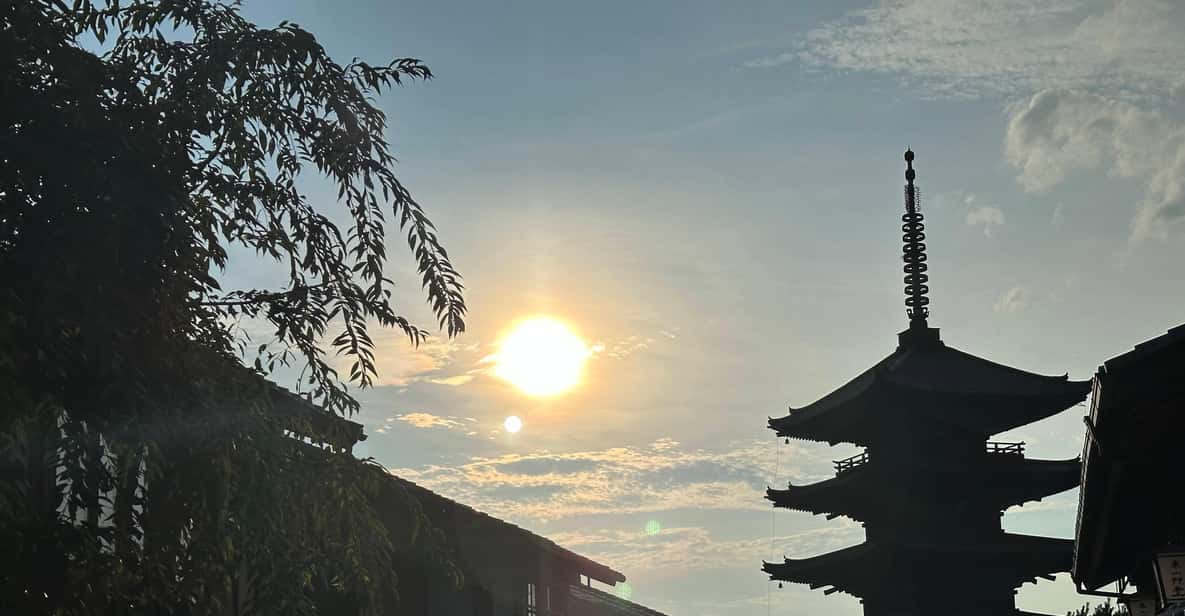
If your only plan is to “see Gion,” you’ll probably spend the whole evening dodging people and scanning for the next familiar photo angle. Going at night changes the feel. The streets in Gion, Hanamikoji, and nearby lanes are still busy, but the atmosphere is calmer and easier to read. That matters, because the point here isn’t just scenery—it’s understanding how the geisha world fits into everyday Kyoto.
You’ll also benefit from the timing of a 150-minute walk. It’s long enough to cover multiple districts without rushing, but short enough that you’re not exhausted before you reach the best-lit streets and shrine finish. I like tours that respect your feet.
One more practical note: because this is about living culture, you’ll need to be respectful. You might notice signage or subtle guidance about staying back, and photography can be restricted in certain areas. Treat it like a neighborhood walk, not a “hunt.”
You can also read our reviews of more evening experiences in Kyoto

Meeting at Izumo-no-Okuni: start smart, not scattered
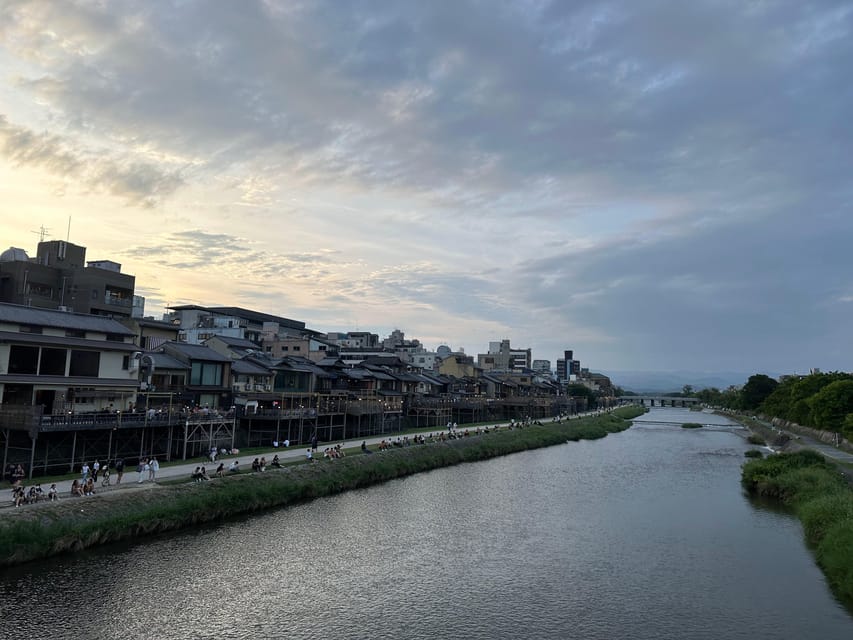
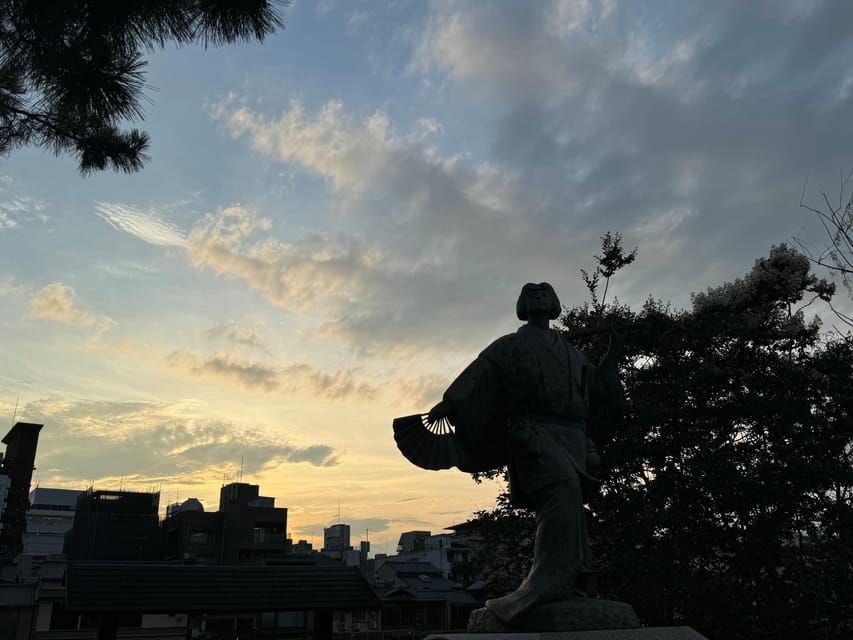
Your tour starts at the Statue of Izumo-no-Okuni (出雲阿国像) at Shijo Ohashi. The guide will be holding a yellow DeepExperience logo sign, so you don’t have to play guessing games.
This starting point is useful because it gives you instant context. Shijo Ohashi is a major landmark, but the statue itself is a doorway into Kyoto’s performing-arts and entertainment history—exactly the theme you’ll keep hearing throughout the walk. I find that getting oriented in the first five minutes makes the rest of the evening click faster.
Also, because it’s a private group, you’re more likely to get quick answers to basic questions like what different names mean (and what they don’t). That kind of clarity can save you from guessing later while you’re tired and hungry.
Gion Shirakawa: where etiquette and real context matter
Gion is the headline, and Gion Shirakawa is the early stop for a reason. The district is known for traditional teahouses and for the presence of geiko and maiko. Even if you don’t see someone in motion every minute, the atmosphere helps you understand why this area became so closely associated with that world.
What you’ll get from the guide is the part most self-walks miss. The tour is designed to explain the world of geisha and maiko—how they’re introduced, how people talk about them, and what you should do (and not do) when you’re walking around. That’s the difference between “cool street photos” and actually understanding what you’re looking at.
A realistic expectation
Geiko and maiko may appear, but this is not an attendance guarantee. Kyoto’s schedule is real life, not a performance calendar. So if your personal definition of value is constant visual sightings, you may feel disappointed. If your definition is learning the meaning behind the streets, this segment usually lands well.
Practical tip
Wear comfortable shoes right away. This portion of the night is gentle compared to the stairs later, but you’ll still be walking a lot through narrow streets and changing surfaces.




Hanamikoji Street: the geisha district centerpiece at night
After Gion, you’ll walk to Hanamikoji Street, one of Kyoto’s most recognizable lanes tied to the geisha world. Even for people who think they already know this area, the best part here is how a guide helps you read it.
Hanamikoji can look like a postcard—lanterns, old storefront lines, that Kyoto “everything slows down” feeling. But the tour frames what you’re seeing: why certain lanes developed their reputation, how traditional life is protected, and why visitors have to be careful about privacy. If you’ve ever wondered why people keep their distance, this is where the explanation usually makes it make sense.
This is also a good section to practice patience. If you want photographs, you’ll likely get cues about when you can take them and where you can’t. Following those rules keeps you respectful and also keeps you out of the way of locals and performers.
Miyagawasuji and Miyagawacho: the quieter side of the geisha map
Next comes Miyagawasuji and the surrounding Miyagawacho area. This part of the tour is a big value-add because it’s often less packed than the most famous Gion lanes. That matters for your experience because Miyagawacho’s preserved charm feels more “you can actually breathe here” compared to the busiest stretches.
The guide’s role stays important: this is where the story becomes about how the geisha world isn’t only one street. It’s a network of districts with different rhythms. When you understand that, you’ll stop treating the city like one big sightseeing strip.
Why this stop helps you
This is the segment that often converts “I came to see Gion” into “I understand Kyoto’s entertainment districts as a system.” You’ll come away feeling like you can recognize the difference between main lanes and quieter supporting streets, which makes future wandering far more rewarding.
Yasui Konpiragu Shrine: a relationship-tied detour that feels different
One of the most memorable stops is Yasui Konpiragu Shrine. The tour highlights this shrine as a special place tied to relationships, and that single theme changes the feel of the whole walk. After the street-life of geisha districts, you get a calm, grounded break where tradition and personal wishes intersect.
A guide can help you understand what makes this shrine notable beyond its location. Instead of just “here’s a shrine you can photograph,” you get a reason to pause, look, and understand the meaning.
When to slow down
This is not a quick photo-stop. Give it your full attention for the best payoff. If you’re used to rushing through Kyoto’s shrines, this part is a good reminder that some places are built for quiet.
Yasaka Pagoda views, Ninenzaka, and Ishibe Alley: the classic Kyoto night walk
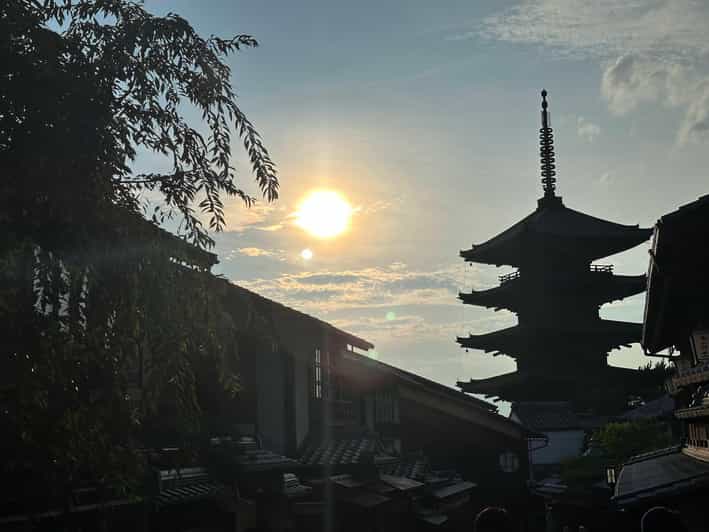
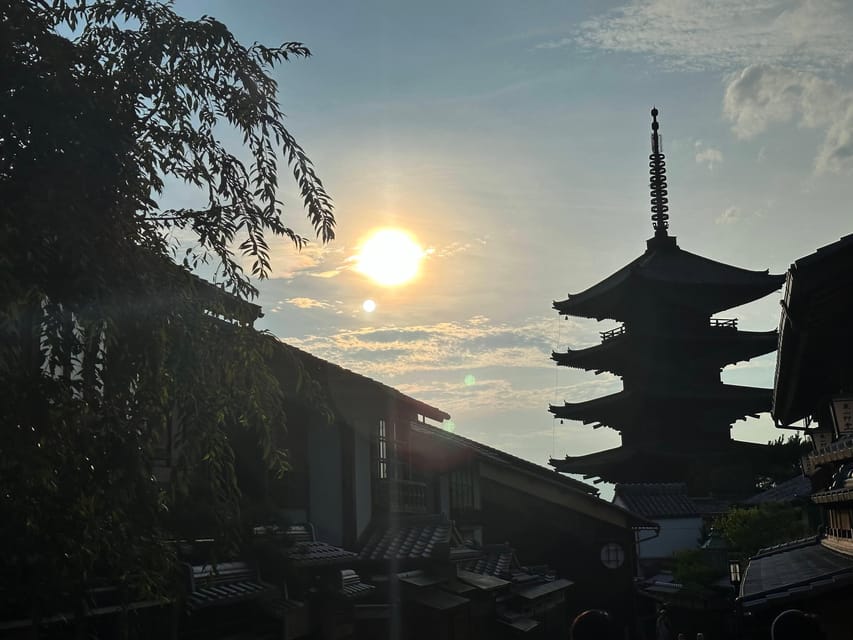
After the shrine stop, the route turns scenic. You’ll do a walk past Yasaka Pagoda, then through Ninenzaka and Ishibe Alley, ending with your final shrine visit.
This section is valuable for two reasons:
1) It connects the geisha-area stories to Kyoto’s broader tradition and city layout.
2) It gives you that “Kyoto at night” rhythm—slower streets, photo-friendly lanes (when allowed), and a natural sense of arrival.
Ninenzaka and Ishibe Alley in practice
These are famous streets for a reason, but they can feel similar if you just walk them like a checklist. The tour approach helps you see why they’re part of the Kyoto experience: they’re transitional spaces, places where the old city shape becomes visible as you move toward Yasaka.
Also, plan your stride. Depending on your comfort level, uneven paving and slopes can add up late in the evening.
Yasaka Shrine finish: a cultural landing point for your night
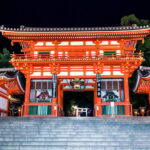
Your tour concludes at Yasaka Shrine, which is an important cultural site. Ending here works well because it feels like a natural “you made it” moment after the smaller lanes and tucked-away corners.
It’s also a strong finish point for practical reasons. After 150 minutes of walking, you’ll want a place that’s easy to understand and easy to navigate from. Yasaka Shrine helps with that.
If you’re deciding what to do next, this is when you can use what you learned. You’ll be better at spotting clues about what area you’re in and why it matters.
Price and pacing: does $64 make sense for this kind of walk?
At $64 per person for about 150 minutes, this isn’t a bargain-basement stroll. It’s paying for guided interpretation across multiple districts—plus the shrine stop and the specific route that strings Gion to Yasaka through classic streets.
Here’s how to judge the value honestly:
This tour is worth the price if:
- You want the guide to explain the world of geisha and maiko, not just show you where the famous streets are
- You appreciate etiquette and privacy rules, and you want help knowing how to act
- You’d rather spend an evening learning than figuring things out alone
- You like night walking with fewer crowds and more atmosphere
It may feel overpriced if:
- Your goal is mainly photos and constant sightings (and you’re not as interested in cultural context)
- You’re comfortable wandering and interpreting on your own
- You want food included, since no beverages or meals are provided
A balanced take: the critique you might hear is that someone staying in Gion could self-walk. That’s true to a point. But the difference is the “why.” A good guide turns streets into meaning—especially when you’re moving across multiple districts where each lane has its own role.
Also, you’ll be walking a fair amount. If you’d rather have a lighter itinerary, you may feel like you’re paying for labor in steps. If you like purposeful walking, it’s a good match.
Who should book this private evening tour (and who might skip)
This works especially well if you:
- Are a first-timer in Kyoto and want a structured way to experience geisha districts at night
- Enjoy explanations and stories as you walk, rather than standing in one place
- Like the comfort of a private group format where the guide can tailor the pace and answer questions
- Are traveling with younger people who benefit from a guide that can keep things engaging (you’ll want to be sure the group’s attention span matches an evening walk)
It might not be ideal if:
- You’re mostly hunting for geisha sightings with no interest in etiquette or shrine context
- You want an included dinner (this tour does not provide food)
- You’re expecting a low-walking “sit and learn” format
One more practical consideration: because photography can be restricted and geishas’ privacy is a priority, you’ll need to be flexible. The best experiences come when you treat the evening as learning and observation—not a photo mission.
Should you book the Gion & Geisha evening tour?
Book it if you want a guided, respectful night walk that helps you understand what you’re seeing in Gion Shirakawa, Hanamikoji Street, and Miyagawacho, with a meaningful break at Yasui Konpiragu Shrine and a classic finish at Yasaka Shrine. The route is paced for about 2.5 hours, and it’s designed for atmosphere, not just checkbox sightseeing.
Skip or rethink it if your priority is constant geisha sightings and you’d rather wander freely. In that case, you may be happier spending your money on time elsewhere in Kyoto and letting the streets be your guide.
If you do book, come ready to walk, be polite, and let the story slow you down a notch. That’s when this kind of tour pays off.
FAQ
How long is the Kyoto Gion & Geisha district evening tour?
It lasts about 150 minutes, or roughly 2.5 hours.
Where do I meet the guide?
Meet your guide in front of the Statue of Izumo-no-Okuni. The guide will be holding a yellow sign with the DeepExperience logo.
What places will the tour cover?
You’ll visit Gion Shirakawa, Hanamikoji Street, Miyagawasuji/Miyagawacho, Yasui Konpiragu Shrine, and then walk past Yasaka Pagoda through Ninenzaka and Ishibe Alley, ending at Yasaka Shrine.
Is this tour private?
Yes, it’s listed as a private group tour.
What languages are available?
The live tour guide is available in Japanese and English.
Is food or drinks included?
No. Food and beverages are not included.
Will I see geiko or maiko during the tour?
The Gion areas you visit are known for the presence of geiko and maiko, but the tour is focused on learning the world of geisha and maiko, and sightings can’t be guaranteed.
Are there rules about photography?
Photography may not be allowed in certain areas, and you should always be respectful of geishas and their privacy.
What should I wear for this tour?
Wear comfortable shoes because there will be a lot of walking.
Is free cancellation available?
Free cancellation is offered up to 24 hours in advance for a full refund, and there’s also a reserve now & pay later option.