Kyoto’s night in Gion feels like another world. This Kyoto Gion Night Tour guides you through lantern-lit streets and classic old-town alleys, with a local English-speaking guide and photo stops built in.
I especially like the chance to see geisha and maiko near Hanamikoji Street. I also like that the walk is short, so you get a focused evening without burning your whole day.
What I like most is how the tour blends “look and learn” with places that make sense once you’re there. A guide named Ikki has been praised for explaining Japanese culture in a friendly, easy way, which helps the sites click instead of feeling like name-drops.
One possible drawback: it’s a walking evening, and you only have about 1 hour 30 minutes. If you’re the type who wants long, quiet time in every shrine or shop for ages, you may feel slightly rushed—and food and drinks are not included.
In This Review
- Quick Highlights
- Lanterns, Shrines, and Gion Vibes Starting at Kawabatacho
- Value Check: Why $26.06 Can Still Feel Like a Bargain
- Hanamikoji Street: The Best Place to Look (Not Stare)
- Gion at Night: Machiya Streets and Tea-House Energy
- Yasui-Konpiragu Shrine: Prayers for Cutting Bad Ties
- Yasaka Pagoda (Hokanji): The Nail-Less Wooden Scale
- Sannenzaka and Ninenzaka: Classic Stone Steps and Shopfronts
- Yasaka Shrine: Prosperity, Protection, and a Network of Shrines
- Photos, Timing, and Etiquette for a Smooth Night Walk
- Who This Kyoto Gion Night Tour Fits Best
- Should You Book This Gion Night Tour?
- FAQ
- What time does the Kyoto Gion Night Tour start?
- How long is the tour?
- Where do I meet for the tour?
- Where does the tour end?
- Is this tour mostly walking?
- What’s included in the ticket price?
- Are food and drinks included?
- How many people are in a group?
- Can I see geisha or maiko during the tour?
- What is the cancellation policy?
Quick Highlights
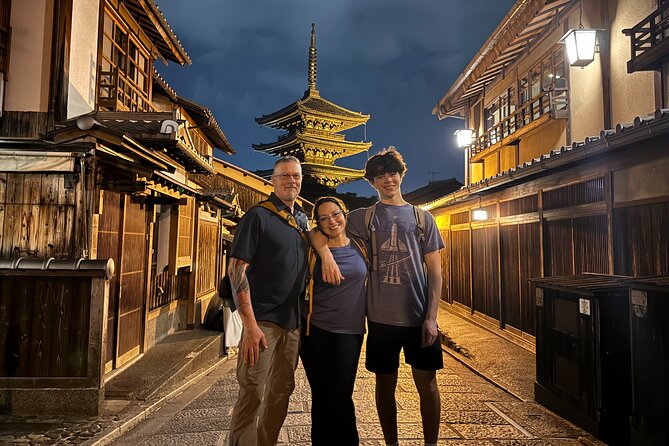
- Hanamikoji Street by night: a prime stretch for a chance to spot geisha or maiko
- Gion after dark: wooden machiya street atmosphere you don’t get in daylight
- Yasui-Konpiragu Shrine: a prayer theme about ending bad relationships and finding new connections
- Yasaka Pagoda (Hokanji): a huge wooden landmark said to be built without nails
- Sannenzaka and Ninenzaka: stone-paved lanes lined with souvenir shops and restaurants in historic wooden buildings
- Professional photos on the walk: you’ll have images from the evening, not just your phone
Lanterns, Shrines, and Gion Vibes Starting at Kawabatacho
This is the kind of Kyoto evening that starts working on you the moment you arrive. The tour kicks off at the Statue of Izumo-no-Okuni in Higashiyama Ward (Kawabatacho area), right where you can feel the old-city rhythm before the group even gets moving. Starting at 6:30 pm is smart: the worst of the day is usually gone, and the streets start turning into that softer, night-time glow.
The route is designed for a relaxed pace, but it is still a true walk. You’ll want to show up ready to move—comfortable shoes matter more than style here. Also, if you’re late, you can miss the tour and you won’t receive a refund, so give yourself a little buffer and don’t assume you can sprint in at the last second.
You can also read our reviews of more evening experiences in Kyoto

Value Check: Why $26.06 Can Still Feel Like a Bargain
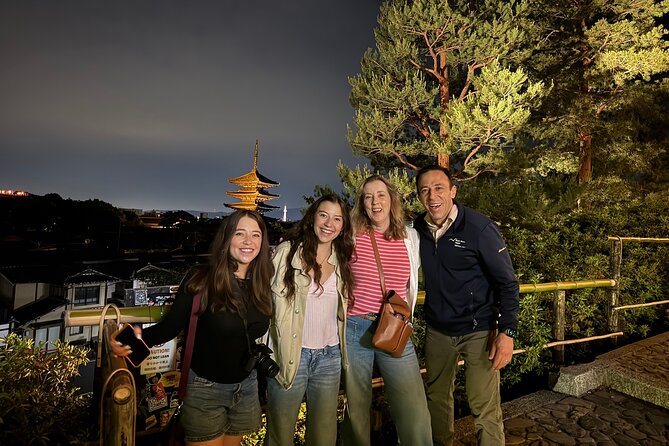
The price is $26.06 per person, and the value comes from what’s included. You get a passionate local English-speaking guide, admission fees for the temples and shrines, and professional photos taken during the tour. For a short, focused night program, that bundle often beats the “pay as you go” approach—especially when your night time in Kyoto is limited.
Another value factor: the group size is capped at 20 people. That matters in Gion. It’s famous for foot traffic, and smaller groups help you keep your bearings and ask questions without feeling like you’re in a moving crowd.
Also, this is a mobile-ticket experience. That’s a small thing, but in Kyoto—where getting tickets sorted quickly saves time—it’s genuinely helpful.
Hanamikoji Street: The Best Place to Look (Not Stare)
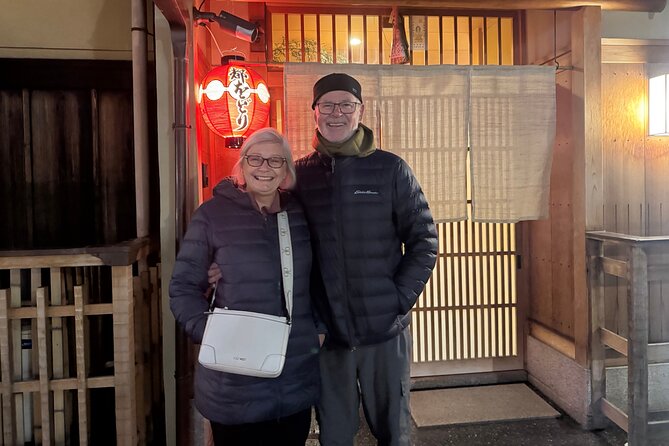
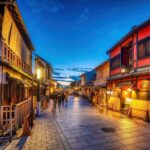
Hanamikoji Street is one of the most famous stretches in Gion, and for good reason. At night, it’s lit up and the atmosphere feels traditional—teahouses, classic wooden machiya houses, and the kind of street geometry that makes photos look like you planned the whole trip.
This is also where the tour leans into the main allure: a chance to encounter geisha and maiko. The key word here is chance. You’re not guaranteed anything, but you are in one of the most likely areas. I like that the tour doesn’t oversell sightings with unrealistic promises—it sets expectations while still giving you the right location and timing.
Practical tip: when you’re walking here, keep your movements calm and your camera at a respectful level. Night streets make everyone feel like they’re watching each other, and courtesy goes a long way.
Gion at Night: Machiya Streets and Tea-House Energy
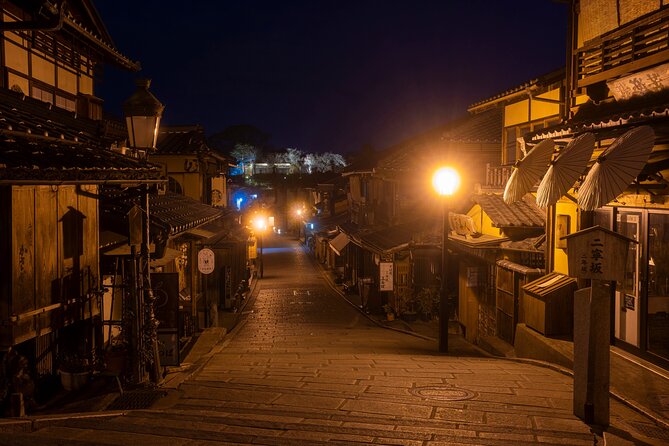
Next up is Gion, Kyoto’s best-known geisha district. Daytime is pretty, but night is different. You feel the preserved street vibe more clearly once the lights are on and shop shutters start closing. The wooden machiya houses and teahouses become part of the scene instead of background scenery.
In this stretch, the guide’s job becomes important. You’ll get context for what you’re seeing—why these areas were preserved, what the traditional architecture is meant to communicate, and what to notice as you walk. I like tours that give you words for the things your eyes already caught. It turns a walk into a story.
Downside to be aware of: even if you’re in a small group, Gion is still a high-interest area. Expect foot traffic. The tour helps you move with purpose, but you can’t control the sidewalks.
Yasui-Konpiragu Shrine: Prayers for Cutting Bad Ties
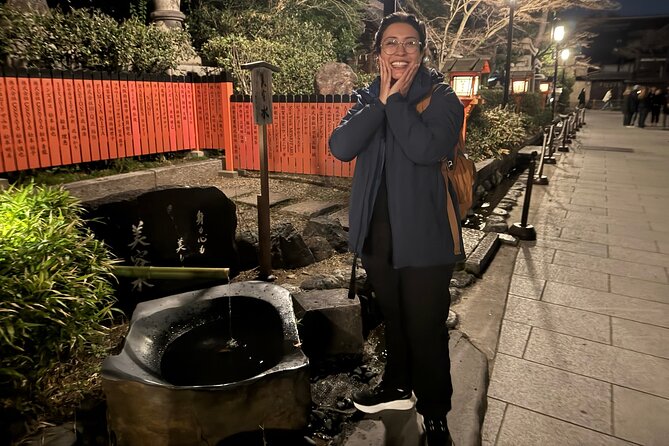
One of the most memorable stops is Yasui-Konpiragu, a shrine known for praying to sever negative relationships and help bring in better connections. That theme is specific and a little emotional, which is part of why it stands out during a night walk. It’s not just sightseeing. You’re stepping into a place with a clear purpose tied to everyday human worries.
This stop is short, so use it strategically. Don’t treat it like a museum. Instead, take a moment to observe what people are doing and then reflect on the shrine’s intention—ending bad relationships, creating positive ties. It’s a meaningful pause in the middle of a night that otherwise focuses on streets and architecture.
Potential consideration: if you’re hoping for a major temple complex experience, this is more of a focused spiritual stop than a long visit. The tour is designed to keep the evening moving.




Yasaka Pagoda (Hokanji): The Nail-Less Wooden Scale
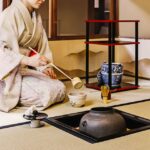
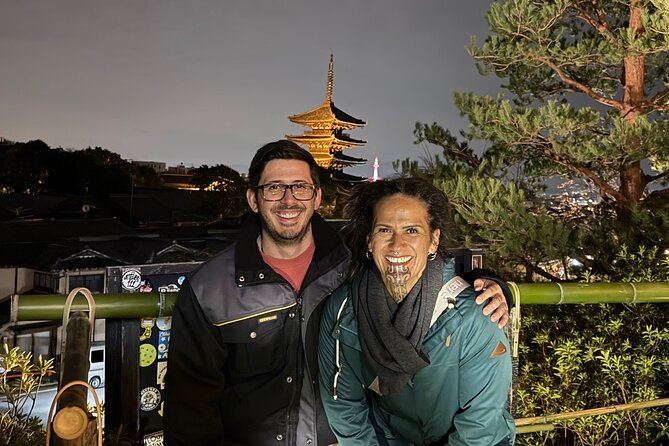
Then comes one of Kyoto’s iconic visual moments: Yasaka Pagoda (Hokanji temple). The pagoda is described as one of the oldest wooden structures in Japan, and the scale is hard to absorb until you’re standing near it. What grabbed my attention from the tour notes is the story that it was built without nails. Whether you’re thinking about construction history or just the sheer craftsmanship, it’s the kind of detail that makes you look twice.
Why I think this stop works on a night tour: pagodas and big wooden landmarks often photograph beautifully after dark, and the surrounding streets give you a sense of depth. You’ll likely get a view that feels more dramatic than the same structure in daylight.
Possible drawback: the best viewing moments can be shared, and it’s a popular landmark area. If you’re sensitive to crowds, keep your expectations for “quiet awe” in check.
Sannenzaka and Ninenzaka: Classic Stone Steps and Shopfronts
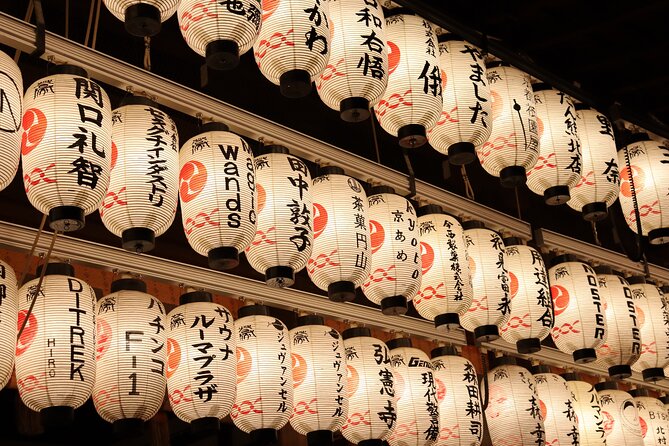
Next you’ll walk through Sannenzaka Ninenzaka, a traditional stone-paved path lined with souvenir shops and restaurants in historic wooden buildings. This is the part of Kyoto that feels most like a postcard, but it’s also very real: the lanes are narrow, the storefronts are close together, and walking them changes your sense of time.
This stop also makes practical sense. It gives you a chance to slow down just a bit, look at the shopfronts, and take photos while still staying within the tour’s short time frame.
Two things to keep in mind:
- It can be busy, especially around prime photo angles.
- Since food and drinks are not included, you can either snack on your own nearby or treat this section as mostly for browsing and photos.
If you hate shopping crowds, plan to keep your focus moving forward. If you love browsing, this is one of the most fun stretches in the evening to do it.
Yasaka Shrine: Prosperity, Protection, and a Network of Shrines
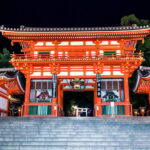
The final stop is Yasaka Shrine, the headquarters of 2,300 related shrines across Japan. That number alone gives you perspective. You’re not just visiting one shrine—you’re seeing the focal point for a much bigger network of worship.
It’s also dedicated to gods tied to prosperity and protection, which makes the message feel practical rather than abstract. After spending time in Gion streets and walking through wood-and-stone Kyoto scenery, the shrine lands like a steady heartbeat—calm, symbolic, and very Kyoto.
This is also a nice closing point because it helps you end the night on something lasting. Lantern streets fade; shrine architecture and the idea behind the place tends to stay in your memory longer.
Photos, Timing, and Etiquette for a Smooth Night Walk
One of the best reasons to choose a guided night walk is the professional photos included. You’re not only relying on phone timing or trying to get the light just right while your group moves. It’s especially useful in Kyoto, where the streets look great but you still need help coordinating angles and timing.
Here’s how to get the best out of a photo-focused evening:
- Wear comfortable shoes, so you don’t end up rushing the walk.
- Keep your pace steady so the group stays aligned with the photo moments.
- When you see something special—pagoda viewpoints, shrine approaches—pause briefly when the guide signals, rather than wandering off on your own.
Night etiquette matters too. In Gion, people are often looking for respectful ways to enjoy the area. If you do see geisha or maiko, treat it like you would a cultural moment: watch with care, don’t crowd, and keep voices down.
Who This Kyoto Gion Night Tour Fits Best
This tour is a great match if you want an organized, time-efficient Kyoto evening. It’s built for people who like walking routes, enjoy learning about Japanese culture while seeing famous spots, and don’t want to plan transportation or ticket logistics after a long day.
I’d especially recommend it if:
- you only have one evening in Kyoto and want a dense, meaningful loop
- you like Gion’s traditional architecture but want context (not just photos)
- you enjoy night atmospheres and historic streets
- you want a guided explanation that helps the sites connect
If you’re someone who dislikes crowds at popular landmarks or you need long downtime at each site, you may find the schedule a bit tight. It’s designed to keep the momentum, not to slow down for hours.
Should You Book This Gion Night Tour?
Book it if you want a compact night program that combines Gion streets, classic shrines, and photo support in about 90 minutes. The price works well because the guide, shrine/temple admissions, and professional photos are included, and the group stays reasonably small.
Skip it if your priority is long, quiet time in each place, or if you’re expecting food to be part of the experience. Also, if you’re traveling with limited mobility, remember it’s a walking tour with plenty of time on foot.
If you want a Kyoto evening that feels organized and culturally grounded, this is an easy yes.
FAQ
What time does the Kyoto Gion Night Tour start?
The tour starts at 6:30 pm.
How long is the tour?
The duration is about 1 hour 30 minutes.
Where do I meet for the tour?
You meet at the Statue of Izumo-no-Okuni, Kawabatacho, Higashiyama Ward, Kyoto (605-0076), Japan.
Where does the tour end?
The activity ends back at the meeting point.
Is this tour mostly walking?
Yes. It’s designed as a walking experience with plenty of time on foot to explore Kyoto.
What’s included in the ticket price?
The tour includes a local English-speaking guide, admission fees for the temples and shrines, and professional photos taken during the tour.
Are food and drinks included?
No. Food and drinks are not included.
How many people are in a group?
The maximum group size is 20 travelers.
Can I see geisha or maiko during the tour?
You may have the chance to encounter geisha and maiko, especially around Hanamikoji Street.
What is the cancellation policy?
Free cancellation is available up to 24 hours in advance for a full refund. If you cancel less than 24 hours before the experience starts, the amount paid is not refunded.