REVIEW · KYOTO
Kyoto: Japanese Archery Workshop with Experienced Instructor
Book on GetYourGuide →Operated by Honey J Tours · Bookable on GetYourGuide
Kyoto has plenty of temples, but this one is about aiming and breath. In a small group of four, you’ll practice Kyudo with Yamaguchi-sensei, a Kyudo Kyoshi (6th grade) who’s spent decades teaching the Japanese way of archery. It’s a focused 1-hour class that feels both practical and surprisingly calming.
I love how hands-on the coaching is, from stance to the exact bow hold. I also like the mix of technique and meaning, with an assistant explaining the history and cultural reasons behind each motion. The class stays beginner-friendly without turning it into a gimmick.
One thing to consider: the instructor’s language is Japanese. You’ll have English materials and an assistant who translates and helps with archery terms, but if you need lots of direct English talk, plan for that support to do most of the work.
In This Review
- Key highlights you’ll feel right away
- Kyudo in One Hour: What You Actually Learn
- Yamaguchi-sensei and the Teaching Style That Makes Beginners Go Again
- Bow Hold, Stance, and the Kata-Like Opening Steps
- Equipment Provided: Expect Big, Heavier Feel, Not a Tiny Toy Bow
- Small Group of Four: The Real Reason This Workshop Feels Different
- The Meaning Behind Every Motion: History and a Spiritual Frame
- Getting There Near Tambaguchi and Omiya: The Entrance Detail You Must Not Miss
- Price and Value: Why $38 Works Here
- Who Should Book This Kyudo Workshop
- Should You Book This Kyudo Experience in Kyoto?
- FAQ
- How long is the Kyudo workshop?
- What does it cost?
- Is it beginner-friendly?
- What’s included in the price?
- Where is the meeting point, and how do I find the entrance?
- How far is it from nearby stations?
- What language is used during the workshop?
- What should I wear?
- Can I cancel for free, and do I need to pay right away?
Key highlights you’ll feel right away
- Kyudo Kyoshi (6th grade) instructor with 50+ years of practice teaching in-person
- Small group of 4 participants, so you get real attention and enough attempts
- Hands-on form coaching for stance and bow hold, not just a show-and-tell demo
- English materials plus an assistant interpreter for explanations and translation
- All Kyudo equipment provided, so you can travel light
- A calm, Zen-style pace where relaxation is part of the method, not an afterthought
Kyudo in One Hour: What You Actually Learn
Kyudo is Japanese archery, but the goal is bigger than hitting a bullseye. The training emphasizes correct form, composed movement, and a rhythm that connects body and mind. In this 1-hour workshop, you’ll focus on the basics you need to participate right away: stance, bow hold, and the sequence of motions that makes Kyudo Kyudo.
Don’t expect a long, multi-session progression. This isn’t about becoming a skilled archer by the end of the hour. It’s about understanding what you’re doing and why, then practicing the motion with guidance until it starts to make sense. With the teaching style here, you’ll get the technical cues you need early, which helps beginners avoid the most common frustration.
And since the session is structured for beginners, the class works well even if you don’t know any martial arts terms. What matters is that you can follow directions, repeat what you just learned, and adjust based on the instructor’s corrections.
You can also read our reviews of more tours and experiences in Kyoto

Yamaguchi-sensei and the Teaching Style That Makes Beginners Go Again
The heart of the experience is Yamaguchi-sensei, the master instructor for the session. He’s practiced Kyudo for more than 50 years and holds the Kyudo Kyoshi (6th grade) qualification, which usually means instruction is precise and disciplined. In the workshop format, that experience shows up as careful, deliberate coaching rather than vague advice.
You’ll also have an assistant who translates and helps explain the deeper parts of the practice. In other words, you aren’t stuck trying to guess what the instructor means. The assistant’s job isn’t just language support; they also understand Kyudo well enough to connect explanations to what you’re physically doing.
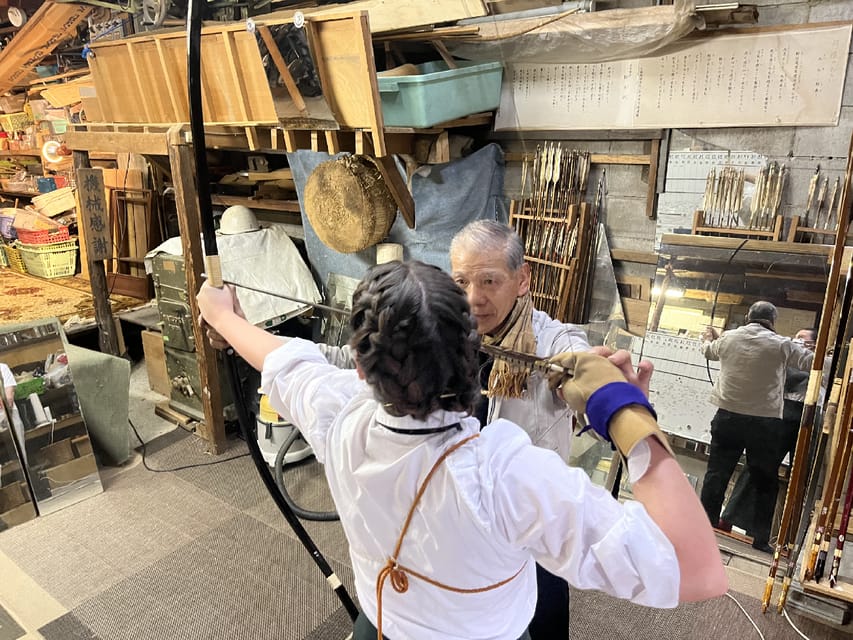
The vibe is friendly and encouraging. The teaching includes hands-on guidance—like demonstrating the correct stance and how to hold the bow—so you can feel the shape of the practice, not just hear about it. That matters because Kyudo form is hard to “figure out” alone.
One more practical note: if you prefer a different style of instruction, you can tell the instructor in advance. The session is small, so communication can actually influence how they guide you.
Bow Hold, Stance, and the Kata-Like Opening Steps
Kyudo starts before you even draw an arrow. The early steps are about posture, balance, and the disciplined setup that lets the rest of the movement work. Several people find this part surprising, because it can look like a martial arts kata: a repeatable sequence you practice until it feels natural.
In your session, you’ll learn the proper form basics first, including:
- how to stand and position your body
- how to hold the bow correctly
- how to move through the motions with controlled relaxation
This is where the hands-on correction is most valuable. When your stance is off, everything after that gets harder. When your bow hold is awkward, your movement can feel tense or forced. The instructor’s guidance helps you correct those issues quickly, instead of spending the hour struggling with the wrong setup.
You’ll also hear the idea that relaxation is part of performance. That might sound backwards if you associate archery with stiffness, but Kyudo asks for calm control. When you combine posture, timing, and relaxed focus, the practice becomes smoother—and far less exhausting.
Equipment Provided: Expect Big, Heavier Feel, Not a Tiny Toy Bow
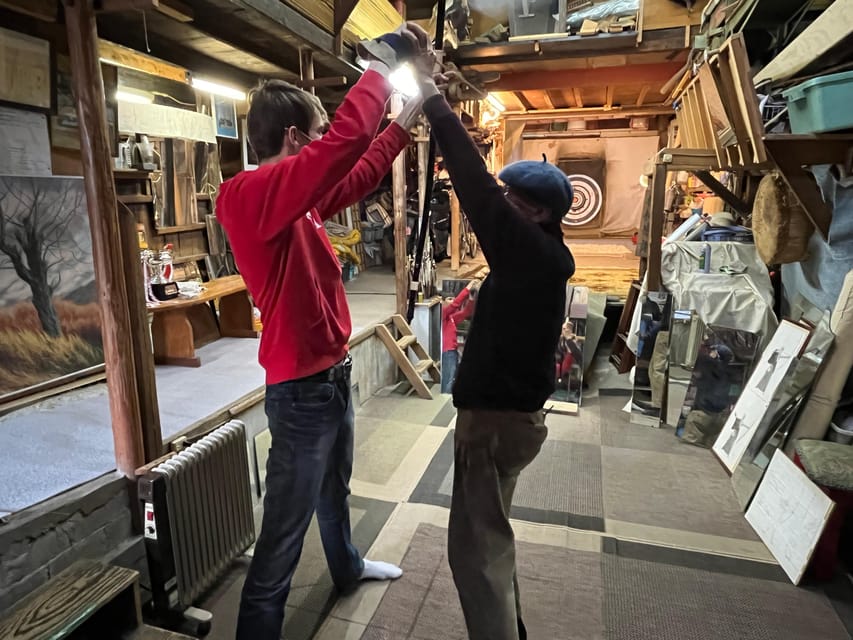
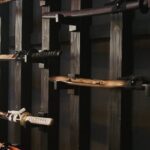
All required Kyudo equipment is included, so you don’t need to source anything before you arrive. That said, you should mentally prepare for what Kyudo equipment feels like in your hands.
Kyudo bows are typically larger and taller than what most people have used elsewhere. Reviews also mention the bows feel heavier than expected, which is a genuine consideration if you’re not used to archery strength. The good news: you’re coached, and the instruction focuses on correct form, which can reduce wasted effort.
If you’re bringing a friend who’s worried about physical difficulty, this is a fair discussion. The movements are manageable, but the bow can demand effort, especially early on while you’re still finding the right stance and grip. The assistant and instructor support you through that adjustment.
Safety isn’t described in extreme detail here, but the workshop format is clearly controlled: limited space, small group size, and instruction that includes hands-on guidance for correct posture and handling.
Small Group of Four: The Real Reason This Workshop Feels Different
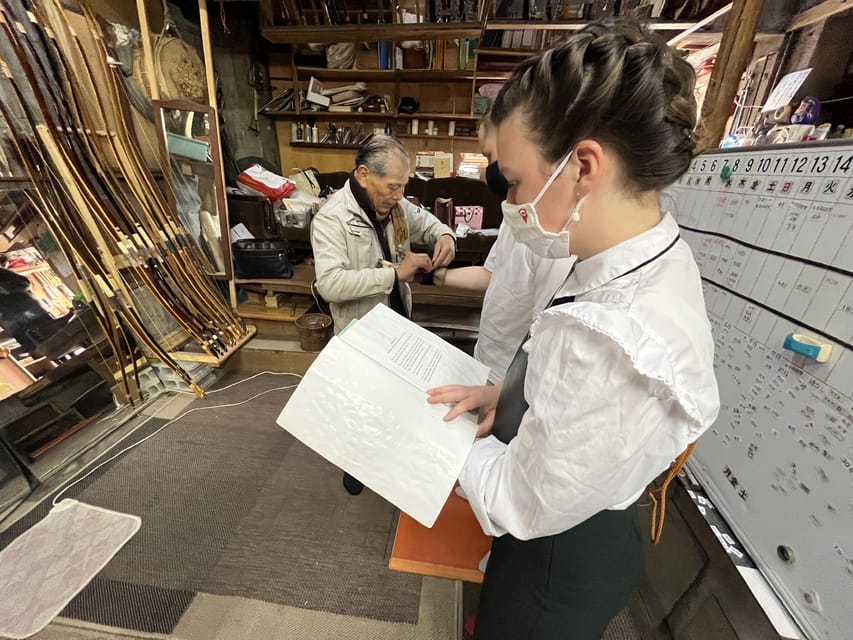
A group of four changes everything. In bigger classes, beginners often get stuck waiting while others practice. Here, the pace stays personal. Each participant gets attention, corrections, and chances to repeat the motion until it improves.
This matters because Kyudo is technical. Tiny changes in stance, the bow hold, or the sequence can make your body feel more stable and your movement more natural. With a small group, those corrections happen while you’re still in the middle of your practice, not after you’re done.
You should also expect a lot of encouragement. Even when it feels tricky at first—which it often does—this format gives you feedback quickly. Several experiences described guidance as present and attentive, with the teacher walking through every motion and the assistant translating the meaning behind it.
The result is that the workshop often feels like a coaching session rather than a one-time demo. You leave with the sense that you understand what you were practicing and how to try again.


The Meaning Behind Every Motion: History and a Spiritual Frame
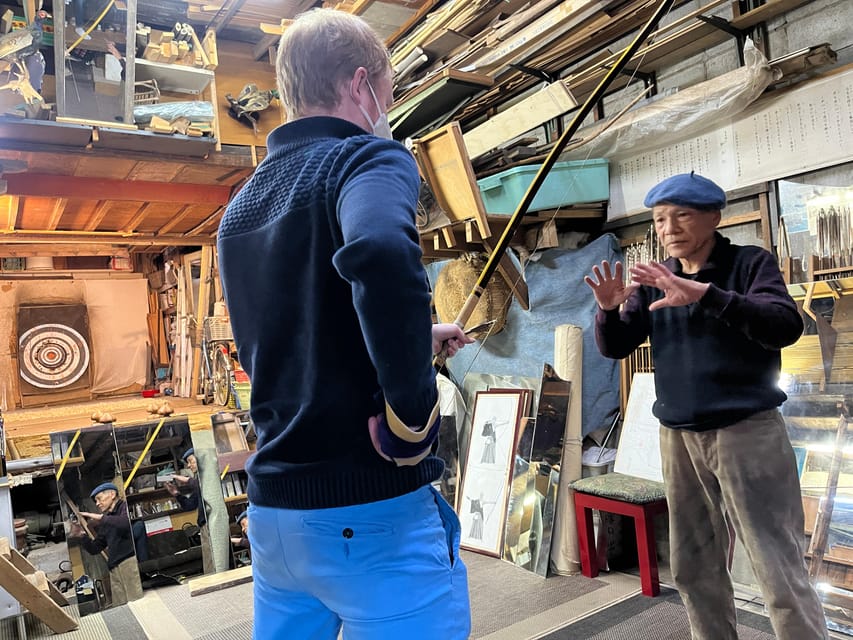
Kyudo includes a philosophical layer, and the workshop doesn’t ignore it. You’ll learn the history of Kyudo and gain a better understanding of this traditional martial art. More importantly, you’ll hear cultural and spiritual reasons behind movements, not just a list of facts.
In practice, this meaning-based approach affects how you perform. When you understand why the bow hold and sequence matter, you’re less likely to treat the movements like random steps. Instead, they become something you can remember and reproduce with intent.
People describe the training as educational and calm, with a meditation-like quality. The idea of relaxation comes back again here: Kyudo isn’t only about force, it’s about controlled expression. When the instructor frames the motions this way, you’re guided toward a mental state that makes technique easier, not harder.
If you like cultural experiences that go beyond photos, this is the kind that sticks in your memory. You’re not just watching Kyoto; you’re practicing a Kyoto-born discipline.
Getting There Near Tambaguchi and Omiya: The Entrance Detail You Must Not Miss
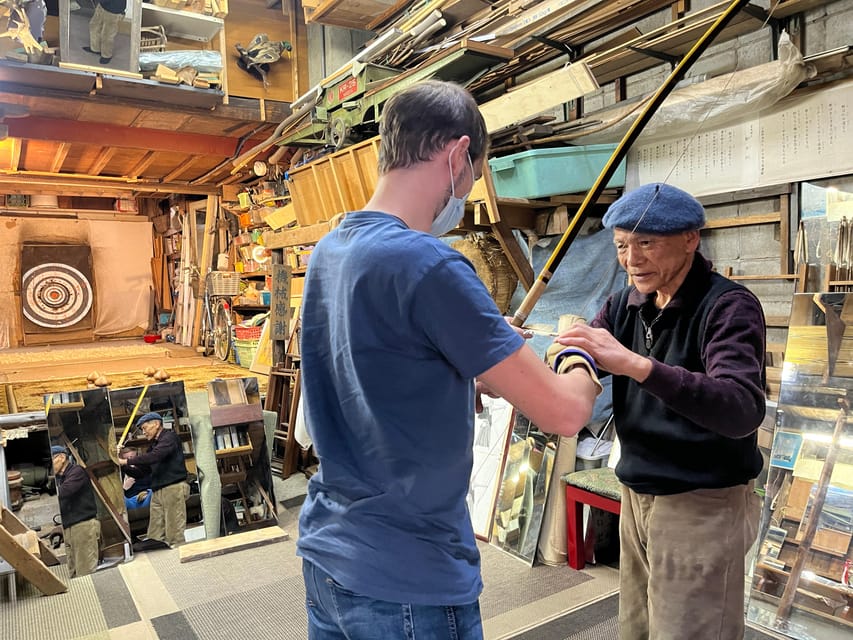
Location is part of the experience, especially in a city where small studios can be easy to overlook.
The meeting point is からくり弓道体験場 (Kyudo Experience Kyoto). When you use Google Maps, copy-paste the Japanese name only—or search for Kyudo Experience Kyoto—and then compare results with the address provided.
Walk time is about 10 minutes on foot from:
- JR Tambaguchi
- Hankyu Omiya
- Randen Shijo-Omiya
If you arrive by taxi, tell the driver Mibugawa-street, Takatsuji-street instead of the address.
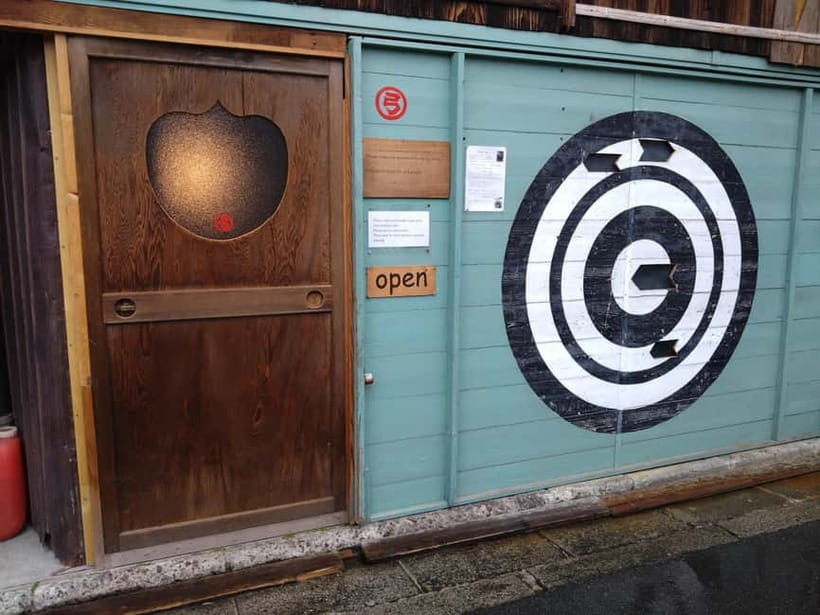
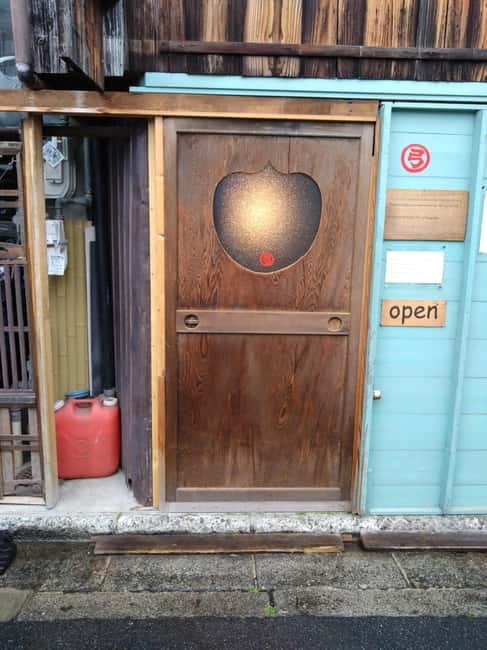
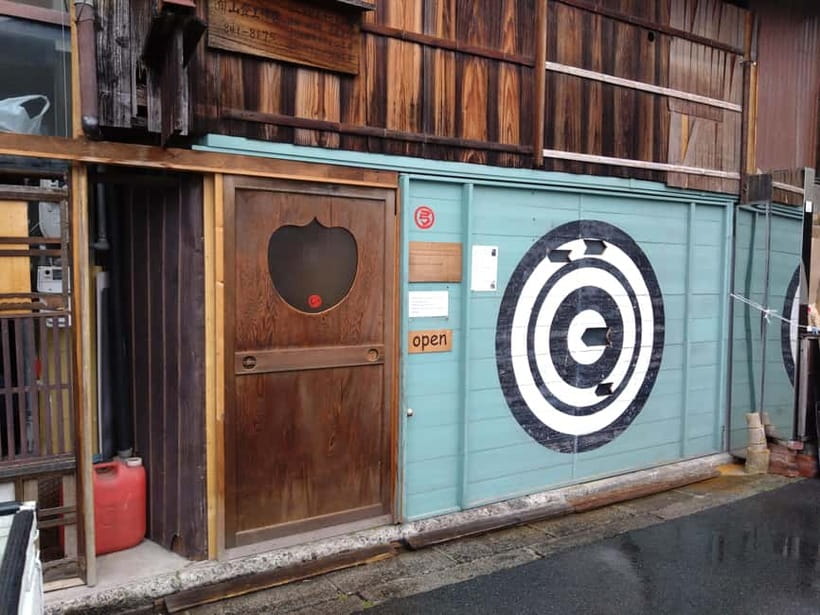
And here’s the detail that can ruin your day if you miss it: there are no door bells. Entrance is on the side of the building, opposite a small parking lot. Don’t enter through other doors or ring bells you won’t find.
If you’re arriving early, spend the first minute reading the approach and checking which entrance matches the photos you were given.
Price and Value: Why $38 Works Here
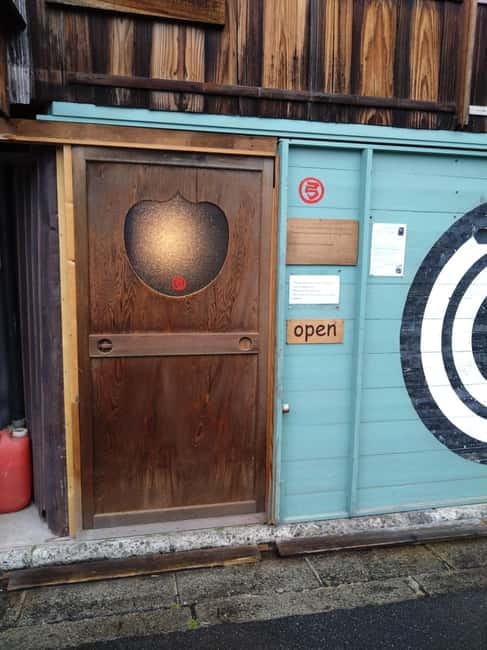
At $38 per person for a 1-hour session, the price is relatively fair for what you’re getting—especially in Japan, where many cultural activities charge more once you add instructor time.
Here, your value comes from four things:
- A high-level instructor (Kyudo Kyoshi, 6th grade) leading the practice
- Hands-on form coaching rather than a passive class
- All equipment provided, so you aren’t paying for rentals separately
- A small group of four, which reduces the time you spend waiting
There’s no hotel pickup and drop-off included, so you’ll want to plan your own transit. But for someone comfortable walking in Kyoto’s neighborhood areas, that’s not a deal-breaker. You’re paying for the instruction and the equipment, not for extra services.
If you’ve been doing Kyoto walking tours all day, this workshop is also a nice change of pace. It’s contained, you’ll burn some physical effort, and you’ll get a skill you can discuss with confidence afterward.
Who Should Book This Kyudo Workshop
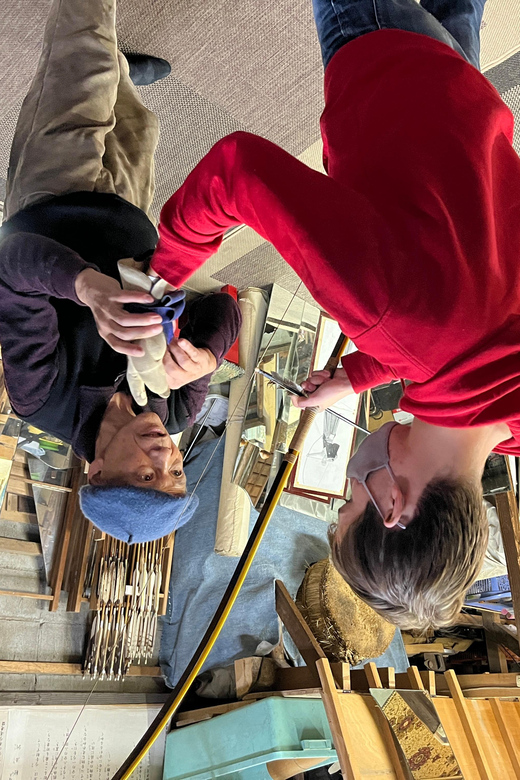
This workshop is a good fit if you want:
- a beginner-friendly introduction to Japanese archery
- a calm, disciplined activity with a clear structure
- a hands-on cultural skill (not just a lecture)
- small-group attention and real coaching
It’s also a strong choice for people interested in martial arts and meditation-style focus. Kyudo isn’t loud. It’s controlled. You’re working with posture, balance, and timing, which can feel surprisingly relaxing once you find the right form.
If your travel style is all about big attractions, this might not replace a temple day. But if you like authentic, local practices—especially ones with meaning—you’ll likely feel like you did something different in Kyoto.
Should You Book This Kyudo Experience in Kyoto?
Book it if you want a structured, hands-on introduction to Kyudo with a real master instructor and enough time to practice the basics correctly. The small group size, included equipment, and coaching style make it feel more personal than most short activities.
Skip it (or at least set expectations) if you’re uncomfortable with instruction that happens mostly in Japanese. The assistant and English materials help, but the instructor’s main language is Japanese, and the workshop won’t turn into a fully English-led explanation.
If you’re deciding between another quick Kyoto attraction and this workshop, I’d choose the one that teaches you how something works. This is one of those rare activities where technique and meaning travel together, and you leave with a better understanding than you arrived with.
FAQ
How long is the Kyudo workshop?
The session lasts 1 hour.
What does it cost?
It’s $38 per person.
Is it beginner-friendly?
Yes. You’ll learn proper form, including stance and bow hold, plus the tools and techniques used in Kyudo.
What’s included in the price?
The price includes the Kyudo lesson, an experienced instructor, and all required Kyudo equipment.
Where is the meeting point, and how do I find the entrance?
The meeting point is からくり弓道体験場. There are no door bells, and the entrance is on the side of the building opposite a small parking lot. Don’t enter through other doors.
How far is it from nearby stations?
It’s about 10 minutes on foot from JR Tambaguchi, Hankyu Omiya, or Randen Shijo-Omiya.
What language is used during the workshop?
The instructor’s language is Japanese. English materials are provided, and an assistant helps with interpretation.
What should I wear?
Wear comfortable clothes that allow you to move freely.
Can I cancel for free, and do I need to pay right away?
You can cancel up to 24 hours in advance for a full refund, and you can reserve now and pay later to keep your travel plans flexible.