REVIEW · KYOTO
Kyoto Private Tea Ceremony at a Japanese Inns
Book on Viator →Operated by ZEN: Tea Ceremony Experience in Kyoto (茶道体験所 禅) · Bookable on Viator
Tea at Kyoto night feels like a secret. This candlelit 20-tatami room inside a long-established inn turns a normal evening into a private cultural show, with hands-on matcha whisking that you actually get to do. One possible drawback: at about 59 minutes, it’s more of a focused experience than a long, deep lesson.
I like that it’s built for real conversation, not hand-waving. Translator devices are provided, the group stays small (2 to 6), and the ceremony includes a kimono photo session plus a short Zen moment before the tea. Just note the experience requires good weather, since it can be affected by conditions outside.
In This Review
- Key Things to Know Before You Go
- Candlelight Tea After Dark in a Kyoto Ryokan Hall
- Price and Value: What ¥15,000 Covers in Real Terms
- Getting There: The Meeting Point and the Ryokan Setup
- Kimono Dressing and a Photo Shoot That Actually Looks Like Kyoto
- Zen Meditation: The Short Pause Before the Tea
- The Tea Ceremony Demonstration: Matcha You Can Understand
- Matcha Whisking: Making Your Own (and Not Just Watching)
- Communication That Works: Translator Devices and Matsuda & Mayumi
- Tips for Getting the Most From Your Private Session
- Who Should Book This Kyoto Tea Ceremony?
- Should You Book This Private Tea Ceremony?
- FAQ
- How long is the Kyoto private tea ceremony?
- Is this a private activity?
- Do I need to speak Japanese?
- What happens during the kimono or haori portion?
- Is Zen meditation included?
- What’s included in the tea ceremony demonstration?
- Can I make matcha myself?
- Are photos allowed during the experience?
- How much does it cost?
- Is there free cancellation?
Key Things to Know Before You Go
- A private ceremony in a normally closed 20-tatami hall inside a traditional Kyoto ryokan
- Kimono or haori dressing with a guided photo shoot, complete with props and lighting
- Zen meditation (about 4 minutes) before the tea starts
- Tea ceremony demonstration (about 20 minutes) where you get a bowl of matcha and sweets
- Matcha whisking (about 20 minutes) where you make your own
- Translator devices so language is not a barrier, even for kids
Candlelight Tea After Dark in a Kyoto Ryokan Hall
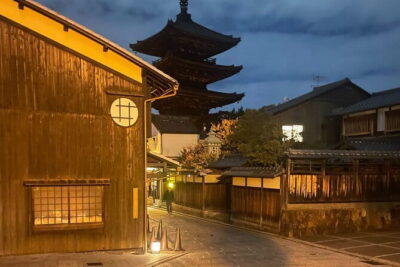
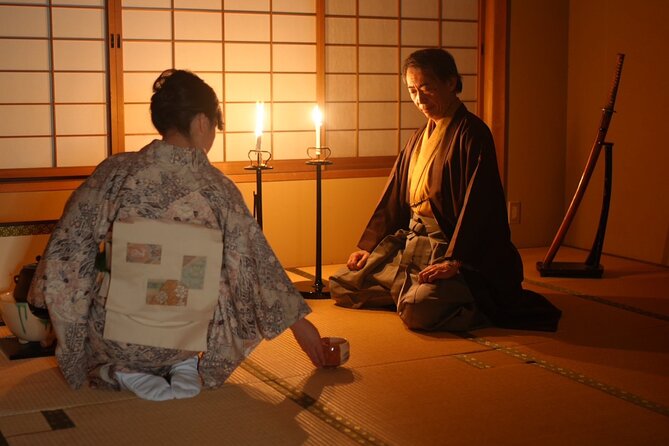
This isn’t a temple show that ends when the lights go out. Instead, you step into a traditional inn setting where the atmosphere does the heavy lifting: candlelight flickers in a dark room, and the ceremony happens in a large 20-tatami banquet hall that’s usually not open to the public.
I like that the venue choice matters. Kyoto’s big sights are often daytime-and-early-evening affairs, so doing something cultural after dark keeps your itinerary balanced. It also feels special that you’re not just visiting a room; you’re being guided through a ritual in a space that’s used for hosting, not tourism traffic.
The time is tight but not rushed in feel, because the evening is structured. You’ll have distinct moments for dressing and photos, a brief Zen pause, then the tea flow and your own whisking.
Group size is intentionally small, from 2 to 6 people. That matters for pacing. In a bigger group, tea ceremonies can turn into a watch-and-wait situation. Here, you’re meant to participate.
You can also read our reviews of more private tours in Kyoto

Price and Value: What ¥15,000 Covers in Real Terms
At $97.98 per person (adults ¥15,000), this sits in the “worth it if you care about the experience” category. What justifies the price is not only the matcha, but what wraps around it.
You’re paying for several things at once:
- Kimono or men’s haori dressing plus a photo shoot
- A guide and a set program that includes Zen meditation and a tea ceremony demonstration
- Matcha sweets (and coffee and/or tea as part of the experience)
- Matcha whisking hands-on time, not just a tasting
- Assistance with photography and the tools/utensils used for the ceremony
- Translator devices, so you can ask questions and follow along
If your goal is a short cultural evening that includes both learning and doing, this is good value for Kyoto. If your goal is a cheaper, simpler activity, you might decide it’s too much for one hour.
Also, consider the “private” factor. This is not a crowded class. Your group stays together, and the attention is more personal. That’s where the price starts making sense.
Getting There: The Meeting Point and the Ryokan Setup
You’ll meet at 茶道体験所 禅 (ZEN: Tea Ceremony Experience in Kyoto) at 緑風荘 4階 (Ryokufū-sō, 4th floor) in Shimogyo Ward, Kanayachō, Kyoto (600-8323). The activity ends back at the meeting point.
The good news is that it’s near public transportation, so you’re not planning your night around a long taxi shuffle. And since you receive a mobile ticket, you can keep it simple on arrival.
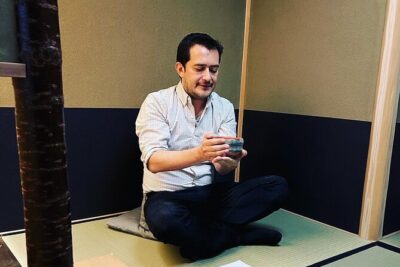
Inside, you’re not just in a room with chairs. You’re in tatami space, using a 20-tatami hall typically closed to the public. That changes the feel right away. You’ll notice the difference between watching from the outside and being in the middle of the setting.
The flow is designed to work even if your group has different comfort levels. You’ll have guided steps, and staff help with photography. If you want to focus on the ceremony rather than logistics, this setup helps.
Kimono Dressing and a Photo Shoot That Actually Looks Like Kyoto
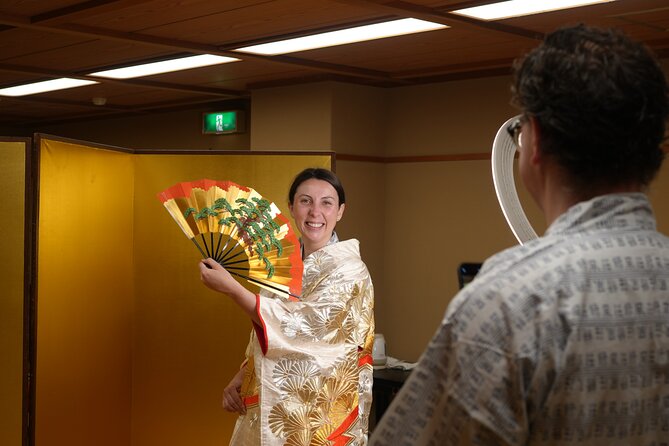
One of the strongest parts of this experience is the visual setup. You’ll spend about 15 minutes getting dressed and doing a photo shoot as part of the program.
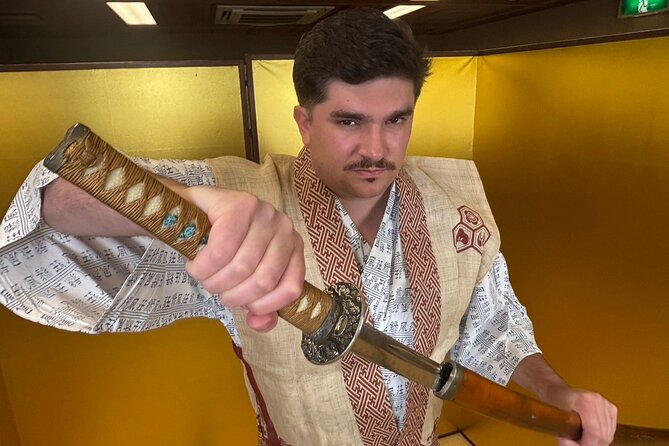
For women, the option is a bridal uchikake. For men, it’s a men’s haori. You’ll also use props such as folding fans and swords, and there’s professional lighting.
I like that the photo session isn’t treated like an afterthought. It’s scheduled. Staff help with photography, so you’re not guessing angles while the ceremony clock is ticking. That means you can enjoy the moment without turning it into a DIY photoshoot.
A small practical note: props and costumes are part of the experience, so be ready to cooperate with direction. If you’re comfortable standing for a bit and following instructions, you’ll get more from this than a quick costume-and-go.
If you’re traveling for a “Kyoto night story,” this is exactly the kind of activity that gives you both the memory and the photos to match.
Zen Meditation: The Short Pause Before the Tea
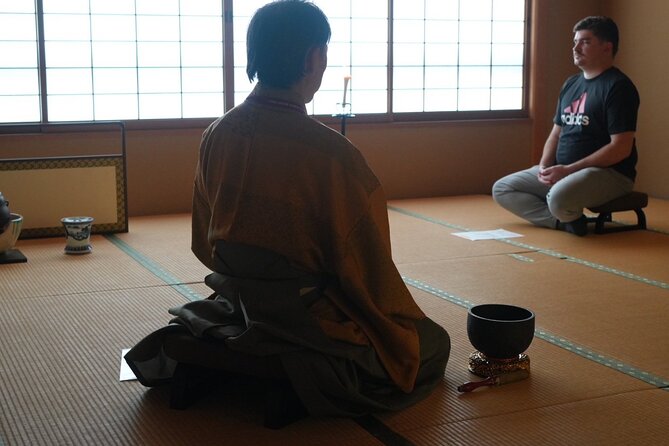
Before the tea happens, you’ll do Zen meditation for about 4 minutes. It’s brief, but it serves a purpose: it changes the pace of the evening.
In my view, that short meditation is the difference between a tea ceremony as entertainment and a tea ceremony as a ritual. Even if you don’t know any Japanese, the timing works. You can sit, breathe, and let the space do its job.
This part also helps families and first-timers. Kids who might get restless can focus on something simple and structured for a few minutes. Adults who want calm after a busy day in Kyoto get a controlled reset.
Then the energy shifts from stillness to participation, and that’s when the tea demonstration begins.
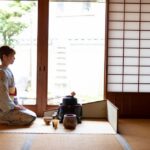
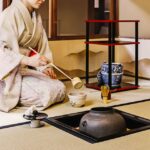
The Tea Ceremony Demonstration: Matcha You Can Understand
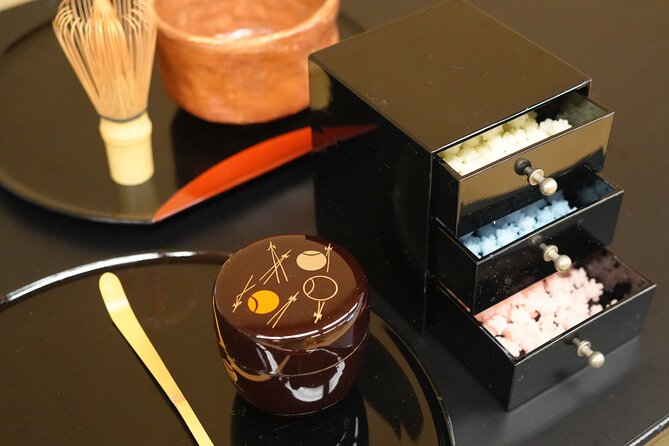
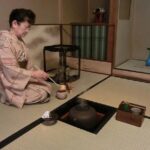
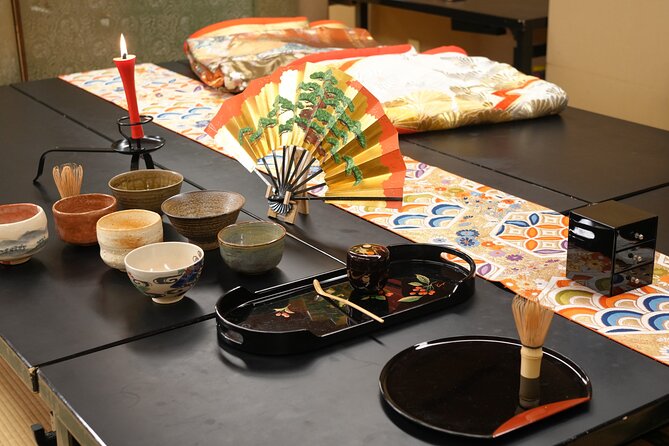
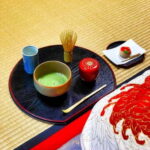
The main tea moment is about 20 minutes. You’re welcomed as a guest, you’re given a bowl of matcha, and you experience the flow of a traditional tea gathering.
The key detail here is communication. Translator devices are available, so you’re not stuck with nodding and hoping you got the meaning. That makes the demonstration feel more like learning than watching.
I also like that sweets are included with the tea ceremony. Matcha can be intense if you’re not used to it. Having sweets alongside makes the tasting feel more balanced and celebratory.
Think of this segment as the “how it works” chapter. Even if you’re not memorizing every step, you’re getting the structure: how the host moves, how the ritual unfolds, and what to pay attention to when it becomes your turn.
If you tend to enjoy hands-on learning, the demonstration sets you up well for the next step.
Matcha Whisking: Making Your Own (and Not Just Watching)
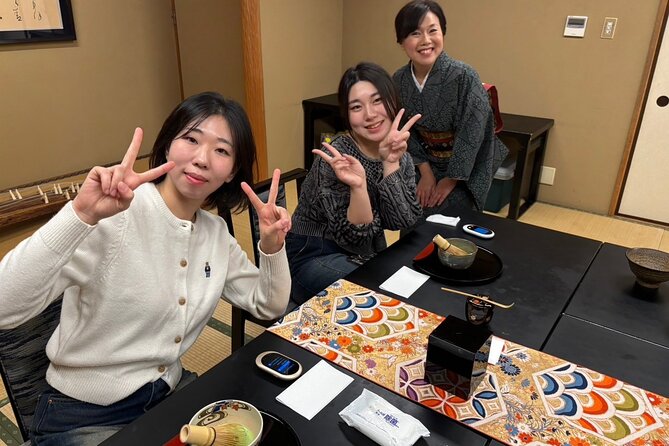
After you’ve seen the flow, you’ll move into matcha whisking for about 20 minutes. This is the part people remember, because it’s not passive.
You get to make your own matcha using the ceremony utensils provided. Your guide walks you through the process, and because translator devices are available, you can ask questions as you go.
I like this segment because it turns culture into a skill you can repeat later. You’re still experiencing a tradition, but you’re also building a personal memory tied to a real action. That’s a big difference from many “watch a performance” activities.
Also, photos are welcome throughout the session, so you can capture the moment while you’re learning. The staff assist with photography, which means you don’t need to set up your camera at a perfect angle while your matcha is being made.
The program ends back at the meeting point, so it’s a self-contained evening. You’re not left scrambling for dinner plans right after.
Communication That Works: Translator Devices and Matsuda & Mayumi
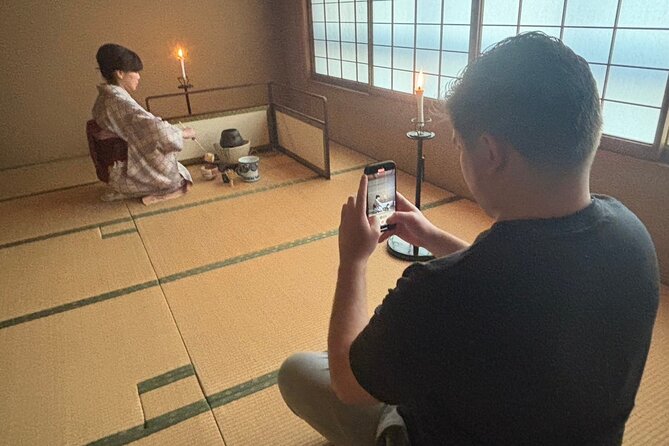
A lot of Kyoto cultural activities struggle with one thing: language. This one doesn’t, at least not in the way you’d expect.
They provide translator devices, which helps you follow along even if you don’t speak Japanese. That’s also a big deal for families. One of the strongest signals from the experience is that kids who may not speak English can still ask questions in their own language through the translation support.
The human side matters too. The guides Matsuda and Mayumi are part of the reason people leave with a good feeling, not just a photo. The hosts’ warmth and attention to details show up in how they guide the room—especially during the dressing and photo portion, and again when you’re whisking matcha.
Practical takeaway: if you want to ask questions, do it. A ceremony like this becomes more meaningful when you’re not silently guessing what’s happening.
Tips for Getting the Most From Your Private Session
If you want your evening to feel smooth, aim for the same mindset you’d use at any guided cultural activity: listen, relax, and follow instructions.
Here are a few practical ways to get more out of it:
- Go in with an attitude of participation. This is designed for you to dress up, watch, and then do the whisking.
- Use the translator devices. Ask what things mean as they come up. Even a few questions can make the experience click.
- Embrace the photo moment. The kimono dressing and photo shoot are part of the value, not an optional extra.
- Expect a full loop in under an hour. The program includes multiple segments, so you won’t have time for wandering around afterward.
- If you’re sensitive to scheduling pressure, double-check your start time and plan an easy arrival. The activity ends where it starts.
Weather is also a factor, so if Kyoto is throwing rain at you, expect the provider to handle it with a change of date or refund options. Good weather matters for the experience plan.
Who Should Book This Kyoto Tea Ceremony?
This is a great fit if you want a Kyoto night that is cultural, structured, and personal. The small private group size (2 to 6) makes it feel friendly rather than formal. The translation support makes it workable for non-Japanese speakers. And the combination of kimono photos plus hands-on matcha gives you both storytelling and skill.
It’s especially smart for:
- Couples who want a memorable evening without a long trek
- Families who want something meaningful but not too complex
- First-time visitors who want Kyoto culture without relying on language
You might consider skipping it if:
- You want a longer, lecture-style deep dive rather than a compact 59-minute program
- You’re mainly hunting for major temple sights and don’t have time for a timed indoor experience
Should You Book This Private Tea Ceremony?
Yes, if you want a Kyoto experience that runs like a well-paced night program and ends with you holding a skill: your own matcha whisked under guidance. The venue choice (a candlelit 20-tatami hall in a ryokan), the dressing-and-photo segment, and the translator support make this feel built for real visitors, not just people who already know how tea ceremonies work.
If you’re on the fence because of the price, focus on the package: kimono/haori, demonstration, sweets, and hands-on whisking, all in a private small group. That combination is what you’re really buying.
Book it when you can, because you’ll want an evening slot that matches your plans. And if weather is iffy, plan to be flexible.
FAQ
How long is the Kyoto private tea ceremony?
It takes about 59 minutes.
Is this a private activity?
Yes. It’s private for your group, typically 2 to 6 people.
Do I need to speak Japanese?
No. Translator devices are available, so communication is supported regardless of language.
What happens during the kimono or haori portion?
You’ll dress in a bridal uchikake (for women) or a men’s haori (for men) and do a photo shoot for about 15 minutes, with props such as folding fans and swords and professional lighting.
Is Zen meditation included?
Yes. You’ll have Zen meditation for about 4 minutes.
What’s included in the tea ceremony demonstration?
The tea ceremony demonstration lasts about 20 minutes. You’ll be welcomed as a guest and receive a bowl of matcha, plus sweets.
Can I make matcha myself?
Yes. The experience includes a matcha whisking session for about 20 minutes where you make your own matcha.
Are photos allowed during the experience?
Yes. Photos are welcome throughout, and staff assist with photography.
How much does it cost?
Adults are ¥15,000 and children under 15 are ¥3,000. The listed price is also shown as $97.98 per person.
Is there free cancellation?
Yes. You can cancel up to 24 hours in advance for a full refund.