REVIEW · KYOTO
Private Highlights of Kyoto Tour
Book on Viator →Operated by WaRaiDo Guide Networks · Bookable on Viator
Kyoto in seven hours needs a plan. This private highlights tour is built for first-timers who want the big-name sights with a calm, small-group rhythm, plus a guide who can explain what you’re actually looking at. I especially like the private guide (I’ve seen names like Mie and Chako turn temple facts into clear stories), and I also like that the tour includes a one-day bus pass you can keep using after you finish.
The main drawback is simple: it’s a lot of moving around. Expect steady walking and some steeper slopes at stops like Kiyomizu-dera, and lunch is on your own budget and timing.
In This Review
- Key Highlights Worth Your Time
- Start at Kyoto Station: Easy meeting point, smoother first steps
- Two Routes, One Great Day: Northwest bamboo and gardens vs Southeast shrine classics
- Northwest-bound highlights: Arashiyama to Golden Pavilion
- Southeast-bound classics: Sake, torii gates, and hilltop views
- Kinkakuji and Kiyomizu-dera: The clock-friendly way to see Kyoto’s icons
- Nijo Castle’s Tokugawa drama and Sanjusangendo’s statue count
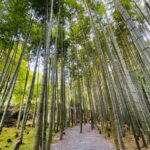
- Arashiyama bamboo and Togetsukyo: The photo moment you can actually walk through
- Ryoan-ji: Why a small rock garden still takes attention
- Fushimi Inari plus the sake museum: Two ways to understand Kyoto identity
- Gion at the end: Use the time wisely, not just for photos
- Getting around with public transport and that bus pass
- Price and value: What you’re really paying for
- Walking, crowds, and weather: The practical realities
- Who this tour suits best
- Should you book this Kyoto Highlights private tour?
- FAQ
- What is the meeting point for the tour?
- What time does the tour begin?
- How long is the Kyoto highlights tour?
- How large is the group?
- Are admission tickets included?
- Is lunch included in the price?
- Is hotel pickup or drop-off included?
- What transportation do we use during the day?
- What if the weather is poor?
Key Highlights Worth Your Time
- Two smart route choices so you can match the day to your interests in temples, bamboo, or shrine-and-sake stops
- Included temple and museum entries at key sights, saving you time buying tickets on the fly
- Small group size (up to 8) for real back-and-forth with your guide, not just head-down sightseeing
- A bus pass that keeps working afterward, useful for stretching your day in Kyoto
- Real cultural context from guides such as Mia, Mie, Chako, Mai, and Choc, who often translate the meaning behind the scenery
Start at Kyoto Station: Easy meeting point, smoother first steps
The tour starts at Hotel Granvia Kyoto, right by JR Kyoto Station, at the Central Entrance. Meeting here matters. If you’re juggling luggage, jet lag, or just trying to figure out Kyoto’s transit, being anchored near Kyoto Station helps you get going without stress.
You’ll take public transportation during the day, with the guide handling the route and the timing. I like this approach because it mimics how locals move, and you’re not stuck inside a van all day long.
The tour runs about 7 hours, starting at 9:00am. That’s long enough to feel like a proper Kyoto day, but not so long that you’re completely cooked by mid-afternoon—if you pace yourself.
You can also read our reviews of more private tours in Kyoto

Two Routes, One Great Day: Northwest bamboo and gardens vs Southeast shrine classics
This is a private full-day highlights tour with two itinerary options. The best part is that you can pick the direction that fits your Kyoto “mood.”
Northwest-bound highlights: Arashiyama to Golden Pavilion
This route leans into gardens, bamboo, and classic temple views. You typically begin with Arashiyama Park, known for temples and those signature bamboo scenes. Then you move to Ryoan-ji, one of the most famous Zen rock gardens in Japan, where you’re looking at a layout built around 15 stones.
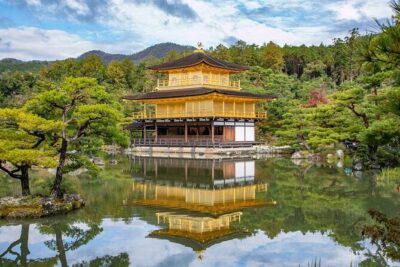
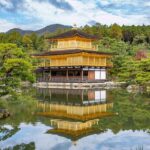
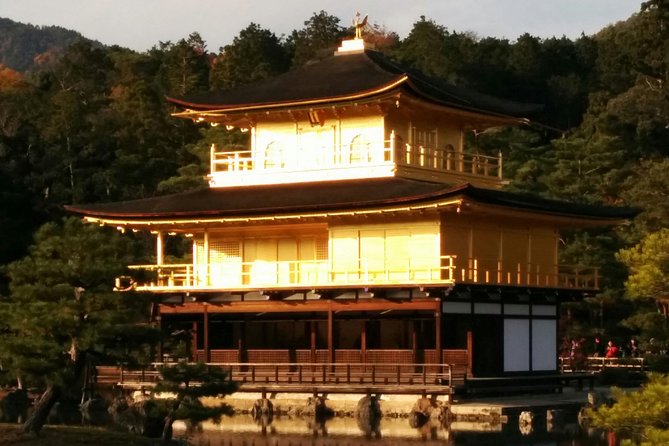
After a lunch break (own expense), you head to Kinkakuji (Golden Pavilion), a three-story pagoda covered with gold leaf, with the temple reflecting over water. From there, you choose between Nishiki Food Market or Nijo Castle depending on what you want more: food-stall Kyoto or the Tokugawa-era power center.
Southeast-bound classics: Sake, torii gates, and hilltop views
This route is heavy on the big shrine and temple hits. You start with Gekkeikan Okura Sake Museum, where you learn about Japan’s rice wine and the story behind one of the best-known brands.
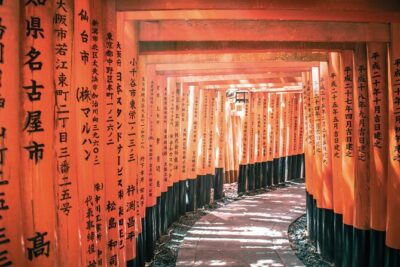
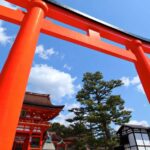
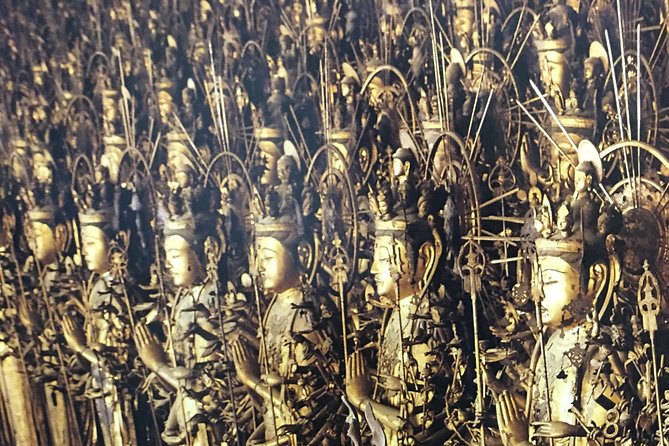
Then comes the star attraction for many first-timers: Fushimi Inari-taisha, a shrine famous for thousands of red torii gates on the mountain path, plus foxes and smaller shrines along the way. After Sanjusangendo, which houses 1,001 Kannon statues, you take lunch on your own and then continue to Kiyomizu-dera.
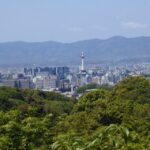
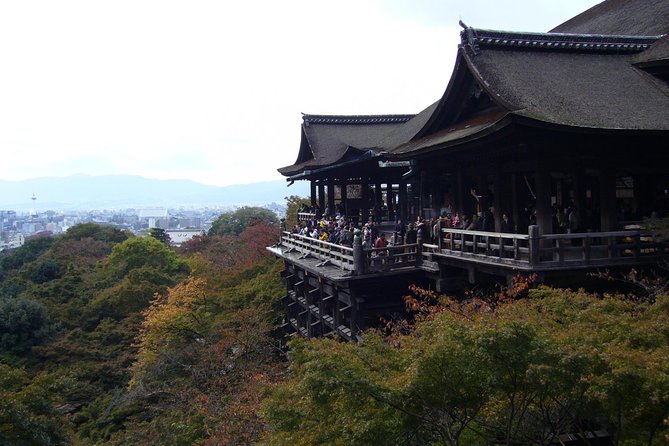
Kiyomizu-dera sits high on the hill and dates back to the 8th century. Afterward you walk up through Ninenzaka and Sannenzaka, those postcard-like lanes with excellent city views, before ending in Gion.
Kinkakuji and Kiyomizu-dera: The clock-friendly way to see Kyoto’s icons
Both Kinkakuji and Kiyomizu-dera are included stops (with admission ticket included). The time on each is planned for about 50 minutes, which sounds short—until you remember Kyoto’s major sites can swallow hours in lines, crowd drifting, and photo detours.
At Kinkakuji, the point isn’t just to see gold. It’s to see the design in context: the three levels, the way it sits by the lake, and why it became such a symbol of Kyoto. A good guide can also help you spot the architectural cues you’d otherwise miss.
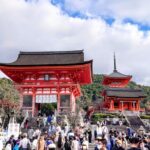
At Kiyomizu-dera, your big win is the viewpoint. The temple’s balcony area gives you sweeping views of Kyoto, and that’s the moment you want to hit without rushing. The planned time includes walking up the area and taking in the slopes and lanes nearby.
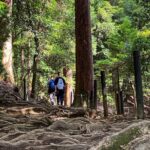
Practical note: both areas can involve uneven ground and lots of stairs. If you’re bringing knee issues, plan for slower steps and take breaks when you need them.

Nijo Castle’s Tokugawa drama and Sanjusangendo’s statue count
Some days in Kyoto blur together. These two stops keep things grounded in history and craft.
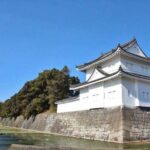
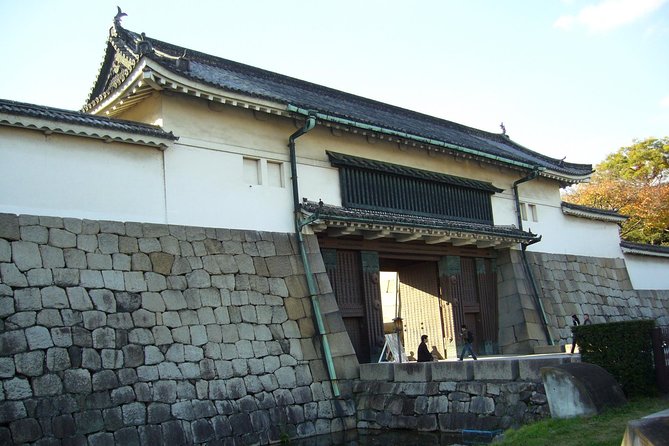
Nijo Castle is built in the early 17th century during the Tokugawa Shogunate period. It’s included with admission ticket and about 50 minutes. The highlight for many people is touring the original lived-in quarters of the shogun, where the whole place is designed to reflect authority and control, not just beauty.
Then there’s Sanjusangendo Temple, included with admission ticket and about 50 minutes. The wow factor is simple: 1,001 Kannon statues. Even if you’re not a religious-history person, it’s a rare sight that forces your eyes to work, and that’s when context from a guide becomes valuable.
Arashiyama bamboo and Togetsukyo: The photo moment you can actually walk through
No Kyoto highlight list survives without bamboo. Here, you get the bamboo without turning it into a one-and-done selfie stop.
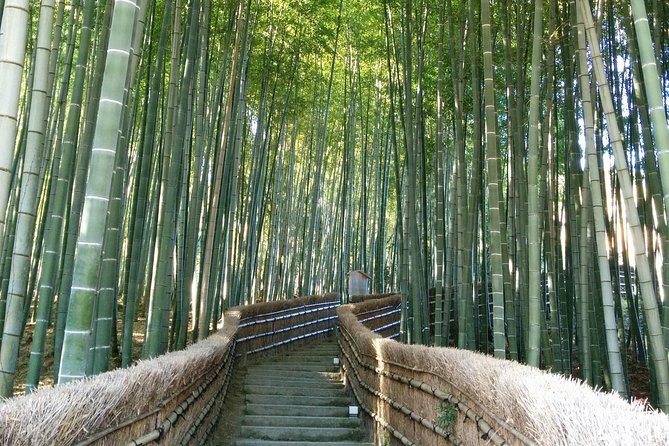
On the northwest route, you’ll have time for Bamboo Forest Street for about 30 minutes, and you’ll also see the Togetsukyo bridge near the bamboo area. The bridge is often the easiest way to orient yourself, and walking the corridor is a better plan than just staring from the edge.
Arashiyama itself is more than one scene. Arashiyama Park is noted for temples as well, so you’re not limited to bamboo alone. That makes the route feel more “Kyoto” and less like one theme park moment.
Ryoan-ji: Why a small rock garden still takes attention
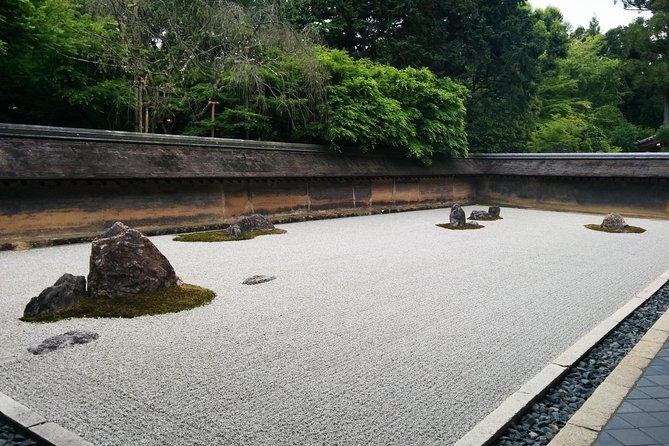
Ryoan-ji is scheduled for about 30 minutes with an included ticket. It’s short on purpose, but it’s enough time to understand what you’re seeing, not just check a box.
This Zen rock garden is famous for its world-recognized rock layout built around 15 stones. When you have a guide, you get help interpreting the design choices—why certain sightlines matter and how your view shifts as you change position.
If you want a quieter pocket in the day, this is it. It also helps balance the more crowded-feeling shrine and temple stops later.
Fushimi Inari plus the sake museum: Two ways to understand Kyoto identity
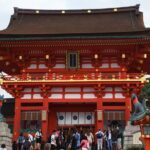
If you only do one route stop, Fushimi Inari is the reason many people plan Kyoto first. It’s included (about 50 minutes) and it’s free to enter. The shrine’s thousands of red torii gates stack up along the mountain path, and there are foxes and smaller shrines along the way.
That’s the visual. The explanation is what makes it stick. With a guide, you can better understand the symbolism of the gates and how the path works as a journey instead of a hallway.
Pairing it with Gekkeikan Okura Sake Museum on the same day (on the southeast route) is smart. Kyoto has layers: shrines and temples, yes, but also the crafts and local products that shaped everyday life. The museum stop focuses on the secrets behind rice wine, and the whole day feels less like a checklist.
Gion at the end: Use the time wisely, not just for photos
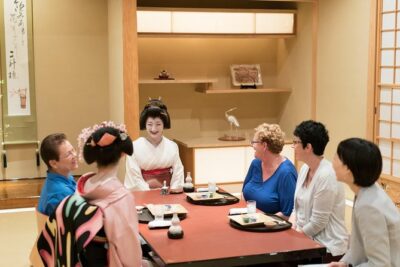
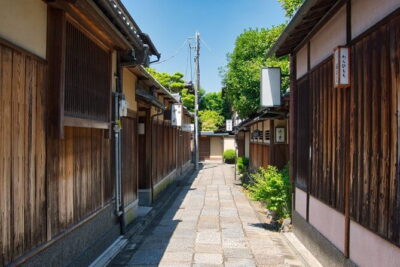
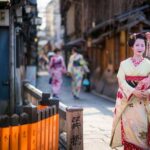
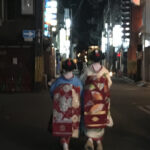
Both routes conclude in Gion, which is known for the geisha tradition. The stop is about 50 minutes and entry is free since it’s an area rather than a single attraction.
Gion is a great finale because it slows your pace naturally. You can look for details in the streets, notice how people move through the neighborhood, and decide if you want to continue exploring on foot after the tour.
Also, since the tour gives you a one-day city bus pass, you’re not stuck planning your next step with zero transit options. You can extend your evening in Gion or head elsewhere without rerouting your whole day.
Getting around with public transport and that bus pass
The tour uses public transportation, and you’ll be provided a one-day city bus pass that you can use continuously after the tour. That single detail is one reason the day works well for value.
It means you’re not only paying for guided temple time—you’re also buying yourself freedom after. Want to hop between neighborhoods for dinner? With the pass included, you can.
You should still expect crowds at major sites and some waiting around popular spots. But a good guide typically helps you avoid unnecessary backtracking and keeps your timing realistic.
Price and value: What you’re really paying for
At $151.20 per person for roughly 7 hours, this isn’t a bargain tour. It is, however, priced like a serious “see Kyoto right” day.
Here’s the value math that matters:
- You get a professional English-speaking guide and private full-day highlights with a small group (max 8 travelers).
- Major admissions are included for key stops (Kinkakuji, Kiyomizu-dera, Nijo Castle, Sanjusangendo, Ryoan-ji, and the Gekkeikan museum).
- You get public transportation support and a bus pass that keeps helping after you finish.
What you pay extra for is mostly your time and guidance. If you’re going solo and trying to stitch together transit, tickets, crowd timing, and interpretation, costs and stress can add up fast. If you’re traveling as a couple or small group, the private angle is usually where the money makes sense.
Guides often make the day feel better than the schedule suggests. In past days, guides like Mia/Mie and Chako were praised for giving just the right amount of information and answering questions, plus adjusting pacing when needed.
Walking, crowds, and weather: The practical realities
This experience requires good weather. If it’s canceled due to poor conditions, you’ll be offered another date or a full refund.
Even on good days, Kyoto’s top sights can feel crowded. The trick is pace: follow your guide’s timing, don’t get stuck lingering at one photo spot, and keep energy for the views that matter most—Kiyomizu-dera’s balcony and the torii paths at Fushimi Inari.
Also remember lunch is not included. Your guide may point you to a solid meal option, and that can be a major quality-of-day difference. Since lunch is own expense, budget time for it and don’t wait until the last minute at a site entrance.
Who this tour suits best
This is a great fit if:
- You’re in Kyoto for the first time and want the strongest hits without spending your day planning.
- You like temple and shrine details explained in plain language, not just signage.
- You want a small group with undivided attention from your private guide, not a crowded bus herding system.
It’s also a good choice if you’re short on time and want Gion at the end, not just another temple dump before you go back to your hotel.
If you’re someone who hates schedules or wants to wander aimlessly for hours, you might find the timed stops feel structured. But if you treat the schedule as a framework, it works well.
Should you book this Kyoto Highlights private tour?
Book it if you want a guided route that hits Kinkakuji, Kiyomizu-dera, and Fushimi Inari (plus bamboo and the Zen garden) in one clean day, with admission tickets handled and a small-group feel.
Skip it or consider another format if you’re extremely sensitive to walking, or if you want total freedom and no scheduled stops. Also, if food and flexible lunch timing are your top priority, you’ll need to plan your meal approach since lunch is not included.
For most first-timers, this is a strong value: you’re paying for guidance, smart routing, and time saved on the parts of Kyoto that are hard to “figure out fast” on your own.
FAQ
What is the meeting point for the tour?
The tour starts at Hotel Granvia Kyoto, at JR Kyoto Station Central Entrance.
What time does the tour begin?
The start time is 9:00am.
How long is the Kyoto highlights tour?
It runs for about 7 hours.
How large is the group?
The tour has a maximum of 8 travelers.
Are admission tickets included?
Admission is included for several stops, including Kinkakuji Temple, Kiyomizu-dera, Nijo Castle, Sanjusangendo, Ryoan-ji, and the Gekkeikan Okura Sake Museum. Other areas like Gion and Fushimi Inari-taisha are listed as free.
Is lunch included in the price?
No. Food and drinks, including lunch, are not included.
Is hotel pickup or drop-off included?
No. Hotel pickup and drop-off are not included.
What transportation do we use during the day?
You use public transportation, and you’ll also receive a one-day city bus pass.
What if the weather is poor?
The experience requires good weather. If it’s canceled due to poor weather, you’ll be offered a different date or a full refund.