REVIEW · KYOTO
See What You Can’t See by Day — Explore Kyoto at Night by E-Bike
Book on Viator →Operated by Discovery Bicycle Tours Okinawa / e-CHARIty Naha · Bookable on Viator
Night Kyoto looks different when you pedal. This 3-hour e-bike ride turns quiet streets into a guided photo walk, with easy-to-ride bikes and clear safety briefings so you can focus on temples, lantern-lit alleys, and the calm pace of the city after dark.
I also like how the stops are spread out across Kyoto’s night vibe, from Nishi Hongan-ji to the Shirakawa Canal and the Kamo River area. One possible drawback: you’ll still be cycling for about three hours, and the tour requires good weather, so a rainier night can cut your plans short.
In This Review
- Key Highlights You’ll Actually Feel
- Kyoto After Dark: Why an E-Bike Changes Everything
- Where You Start at 570 Higashishiokōjichō and What to Expect First
- Seikouin Wagatazizou Area to Nishi Hongan-ji: Old Kyoto With a Night-Quiet Feel
- Shirakawa Canal and Chaya-mati Vibes: Tea Streets by Moonlight
- Shomen-dori Street Pass-By: A Nintendo Surprise on a Night Ride
- Lake Biwa Canal System and Nanzen-ji: Big Temples, Less Waiting
- Heian Shrine’s Red Torii and Hokodencho on the Kamo River
- The Value Case: Is $117.28 for 3 Hours Reasonable?
- The Guide Factor: Patient Instructions and Even Birthday Magic
- Should You Book This Kyoto Night E-Bike Tour?
- FAQ
- How long is the Kyoto at night e-bike tour?
- Where do we meet, and where does the tour end?
- What’s included in the price?
- Do I need to pay admission fees at the stops?
- Can children join?
- What if the weather is bad?
Key Highlights You’ll Actually Feel
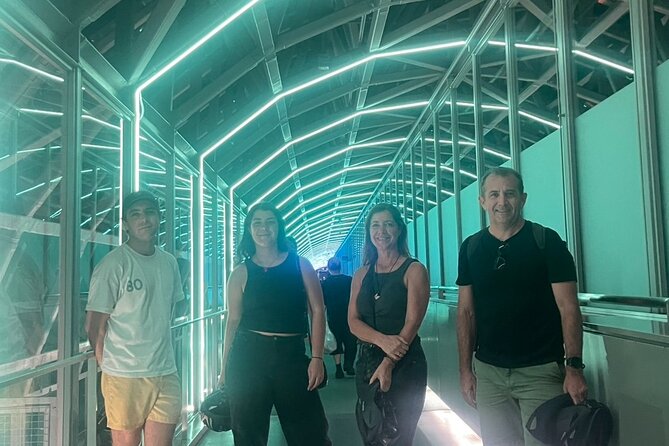
- Small group max of 5 travelers for a calmer ride and easier pacing
- Helmet + cycling hand-sign briefing so you’re not guessing on a dark street
- World Heritage temple grounds plus classic canal atmosphere in the same evening
- Shomen-dori pass-by of Nintendo’s old headquarters adds a surprising modern contrast
- Kamo River feet-in-the-water break at the end, because night cycling makes you want a reset
Kyoto After Dark: Why an E-Bike Changes Everything
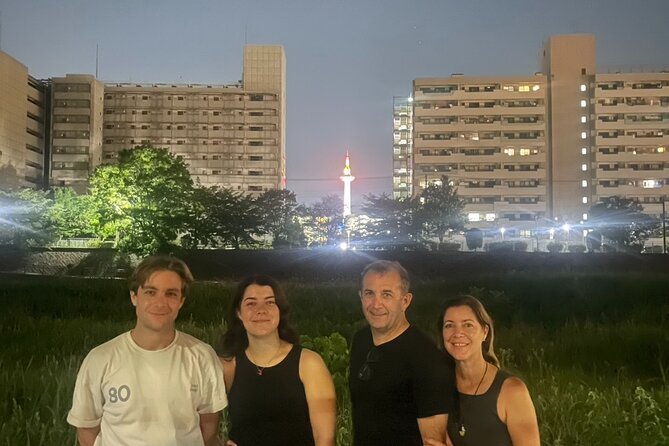
Kyoto at night can feel magical, but it can also be a little tricky if you’re on foot. Streets get darker, distances add up fast, and daytime crowds thin out in a way that still leaves you walking between areas.
This e-bike tour solves the big problem with an approach that’s practical, not showy: you cover more ground than walking, yet the pace stays gentle. The guide focuses on keeping you comfortable and moving safely through the quieter evening rhythm—so you’re not rushing to keep up, and you’re not stuck waiting at every intersection.
The biggest win is how the city’s details show up better at night. You get lit temple walls, calmer streets, and that late-evening feeling where small alleys look like they belong to another Kyoto entirely. And because this tour is built for biking, you’re seeing the spaces between the famous sights, not just the sights themselves.
You can also read our reviews of more cycling tours in Kyoto
Where You Start at 570 Higashishiokōjichō and What to Expect First
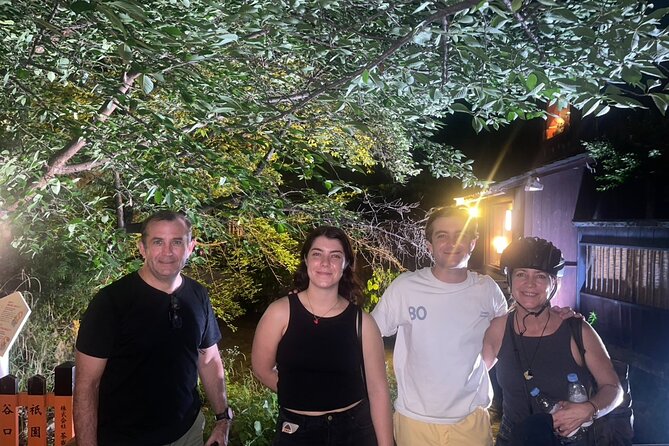
You’ll meet near The Thousand Kyoto area at 570 Higashishiokōjichō at a share-cycle Clew port. The guide meeting point is tied to Seikouin Wagatazizou, which sits behind the hotel. The first chunk of time is practical: a briefing, then getting ready to ride.
Plan for an easy start. The tour includes an installed cycling helmet, and the guide explains the basics of bike control and safety, including cycling hand-signs. That matters more than people think, especially at night. When you know what to do with your hands and where to look, you can relax and enjoy the ride instead of feeling tense on turns or at stops.
This tour runs for about 3 hours, so the early briefing time matters. It sets the tone for the whole evening: clear instructions first, then sightseeing while the city is settling down.
Seikouin Wagatazizou Area to Nishi Hongan-ji: Old Kyoto With a Night-Quiet Feel
The first sightseeing moment is less about a single building and more about atmosphere. You stop in the old streets and alleys part of Kyoto and take photos together at places that catch your eye. The tour format helps here, because it’s positioned as a private-style experience—small enough that you can pause without feeling like a herd.
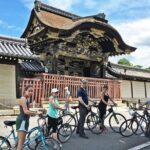
Then you roll into Nishi Hongan-ji Temple, known as the head temple of the Jodo Shinshu Hongwanji-ha sect. It’s also listed for historical importance, including registered World Heritage buildings. In practice, this means your evening has a solid dose of cultural weight early on, before the canals and street scenery start stacking up.
A quick consideration: temples can be visually stunning at night, but night lighting can also make details harder to read. If you’re the type who likes architecture-for-architecture’s-sake, go slowly and take advantage of the guide’s explanations during the stop.
Shirakawa Canal and Chaya-mati Vibes: Tea Streets by Moonlight
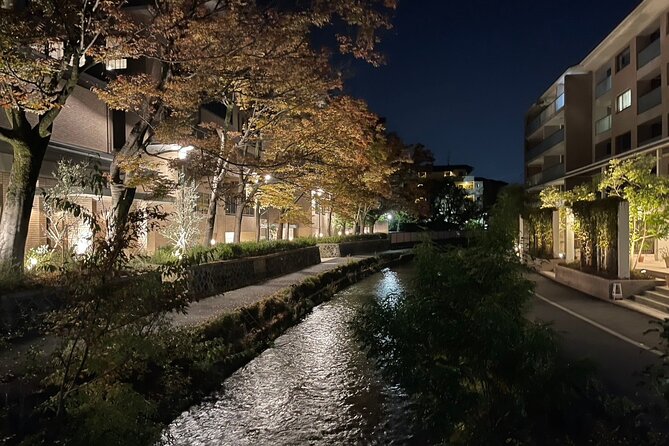
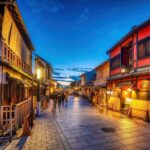
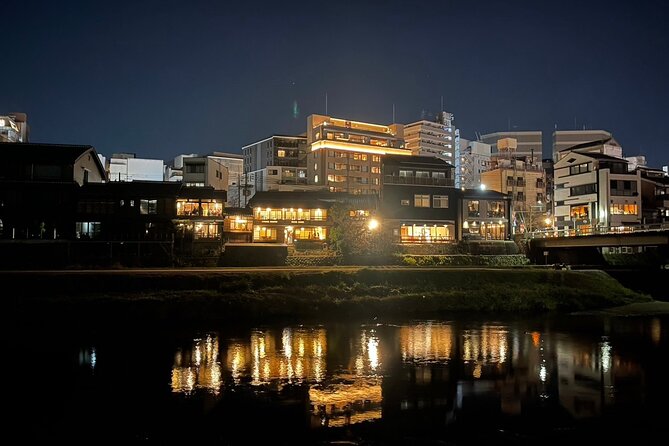
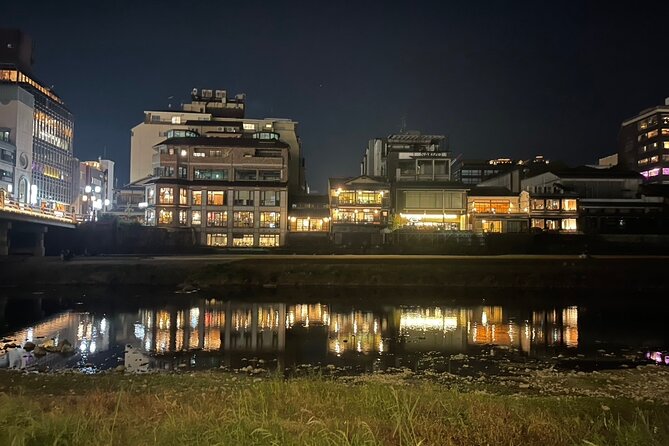
Next is the Shirakawa Canal area. The tour frames this as the sort of Kyoto street that thrived as a chaya-mati, tied to tea culture, and it’s easy to see why. Old buildings line the river, and at night the whole scene has that quiet, paper-lantern feel people come to Kyoto for.
You’ll have about 20 minutes here, which is a realistic amount of time for evening photos plus a bit of just-standing-and-watching time. You’re not doing a forced sprint. You’re meant to soak in the canal-side atmosphere and seasonal plants when they’re in view.
The tradeoff is also real: canal areas can feel crowded if you hit the wrong time, and night isn’t automatically empty. This tour aims for the calmer side of Kyoto after dark, but you should still expect some shared space around popular spots.
Shomen-dori Street Pass-By: A Nintendo Surprise on a Night Ride
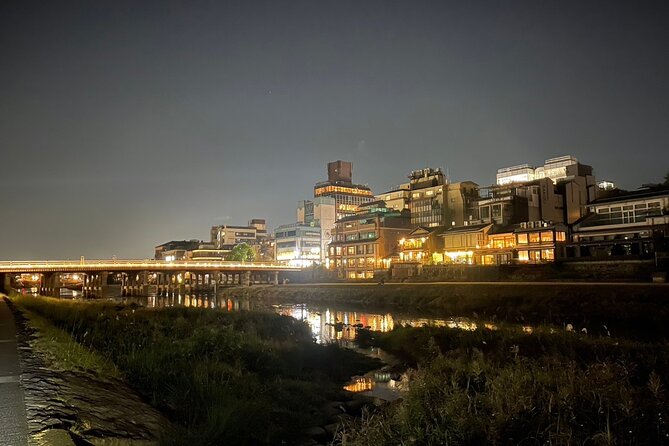
From the canal, you continue toward Shomen-dori Street. Here’s where the tour gets fun in a non-obvious way: you’ll pass by what’s described as the old headquarters of NINTENDO.
That detail is worth remembering because it breaks the usual night-sightseeing script. Kyoto isn’t only temples and tradition at night—it’s also modern institutions and the layers of what the city has been doing over time. The guide’s explanation is the difference between seeing a big building and understanding why it’s there.
A practical point: a “pass-through” stop works best when you have the chance to briefly look and then keep moving. If you tend to want long photo sessions of streetfront architecture, use your 20 minutes wisely and ask the guide what’s most worth photographing.
You can also read our reviews of more evening experiences in Kyoto

Lake Biwa Canal System and Nanzen-ji: Big Temples, Less Waiting
After Shomen-dori, the route shifts into waterway themes and major temple territory. You’ll ride through the area linked to the Lake Biwa Canal, a water system designed to manage elevation differences between Kyoto and Lake Biwa.
The itinerary includes multiple stops connected to the Nanzen-ji precinct and the canal connections:
- 13 Nanzenji Fukuchichō
- 17 Nanzenji Kusakawachō
- 86 Nanzenji Fukuchichō
At these points, you’re meant to appreciate the scale of the waterways and how they supported Kyoto’s development by supplying water over time. Even if you’re not a “water engineering” person, it helps to see the canals in context under night lighting—because the straight lines and long runs feel almost graphic in the evening.
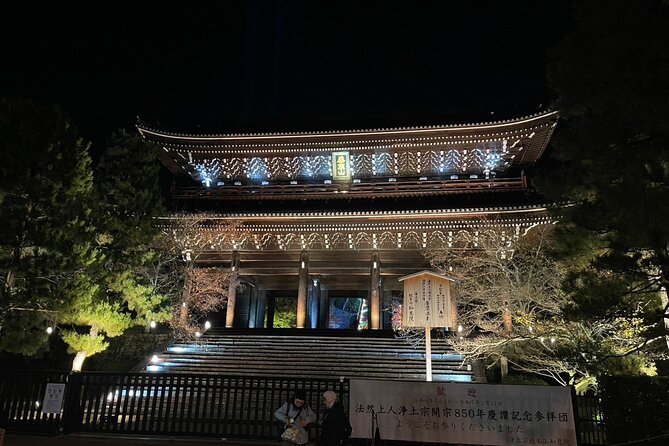
Then you hit Nanzen-ji itself. It’s described as especially special among the Five Mountains of Kyoto, with the main temple and gate pulling your attention as you arrive. In the evening, gates and temple structures often read as silhouettes first and details second. That can actually be a benefit. You can get the big picture quickly, then linger on the details while the guide explains what you’re looking at.
Potential drawback here: temple grounds can have uneven walking surfaces, and you’re doing both cycling and short foot pauses. I’d go slow during the stop moments, especially if you’re not used to walking on stone after biking.
Heian Shrine’s Red Torii and Hokodencho on the Kamo River
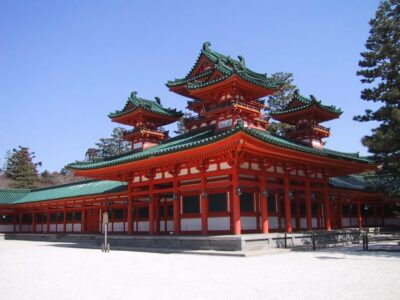
Near the end, you’ll visit Heian Shrine, with the highlight being its large red torii gate and the shrine’s connection to the transfer of the capital to Heian-kyo. This stop works well late in the tour because your eye has already adjusted to night Kyoto. Red gates and shrine colors photograph differently after dark, and the guide’s context helps you see the symbolism instead of only the color.
Then comes the final stretch: Hokodencho, near the Kamo River. The tour is designed to let you exhale here. You can relax in the riverbed along the river or ride along the riverbank, and at the end you can get your feet in the water to cool down.
That feet-in-the-water moment is surprisingly useful. Three hours on an e-bike can leave you a little stiff, and cooling off helps you transition from tour mode to exploring on your own.
A consideration: if the riverbed is slippery or the water feels cold to you, keep it gentle. The tour says cooling down, not toughness competition.
The Value Case: Is $117.28 for 3 Hours Reasonable?
Let’s talk money in a grounded way. At $117.28 per person for about 3 hours, you’re paying for three things:
- Guided routing through multiple Kyoto areas after dark
- E-bike access (plus an installed helmet)
- A small group experience (max 5 travelers)
If you were to do this on your own, you’d still need transit planning, bike rental logistics, and a way to connect stops efficiently. The guide’s job is to save you time figuring things out, and that time has real value—especially at night when you don’t want to waste energy retracing steps.
The pricing also makes sense if you care about safety and comfort. This tour includes safety briefing and cycling hand-sign guidance. When you’re riding after dark, that structure isn’t a “nice extra.” It’s what keeps the experience relaxing instead of stressful.
Is it cheap? No. Is it expensive in a way that matches what you get? It looks reasonable for a small-group night ride with multiple stops and bike support.
The Guide Factor: Patient Instructions and Even Birthday Magic
One of the most praised parts of this experience is the guide. A name that comes up again and again in guest feedback is Yuki—and the repeated theme is that he’s kind, patient, and careful about comfort and safety.
That matters because e-bikes make cycling easier, but night cycling still requires attention. Clear instructions on bike use and safety are what let you enjoy the route rather than focus on whether you’re doing it right. The feedback also highlights that routes are planned on roads that are not very busy, which helps the ride feel smooth.
There’s also a charming detail: one birthday guest described how Yuki arranged a surprise cake and gift. Whether that’s guaranteed or not for every trip, the takeaway for you is clear: the guides seem invested in making the evening feel personal, not generic.
Should You Book This Kyoto Night E-Bike Tour?
Book it if you want:
- A safe, guided night experience with clear biking coaching
- Temples and classic Kyoto streets plus a couple of surprises like the Nintendo headquarters pass-by
- A route that ends with a real “reset” moment at the Kamo River
Skip it (or at least think twice) if:
- You don’t want to cycle for much of the evening, even with e-bike help
- You’re sensitive to temperature changes at night, since you’ll be out during evening hours
- You prefer purely indoor or static sightseeing with minimal movement
For most first-timers, this is an excellent way to see Kyoto’s night personality without feeling like you’re stuck in a slow crawl. It’s not about sprinting between landmarks. It’s about getting Kyoto’s quieter, lit-up side in a way that actually feels doable.
FAQ
How long is the Kyoto at night e-bike tour?
The tour is about 3 hours long, with multiple stops along the way and a short return to the meeting point.
Where do we meet, and where does the tour end?
You meet at the Clew share-cycle port at 570 Higashishiokōjichō near the Seikouin Wagatazizou area. The tour ends back at the same meeting point.
What’s included in the price?
It includes a cycling guide, an installed cycling helmet, use of the bicycle, and a Mandarin and Japanese speaking guide.
Do I need to pay admission fees at the stops?
Admission tickets are listed as free for the stops on the itinerary.
Can children join?
Children under 10 can participate if they are taller than 140 cm and can ride a bicycle. The fee is the same as an adult.
What if the weather is bad?
This experience requires good weather. If it’s canceled due to poor weather, you’ll be offered a different date or a full refund.