REVIEW · KYOTO
Stunning Private Tea Ceremony: Camellia Garden Teahouse
Book on Viator →Operated by Camellia · Bookable on Viator
Matcha tastes better when the room is quiet. At Camellia Garden Teahouse, you get a private tea ceremony for your group, with a garden view and a calm pace that cuts through Kyoto crowds fast. I love the teaching style of the host (Yumiko in recent sessions) and the practical part where you learn the whisk, scoop, and bowl technique yourself. One thing to consider: the experience runs about 1 hour, so you’re choosing a short, focused moment rather than a long sightseeing stop.
The setting is also a big win for me. You’re in a 100-year-old property surrounded by traditional gardens, and it’s right across the road from Ryoan-ji, so the vibe is serene even before the tea starts. If you’re hoping for a high-energy cultural show with lots of movement, this is more about stillness and detail.
In This Review
- Key highlights worth your attention
- A Kyoto tea moment that actually feels private
- Camellia Garden Teahouse and the Ryoan-ji connection
- The 60-minute flow: history first, then matcha hands-on
- Start in the sofa room with seasonal sweets
- Watch an authentic tea ceremony with the garden backdrop
- Make your own bowl of matcha
- Whisk, scoop, bowl: the technique you’ll actually remember
- Seating options: floor or chair
- Kimono dresser, but no kimono rental here
- Your host matters: Yumiko’s teaching style and Q&A time
- Price and value: what $118.60 gets you in Kyoto
- Why privacy is expensive in Kyoto
- What’s included that reduces “extras”
- The best way to think about it
- Logistics that affect the quality of your experience
- Weather matters
- Mobile ticket and service animals
- Who should book this, and who might skip
- Ideal for you if…
- Maybe skip if…
- Practical tips so your hour feels easy
- Should you book Camellia Garden Teahouse?
Key highlights worth your attention
- Private tea ceremony for only your group, so you can ask questions without competing for attention
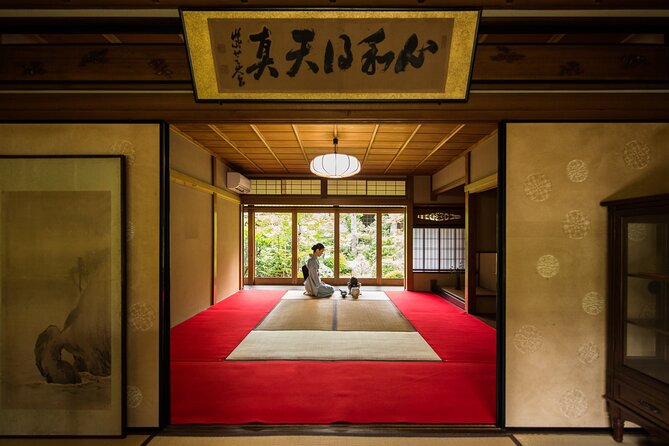
- Garden views from the teahouse, with the main garden as your backdrop during the ritual
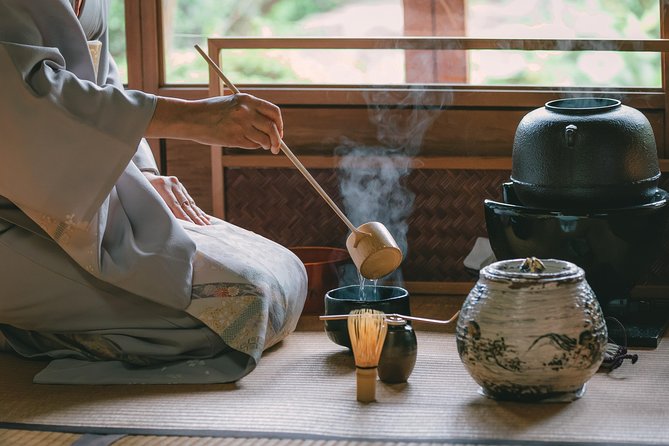
- Hands-on matcha making using the proper tools: whisk, scoop, and bowl
- Sweets at the start, plus time to slow down, taste, and learn
- English-speaking instruction in a calm setting, with plenty of time for photos
- Chairs available if you’d rather not sit on the floor
A Kyoto tea moment that actually feels private
Kyoto can feel like you’re always sharing space: with buses, with lines, with crowds that move in waves. This tea ceremony helps you step out of that rhythm. At Camellia Garden Teahouse, the experience is designed for your party only, and the entire tone is quieter than a typical group lesson.
I also like how the setting does part of the work for you. You’re not just learning matcha theory; you’re doing it while watching the garden scenery shift through the session. That matters, because tea ceremony is partly about attention—how you slow your body so your senses can catch up.
You can also read our reviews of more private tours in Kyoto


Camellia Garden Teahouse and the Ryoan-ji connection
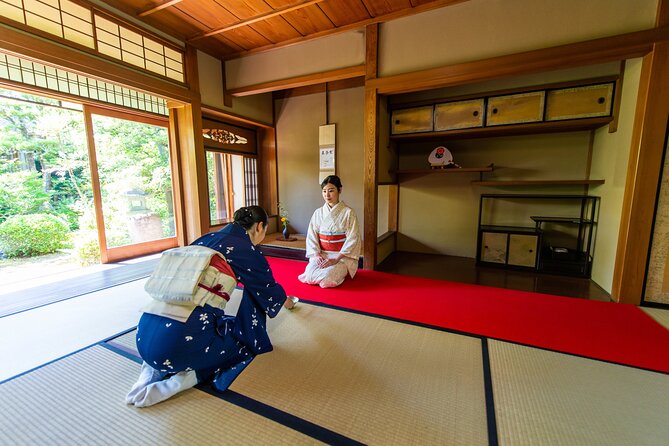
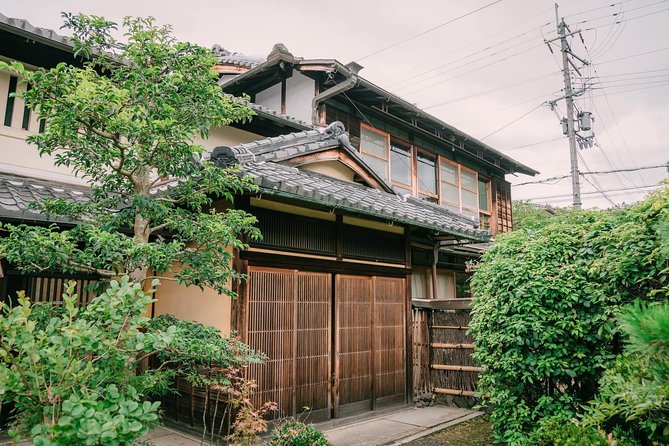
The teahouse sits in a beautiful, older property—around a 100-year-old house—framed by two traditional Japanese gardens. The information I’m working from places it across the road from Ryoan-ji, and it notes a long connection between the area and the world-famous temple.
For you, that means two practical things. First, you get a view that feels genuine to Kyoto rather than staged for tourists. Second, you’re in a location that’s easy to combine with temple time nearby, because you’re already essentially in the Ryoan-ji neighborhood.
It’s also set up for privacy. The house is described as offering guest utmost privacy and a moment of escape from the outside world. In plain terms: this is the kind of stop where you can hear yourself think between courses of sweets and tea.
The 60-minute flow: history first, then matcha hands-on
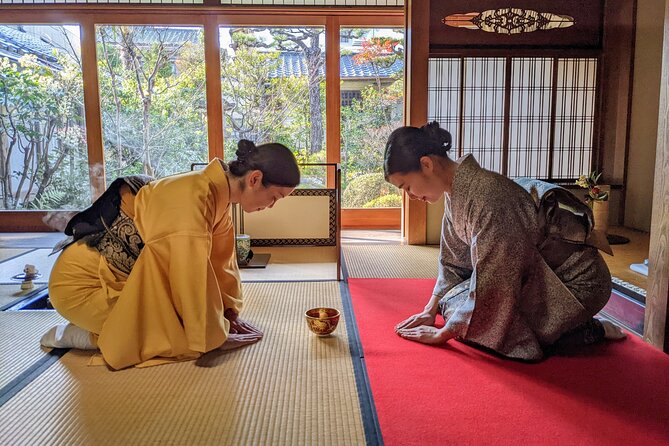
The session is about 1 hour. You’ll start with a gentle, guided introduction before you ever touch a whisk.
Start in the sofa room with seasonal sweets
At the beginning, your instructor welcomes you in a sofa room overlooking the front garden. This is where you learn the cultural and historical context around tea and matcha. The experience also includes seasonal sweets from one of Kyoto’s well-regarded confectioners, served as part of the welcome.
This first part is more than a lecture. It’s a setup for what you’re about to do. If you’ve ever wondered why the bowl matters, why whisking has a rhythm, or why the movements look so exact, this is where the meaning comes in.
Watch an authentic tea ceremony with the garden backdrop
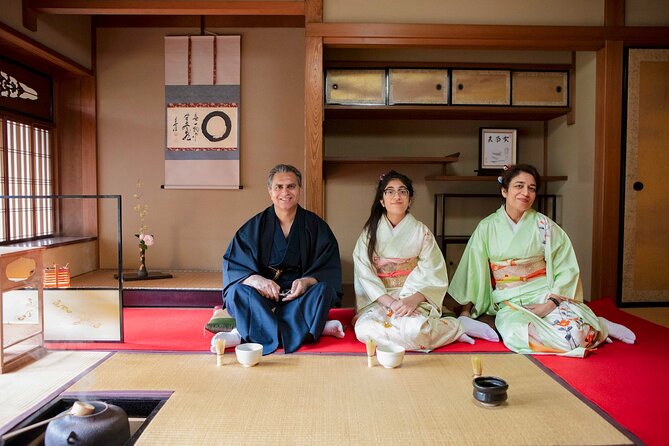
Next, the flow moves to the tearoom itself. You’ll watch the tea ceremony while the main garden is your backdrop. Then you’ll receive tea and have time to observe how the host handles each step.
This is a useful pause. Even if you’re not an expert in Japanese culture, you get to see how the ceremony looks when it’s done calmly, not rushed. You also have time for photographs during the session, which helps you capture the moment without feeling like you’re interrupting it.




Make your own bowl of matcha
After you’ve watched and tasted, you get the chance to make your own bowl of matcha. Your tools are provided—tea bowls, tea scoops, and tea whisks—so you’re not scrambling for equipment or worrying about ordering the right thing in advance.
The biggest payoff here is that the lesson isn’t only visual. You learn how to use the whisk, scoop, and bowl in practice, then you can carry that skill (and the calm focus behind it) home with you.
Whisk, scoop, bowl: the technique you’ll actually remember
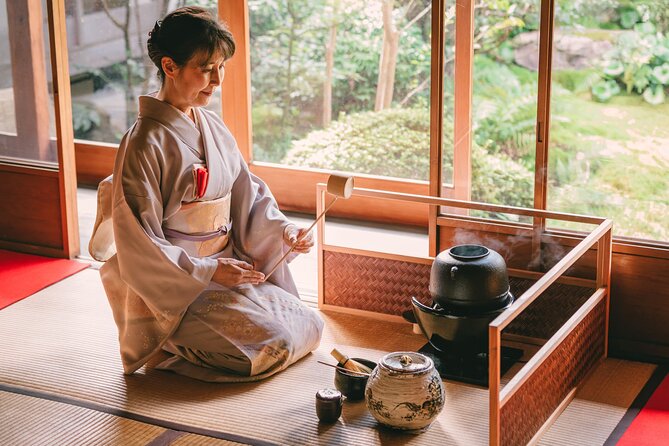
Matcha looks simple until you try it. That’s where this ceremony earns its price. You’re taught the mechanics of using a whisk, scoop, and bowl, not just told that matcha exists.
You’ll see the standard steps up close during the demonstration, and then you’ll repeat them. Even if your first bowl isn’t perfect, the process is the point: you learn how the ceremony’s tools work together to create a smooth, frothy result.
Seating options: floor or chair
If you’d rather not sit on the floor, you can use chairs. That small detail is a big quality-of-life improvement for many visitors. It keeps you comfortable so you can focus on the hands-on part instead of counting minutes.
Kimono dresser, but no kimono rental here
There’s a dedicated kimono dresser, and the experience invites you to let them know if you’d like to dress in kimono. Just note: kimono rental isn’t available at this location.
So if you want the full kimono feeling, bring your own plan. If you already have kimono through another arrangement, the dresser can still help you with setup and timing so it doesn’t eat into the ceremony itself.
Your host matters: Yumiko’s teaching style and Q&A time
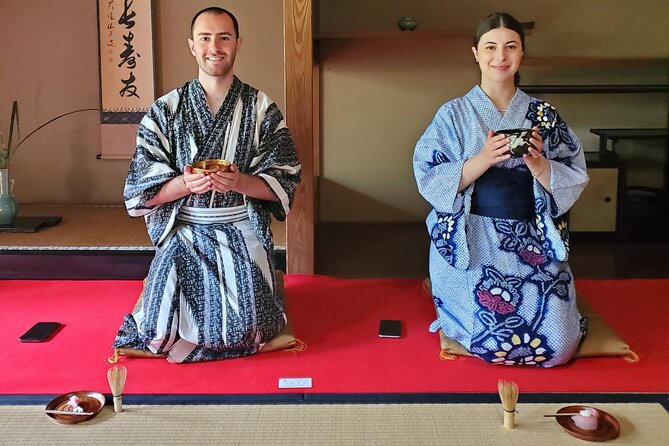
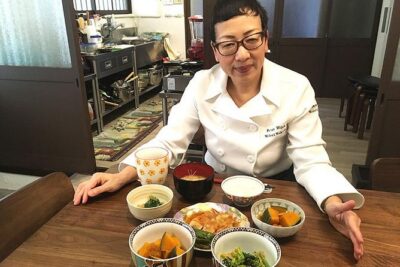
One standout from recent experiences is the way the host guides the group. In at least some recent sessions, Yumiko is named as the tea practitioner/instructor, and she’s described as friendly, well spoken in English, and open with questions.
That matches what you want from a private ceremony. When it’s just your party, you can ask about the history, the ritual, or why each step is done a certain way. You’re not squeezed into a schedule where the instructor has to keep moving to cover the next group.
The session also includes time for questions and for photographs. That’s important for you if you’re the type who wants to understand what you’re seeing, not just collect photos.
Price and value: what $118.60 gets you in Kyoto
At $118.60 per person, this isn’t a budget activity. But for many people, it’s a fair trade for two reasons: privacy and instruction.
Why privacy is expensive in Kyoto
Most tea experiences are group-based, and then you get a shorter attention window. Here, it’s private, meaning only your group participates. That usually changes everything: less waiting, more guidance, and more time for questions.
What’s included that reduces “extras”
You don’t need to bring matcha tools. Your tea bowls, tea scoops, and tea whisks are provided, plus you get the welcome sweets and the tea during the session. The core value isn’t just tasting tea—it’s learning the movements and practicing the method.
The best way to think about it
If you compare this to paying for a self-guided matcha tasting plus a separate class plus time, the math starts to make sense. You’re paying for a focused hour where the host teaches, guides, and then hands you the whisk.
Also, there’s a note about group discounts. If you’re traveling with friends or family, it’s worth asking how that applies to your party size.
Logistics that affect the quality of your experience
This is a private activity that ends back at the start location. The meeting point is listed as:
Tea Ceremony Camellia GARDEN, 18 Ryōanji Ikenoshitachō, Ukyo Ward, Kyoto, 616-8003, Japan
It’s also described as near public transportation. That matters because you can show up without turning the trip into a whole transit project.
Weather matters
The experience notes it requires good weather. If it’s canceled due to poor weather, you’ll be offered a different date or a full refund. So keep your schedule flexible if you can.
Mobile ticket and service animals
It includes mobile ticket access, and service animals are allowed. Those details are small, but they make your day smoother when Kyoto crowds and transit are less predictable than you hope.
Who should book this, and who might skip
Ideal for you if…
You want a calm, structured cultural experience where you can learn and then practice. You also prefer quiet, private attention over joining a crowded group.
It’s a strong fit for:
- couples who want something different from temples
- families who want a gentle activity without long walking
- anyone curious about matcha, not just willing to taste it
Maybe skip if…
If you’re looking for a long, multi-stop itinerary or a jam-packed day tour, this may feel too short. It’s about an hour of tea ceremony, not a full cultural tour of Kyoto.
Practical tips so your hour feels easy
Here are a few ways to make this experience work for you.
- Arrive with the mindset of slowing down. This ceremony is about attention, not speed.
- Wear comfortable clothing, especially if you may sit with a chair or if you’re curious about kimono styling.
- If you want kimono presentation, remember: kimono rental isn’t available here, but a dresser is available if you tell them in advance.
- Bring curiosity. The experience is built around history, ritual, and hands-on matcha making, and the host is there to answer questions.
- If you’re sensitive to weather changes, plan for the fact that good weather is required.
Should you book Camellia Garden Teahouse?
Yes—if you value a quiet, private cultural experience and you’re excited to learn the mechanics of matcha. For the money, the value is in the full sequence: intro with sweets, a real ceremony to watch, then your own matcha bowl to make with provided tools.
I’d book it especially if:
- you want to avoid crowds while still being in a classic Kyoto setting
- you’d enjoy learning from a named host like Yumiko and having time to ask questions
- you like activities where you do the craft yourself, not just observe
Skip it if you want a larger, multi-hour tour with lots of movement. This is an hour of stillness that will make you feel more grounded, not more rushed.
If your schedule can handle flexibility for weather, this tea ceremony is the kind of Kyoto stop you’ll remember long after the bowl is empty.