REVIEW · KYOTO
Hiroshima, Miyajima 1 Day Bus with Indian Lunch from Osaka, Kyoto
Book on Viator →Operated by H.I.S.Co., Ltd. · Bookable on Viator
Hiroshima and Miyajima in one packed day. You get the big-hitting sights—Atomic Bomb Dome and Itsukushima Shrine—plus a ferry ride that makes the iconic red torii practical to photograph, not just something you read about. I like that the day is built around both history and scenery, with a guide who keeps facts flowing while the bus rolls past key landmarks like the Gandhi statue. I also like the food setup: Indian curry for lunch with a vegetable option if you plan ahead. One consideration: this is a long day (around 12 hours), and the Hiroshima portion is heavy, so it’s not a casual sightseeing outing.
If you’re looking for value, this tour is aiming at two things at once: less stress getting between cities and a guided “big picture” for places that can feel overwhelming if you visit on your own. Expect a small group on an air-conditioned bus (up to 20 people), with planned time to visit major sites and then breathe during short free windows—especially on Miyajima.
In This Review
- Key highlights worth knowing
- How this day trip fits together (and why it works)
- Hiroshima’s Peace Memorial stops: what you’ll actually see
- Atomic Bomb Dome: the photo everyone recognizes, with real weight
- Peace Memorial Museum: plan to take your time
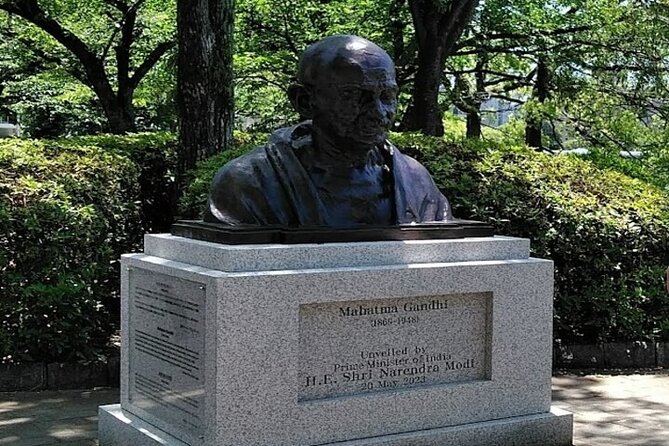
- The Gandhi statue stop: a small moment with big context
- Miyajima ferry to Miyajimaguchi: the practical way to aim for the torii shot
- Itsukushima Shrine: how you’ll experience the red shrine day
- Omotesandō shopping street: using the free time well
- Lunch: Indian curry with a vegetable option (and what to do about it)
- Group size, guides, and pacing: the difference between smooth and stressful
- Price and value: what $280.16 buys you
- When this tour may not be your best fit
- Should you book this Hiroshima and Miyajima day trip?
- FAQ
- How long is the Hiroshima and Miyajima day tour?
- Is lunch included, and can it be vegetarian?
- What tickets are included for the main sites?
- Do you get any free time on Miyajima?
- How does the tour handle the Miyajima torii photo?
- What group size should I expect?
- What if the Peace Memorial Museum is closed?
- Do I get a mobile ticket, and when will confirmation arrive?
Key highlights worth knowing
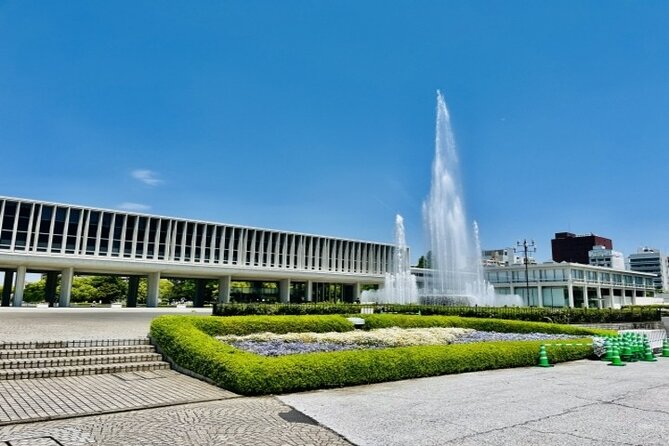
- Atomic Bomb Dome + Peace Museum time that doesn’t feel rushed: admission details are clear (Dome is free; museum ticket is included), and you get a solid block to see the museum on your own.
- Miyajima ferry photo moment: the tour uses a ferry route to Miyajimaguchi, with a chance to get pictures of the torii from the closest practical spot on the boat.
- Itsukushima Shrine included with dedicated time: you’ll have a full visit window for the shrine area, not just a quick walk-by.
- Omotesandō free time: you get about an hour to roam the Miyajima shopping street at your own pace.
- Indian curry lunch with a vegetarian swap: the curry can be changed to vegetable—just not on the day of the tour.
- Small-group pacing under one guide: with guides like Azura, Joe, and Yuko praised for staying engaging and keeping the day on track, the schedule feels controlled rather than chaotic.
How this day trip fits together (and why it works)
This is designed for people who want Hiroshima and Miyajima without turning their day into logistics roulette. You start with transport from the Osaka/Kyoto side of the trip (the tour runs as a full-day experience), then you spend the majority of your time in Hiroshima and on Miyajima. The main win is that the order of stops follows a sensible arc: first the Peace Memorial core, then the scenic reset on Miyajima.
The bus is air-conditioned, which matters because the day is long. You also get a guided flow: the bus ride isn’t just dead time. You’ll get commentary as you go, including notable roadside sights like the Gandhi statue while you’re in the Hiroshima area.
Also, this is not a private tour. You’ll share the day with other participants, up to 20 people. That can be great—more energy on the bus, and you’re less likely to miss details—just know it’s a group schedule, not a tailor-made day.
You can also read our reviews of more tours and experiences in Kyoto

Hiroshima’s Peace Memorial stops: what you’ll actually see
Atomic Bomb Dome: the photo everyone recognizes, with real weight
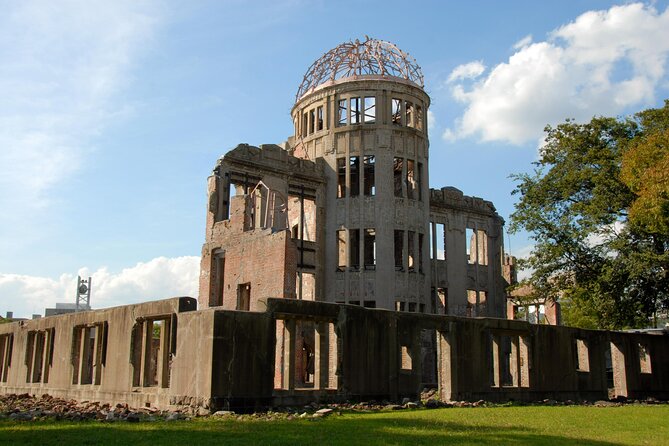
You’ll visit the Atomic Bomb Dome area with about 30 minutes on-site. Admission is free. That’s enough time to get the classic exterior view and also to stand still and take in what it represents—especially because this is one of those places where the “what am I looking at?” question becomes “why does this exist?”
This tour treats the Dome as more than a landmark. The guide’s role is key here. Even if you’ve read about Hiroshima before, a good guide helps you connect the place to the human reality behind it. One of the recurring themes from strong guide mentions (like Joe and Yuko in particular) is turning the day into understanding rather than just checking boxes.
Peace Memorial Museum: plan to take your time
Next comes Hiroshima Peace Memorial Museum, with about 1 hour 45 minutes and admission included. This is where the day becomes most absorbing. The museum is designed to document the bombing of Hiroshima in World War II, so you’re not watching a show—you’re reading, looking at artifacts, and absorbing the timeline.
A practical note: the museum can be busy, including with school groups. That doesn’t ruin the experience, but it does mean you may need to slow down where you want to pause. The good part is that you’re not crammed into a 20-minute “hit and run.” You have real time to move through at your own pace once you’re inside.
If the museum is closed on the day you go, the plan may shift to another peace memorial facility. That’s stated upfront, so you won’t be blindsided if the day changes.
The Gandhi statue stop: a small moment with big context
The overview includes a stop by the Gandhi statue while sightseeing the Atomic Bomb Dome area. It’s a quick add-on compared to the Dome and museum, but it helps frame the theme of peace in a way that feels less abstract.
Why it matters: when you see Hiroshima only through the bombing story, your brain can stop there. A Gandhi reference nudges the day toward ideas of nonviolence and moral consequence. On a day that’s otherwise very solemn, it can give you a different angle to carry with you.
You can also read our reviews of more tours and experiences in Kyoto
Miyajima ferry to Miyajimaguchi: the practical way to aim for the torii shot
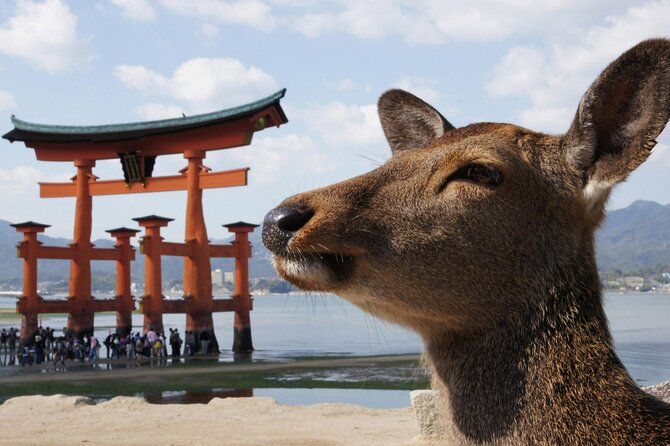
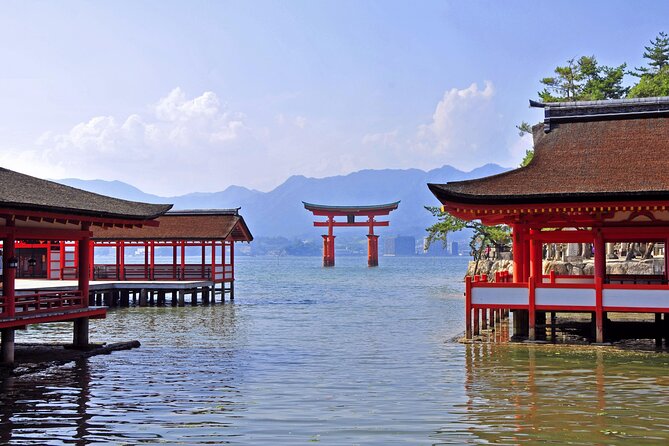
A big part of the Miyajima experience here comes from the transportation route. You take a ferry from Hiroshima to Miyajimaguchi, and the tour specifically sets up a chance to take pictures of the Great Torii from the nearest location on the ferry.
This is more useful than you might think. On your own, it can be easy to waste time trying to find the right angle. Here, the ferry ride is treated as part of the attraction. You’re not just traveling; you’re positioning.
One more reason I like this approach: the ferry gives you a mental transition. After a heavy Hiroshima block, you move onto water and fresh views, and your day shifts gears without you having to plan the switch yourself.
Itsukushima Shrine: how you’ll experience the red shrine day
Then you head to Itsukushima Shrine on Miyajima Island. Admission is included, and you’ll have about 1 hour 10 minutes there.
You can expect the famous red shrine visuals, and you’ll likely feel the “floating in the sea” effect people talk about once you’re actually looking at it. The tour’s value is that you get time to walk the shrine approach and then settle your eyes on the details instead of sprinting through.
A realistic consideration: 1 hour 10 minutes is great for seeing the key areas, but it’s not a slow, unhurried wandering day. If you prefer hours of photo time, you might find the schedule tight. Still, for a one-day trip, it’s one of the better time allocations in the plan.
Omotesandō shopping street: using the free time well
After the shrine, you get about 1 hour of free time at Miyajima Omotesandō Shopping Street.
This is the decompression zone. You can treat it like a mini “Miyajima evening” without the pressure of planning meals or browsing stops. Use the hour for what you actually want:
- a snack break
- a short browse for small souvenirs
- or a slow walk back toward where you feel you’ll catch the best views again
The key is to remember your hour is limited and the day runs on schedule. Think of it as a flexible bonus rather than a full market exploration.
Lunch: Indian curry with a vegetable option (and what to do about it)
Lunch is Indian curry, and it can be changed to vegetable. This is a rare kind of included meal benefit because it takes some decision-making off your plate. If you need a vegetarian option, this tour is set up for it as long as you handle requests correctly.
Two practical rules matter:
- You need to inform the provider in advance about allergies or dietary restrictions when you book.
- They can’t accommodate menu changes on the day of the tour.
Also, the tour notes that you shouldn’t bring your own food or drinks into the restaurant. So if you’re picky or have specific needs, plan ahead. The payoff is that when the meal matches your dietary plan, you can actually relax instead of hunting for another spot halfway through the day.
Some guides also help by keeping the group moving so lunch doesn’t snowball into a time sink.
Group size, guides, and pacing: the difference between smooth and stressful
This is a shared-group experience with a maximum of 20 travelers, and it’s guided. From the guide feedback, the most praised aspect is how engaged the guide stays and how well the day stays on time.
Names that came up in high ratings include Azura, Joe, and Yuko. The common thread in their praise is:
- they explained highlights during the drive, not just after arriving
- they kept the tour moving on schedule
- they brought energy without turning it into noise
That matters for Hiroshima, too. If your group moves too fast, the Peace Memorial sites can feel like a checklist. The schedule here gives time blocks for the places that require attention—especially the museum.
Still, because it’s a shared tour, you should expect a group tempo. If you need total control—slow photos, long readings, no waiting—this may feel structured.
Price and value: what $280.16 buys you
At $280.16 per person, this isn’t a budget snack. So the question is whether the day reduces enough stress to be worth it.
Here’s what you’re getting that supports the cost:
- major paid-admission items are handled (Peace Memorial Museum ticket included; Itsukushima Shrine admission included)
- a ferry route is built into the day
- you get a full-day guided plan across Hiroshima and Miyajima
- lunch is included (Indian curry, with a vegetable swap option)
If you tried to do Hiroshima + Miyajima on your own in one day, you’d still be paying for transportation and tickets, and you’d spend time figuring out timing. This tour removes some of that guesswork. That’s the value.
It’s still a long day, though, so the price makes most sense if you’re visiting from Osaka/Kyoto and want a guided day that hits the big targets without extra planning time.
When this tour may not be your best fit
I think this tour is a strong match if you want:
- a guided overview of Hiroshima Peace Memorial sites
- a practical, one-day way to reach Miyajima and see Itsukushima Shrine
- included lunch and included key admissions
- a small group with a guide who keeps things on track
But it may be less ideal if:
- you’re sensitive to emotionally heavy content (Hiroshima is the emotional core of the day)
- you dislike structured schedules and fixed time windows
- you need meal changes last-minute (menu changes on the day of the tour aren’t supported)
- your planning style is “slow and spontaneous” rather than “see the essentials and enjoy the rest”
Should you book this Hiroshima and Miyajima day trip?
Book it if you want an efficient, guided route that still leaves you room where it counts—especially at the Peace Memorial Museum and during your time on Miyajima. This is a good choice when you’re coming from Osaka or Kyoto and don’t want to wrestle with timing and ticket hassles.
Skip it or reconsider if you prefer deep, unstructured time in every place, or if the Hiroshima portion is hard for you emotionally. Also, if your dietary needs are complicated, make sure you communicate them early since changes aren’t handled on the day.
If you’re ready for a moving history day paired with a beautiful island shrine finale, this tour does that job in a way that’s organized, thoughtful, and (importantly) not built to waste your time.
FAQ
How long is the Hiroshima and Miyajima day tour?
The tour runs for about 12 hours (approx.), covering both Hiroshima and Miyajima in one day.
Is lunch included, and can it be vegetarian?
Yes. Lunch is Indian curry, and it can be changed to a vegetable option. You need to inform the provider when booking for dietary needs.
What tickets are included for the main sites?
Atomic Bomb Dome admission is free, Hiroshima Peace Memorial Museum admission is included, and Itsukushima Shrine admission is included.
Do you get any free time on Miyajima?
Yes. You’ll have about 1 hour of free time at Miyajima Omotesandō Shopping Street.
How does the tour handle the Miyajima torii photo?
The tour includes a ferry route to Miyajimaguchi, with chances to take pictures of the Great Torii from the nearest location possible on the ferry.
What group size should I expect?
It’s a shared, non-private tour with a maximum of 20 travelers.
What if the Peace Memorial Museum is closed?
If the Peace Memorial Museum is closed, the itinerary may change to another peace memorial facility.
Do I get a mobile ticket, and when will confirmation arrive?
The tour uses a mobile ticket. Confirmation is received within 48 hours of booking, subject to availability.