REVIEW · KYOTO
Kyoto Guided Walking Tour Highlight of Kiyomizu & Fushimi Inari
Book on Viator →Operated by Japan Wonder Travel · Bookable on Viator
Three Kyoto icons, one guided half-day route. I like the small-group pace and the way the guide threads history into your walk, and I also love that temple admissions are included for Kiyomizu-dera and Sanjusangendo. The one catch: the short train hop to Fushimi Inari costs extra, so have an IC card or coins ready.
You’ll start near the Kyoto Ceramic Center at 8:30am and finish at Fushimi Inari Taisha’s Honden area. Expect moderate walking, rain or shine, and a route designed so you’re not just sightseeing—you’re understanding what you’re seeing while you’re there.
The bottom line: this is a strong choice if you want the big Kyoto spiritual sights in a manageable 4 hours, without getting lost or stuck figuring out logistics mid-day.
In This Review
- Key Points at a Glance
- Why This Half-Day Kyoto Walk Feels Worth Your Time
- Meeting at Kyoto Ceramic Center and Ending at Fushimi Inari’s Honden
- Kiyomizu-dera in One Hour: The Wooden Stage View and Temple Basics
- Sanjusangendo Temple: 1,001 Statues and a Short Stop That Matters
- The Train Hop to Fushimi Inari: The ¥170 Detail You Must Not Forget
- Fushimi Inari Taisha: Torii Gates, Spiritual Atmosphere, and Photo Spots
- Pacing and Walking: How to Enjoy It Without Feeling Rushed
- Price and Value: What $78.18 Covers (and What It Doesn’t)
- Who This Tour Suits Best
- Should You Book This Kyoto Guided Walking Tour?
- FAQ
- How long is the Kyoto guided walking tour?
- What does the tour cost?
- Is the train fee included to get to Fushimi Inari?
- Are temple admissions included?
- How many people are in the group?
- Does the tour run in bad weather?
Key Points at a Glance
- Max 8 people keeps the experience friendly and easy for questions
- Admissions included for Kiyomizu-dera and Sanjusangendo save time and money
- Photo-first route through scenic viewpoints and the Fushimi Inari torii walk
- Guide-led stories and jokes help the sites stick in your mind
- Train fee not included means you’ll need an IC card or coins for ¥170
Why This Half-Day Kyoto Walk Feels Worth Your Time
Kyoto’s top sights can eat your whole day. This tour is built to protect your time: you get three major stops—Kiyomizu-dera, Sanjusangendo, and Fushimi Inari—within about 4 hours. That matters if you’re only in Kyoto briefly or if your schedule is already packed with food, neighborhoods, and side trips.
I also like that it’s structured like a walk with meaning. You’re not just hopping between landmarks; the guide connects what you see to the why behind the architecture, the religious significance, and the little details that most people miss.
One more practical point: with a small group up to 8, you can actually hear explanations and ask questions while you move. When a tour is too large, you end up watching from the back. Here, you’re closer to the action.
You can also read our reviews of more walking tours in Kyoto


Meeting at Kyoto Ceramic Center and Ending at Fushimi Inari’s Honden
You’ll meet at the Kyoto Ceramic Center (Kyoto Ceramic Art Association Official Shop and Gallery), located at 583-1 Yūgyōmaechō, Higashiyama Ward. Starting from a recognizable place like this helps if you’re using public transit and want a calm, easy meetup.
The tour ends at Fushimi Inari Taisha Honden (Sanctuary), at the front area by 68 Fukakusa Yabunouchichō, Fushimi Ward. That ending point is smart. Instead of turning your day into a second journey across town, you finish right where people want to be for the shrine experience and for onward plans.
Timing matters here too: it starts at 8:30am. Morning tours often feel less stressed because you’re not trying to cram the most famous sights into peak afternoon energy.
Kiyomizu-dera in One Hour: The Wooden Stage View and Temple Basics
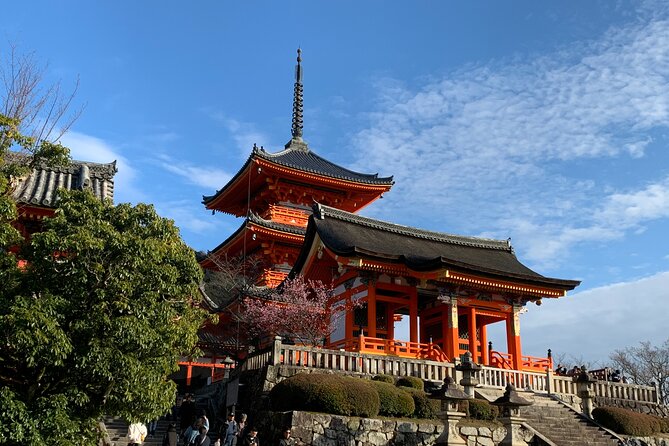
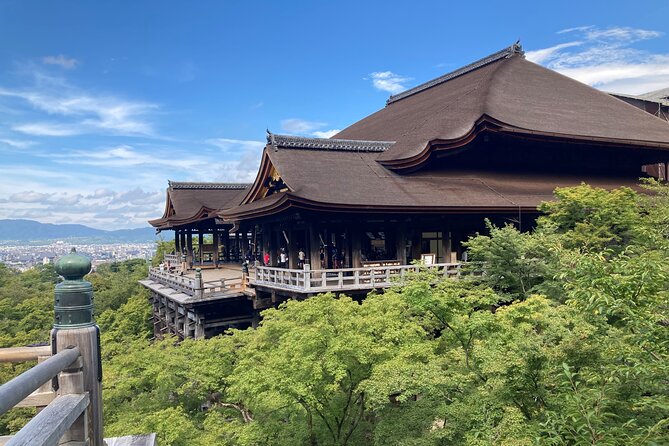
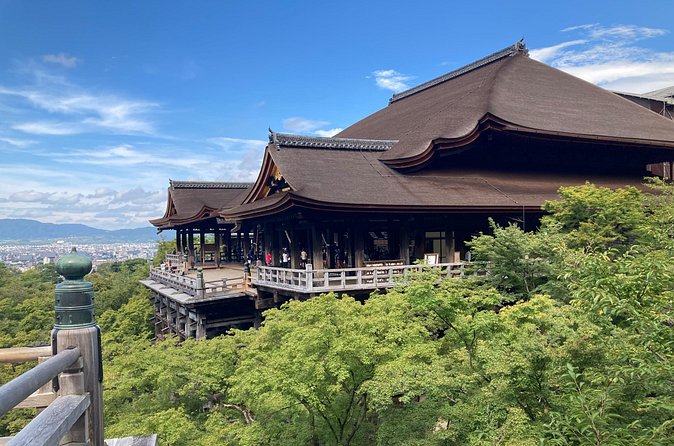
Kiyomizu-dera is the headline stop, with 1 hour on-site and admission included. The reason it’s famous is the dramatic wooden stage and the way it frames the view outward—plus the temple’s deep roots, founded in the late 8th century.
What I like about getting a full hour (instead of a quick 15-minute photo stop) is that you can do the essentials without racing your own legs. You’ll have time to get your bearings, soak in the main features, and then step back for photos when angles make sense.
A practical tip: this is a temple where you’ll likely want to slow down near viewpoints. If you’re serious about photos, plan on spending a couple of minutes waiting for the crowd gaps to pass. You don’t need a perfect shot—just take one or two solid frames and move on.
Potential drawback: Kiyomizu-dera is one of Kyoto’s most iconic names, so you should expect lots of interest around you. That doesn’t ruin the experience, but it does mean you’ll get more value if your guide helps you notice what matters beyond the obvious.
Sanjusangendo Temple: 1,001 Statues and a Short Stop That Matters
Next up is Sanjusangendo, with 30 minutes and admission included. This is a different kind of wow. Instead of a stage-and-view temple moment, Sanjusangendo’s claim to fame is its hall housing 1,001 statues of the Thousand Armed Kannon, known as the Goddess of Mercy.
Even in just half an hour, this stop can land because it’s so specific. You’re not scanning a whole complex of buildings—you’re focusing on one powerful interior sight and what it represents. The name Sanjūsangen-dō literally refers to the hall count in the way it’s described (thirty-three, as part of the naming tradition), and that gives you context for why so many figures are included.
Here’s how I’d think about the value: temples like this are about detail. A short stop works best when the guide points out what to look for. If your guide keeps the pace moving without rushing, those 30 minutes can feel like a full mini-lesson rather than a quick hallway glance.
The main consideration is that 30 minutes doesn’t leave much time for slow browsing afterward. If you know you love statue halls and want extra time, you may wish you had more. Still, for most people, this is a great balance inside a half-day route.
The Train Hop to Fushimi Inari: The ¥170 Detail You Must Not Forget
Between the temples and the shrine, you’ll take a train to Fushimi Inari Shrine. This part is short—about 5 minutes on the schedule—but the crucial detail is cost: the train fee is not included.
You’re asked to prepare ¥170 per person using an IC card or coins. That’s not a lot, but it’s exactly the kind of small logistics issue that can slow you down if you don’t have it sorted.
If you use a transit card, this is easy. If you don’t, get coins ready before you start your day so you’re not scrambling at the station entrance. It also helps to keep an eye on where the group is going so you don’t accidentally drift while everyone boards.
You can also read our reviews of more guided tours in Kyoto



Fushimi Inari Taisha: Torii Gates, Spiritual Atmosphere, and Photo Spots
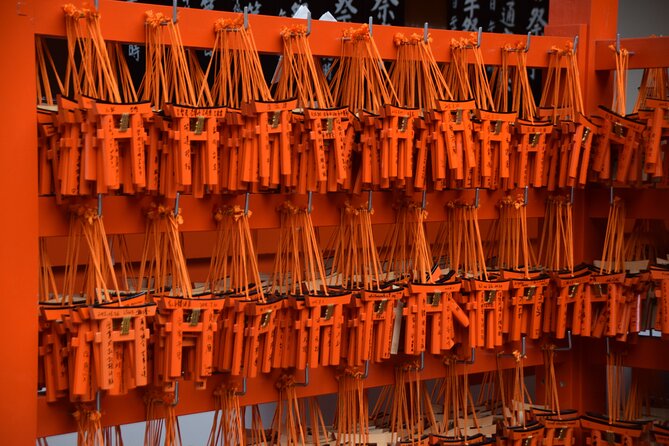
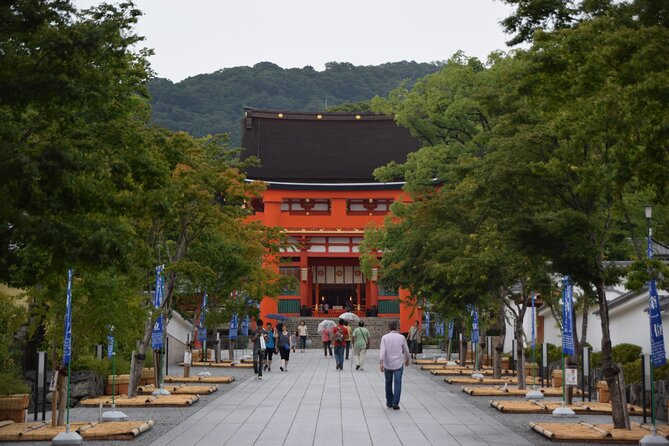
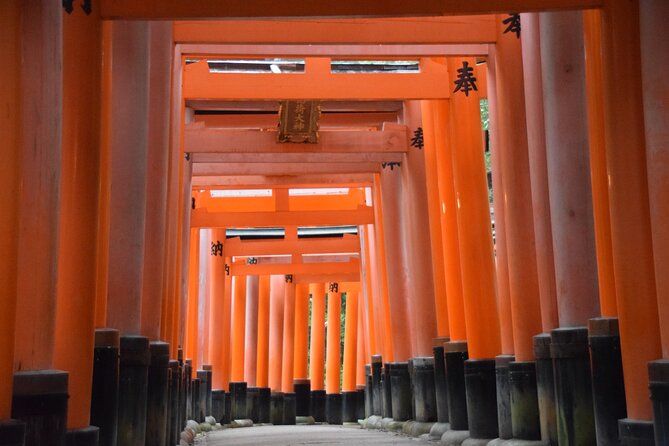
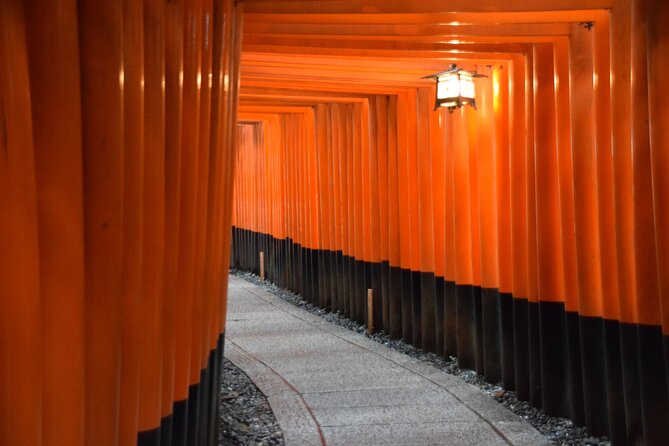
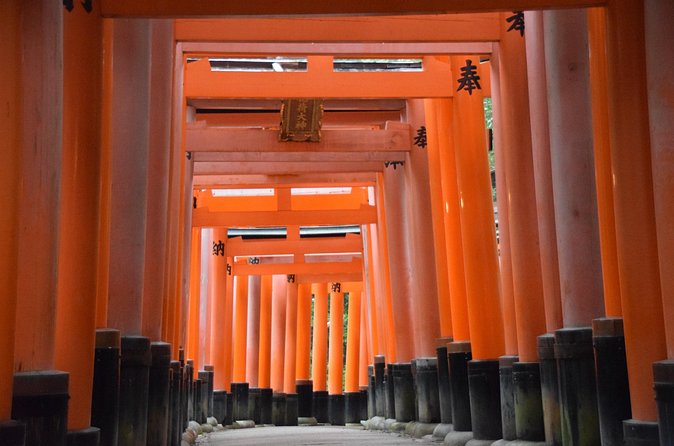
At Fushimi Inari Taisha, you’ll get about 45 minutes, and entry is free. The shrine is dedicated to Inari, the Shinto god associated with rice, agriculture, and prosperity. The visual signature is the thousands of red torii gates, which form paths you can walk through for depth and perspective.
This stop is where the tour’s photo value really shows. Even if you’re not trying to “collect” photos, the torii tunnels give you natural framing lines. You’ll also get chances to take pictures at scenic spots along the way without it turning into a camera-sprint.
One more thing I appreciate: the route is described as including a more peaceful feel through secret paths in Fushimi Inari. That’s the kind of planning that makes a guided walk better than wandering on your own. It’s not that Fushimi Inari is impossible without a guide—it’s that the guide can steer you toward the parts that feel less like a film set and more like a lived-in shrine space.
Practical expectation: 45 minutes in Fushimi Inari is enough for a meaningful walk among the gates, but it’s not enough to explore absolutely everything at every depth level. If you want a long full-gate hike, you’ll eventually need extra time. For a half-day highlight tour, it’s a good target.
Pacing and Walking: How to Enjoy It Without Feeling Rushed
This tour involves a moderate amount of walking, and you’ll want comfortable walking shoes. That’s not a throwaway note. The route links multiple iconic areas, and you’re spending time moving between them plus exploring each site.
The best part about the pacing is that it feels designed for questions. When you’re not stuck in a bus for big chunks of time, you can ask about what you’re seeing. In practice, that means you’ll learn more than just the basic name-and-date facts.
Rain or shine is another important detail. Kyoto weather can be changeable, and temples and shrines don’t pause for clouds. If it rains, you’ll still be able to enjoy interiors like Sanjusangendo and keep moving through the shrine paths in the weather.
My advice: bring a small umbrella or a light rain jacket, and plan for slick stone or steps. You’ll enjoy the walk more when you’re not thinking about slipping.
Price and Value: What $78.18 Covers (and What It Doesn’t)
At $78.18 per person, you’re paying for guided interpretation, a structured route, and included entry for two major sites. In other words, you’re not just buying access—you’re buying time-saving and context.
Here’s the value math as it affects your day:
- Included admissions: Kiyomizu-dera and Sanjusangendo
- Free entry: Fushimi Inari Taisha
- Extra cost: train fee to the shrine area (¥170 per person)
So your total on-the-day spending should be pretty predictable. The tour itself covers the biggest parts you’d otherwise need to navigate: where to go, how much time to spend, and what details to pay attention to.
Small-group size is part of what you’re paying for too. With a maximum of 8 travelers, the experience is easier to manage and more conversational. That tends to matter a lot if you care about understanding temples and shrines rather than just checking boxes.
One more practical angle: this tour is often booked about 46 days in advance on average. That’s a strong clue that it fills, especially during peak seasons. If your dates are firm, don’t wait until the week of.
Who This Tour Suits Best
This is a great match if:
- you’re in Kyoto for a short time and want the top spiritual highlights efficiently
- you like guided explanations that help you notice details
- you’re comfortable with moderate walking and want a half-day schedule that doesn’t feel frantic
- you want a small group experience where you can actually ask questions
It may be less ideal if you’re someone who wants to linger long at only one site. This route is balanced across three big stops, so it’s not designed for deep, slow exploration of every corner at the expense of moving on.
Should You Book This Kyoto Guided Walking Tour?
I’d book it if you want a smart, not-too-long route through Kyoto’s most recognizable spiritual sites, with included temple admissions and a guide who brings the day to life while you walk.
I wouldn’t book it if you’re allergic to any extra planning. You do have one extra logistics item—the train fee to Fushimi Inari (¥170)—and you’ll want comfortable shoes for steps and paths. But for most first-timers and many repeat visitors, that’s a small tradeoff for a well-structured half-day.
If you want a clean highlight plan without the stress of figuring out timing and connections yourself, this tour is exactly that.
FAQ
How long is the Kyoto guided walking tour?
It runs for about 4 hours.
What does the tour cost?
The price is $78.18 per person.
Is the train fee included to get to Fushimi Inari?
No. The train fee is not included, and you should prepare ¥170 per person using an IC card or coins.
Are temple admissions included?
Yes for Kiyomizu-dera Temple and Sanjusangendo Temple. Fushimi Inari Taisha entry is free.
How many people are in the group?
The tour has a maximum group size of 8 travelers.
Does the tour run in bad weather?
Yes. The tour takes place rain or shine, and you’ll be walking at a moderate pace, so wear comfortable shoes.