REVIEW · KYOTO
Maiko Night Performance with Kaiseki-style Kyoto cuisine Dinner
Book on Viator →Operated by Beauty of Japan · Bookable on Viator
A maiko show in Kyoto is pure magic. This 3.5-hour evening outing strings together Kyoto-style kaiseki dinner, a live maiko performance, and a garden-and-hilltop nighttime sightseeing break. It’s set up as a smooth package, so you’re not juggling trains after dinner.
I especially like the combo of a formal Kyoto dinner with a real cultural performance in one place. You also get a planned walk afterward—traditional garden space and architecture are part of the evening’s feel, not just a quick photo stop.
One thing to consider: this experience can tilt heavily Japanese in how things are explained. If you want lots of English commentary, you may feel the guidance is limited compared with what the booking page implies.
In This Review
- Key moments in your Kyoto evening
- Shozan Resort Kyoto: dinner and the maiko stage in one smooth stop
- Kyoto-style Kaiseki dinner: elegant, but read the fine print
- Maiko performance: what you’ll actually watch (and what you should expect)
- The garden stroll and the Kyoto night view break
- Price and logistics: when $100.15 feels fair (and when it doesn’t)
- Who should book this maiko night (and who might skip it)
- Small practical tips to get the most out of your night
- Should you book this maiko night with Kaiseki-style Kyoto cuisine dinner?
- FAQ
- What time does the tour start?
- How long is the experience?
- Where is the meeting point?
- What’s included in the price?
- Are drinks included?
- Can the dinner accommodate vegetarian diets or allergies?
- What languages are provided for the audio guide?
Key moments in your Kyoto evening
- Kyoto-style Kaiseki dinner served on a fixed schedule, with no vegetarian or allergy customization
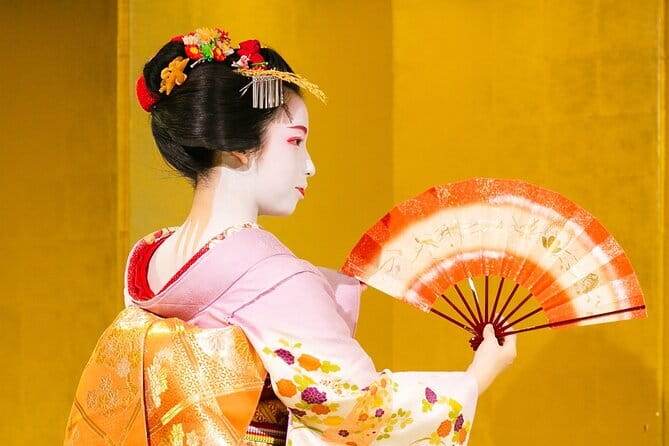
- Maiko performance with music and dance elements, plus chances for guest interaction
- Shozan Resort Kyoto setting where the meal and show happen in one trip
- Garden stroll after dinner for slower, more atmospheric photos
- Higashiyama-sancho Park night views for Kyoto lights from a scenic viewpoint
- Multilingual GPS audio available in English, Chinese, and Korean, with a Japanese-speaking guide onboard
Shozan Resort Kyoto: dinner and the maiko stage in one smooth stop
This is built for an easy evening rhythm: you meet at Kyoto Station and take a bus to Shozan Resort Kyoto. The performance and dinner aren’t scattered across town, which matters in Kyoto—moving after dark can cost time and energy.
Shozan Resort Kyoto is the anchor of the whole night. Think of it as a designed space for this exact pairing of food and traditional entertainment, followed by a casual stroll. If you’re the type who gets tired of switching venues mid-day, you’ll probably appreciate the simplicity.
Also, the night feels structured. You’re not “hoping” the timing works out—you’re getting a set evening flow, which can make a big difference if you have limited Kyoto time.
You can also read our reviews of more tours and experiences in Kyoto
Kyoto-style Kaiseki dinner: elegant, but read the fine print
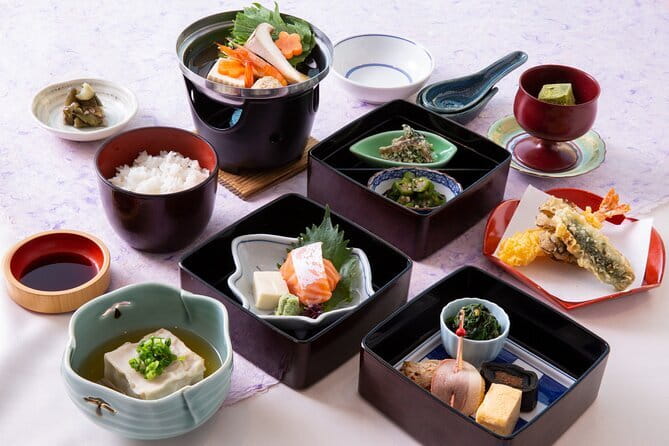
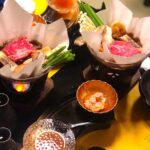
Kaiseki in Kyoto isn’t about huge portions. It’s about careful ingredients, subtle flavor, and presentation—small plates that aim to taste seasonal and precise.
That said, the dinner here may land differently depending on your expectations. Some people get a satisfying sense of classic Kyoto cooking and service. Others feel the meal is closer to a simpler boxed-style experience than the high-end, course-by-course idea they had in mind when they hear the word Kaiseki.
Here’s how to protect yourself from disappointment: treat this as a tasty Kyoto dinner experience with show-night convenience, not as the most elaborate tasting menu you can find in the city. The wording about limited seafood also hints at a chef-focused approach: since Kyoto is surrounded by mountains, seafood variety is naturally constrained, so flavors lean into what’s available and what the chef can do with it.
Two practical notes matter for planning:
- Drinks aren’t included, so budget for bottled water or tea if you want something more than just what’s served with the meal.
- No vegetarian options or specific food allergies can be accommodated. If you have dietary restrictions beyond a basic dislike, this is a real deciding factor.
Maiko performance: what you’ll actually watch (and what you should expect)
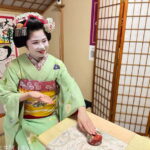
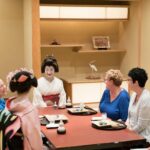
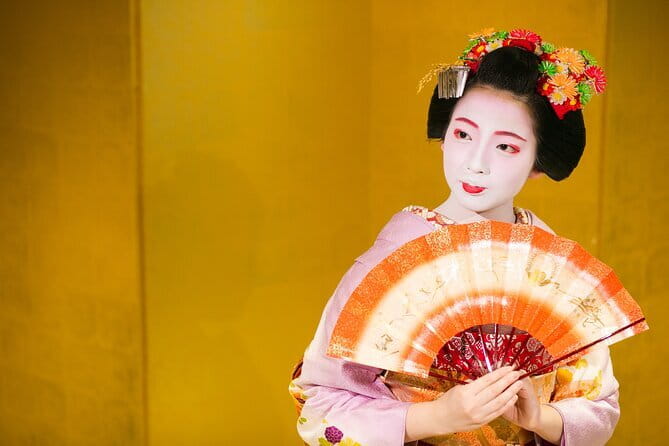
A maiko is an apprentice geiko—an important distinction in Kyoto culture. They train to perform traditional songs and dances, and they’re also known for playing classic Japanese instruments like the shamisen or the koto.
The performance itself is the headline. You’ll get a staged evening program designed for visitors, and it tends to be a visual, musical event rather than a lecture. If your main goal is to see a maiko in action—music, dance, and the overall atmosphere—this part is the strongest reason to book.
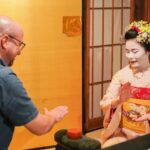
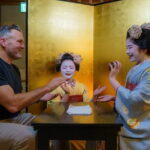
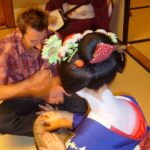
From the feedback patterns, one detail stands out: interaction can happen. Some visitors report the maiko took pictures with guests, which can turn the show from a passive sit-and-watch into a more personal moment. That’s also why this works especially well if you’re traveling with someone who wants more than photos of buildings.
Language can be the weak link. A Japanese-speaking guide accompanies the bus and likely handles much of the narration, while you rely on the GPS-enabled audio for English, Chinese, or Korean. If you’re used to guided experiences with steady explanations in your language, you might find the performance context isn’t fully spelled out for you.
The garden stroll and the Kyoto night view break
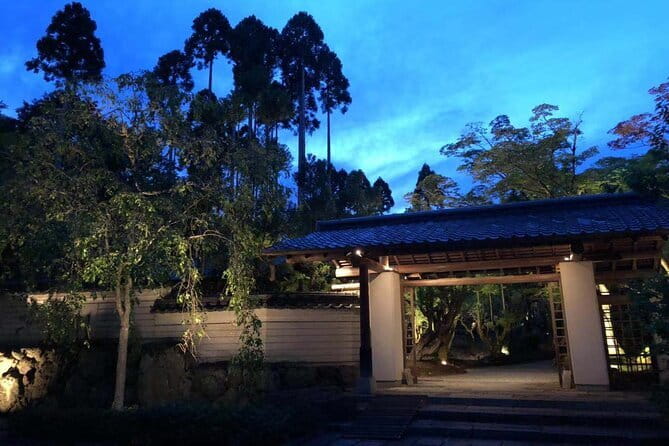
After dinner and the show, you get a slower-paced moment: a stroll through a Japanese garden and traditional architecture. This matters more than it sounds. Kyoto nights can be cold-wet or simply exhausting if you rush. A short walk here gives you a chance to reset your senses before the city-view stop.
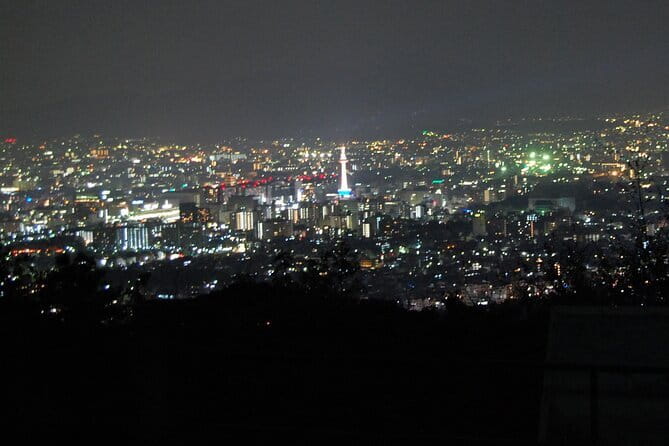
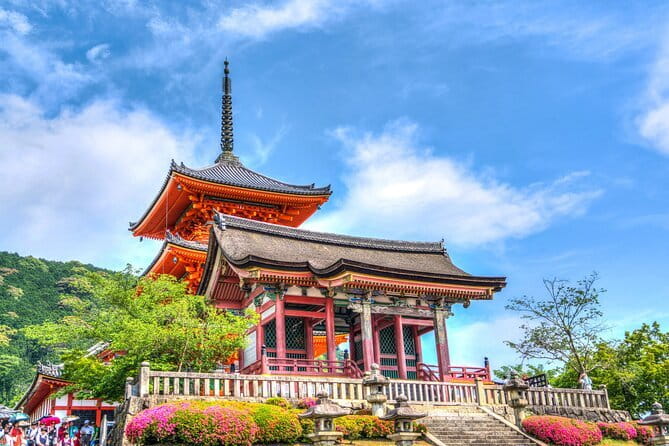
Then comes a brief stop at Higashiyama-sancho Park, known for night views of Kyoto. This is the kind of viewpoint that makes the whole evening feel like more than dinner-and-a-show. Even if you’ve seen Kyoto photos before, city lights from a hilltop angle tend to feel different once you’re there.
Timing is the key. You’ll be given a return time before the bus leaves for the next destination. If you’re the type who likes to wander, set a mental alarm on your phone. The bus won’t wait.
Price and logistics: when $100.15 feels fair (and when it doesn’t)
At $100.15 per person for about 3 hours 30 minutes, this is not a budget add-on. The good news is what you’re getting for the money: admission to the maiko performance, the Kyoto-style dinner, and bus transport from Kyoto Station. You also get an on-board audio guide in multiple languages.
The value angle depends on what you’d otherwise spend to replicate the night:
- If you’d have to buy a separate maiko show ticket and figure out dinner near your show venue, the “package” format can feel like a time saver.
- If you already planned to eat at a great Kyoto restaurant and see a maiko elsewhere, then this can feel like you’re paying extra for convenience.
One caution: some comments suggest the dinner may not match a strict, high-end definition of Kaiseki. That doesn’t automatically make it bad—it just means you should decide whether your priority is the maiko performance atmosphere (the likely winner) or the most elaborate dinner possible.
Also, you’re riding in a group with a mix of Japanese and international guests. The bus ride can feel loud, and the onboard narration may be geared more for the larger Japanese-language audience. This doesn’t kill the experience, but it affects how comfortable you’ll feel if you want constant English guidance.
You can also read our reviews of more tours and experiences in Kyoto

Who should book this maiko night (and who might skip it)
This experience tends to suit three types of travelers.
You’ll probably love it if:
- You want a Kyoto cultural evening without doing logistics after dark
- You care most about seeing a maiko performance and getting the atmosphere right
- You like structured experiences when your Kyoto schedule is tight
You might want to think twice if:
- You need strong, continuous English interpretation throughout the evening
- You have dietary restrictions (no vegetarian options and no allergy accommodations)
- You’re expecting a top-tier, course-by-course Kaiseki dinner like the most formal tasting formats in Kyoto
Group size is capped at 35 travelers, and that can keep things from feeling like a huge coach-tour stampede. Still, you’re not getting private-guide attention. If you’re the kind of traveler who wants time for questions, go in knowing this is a show-and-sightseeing rhythm, not a seminar.
Small practical tips to get the most out of your night
- Arrive early at Kyoto Station. The bus departs on time, and late arrivals aren’t allowed to join. Build in buffer time.
- Wear comfortable shoes. The garden stroll and park viewpoints are short, but you’ll want easy footing.
- Bring patience for language balance. The audio guide exists, but the live guidance is Japanese-speaking.
- Manage your photo expectations. If guest interaction is part of the show, it can be great—but performance time is still performance time.
Also, check the month. In April the departure time shifts slightly (5:40 pm instead of 5:30 pm). That kind of change is small, but it’s exactly how you can miss the bus if you show up based on memory.
Should you book this maiko night with Kaiseki-style Kyoto cuisine dinner?
I’d book it if your top goal is simple: a maiko performance in a Kyoto setting, paired with an easy dinner and some night viewing. The structure is strong, and the show is the reason this tour makes sense in the first place.
I’d pause before booking if Kaiseki is your main obsession and you need it to be ultra-formal and highly explained in English. This is also not a good fit if you need vegetarian meals or have food allergies.
If you’re okay treating the dinner as the supporting act and you’re flexible on language narration, this can be a very worthwhile Kyoto night—especially if it saves you from hopping between dinner, show tickets, and post-show transport.
FAQ
What time does the tour start?
The tour starts at 5:30 pm from Kyoto Station. In April, it departs at 5:40 pm.
How long is the experience?
It runs for about 3 hours 30 minutes.
Where is the meeting point?
Meet at Kyoto Station (Higashishiokoji Kamadonocho, Shimogyo Ward, Kyoto).
What’s included in the price?
The price includes admission to the maiko performance, Kyoto-style Kaiseki dinner, bus transportation from Kyoto Station, and an on-board audio guide. Drop-off is also included at Kyoto Tokyu Hotel, RIHGA Royal Hotel Kyoto, and Hotel Keihan Kyoto Grande.
Are drinks included?
No. Drinks are not included.
Can the dinner accommodate vegetarian diets or allergies?
No. Vegetarian options and specific food allergy requests aren’t available.
What languages are provided for the audio guide?
The audio guide is available in English, Chinese, and Korean. A Japanese-speaking guide is also onboard.