REVIEW · KYOTO
Japanese Cuisine Cooking Class in Kyoto
Book on Viator →Operated by Iku · Bookable on Viator
Clay-pot rice is a good kind of slow. This Japanese cuisine cooking class in Kyoto turns a trip to the kitchen into something you can repeat at home, right in a classic machiya room near Toji Temple.
What I especially like is the focus on Kyoto-specific flavors through healthy Japanese techniques you can actually copy, plus a meal format that feels complete without being overwhelming. You’ll also get bilingual support in both English and Japanese, so questions don’t get stuck in translation.
One thing to consider: the class is built around a set menu (one soup and five sides), so if you’re chasing a very specific dish not on that list, you may want to confirm it ahead of time—especially if you have allergies.
In This Review
- Key things I’d circle before booking
- Stepping into Kyoto’s machiya kitchen near Toji Temple
- Timing, group size, and how the 3-hour class really flows
- Clay-pot rice and miso: the hands-on skills you’ll use at home
- The full menu: one soup, five side dishes, and matcha tea
- Vegan-friendly Kyoto cooking (and how to handle allergies)
- Price and value: what you’re paying for at $71.67
- Who should book this Kyoto cooking class, and who might pass
- Tips to get the most from Iku’s teaching
- Should you book this Japanese cuisine cooking class in Kyoto?
- FAQ
- Where does the class meet, and is it near transit?
- When does the cooking class run?
- What will I cook during the class?
- What’s included in the meal?
- Is the class vegan?
- Can the class accommodate allergies?
- Does the instructor speak English?
- What’s included in the price?
- FAQ
- Can I cancel and get a refund?
Key things I’d circle before booking
- Machiya setting near Toji Temple: a traditional Kyoto townhouse vibe, a short walk from Kyoto Station.
- Small-group, private experience: you’re not sharing the kitchen with strangers beyond your group.
- Clay-pot rice + miso basics: hands-on cooking tied to practical skills, not just watching.
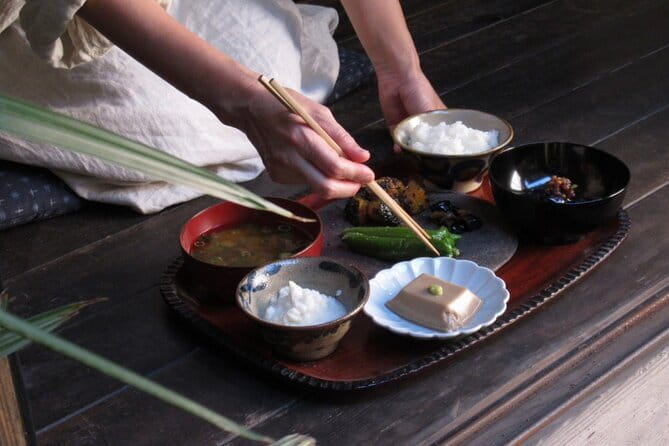
- Meal structure you can plan around: one soup, five side dishes, then matcha tea.
- Mostly vegan with flexibility: many ingredients are vegan, with fish/eggs possible if you choose.
- Ask-anything teaching style: you can probe utensils, culture, and technique as you go.
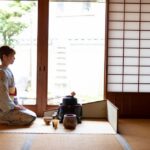
Stepping into Kyoto’s machiya kitchen near Toji Temple
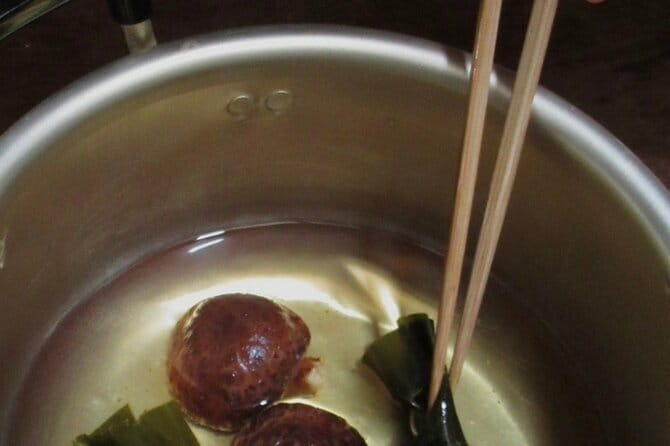
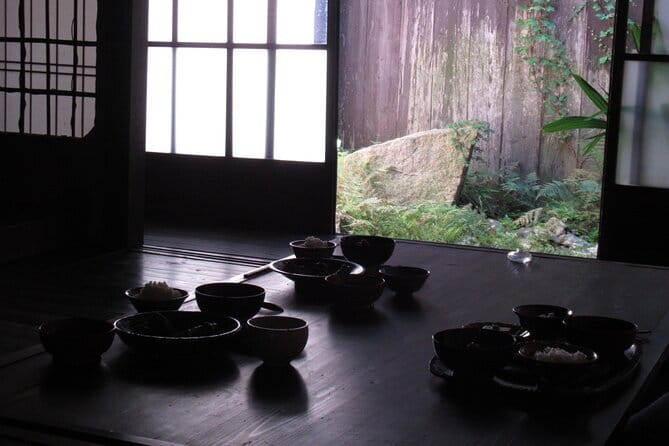
The setting matters here, because it changes the feel of the whole class. You’ll meet at 411-2 Kujōchō, Minami Ward, in a Kyoto machiya exhibition room near Toji Temple, about a 5-minute walk from Kyoto Station. That’s great if you want an easy add-on before or after day sightseeing.
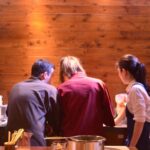
A machiya isn’t just decoration. It tends to feel more intimate and less “tour-warehouse,” so you get pulled into the process instead of treating it like a show. The kitchen area is set up for small-group instruction, and the classroom concept is clearly aimed at overseas visitors learning how Japanese home cooking works in real life.
Inside, the cooking theme is Kyoto-style Japanese food, including vegetarian options and obanzai-type home cooking. Even if you’ve eaten in Kyoto before, this kind of setting helps you understand what “home-style” really means—seasoning, portioning, and the rhythm of several dishes that work together.
The practical upside: being close to Kyoto Station means you’re not forced to build a complicated route around the class. You can keep your morning simple, then spend your afternoon (or lunch) with new cooking skills instead of rushing across town.
You can also read our reviews of more cooking classes in Kyoto
Timing, group size, and how the 3-hour class really flows
This cooking class runs every Tuesday, starting at 11:30 am, with a total length of about 3 hours. It’s listed as a private tour/activity, meaning only your group participates, which often helps the pace and makes questions easier.
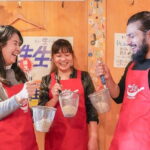
The experience is designed around a rhythm: demonstration, then you cook, then you eat. That structure is important because it keeps you from feeling lost if you’re new to Japanese cooking. You’ll see how rice in a clay pot is handled, how miso is approached, and how side dishes are assembled—then you’ll step in with help when it’s your turn.
In a small class, the instructor can correct small technique issues quickly: how to portion, how to handle heat, and what to watch for with texture. That’s the kind of feedback you can’t get from a cookbook alone.
There’s also a social element that stays calm. You’re welcome to ask questions about Japanese cuisine, utensils, and culture while you cook. It’s not just culinary training; it’s also interpretation of why ingredients and methods matter in Kyoto.
By the end, the time isn’t just “work then stop.” You plate everything and eat your own meal, then finish with matcha tea. For many people, that’s the payoff: you taste the result while it’s still fresh in your mind.
Clay-pot rice and miso: the hands-on skills you’ll use at home
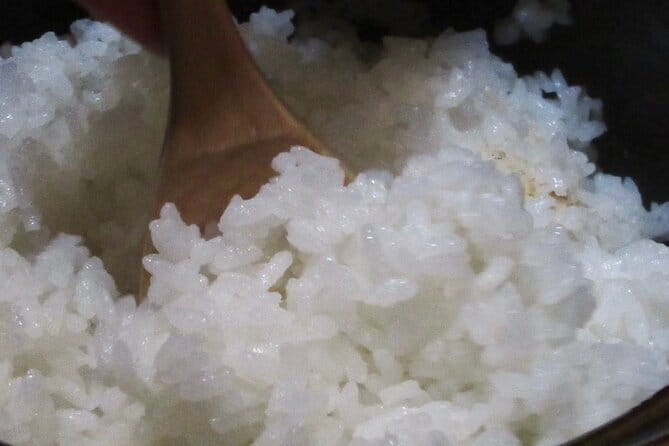
Two core items drive the class: rice cooked in a clay pot and miso, a fermented Japanese staple. Even if you’ve made rice before, clay pot rice is a different experience. It’s usually about gentle, even heat and letting the rice develop a tender texture. In class, you’ll see the method clearly, then you’ll help make the rice yourself.
For miso, the key is learning how fermented ingredients fit into everyday cooking. You’re not just mixing something salty into soup. You’ll be guided in how miso behaves and how to treat it in the context of a warm dish. That matters at home because miso can be overpowering if you treat it like a canned sauce instead of a balanced base.
What I like about teaching these two things is that they’re foundational. Rice and miso show up everywhere in Japanese meals, including at modest home tables. If you learn how to execute them, you gain a base that makes other Japanese side dishes easier to adapt.
You’ll also learn through explanation, not silence. The instructor (Iku) teaches while you work, and you can ask questions in English and Japanese. That combination is handy if you’re trying to build confidence rather than just collect recipes.
A useful detail: the class includes writing implements and recipes. So after you leave, you’re not relying on memory and guesswork. You can recreate flavors, not just recreate meals.
The full menu: one soup, five side dishes, and matcha tea
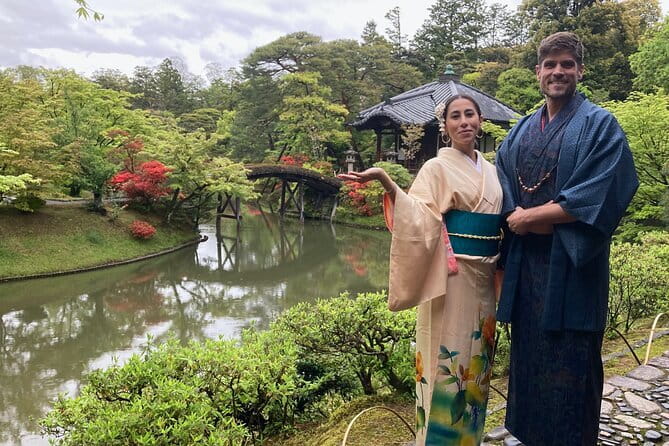
The meal format is refreshingly clear. You’ll make one soup and five side dishes, then plate everything and eat it. For most people, this is the sweet spot: you get variety and learning without being overloaded by multiple separate courses that each take forever.
Also, the class meal is described as mostly vegetable-based, with many ingredients vegan. Fish and eggs may also be used, depending on the dish and your dietary preference. You’ll be shown what’s going into the food as you cook, so you can connect the ingredients to the flavor outcome.
One practical benefit of this set menu: you know what to expect. You can plan your day around a predictable lunch outcome, and you don’t end up guessing whether you’ll eat something you don’t like. The food is meant to be both educational and enjoyable.
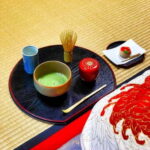
After cooking and eating, you’ll have matcha tea. That’s not just a nice ending. It’s also part of how Japanese meals feel complete, pairing savory dishes with something calming and earthy. Even if you’re not a matcha fanatic, the tea acts like a palate reset after the soup and sides.
What makes this dinner-like format valuable for your future cooking is the “pairing logic.” Japanese home meals often rely on multiple side dishes that balance the main flavors. Once you’ve assembled that structure once in a class like this, you’ll find it easier to recreate the same kind of balance at home.
Vegan-friendly Kyoto cooking (and how to handle allergies)
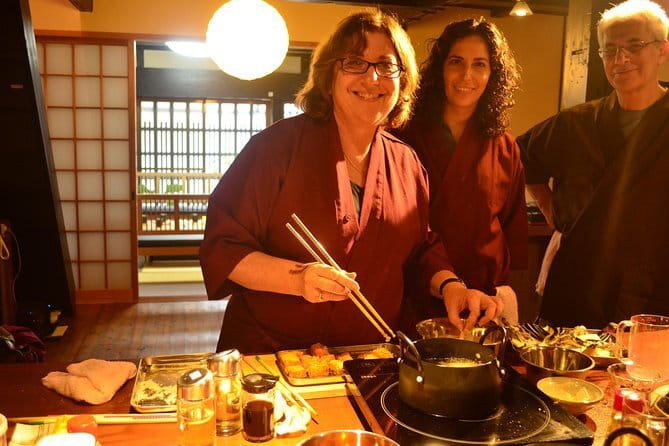
Food preferences are handled directly, which I appreciate. The class uses mostly vegan ingredients, and fish and eggs may be included. If you have allergies, you should let the instructor know in advance.
If you’d like a completely vegan diet, you’ll want to send a message. That matters because “mostly vegan” can still include small non-vegan ingredients depending on the recipe plan. The instructor’s approach is designed to adapt, but you’ll get the best outcome by clarifying your needs early.
The best part is that the teaching style makes it easier to ask follow-up questions while you’re standing at the counter. You can clarify what ingredients are in the dish, what you can substitute, and how the flavors work. That kind of real-time guidance is exactly what people need when they’re not cooking from a familiar baseline.
If you’re very sensitive to cross-contact, allergies, or strict dietary rules, I’d treat this like any cooking class: send your requirements clearly before the day of the class. The more specific you are, the more likely the instructor can keep the class aligned with your needs.
Also note the course isn’t trying to turn Japanese cooking into a generic “healthy food workshop.” It teaches Japanese technique and Kyoto ingredient context, so you end up with meals that feel authentically Japanese rather than sanitized into something else.
You can also read our reviews of more tours and experiences in Kyoto


Price and value: what you’re paying for at $71.67
At $71.67 per person, this class can feel like a “splurge,” until you look at what’s included. You’re getting all fees and taxes, plus cooking utensils, recipes, and writing implements. You’re also getting the meal itself: one soup, five side dishes, and matcha tea.
What you’re really buying is instruction time plus guidance you can keep. Many cooking classes leave you with a vague memory and a few printed recipes. Here, you leave with a structured set of recipes you can reference, and you learned specific techniques like clay-pot rice and miso.
You’re also not paying separately for transportation inside the experience. Private transport isn’t included, so factor that into your day plan. But because the location is close to Kyoto Station, you can usually keep transit costs and friction low by using public transport.
Compared with buying all ingredients back home, this has another kind of value: you learn how to combine ingredients. Without instruction, even good ingredients can turn into a bland or overly salty meal. With instruction, you’re more likely to recreate the texture and balance.
If you’re the type of traveler who likes to come home with one or two “real skills,” this price starts to make sense fast. If you only want a short snack and you don’t care about cooking, it may feel pricey. But if you enjoy learning by doing, it’s a solid use of your time in Kyoto.
Who should book this Kyoto cooking class, and who might pass
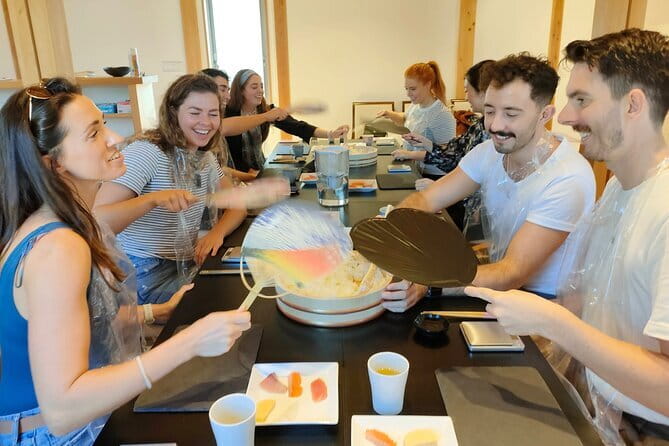
This class fits best if you want hands-on Japanese cooking with a Kyoto focus. It’s especially good for people who:
- Like small-group experiences where you can ask questions.
- Want practical cooking skills to repeat at home.
- Are interested in Japanese home-style meals and Kyoto ingredient context.
- Prefer vegetarian-leaning cooking, with options to coordinate vegan needs.
It may be less ideal if you:
- Have very strict dietary restrictions and haven’t messaged ahead to confirm how they’ll handle it.
- Expect a huge menu with lots of different mains and lots of regional sightseeing built into the class.
- Want a long, open-ended cooking session where you choose every dish from scratch.
For families and friends, private participation is also a plus. A shared cooking table makes it easier to bond over the meal you just made.
And if you’re someone who feels nervous in kitchens, this format helps. It’s guided, structured, and you’re not thrown into the deep end without explanations.
Tips to get the most from Iku’s teaching
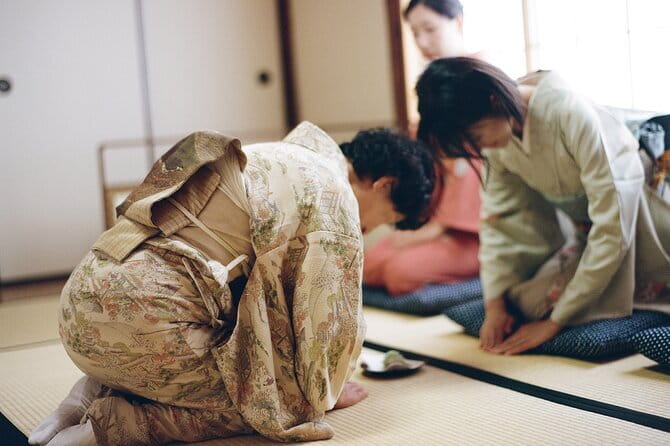
You’ll get the most out of the class if you arrive ready to interact. Don’t be shy about questions—utensils and technique questions are exactly what the instructor invites.
Also:
- Bring a notebook. The class includes writing implements, but it’s easier if you plan to use them.
- Be clear about your dietary needs ahead of time, especially if you’re aiming for completely vegan cooking or have allergies.
- Go in expecting a full meal format: rice, soup, side dishes, then matcha tea. That helps you pace your appetite and enjoy the entire experience.
One more mindset tip: focus on learning the method, not just collecting recipes. The recipe sheets will help, but you’ll remember more if you pay attention to texture changes—especially for rice and miso soup.
Should you book this Japanese cuisine cooking class in Kyoto?
If you want a Kyoto experience that goes beyond photos, I’d book it. The machiya setting near Toji Temple makes the moment feel authentic, and the course structure gives you real technique: clay-pot rice and miso plus a complete meal of one soup and five sides. The fact that many ingredients are vegan is a bonus, and the instructor’s willingness to work with dietary needs makes it practical for lots of eaters.
Skip it only if you’re not interested in cooking or you’re expecting a dish list that’s totally flexible. Otherwise, this is one of those Kyoto activities where you leave with something lasting: the ability to make a Japanese home meal that tastes like Kyoto’s comfort-food logic.
FAQ
Where does the class meet, and is it near transit?
It meets at 411-2 Kujōchō, Minami Ward, Kyoto 601-8473. The location is about a 5-minute walk from Kyoto Station and near public transportation.
When does the cooking class run?
The class takes place every Tuesday, starting at 11:30 am and lasting about 3 hours.
What will I cook during the class?
You’ll learn to cook rice in a clay pot and make miso, and then you’ll help prepare rice, soup, and several side dishes to complete the meal.
What’s included in the meal?
The class meal is one soup and five side dishes, followed by matcha tea.
Is the class vegan?
Most ingredients used in class are vegan. Fish and eggs may also be used, depending on the recipes.
Can the class accommodate allergies?
Yes. If you have allergies, you should let the instructor know in advance.
Does the instructor speak English?
The class is taught in both English and Japanese, so you can communicate during the lesson.
What’s included in the price?
All fees and taxes are included, along with cooking utensils, recipes, and writing implements. Private transportation is not included.
FAQ
Can I cancel and get a refund?
You can cancel up to 24 hours in advance for a full refund. If you cancel less than 24 hours before the start time, the amount you paid won’t be refunded.