REVIEW · KYOTO
Ninja 2-hour Hands-on Lesson by Japanese master in Kyoto -Medium
Book on Viator →Operated by NINJA DOJO and STORE · Bookable on Viator
Kyoto has a funny way of making you act different, fast. I love the small-group setup (max 6) because you get real back-and-forth coaching, not a lecture. I also love the ninja clothing rental, since you end up looking the part while you learn basics for breathing, walking, and weapons. One drawback to plan around: no food or drink is included, so you’ll want to grab a snack beforehand or after.
This 2-hour hands-on lesson is built for beginners and mixes calm mind skills with practical tool practice. You start at NINJA DOJO and STORE KYOTOJapan, and you’ll be guided through everything in English by a Japanese master (Sensei). Expect an active session, some changing time, and a lot of hands-on moments, all wrapped up back at the meeting point.
In This Review
- Key highlights
- Why A Ninja Dojo Lesson Works in Kyoto
- Meeting Up at the Dojo and Getting Ready
- The Two-Hour Flow: From Kuji-In to Weapon Skills
- Kuji-In Meditation and Ninja Breathing You Actually Practice
- Ninja Sword, Kunai, and the Tools That Make It Feel Real
- The Ninja Trick House Moment (Why the Play Belongs)
- Photos, Videos, and What You Can Buy After
- Price and Value: Is $95.51 Worth Two Hours?
- Who Should Book This Lesson in Kyoto
- Practical Planning Tips for Your 10:00 am Session
- Should You Book This Ninja Dojo 2-Hour Lesson?
- FAQ
- What is the duration of the Ninja 2-hour hands-on lesson?
- How many people are in the group?
- Where do I meet for the lesson?
- What’s included in the price?
- What techniques and tools are taught?
- Is food and drink provided?
Key highlights
- Max 6 people means you’re not lost in the crowd.
- Kuji-In meditation and ninja breathing are taught as practical steps, not just stories.
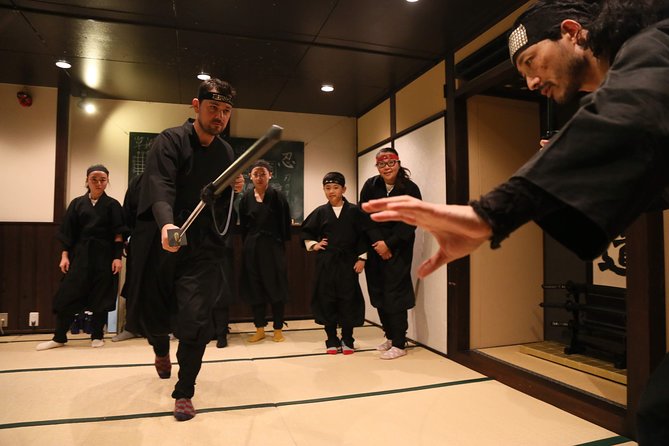
- Weapon practice includes sword, kunai, kusarigama, rope techniques, and shuriken.
- A ninja trick house moment adds play without feeling random.
- Ninja clothing rental turns training into instant photos and fun.
- Same-day photos/videos are taken and sent after the class (per past participants).
Why A Ninja Dojo Lesson Works in Kyoto
Kyoto is full of beautiful history sites. This experience is different. Instead of passively watching, you’re trained in the rhythms and skills that people associate with ninja culture.
The setting matters too. You meet at the NINJA DOJO and STORE KYOTOJapan location, a dojo-and-shop setup that makes the whole thing feel like you’re stepping into a small world rather than just joining a roadside activity. And the class format is designed to keep the energy focused: short instructions, then you try the movements right away.
Finally, the English teaching is a big deal. A Japanese Sensei teaching in English keeps the lesson approachable, even if you know nothing about Japanese martial traditions. You’re not dependent on translating while you’re standing there in costume.
You can also read our reviews of more tours and experiences in Kyoto

Meeting Up at the Dojo and Getting Ready
Your experience starts at NINJA DOJO and STORE KYOTOJapan, 600-8422 Kyoto, Shimogyo Ward, Hakurakutenchō, 528 2F at 10:00 am. It ends back at the same meeting point.
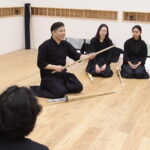
Plan for an on-site changing moment and a dojo-style entry routine. Past participants describe arriving early, removing shoes at the door, switching to slippers, and going up to the training space. Staff (including someone named Sho) welcomes you and helps get you into the ninja garb.
That clothing rental is included in the price. You’ll wear what the dojo provides during training, which also makes the experience feel more complete. In other words, you’re not just watching a demonstration; you’re dressed, practicing, and moving through the lesson as a participant.
The Two-Hour Flow: From Kuji-In to Weapon Skills
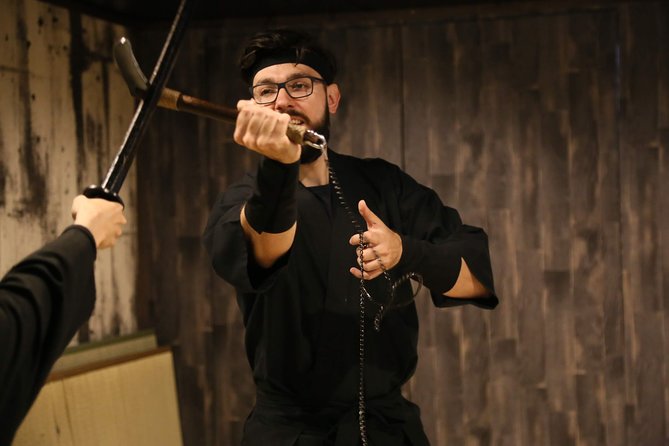
This is an elementary level lesson designed for beginners, with a total of 2 hours. You’ll get the entry basics plus about five additional techniques, so you leave with more than one highlight.
The training follows a clear arc:
- Mind and body basics (meditation and breathing)
- Footwork and control (including ninja walking)
- A playful training stop (a gimmick and trap at a ninja trick house)
- Tool and weapon practice (sword, throwing tools, and more)
That structure matters because it prevents the session from becoming random “try this, throw that.” Even if you’re a complete beginner, you get a path to follow: calm, move, then apply it with hands-on skills.
Kuji-In Meditation and Ninja Breathing You Actually Practice
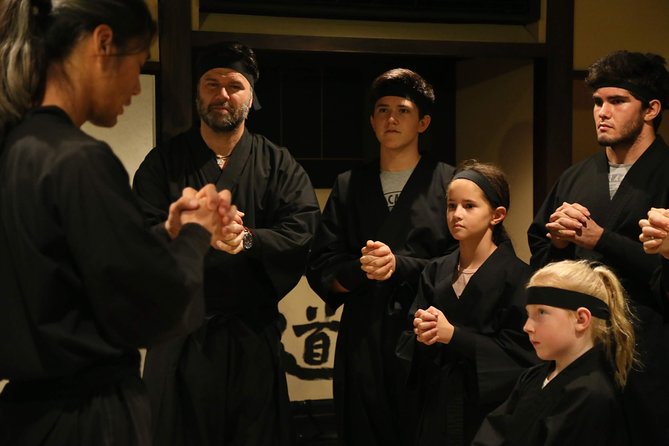
Not every “ninja experience” includes the quiet stuff. Here, you train Ninja meditation Kuji-In and Ninja breathing. This is one reason the class feels more grounded than a pure costume-and-camera stop.
You’ll also learn ninja walking. Think of it as a way to practice control and presence with your feet and posture. In dojo-style training, that kind of body awareness tends to make the later weapon work feel more natural because you’re already focused on how you move.
One bonus from past participants: Kuji-In is often taught with hand-sign emphasis such as kuji-kiri. Either way, you’re not just told to sit still. You’re taught what to do, then you try it.
Ninja Sword, Kunai, and the Tools That Make It Feel Real
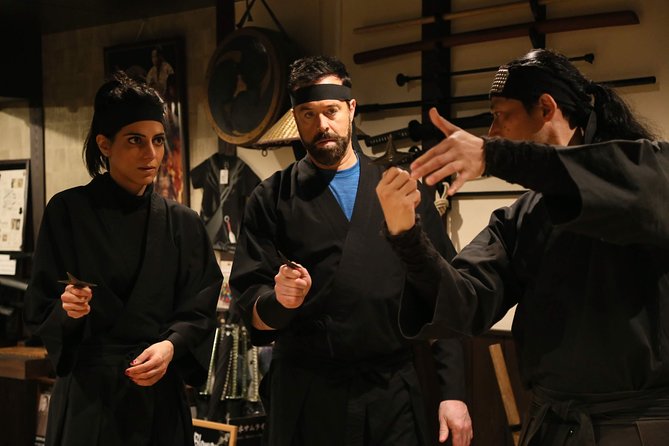
Weapon training is the main event, and this lesson is hands-on throughout. You’ll work through multiple items, including:
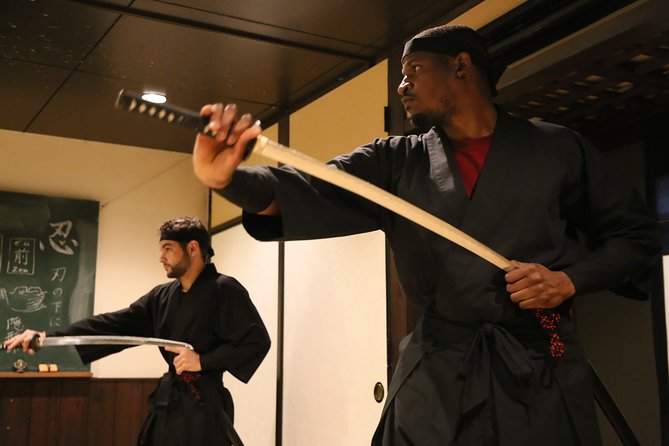
- Ninja sword training
- Kunai (dagger)
- Kusarigama (sickle with chain)
- Rope technique and kunai with rope
- Shuriken (ninja star)
- Ninja sword with shuriken
- Stick type shuriken
- Ninja blowgun (blow darts)
A big value here is variety. Many classes focus on one or two tools. This one cycles through a bunch, so you can feel the difference between throwing tools, chain/rope techniques, and blowgun aiming.
Also, the teaching style seems built for beginners. Participants often point out that instructors demonstrate and explain movements clearly, with a humor-and-discipline balance. That’s exactly what you want when you’re doing unfamiliar skills for the first time.
You can also read our reviews of more tours and experiences in Kyoto


The Ninja Trick House Moment (Why the Play Belongs)
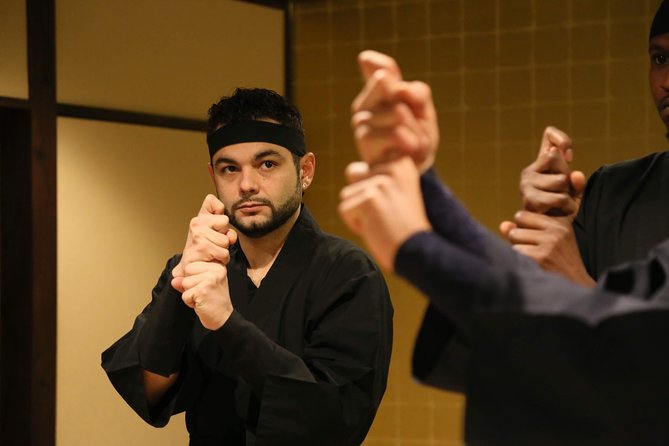
There’s a “gimmick and trap” style segment at a ninja trick house. It’s listed as part of the training, and that matters because it’s not just a photo-op corridor.
This kind of mini challenge typically helps because it breaks up the session. You’re already doing concentration work earlier with breathing and meditation, so the trap-house moment adds energy while still staying connected to the overall ninja theme of awareness and response.
If you’re traveling with kids, this part is often a highlight because it feels like you’re learning through a small adventure step. If you’re an adult, it still helps you stay engaged, instead of turning the session into a checklist.
Photos, Videos, and What You Can Buy After
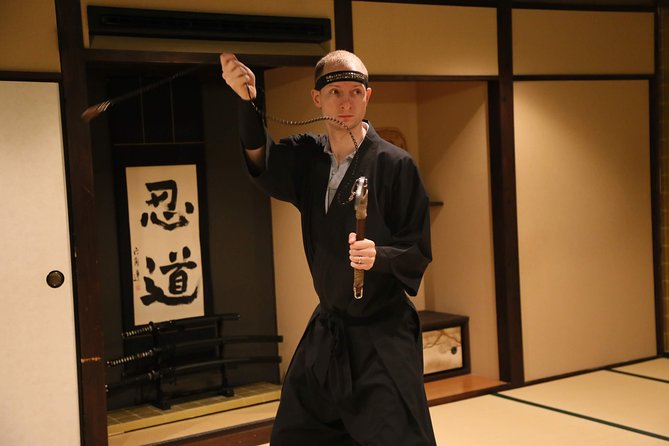
You’re not left to take your own souvenir photos. Past participants describe instructors and staff taking photos and videos during the class using a professional camera setup, then sending them to you by email the same day (often via Google Photos).
That’s a practical bonus. When you’re busy learning sword and throwing-tool basics, you’ll usually forget to stop and capture the moment. Getting a prepared set of images means you can focus on the training during the session, then enjoy the photos later without hunting for angles.
There’s also a store attached to the meeting location. Participants mention it as a fun place to browse for ninja-themed purchases after the training. Even if you don’t buy anything, it helps the experience feel like a full stop in your day, not just a one-and-done class.
Price and Value: Is $95.51 Worth Two Hours?
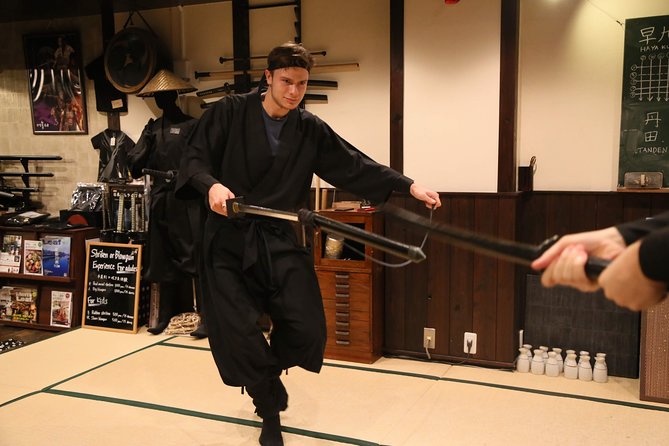
At $95.51 per person for about 2 hours, you’re paying for more than a show. You’re paying for:
- A small-group class (max 6)
- English instruction by a Japanese Sensei
- Ninja clothing rental
- Admission fee included
- A hands-on curriculum that covers multiple techniques and tools
When you compare this to many “tour-like” experiences, the value comes down to participation. Your time isn’t spent watching. You’re learning meditation/breathing basics, practicing walking, and trying weapon-related skills like kunai, shuriken, and even blowgun darts.
Is it expensive? Sure. But you’re also getting a structured class with equipment included and a built-in costume element. For families especially, that rental and photo component can make the session feel like more than you expected.
Just note what’s not included: food and drink, and hotel pickup/drop-off. If you’re budgeting for the day, plan a snack or meal around the 10:00 am start.
Who Should Book This Lesson in Kyoto
This is a good fit if you want an active, hands-on cultural-themed experience in Kyoto that doesn’t require any prior martial arts knowledge. The format is described as suitable for most travelers, and you’ll see lots of families doing it.
It tends to work well for:
- Families with kids, since the lesson is beginner-friendly and includes playful elements
- Couples or friends looking for a fun, shared activity
- Adults who want to try something different without feeling intimidated
One consideration: if you’re hoping for deep training in a single discipline, this is a 2-hour beginner lesson. It’s designed to introduce many skills quickly, not to build long-term technique the way a full martial arts program would.
Practical Planning Tips for Your 10:00 am Session
A few simple details can make your day smoother:
- Arrive a bit early. One past participant came about 15 minutes early and had time to settle in.
- Expect a shoebox/slipper setup typical of dojo entry, with shoes off at the door.
- Plan your hunger. Since food and drink aren’t included, schedule a meal before or after.
- Bring patience for costume changing and group flow. With a max of 6 people, it’s still fast, but it’s not instant.
Also remember that this experience depends on conditions. It requires good weather, and it has a minimum number of travelers. If either condition isn’t met, you’ll be offered a different date or a full refund.
Should You Book This Ninja Dojo 2-Hour Lesson?
If you want Kyoto fun that’s hands-on, not just sightseeing, I’d book it. The combination of small-group coaching, Kuji-In meditation plus breathing, and a long list of tool practice (sword, kunai, rope, shuriken, and blowgun) makes it feel like a real training session rather than a gimmick.
Book it especially if you’re traveling with kids or you like activities where you get to participate right away. The ninja clothing rental and same-day photo/video delivery also make it easy to turn the day into a memory you’ll actually keep.
Skip it only if you strongly prefer passive cultural viewing, or if you need food included and don’t want to plan around the 10:00 am start. Otherwise, this is the kind of Kyoto side trip that feels different the second you step inside.
FAQ
What is the duration of the Ninja 2-hour hands-on lesson?
It runs for about 2 hours.
How many people are in the group?
The lesson has a maximum of 6 travelers.
Where do I meet for the lesson?
You meet at NINJA DOJO and STORE KYOTOJapan, 600-8422 Kyoto, Shimogyo Ward, Hakurakutenchō, 528 2F.
What’s included in the price?
Included items are a Japanese Sensei teaching in English, ninja clothes rental during training, and the admission fee.
What techniques and tools are taught?
The session includes Kuji-In meditation, ninja breathing, ninja walking, a ninja trick house gimmick and trap, ninja sword training, kunai (dagger), kusarigama, rope techniques (including kunai with rope), shuriken (including stick type), and ninja blowgun (blow darts).
Is food and drink provided?
No. Food and drink are not included.