REVIEW · KYOTO
Private Art Sushi Roll Class in Kyoto
Book on Viator →Operated by SAKURA Experience Japanese Culture Nijo Home · Bookable on Viator
Sushi gets art-studio treatment in Kyoto. This private kazarimaki roll class teaches you edible designs using plant-based color, and you go home with a booklet plus a small certification. I love how the steps feel guided and doable, even if sushi isn’t your everyday skill. I also like that it’s hosted in a traditional home setting with clear English support. One catch: you need socks for the tatami room, and late arrivals (over 15 minutes) mean you can’t join.
If you’re the type who wants more than a quick tasting, this is a hands-on hour where you actually shape the roll and learn what makes the patterns work. The host team is organized: one person focuses on instruction and tools while another helps keep the flow moving, so you spend time building your peach-flower design instead of waiting around.
In This Review
- Key Highlights You’ll Actually Use
- How the 60-Minute Kazarimaki Class Really Plays Out
- Stop 1: Arriving at SAKURA Experience Japanese Culture Nijo Home
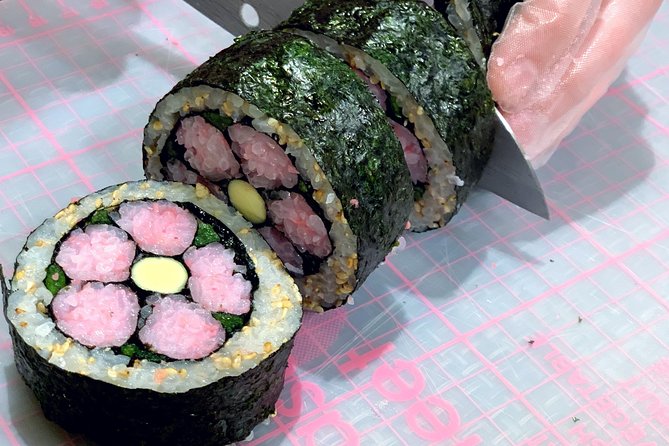
- The Peach Flower Design: What You’ll Make
- Edible Pigments and the Trick Behind “Design in the Roll”
- Private Instruction With English Support
- Traditional Clothing: Kimono and More
- What You Get: Ingredients, Drinks, Booklet, and Certification
- Itinerary Details, Step-by-Step
- 4:30 pm arrival at the Nijo home
- Welcome, seating, and traditional garment
- Hands-on kazarimaki instruction
- Finish, show, and receive your booklet/certification
- Wrap-up back where you started
- Price and Value: Is $93.32 a Fair Deal?
- Who Should Book This Class
- Practical Tips So Your Hour Goes Smoothly
- Final Verdict: Should You Book It?
- FAQ
- How long is the private art sushi roll class in Kyoto?
- Where is the class meeting point?
- What time does the class start?
- Is this a private experience?
- Do I need to speak Japanese?
- What sushi roll design will I learn to make?
- Are vegan or vegetarian options available?
- What is included in the price?
- Do I need to bring socks?
- What if I arrive late?
- Can children attend?
Key Highlights You’ll Actually Use
- Kazarimaki sushi: learn design-making inside the roll using edible pigments from plants
- Private class format: only your group, with English instruction throughout
- A peach flower pattern roll in about 60 minutes
- Booklet + certification given at the end of class
- All ingredients included, plus bottled water and tea or coffee
- Traditional clothing provided (kimono for women; other traditional garments for men and children)
How the 60-Minute Kazarimaki Class Really Plays Out
This experience is built around one idea: edible art you can make yourself. Instead of the usual roll-and-eat approach, you’ll build a patterned sushi roll using kazarimaki techniques, where color and design are created inside the roll with natural, plant-based edible pigments.
The class runs about an hour. In that time, you’ll go from prep to shaping to the finishing steps that help your roll look like a real design, not just sushi with extra effort.
You’ll also get a quick cultural layer, because the host provides traditional clothing. That isn’t just for photos; it helps set the tone, and it makes the whole thing feel like a lived-in experience rather than a workshop held in a commercial kitchen.
You can also read our reviews of more private tours in Kyoto


Stop 1: Arriving at SAKURA Experience Japanese Culture Nijo Home
Your session starts at 4:30 pm at SAKURA Experience Japanese Culture Nijo Home, 660 Izumichō, Nakagyo Ward, Kyoto (near public transportation). This matters because the class timing is strict: if you arrive more than 15 minutes late, you will not be able to join.
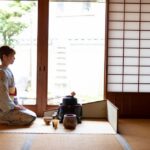
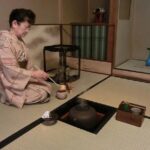
Once you arrive, the host team gets you settled fast. You’ll be guided into the tatami room, but you must bring socks for tatami etiquette. It’s a small rule, but it’s the kind that can derail your evening if you forget.
Also check who’s coming with you. Under-18 participants need to come with a parent or guardian who is over 21. Babies and toddlers can sit or sleep on the tatami mats, which makes it easier for families to manage a short, focused activity.
The Peach Flower Design: What You’ll Make
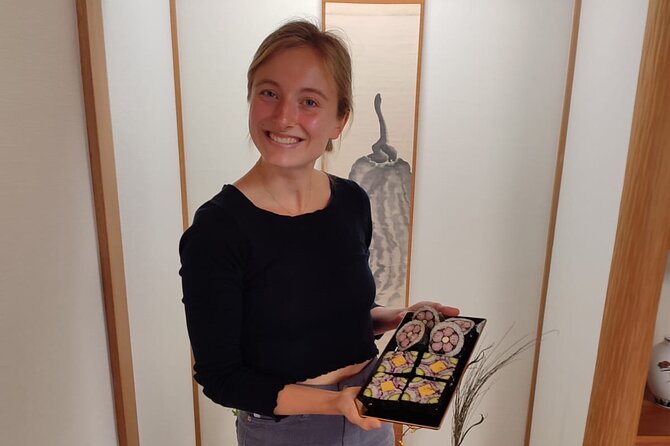
You’ll create a peach flower pattern sushi roll. The point isn’t just taste; it’s the look of the design, which is why kazarimaki techniques are the focus.
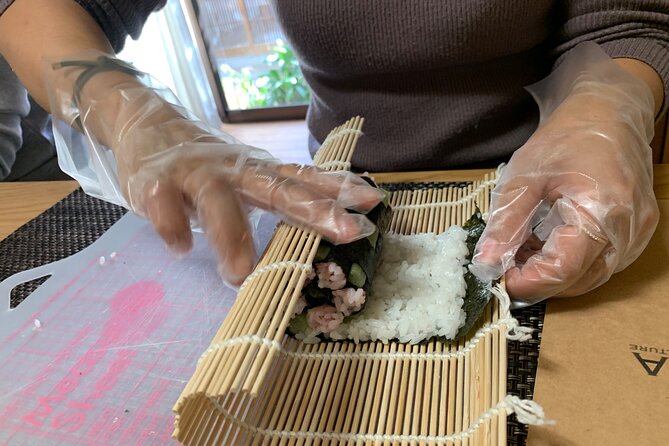
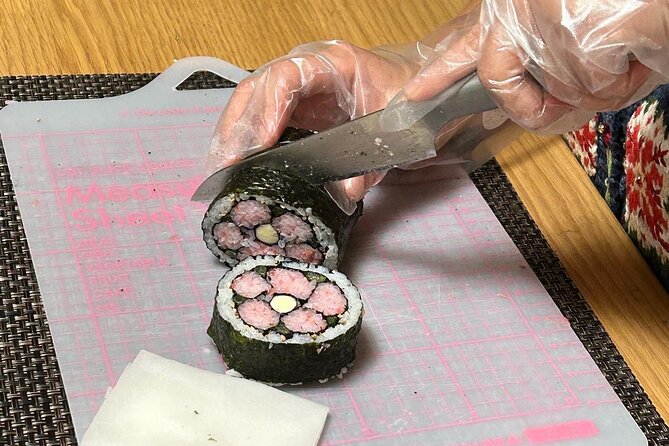
Expect a step-by-step build that teaches you how to place and shape the colored elements so the pattern shows up correctly when the roll is cut. Even if you’ve never made sushi at home, the class is designed to bring you along at a pace you can follow.
You’ll use traditional sushi ingredients, plus natural coloring from plants to create colorful patterns in the roll. There are also vegan and vegetarian options, which is great if your group eats that way or you’re traveling with someone who does.
Edible Pigments and the Trick Behind “Design in the Roll”
The most interesting part of kazarimaki isn’t that it uses food color. It’s that the color becomes part of the structure of the roll.
The pigments are derived from plants and used to create edible designs. You’ll learn how the color placement and roll shaping work together, so the pattern ends up where it should, not smeared or lost.
One practical takeaway: the class helps you understand what matters for results. In a sushi art class, the difference between a good-looking roll and a messy one often comes down to consistency, careful handling, and timing—things that the instructor can correct in the moment.
Private Instruction With English Support
This is operated by an English speaker, and the class is explicitly private, meaning only your group participates. That’s a big value factor because it gives you room to ask questions without feeling rushed or ignored.
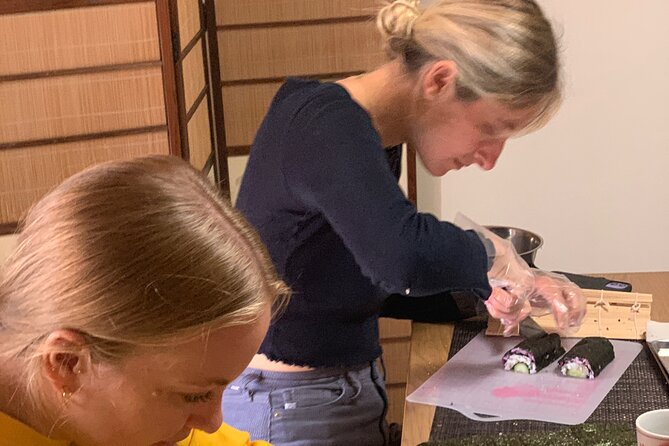
From what I’ve gathered about the way the class runs, the instruction is clear and patient, and the workflow keeps moving. There’s a rhythm to it: one person guides the steps while another helps with the setup, tools, and cleanup.
If you’ve ever felt awkward in a cooking class where everyone else knows the basics, this one is designed to feel manageable. It’s still a sushi-making skill-building session, but it’s not “chef-only” training.
You can also read our reviews of more tours and experiences in Kyoto


Traditional Clothing: Kimono and More
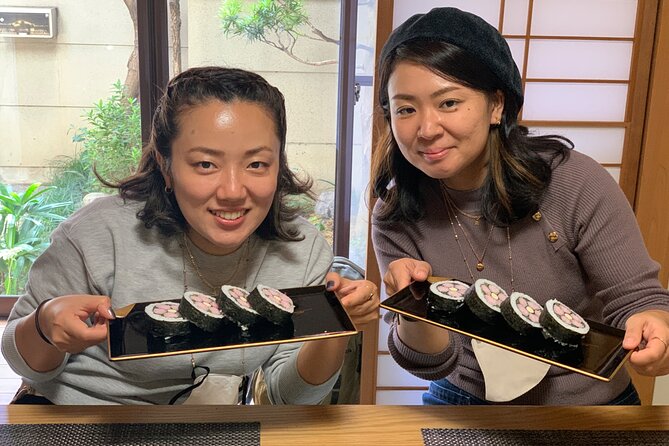
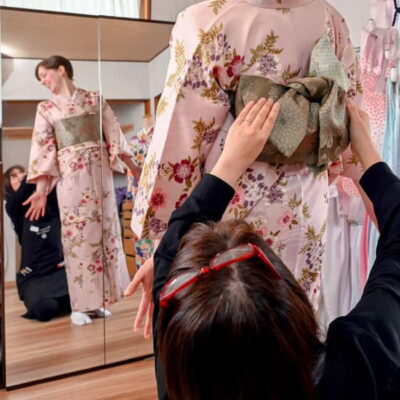
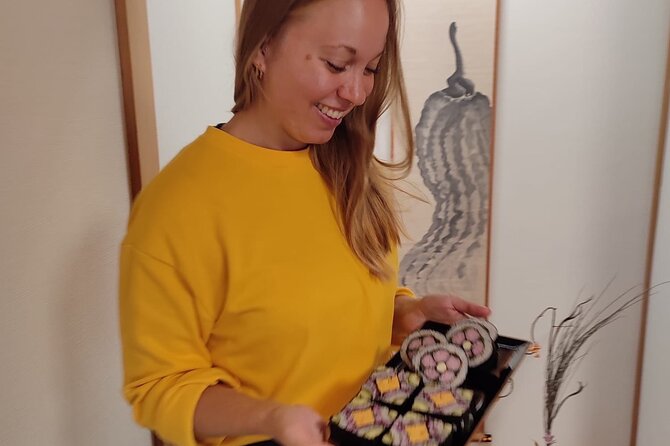
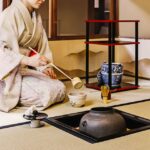
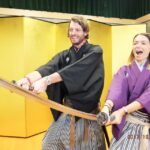
You’ll be offered traditional garments during the experience. Women can wear a kimono, and men and children can wear other traditional clothing.
This is more than a costume moment. Putting on the garment helps you slow down and treat the activity as cultural craft, not just meal prep. It also makes the experience memorable in a way that’s hard to replicate after you leave Kyoto.
If you’re sensitive to fit or comfort, you’ll want to mention preferences early. The class is short, so anything that makes you fidget can steal your focus from the design.
What You Get: Ingredients, Drinks, Booklet, and Certification
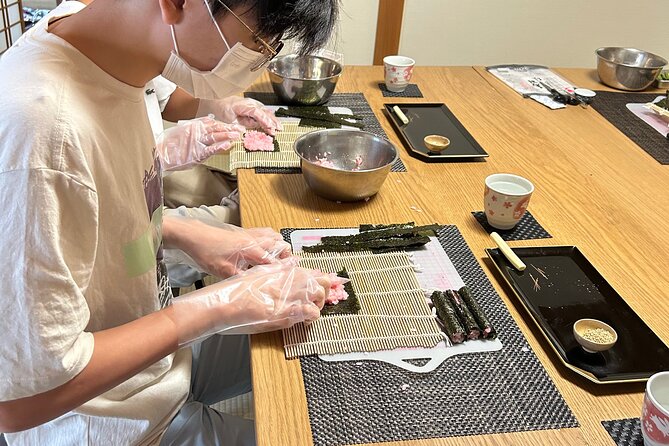
You won’t be asked to bring supplies. The class includes all sushi ingredients, and you’ll also get bottled water plus tea or coffee.
At the end, you’ll receive a booklet and a certification. That’s a small thing on paper, but it changes how you feel about the session. It becomes something you completed, not just something you watched someone else do.
You’ll also likely leave with a clearer sense of what to practice at home. When you have a guide in your hand, you can recreate the steps without having to rely on memory or guess what happened when your pattern looked different from the example.
Itinerary Details, Step-by-Step
Even though the day is one main stop, the experience has a clear flow:
4:30 pm arrival at the Nijo home
You meet at the SAKURA Nijo Home location. Getting there on time is important because entry is time-bound, and tatami etiquette requires socks.
Welcome, seating, and traditional garment
The host helps you get into the experience setting, including traditional garments. Babies and toddlers can sit or sleep on tatami mats, which is helpful for families staying together.
Hands-on kazarimaki instruction
You learn to make a patterned roll using edible pigments. The class is designed so you can finish a recognizable peach-flower design within about an hour, even with limited sushi experience.
Finish, show, and receive your booklet/certification
You’ll end with the materials that document your work. That certification and booklet also make it easier to recreate the technique later.
Wrap-up back where you started
The activity ends back at the meeting point.
Price and Value: Is $93.32 a Fair Deal?
At $93.32 per person, this isn’t a budget activity, but it’s also not priced like a full-day private cooking program. The best way to judge value is what’s included and what you’re paying for.
You’re paying for:
- a private English-speaking instructor
- all ingredients and equipment for the class
- the cultural elements (traditional garment support)
- bottled water plus tea or coffee
- a booklet and certification at the end
In a typical group lesson, you might share attention and end up doing fewer of the hands-on steps. Here, you’re part of a private, structured hour where you make the roll. If your goal is a single, memorable Kyoto activity you can learn from, this price starts to make sense.
If you’re the kind of traveler who only wants to taste food, you might feel the cost more strongly. But if you want an activity with a skill you can repeat, this is the sort of class that justifies itself.
You may also see group discounts listed, which can improve the value if you have a larger party.
Who Should Book This Class
This class fits best if you want a creative, guided experience and you don’t mind a short, focused session.
It’s especially good for:
- couples who want something different from the usual Kyoto food stops
- families traveling together, since it can be a shared project
- people who like crafts and pattern-making
- anyone who wants a sushi skill they can take home
It may be less ideal if:
- you’re impatient with strict timing rules (arrive on time, or you can miss out)
- you don’t want to deal with tatami customs and socks
- you’re only interested in eating, not learning how to make
Practical Tips So Your Hour Goes Smoothly
These are the details that matter more than they sound.
First, bring socks. Tatami rooms have etiquette rules here, and you can’t enter without them.
Second, arrive early enough that you don’t get caught by Kyoto’s little delays. The class won’t wait past 15 minutes late.
Third, plan for the session length. It’s about one hour, so it works best when you don’t stack it too tightly with other bookings right before or after.
Fourth, if you have dietary needs, the class supports vegan and vegetarian options. It’s worth confirming in advance so everyone on your side knows what to expect.
Fifth, bring your camera mindset, but focus on the work too. The pattern is the achievement, and you’ll get better results when you’re present for the shaping steps.
Final Verdict: Should You Book It?
I’d book this if you want a private Kyoto food experience that produces a real result you can recreate. The kazarimaki focus is the hook: you’re learning a distinctive method that turns sushi into edible design, not just a meal.
You should skip it only if you know you’ll be stressed by socks and tatami rules or if strict arrival times don’t work with how you travel. If you can show up on time, follow the simple etiquette steps, and enjoy hands-on craft, this is a smart use of an evening in Kyoto.
If you’re deciding between a quick tasting and a skills-based class, this one leans toward the second option. And that’s why it tends to leave people with something more lasting than photos.
FAQ
How long is the private art sushi roll class in Kyoto?
The class is about 1 hour.
Where is the class meeting point?
You’ll meet at SAKURA Experience Japanese Culture Nijo Home, 660 Izumichō, Nakagyo Ward, Kyoto, 604-0015, Japan.
What time does the class start?
The start time shown is 4:30 pm.
Is this a private experience?
Yes. It’s a private class, and only your group participates.
Do I need to speak Japanese?
No. The experience is operated by an English speaker.
What sushi roll design will I learn to make?
You’ll make a peach flower pattern sushi roll using kazarimaki techniques.
Are vegan or vegetarian options available?
Yes. The class notes vegan and vegetarian options.
What is included in the price?
All sushi ingredients are included, along with bottled water and tea or coffee. You also receive a booklet and certification.
Do I need to bring socks?
Yes. You’re asked to bring socks because entry to the tatami room requires them.
What if I arrive late?
If you arrive more than 15 minutes late, you won’t be able to join the class.
Can children attend?
Yes, under-18 participants need to come with a parent or guardian over 21. Baby and toddler are able to sit or sleep on tatami mats.