REVIEW · KYOTO
Kyoto: Gion Sunset Walking Tour with Local Guide
Book on GetYourGuide →Operated by TripGuru Japan · Bookable on GetYourGuide
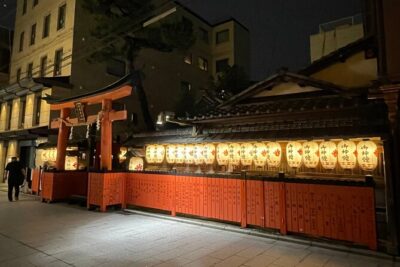
Gion at night happens fast. In this short walk, I love how lantern-lit lanes make the whole district feel cinematic, and I love that the guide turns landmarks into human stories, not just photos, though you should expect steady walking the whole time.
You’ll also like the small group size (up to 9), which keeps the experience relaxed and gives you room to ask questions. A local snack is included too, so you get a real pause instead of just window-shopping in the dark.
One thing to keep your expectations grounded: a geiko/maiko sighting can happen, but it’s not guaranteed. If you do see someone, keep distance and don’t block their way while photographing.
In This Review
- Key takeaways before you go
- Why Gion at sunset feels different (and why 3 hours is a smart length)
- Starting at Kyoto Kawaramachi Garden: your first easy win
- Passing by Kyōto Minami-za: a taste of Kyoto’s performing-arts side
- Hanamikoji Street: the historic lane you actually learn how to see
- Scenic views and quiet turns: the part that makes the walk feel worth it
- Maruyama Park in the evening: a calmer beat between the highlights
- Yasaka Shrine (Gion Shrine): architecture, ritual, and why it matters here
- The local snack stop: a small pause that actually improves the tour
- Pontocho at night: the alley-of-light payoff near the river
- Geiko and maiko: how to spot them respectfully (and not ruin your photos)
- Guides make the difference: what I’d look for based on real outcomes
- Value check: $22 for 3 hours and a snack that adds up
- Who should book this walk (and who should skip it)
- Should you book the Kyoto Gion Sunset Walking Tour?
- FAQ
- Where is the meeting point for the Kyoto Gion Sunset Walking Tour?
- How long is the tour?
- What is the group size like?
- Is this tour in English?
- What’s included in the price?
- Is hotel pickup or drop-off included?
- What should I bring?
- Is it okay if I book at the last minute?
- Is free cancellation available?
- Do I get to see a geiko or maiko?
Key takeaways before you go
- Small group, up to 9 people: easier pace, more questions, less weaving through crowds.
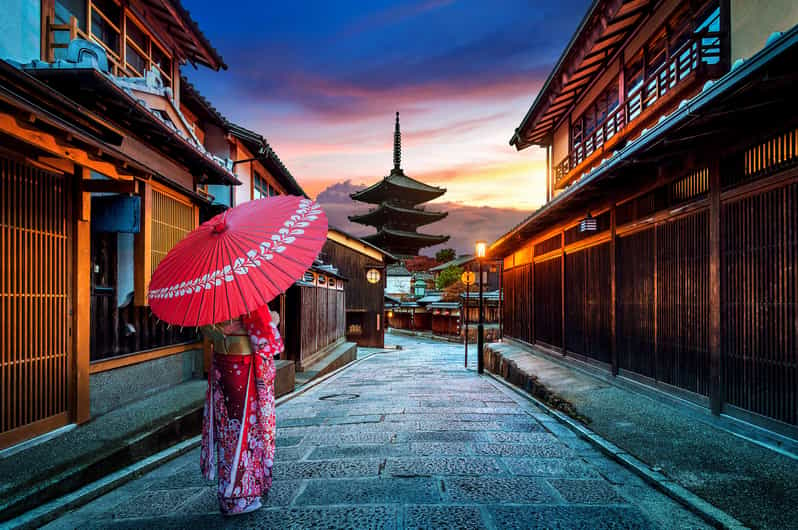
- Sunset-to-night timing: the district changes fast as lanterns light up and streets cool down.
- Hanamikoji Street + Yasaka Shrine: two anchors of Gion, handled with context and respect.
- Snack stop built in: you’ll get an actual taste moment, not just walking mileage.
- Off-the-main-roads feel: the route includes quieter lanes and scenic viewpoints along the way.
- Geiko/maiko spotting is a bonus: you’ll learn the culture either way, and you’ll handle photography properly.
Why Gion at sunset feels different (and why 3 hours is a smart length)
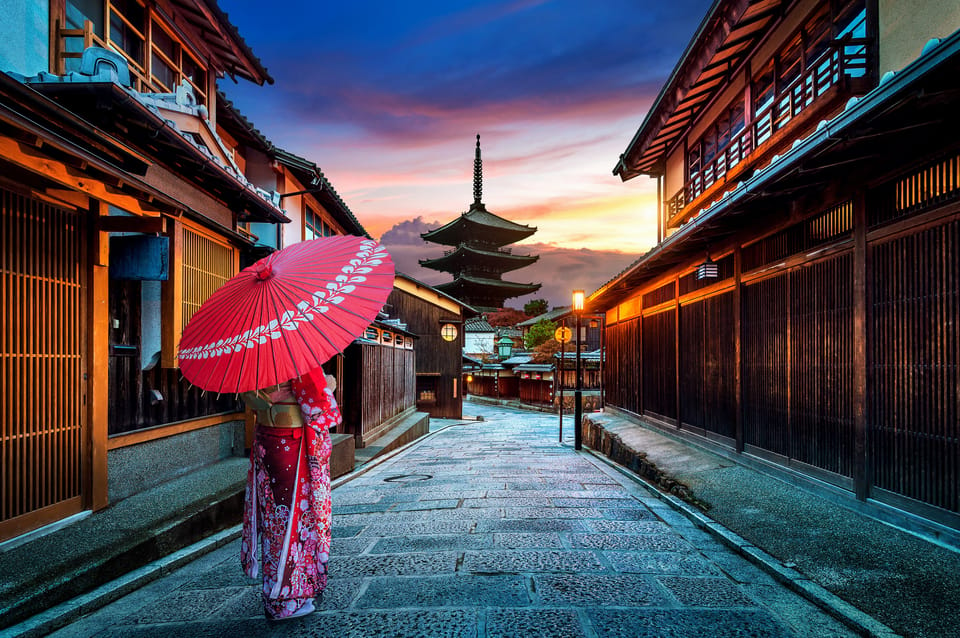
Gion isn’t just pretty. At night it feels layered—quiet lanes, sudden bursts of light from paper lanterns, and the sense that everyone around you has a role to play. That’s why this timing works: you see the shift from late-day atmosphere to full-on night mood without burning an entire evening.
The tour also hits a sweet spot for most schedules. Three hours is long enough to feel like you explored, but short enough that you won’t limp back to your hotel wondering why you booked a long tour right after a full day of temples.
The other big win is focus. Instead of a scattershot “see everything” plan, you get a guided path through the most meaningful parts of Gion, plus a few extra turns that help you understand what you’re looking at.
You can also read our reviews of more walking tours in Kyoto


Starting at Kyoto Kawaramachi Garden: your first easy win
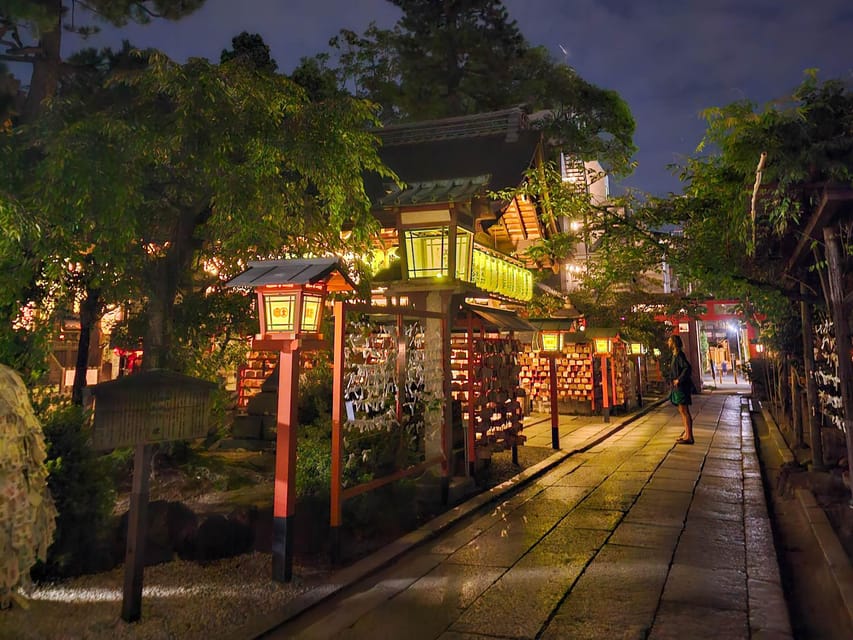
The meeting point is Kyoto Kawaramachi Garden, at the corner in front of the big black world map. Your guide waits there wearing a TripGuru shirt or holding a TripGuru sign.
This matters more than it sounds. If you arrive a little early and get yourself sorted, you avoid the stress that can happen when evening crowds hit and your route is half through before your brain catches up.
Bring the basics: comfortable shoes, a camera, and cash. Even if you don’t plan to buy anything beyond the included snack, cash keeps you flexible for small extras.
Passing by Kyōto Minami-za: a taste of Kyoto’s performing-arts side
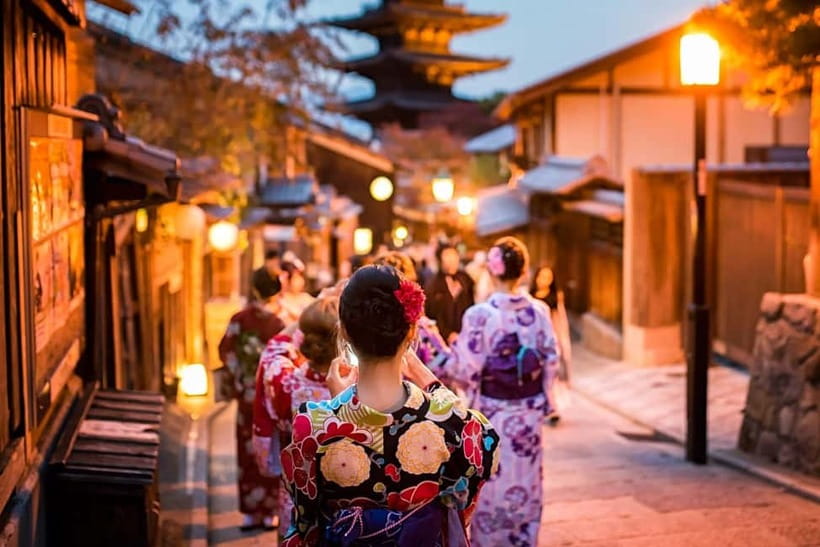
Early in the walk you’ll pass by Kyōto Minami-za (around 10 minutes). Even if you’re not catching a show, it’s a helpful visual reminder that Gion’s story isn’t only about tea houses and lanterns. Kyoto’s cultural life includes performance traditions too, and the theater setting helps frame that.
What I like about a stop like this is that it keeps the tour from becoming only “pretty street photography.” You get a cultural reference point that makes later scenes in Gion feel more connected.
Hanamikoji Street: the historic lane you actually learn how to see
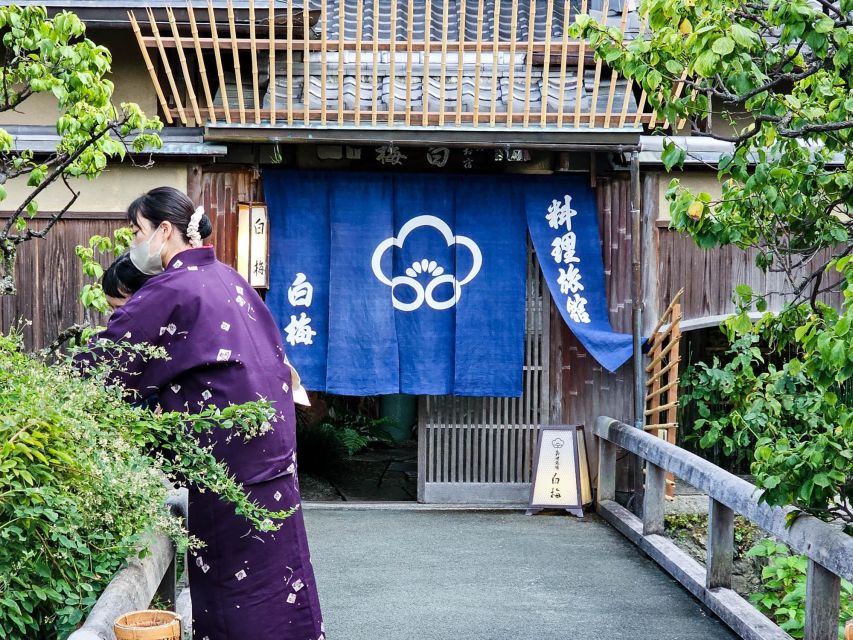
Next you spend about 30 minutes on Hanamikoji Street, one of the district’s best-preserved historic lanes. This is where the atmosphere clicks: narrow passageways, traditional building fronts, and that layered mix of tourist energy and real neighborhood life.
Here’s the practical part: Hanamikoji is the kind of place where you can wander for an hour and still feel like you didn’t understand what you saw. With a guide, you notice details you would otherwise skip—street layout, building styles, and the social logic behind where people gather and how the district operates.
Also, this is a good zone to slow down. If you rush, you miss the small cues that make the street feel alive.
Scenic views and quiet turns: the part that makes the walk feel worth it
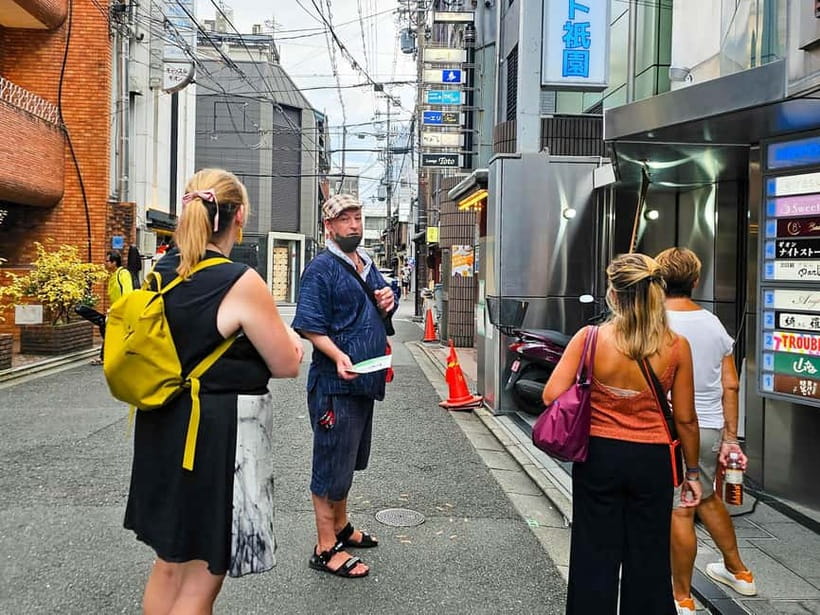
The route includes two stretches of guided sightseeing with scenic views along the way (about 30 minutes, then later about 25 minutes). These segments are often where the photo angles and the “wait, look at that” moments happen.
You’ll get the kind of context that helps the dark streets make sense. When it’s properly explained, Gion’s layout stops feeling like a maze and starts feeling like a set of purposeful connections.
A small downside: because these moments are timed for views and atmosphere, you’ll want to keep your pace steady. If you’re stopping every 30 seconds to reposition your shot, the group timing can feel a bit tight.
You can also read our reviews of more guided tours in Kyoto


Maruyama Park in the evening: a calmer beat between the highlights
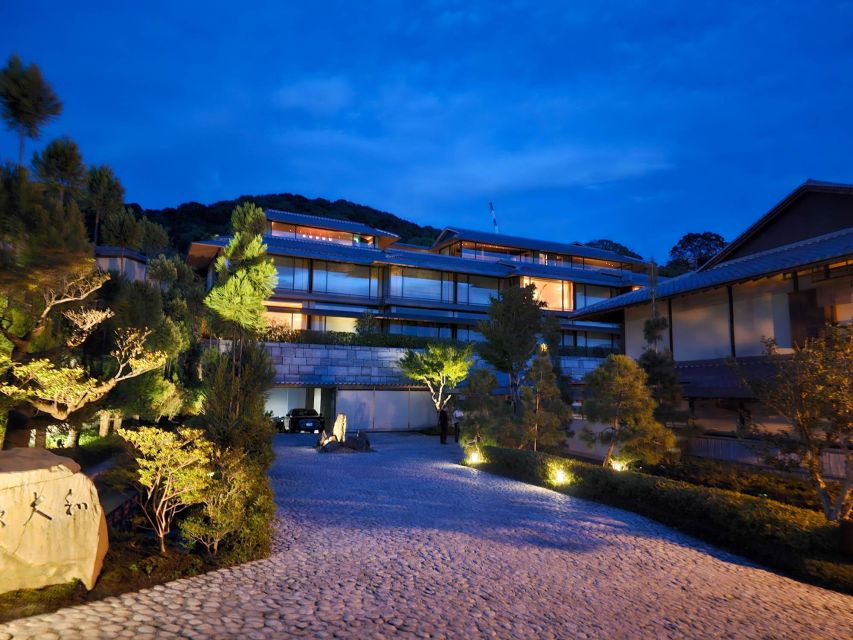
You’ll spend about 15 minutes at Maruyama Park, guided. In a walking tour built around streets and shrines, this is a nice reset. It gives your legs a break and gives your eyes a wider view, which helps break the day-to-night switch into something smoother.
This is also where the mood of Gion makes more sense. The district doesn’t only live on lanterns and restaurant fronts. It also has open-air space and a calmer rhythm that keeps the night from feeling like one long corridor.
Yasaka Shrine (Gion Shrine): architecture, ritual, and why it matters here
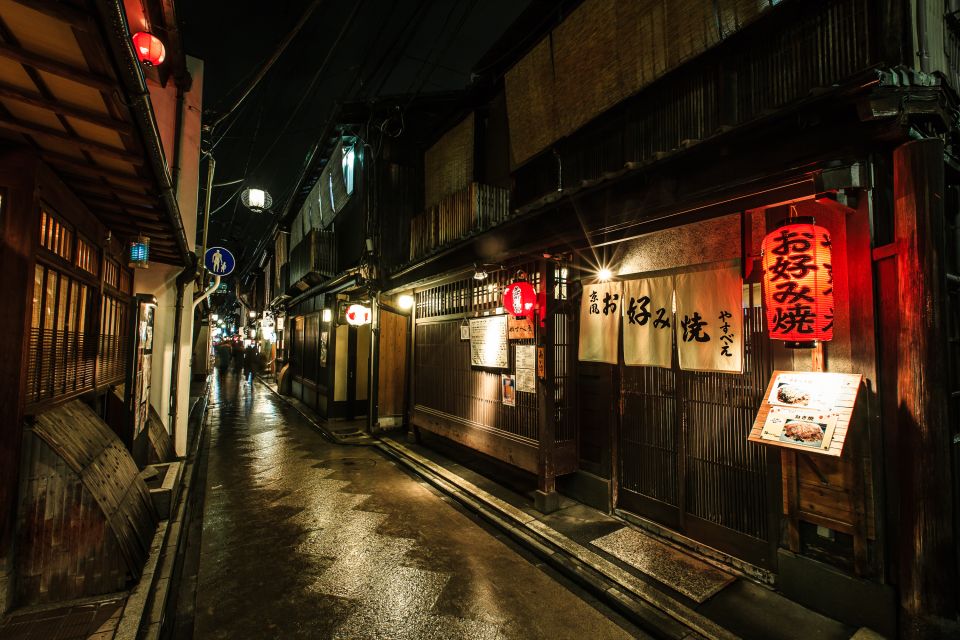
The heart of the cultural story comes with Yasaka Shrine, also known as Gion Shrine (about 20 minutes). At night, shrines can feel both solemn and welcoming—lit pathways, the hush of people moving respectfully, and lots of visible details that you’d miss in daylight.
This stop is valuable because it gives you a foundation. Without that background, Gion can start to look like a curated entertainment district. With it, you see how tradition and daily life intertwine here.
One of the best parts is that your guide can connect the shrine setting to the broader customs of the area. Some groups have highlighted how their guide talked about religion and how it shapes what you see. That kind of context makes your “I’m walking through history” feeling much more grounded.
The local snack stop: a small pause that actually improves the tour
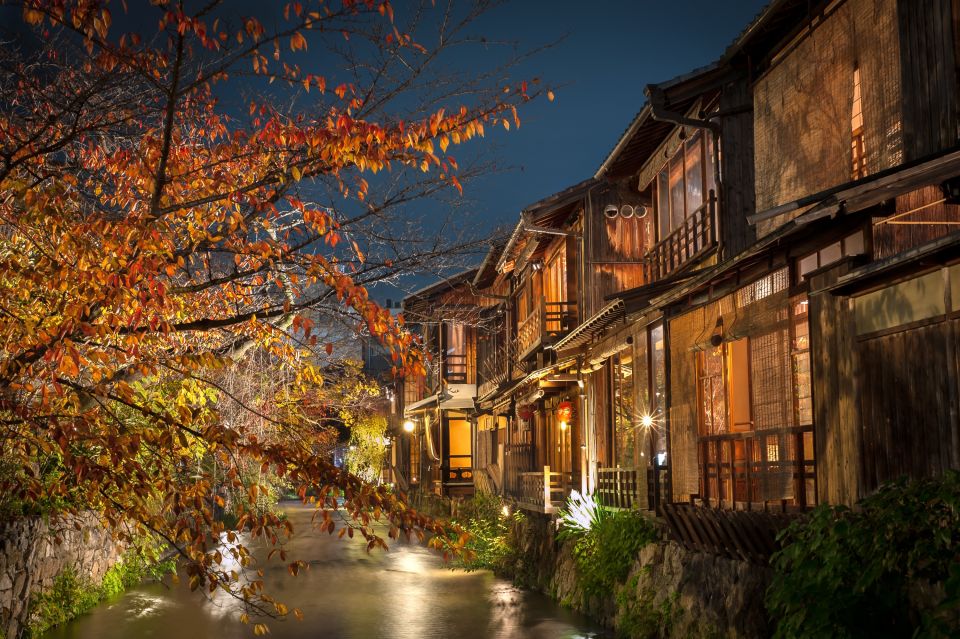
About 20 minutes is set aside for local snacks. The included snack is one of those quietly smart inclusions, because it keeps the night from becoming a full sprint of walking and looking.
From experience with similar tours, this stop can range from a simple local bite to something more special like matcha desserts. In at least one account, the snack cost was reported as under a 1000 yen cap, and the group enjoyed something like matcha-based treats. Another example included choosing a snack at a nearby store, with guidance on what to pick.
Either way, the practical value is this: you’ll be warmer and less distracted, so the rest of the walk feels more enjoyable and less like a hunger puzzle.
Pontocho at night: the alley-of-light payoff near the river
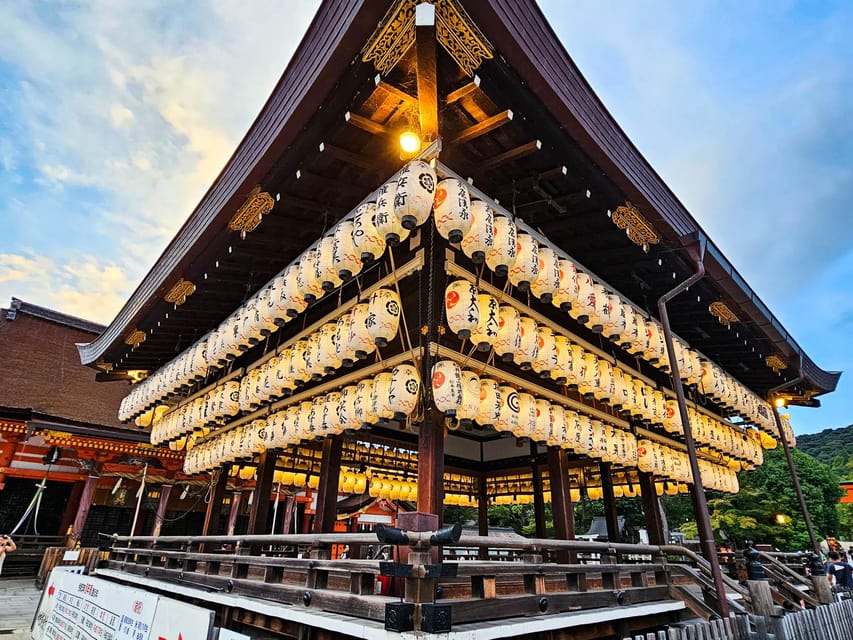
The final sightseeing segment is Pontocho (about 20 minutes), guided. If Hanamikoji is the historic lane, Pontocho is the night mood. It’s the kind of place where the lighting and the narrow channel-like street shape how the district feels.
This is also where your guide’s street knowledge pays off. Pontocho is busy and photogenic, but it can be easy to get “stuck in the crowd” if you don’t know where the better lines of sight are. With a guide, you get the sense of moving through the area with purpose.
And when the tour ends at Sanjo Bridge, you’re in a convenient spot to keep exploring. You’ve got the Gion night look in your head, so it’s easier to decide what to do next without second-guessing your bearings.
Geiko and maiko: how to spot them respectfully (and not ruin your photos)
Even when you don’t spot anyone, your guide’s explanations make Gion’s geisha culture feel less like a mystery box and more like a structured tradition.
If you do spot a geiko or maiko, the rules are simple:
- Keep your distance.
- Don’t block their path or stop directly in front of them.
- If they come close, step out of the way.
- Offer a small bow and a quick thank-you instead of shouting for attention.
- If you photograph, a longer lens helps you avoid crowding them.
This isn’t just etiquette theater. It’s what keeps the experience respectful and also keeps you from becoming the reason the vibe changes.
Guides make the difference: what I’d look for based on real outcomes
A tour like this lives or dies on the guide. The best experiences in the feedback I saw shared a few traits: clear English, a pace that matches the group, and stories that answer questions instead of just narrating the route.
I noticed names showing up again and again—Jasmine, Raphael, Naoki, Alex/Alejandro, Vincent, Zied, Karl, Gustavo, Katz, and Nobumasa Miyake. Many guests specifically called out that their guide took time for the group, adjusted pace for older visitors, and shared extra details beyond the stops.
Here’s what that means for you: you’re not only buying access to a route—you’re buying help turning Kyoto into something you understand on your feet.
Value check: $22 for 3 hours and a snack that adds up
At $22 per person for about 3 hours, this is priced for affordability, not exclusivity. The best part of the value isn’t the dollar amount. It’s that you get:
- a small-group walk (max 9),
- an English-speaking guide (with English/Spanish/French options),
- multiple meaningful sights in one evening,
- and a snack included.
If you’re in Kyoto for a short visit, the biggest cost is often time. This tour spends your evening efficiently: you see the lantern-lit Gion vibe, then get context at a shrine and through historic streets, and you end in a logical area for continuing your own exploration.
Who should book this walk (and who should skip it)
This fits you best if:
- You want an easy evening plan that doesn’t require heavy planning.
- You’d rather learn how to look at Gion than just wander through it.
- You like history and cultural context, delivered while you walk.
It’s also great for first-time visitors who want a fast, high-signal introduction to the district.
It’s not a good match if you have mobility limits or health concerns mentioned by the operator, including pregnancy, mobility impairments, heart problems, or respiratory issues. And because it’s a walking tour, you should be comfortable on your feet for the full duration.
If the idea of steady walking in the evening sounds tiring, consider pairing this with a lighter day before it.
Should you book the Kyoto Gion Sunset Walking Tour?
Yes, if you want a smart, compact evening in Kyoto’s most atmospheric neighborhood. I’d book it when you have only a couple hours to spare and you want more than a photo loop. The combination of lantern-lit streets, historic context at Hanamikoji and Yasaka Shrine, and a snack break makes it feel like a real experience—not a rushed checklist.
Skip it if you want a sit-down “scenic cruise” vibe, or if walking for roughly three hours is a problem for you. Also go in knowing that geiko/maiko sightings are possible but not guaranteed, so your satisfaction should come from the district itself and the culture your guide explains.
FAQ
Where is the meeting point for the Kyoto Gion Sunset Walking Tour?
You meet at Kyoto Kawaramachi Garden, at the corner in front of the big black world map. Your guide will be waiting there wearing a TripGuru shirt or holding a TripGuru sign.
How long is the tour?
The tour lasts 3 hours.
What is the group size like?
It’s a small group tour, with a maximum of no more than 9 people.
Is this tour in English?
The tour includes an English-speaking guide. The tour is also listed as available in English, Spanish, and French.
What’s included in the price?
Included are an English-speaking tour guide, the walking tour, and a snack.
Is hotel pickup or drop-off included?
No. Hotel pick up and drop off are not included.
What should I bring?
Bring comfortable shoes, a camera, and cash.
Is it okay if I book at the last minute?
Yes. The tour states you can book at any time and that last-minute bookings are accepted.
Is free cancellation available?
Yes. There’s free cancellation up to 24 hours in advance for a full refund.
Do I get to see a geiko or maiko?
A glimpse may be possible, but it’s not guaranteed. You’re advised to be respectful if you encounter them.