Kyoto looks calmer at night, and this night e-bike tour makes it easy to see why. I really like how you glide through Gion and other lantern-lit lanes on electric assist instead of slogging on foot.
You’ll also get an English-speaking guide who keeps the ride moving and explains what you’re looking at along the way.
The main thing to consider: you still need to be comfortable riding an e-bike. There can be a bit of pedaling, and this tour isn’t for people who can’t ride a bike or who have back problems.
In This Review
- Key Things I’d Watch For Before You Go
- Why Kyoto’s Night Lights Beat Daytime Crowds
- The E-Bike Advantage: Comfort, Speed, and Less Tired-Foot Touring
- Meeting in Gion: Getting Started Without Wasted Time
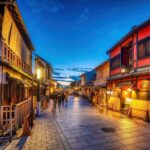
- Miyagawasuji and Gion Streets Under Lantern Light
- Kyoto National Museum Exterior: A Quick Context Stop
- Kiyomizuzaka Slope and Kiyomizu-dera: Photo Stops With Purpose
- Yasaka Pagoda at Night: The Best Kind of Photo Break
- Ninenzaka and Maruyama Park: Old Streets Plus a Breather
- Toyokuni Shrine and Furukawacho Shopping Street: Where the Backstreets Shine
- Riding Rules, Weather Plans, and What You Should Bring
- What You’re Paying $64 For (And Why It’s Fair)
- Who This Night E-Bike Tour Is Best For
- Should You Book This Kyoto Night E-Bike Ride?
- FAQ
- Where is the meeting point?
- How long is the tour?
- What’s included in the price?
- Do I need to know how to ride a bicycle?
- What are the age and height requirements?
- Will the tour run in light rain?
- What should I bring?
- Is pickup from my hotel included?
Key Things I’d Watch For Before You Go
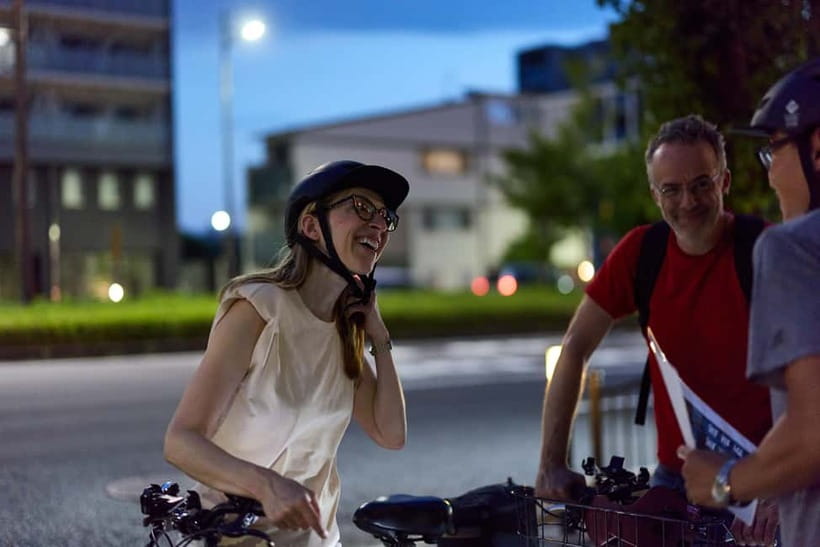
- Small group (max 6): less waiting, more time to actually look around.
- Gion start and a smooth night pace: you begin in a very walkable, scenic area.
- Lit sights close together: you see temple and shrine photo spots without spending all your energy.
- Some pedaling is normal: electric assist helps, but you’re still on a bicycle.
- Light rain doesn’t shut it down: ponchos are available if the sky misbehaves.
Why Kyoto’s Night Lights Beat Daytime Crowds
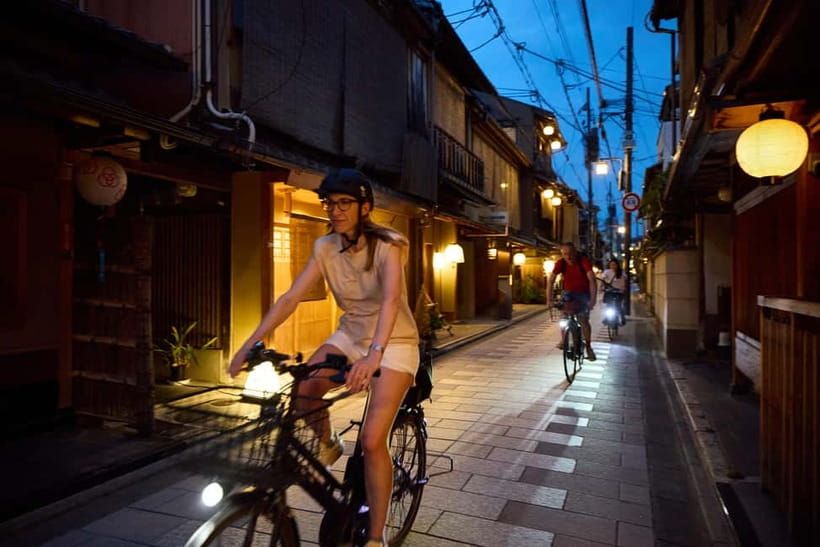
Kyoto by day is impressive, but at night it’s different. The big temples and main streets are still there—just calmer, cooler, and easier to take in. This is the kind of tour where the atmosphere is half the point: lanterns, temple edges glowing, and side streets that feel like they’re made for a slower pace.
What I like most is that the ride naturally pushes you away from the loudest, most crowded walkways. You’re not sprinting between “must-sees.” You’re traveling through the quieter Kyoto rhythm, where you notice street texture, little courtyards, and the way the city lights up corners you’d normally miss.
You can also read our reviews of more cycling tours in Kyoto
The E-Bike Advantage: Comfort, Speed, and Less Tired-Foot Touring
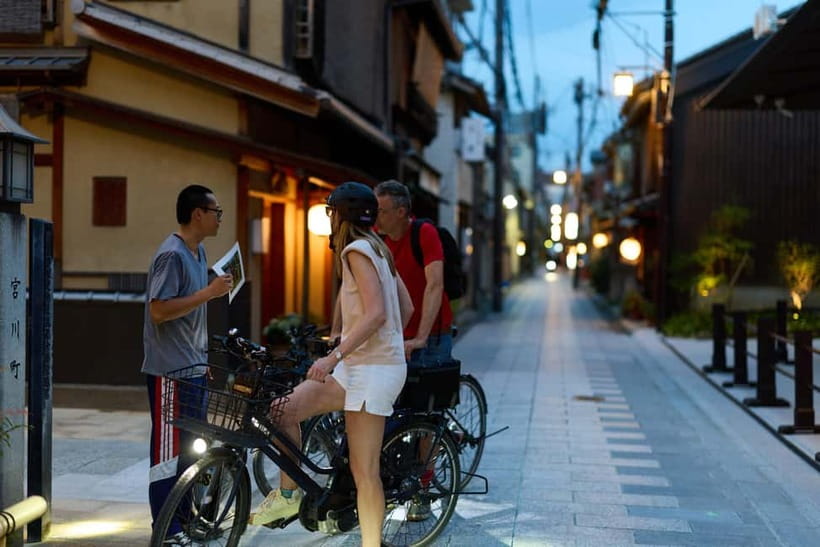
Let’s be honest: a “temple and streets” day in Kyoto can turn into a leg workout. On this tour, the electric bike does the heavy lifting—so you can spend your energy on seeing, photographing, and listening.
You’ll get an e-bike rental and a helmet, and the ride is designed for touring. Reviews also hint at the same reality: you may still do some pedaling, but it’s manageable. If you’re comfortable on a bike already, you’ll feel in control. If you’re nervous around balance or hills, don’t assume electric assist solves everything.
Meeting in Gion: Getting Started Without Wasted Time
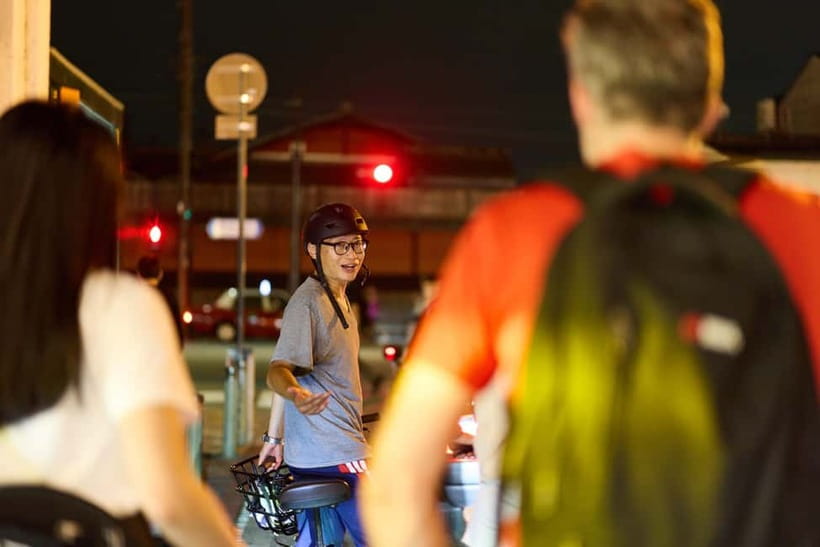
The tour meets in front of the Kyoto Tourist Lounge Gion. That location matters because it puts you near one of Kyoto’s most atmospheric neighborhoods from the minute you start.
Plan to arrive about 10 minutes early. You’ll want that buffer to get oriented, fit the helmet, and get used to the bike before the streets get more interesting. Once you roll out, you’ll cover ground efficiently, with enough stops to actually enjoy each area instead of just passing through.
Miyagawasuji and Gion Streets Under Lantern Light
One of the first things you’ll do is ride along Miyagawasuji. This is where the tour’s “Kyoto after dark” mood really clicks. The street feels calmer, and the lighting makes the architecture pop in a softer way than midday sun.
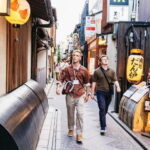
After that, you’ll get guided sightseeing time that helps you connect the dots. Even if you’ve seen Kyoto before, it’s useful to have a guide frame what you’re looking at—like how different street layouts and neighborhood edges shape daily life.
Kyoto National Museum Exterior: A Quick Context Stop
You’ll also make a brief stop at Kyoto National Museum (exterior). You’re not going in here based on the provided schedule, but the exterior stop is valuable for orientation. It helps you understand where you are in the broader geography of Kyoto and gives you a landmark reference before you move toward the bigger temple area.
The trade-off is also simple: if you were hoping for a museum visit, this tour isn’t built for that. Think of it as a “place in the city” moment, not an indoor cultural deep stop.
You can also read our reviews of more evening experiences in Kyoto


Kiyomizuzaka Slope and Kiyomizu-dera: Photo Stops With Purpose
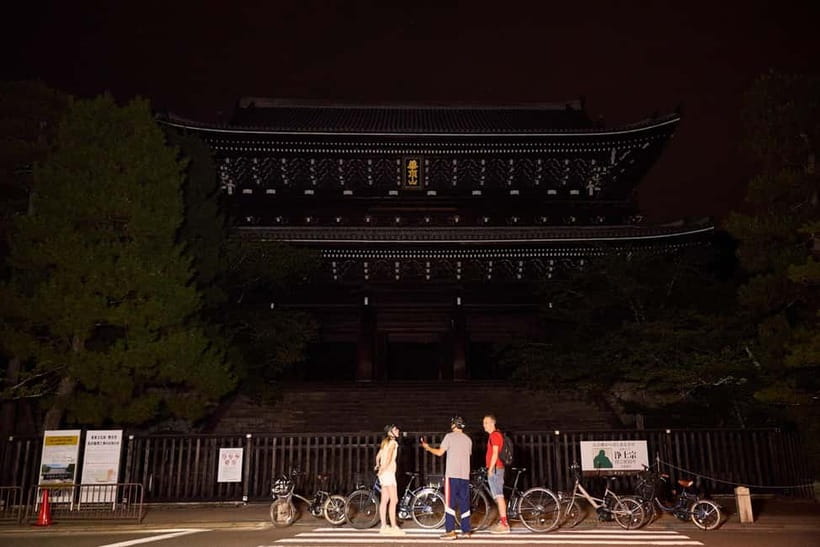
Next comes Kiyomizuzaka, the famous slope approach where Kyoto’s old-street feel really takes over. You’ll have time for a Kiyomizu-dera photo stop, plus a visit and guided moments.
This part is special at night because you get the best of both worlds: the chance to see the temple area illuminated, and the ability to pause without getting crushed by daytime crowds. The guided context makes a difference too. Instead of just snapping pictures, you’re more likely to notice details like how the surrounding streets funnel movement toward the temple and how the lighting changes the feel of stone and wood.
One practical note: comfort matters here. You’ll be outside, walking a bit, and taking photos. Wear comfortable shoes and expect a little uneven footing.
Yasaka Pagoda at Night: The Best Kind of Photo Break
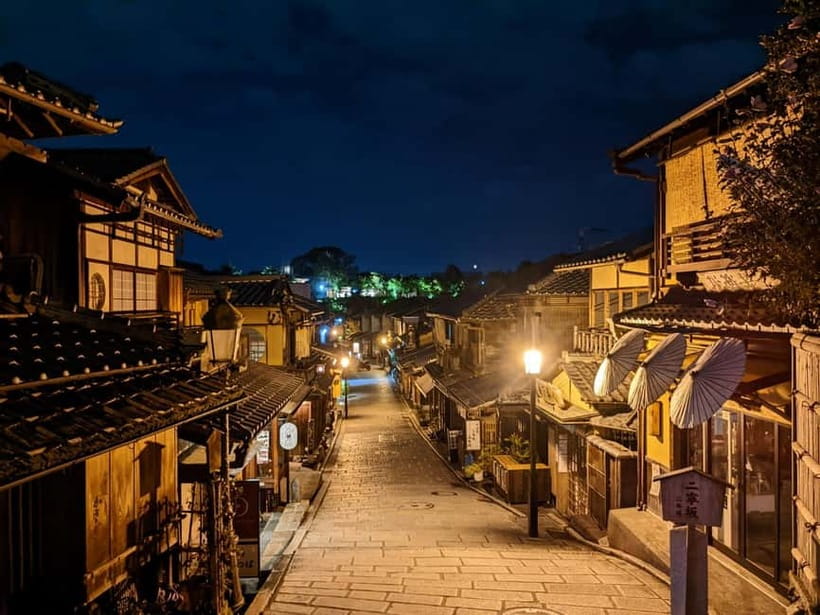
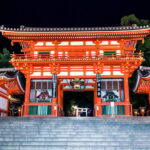
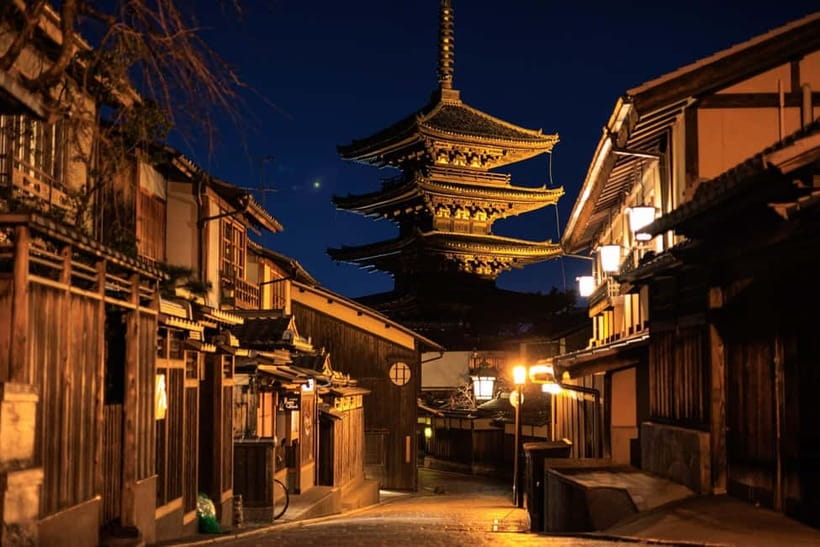
Then you’ll hit the Yasaka Pagoda area with time for a photo spot, visit, and guided talk. This stop is short but focused, which is exactly right for a 2-hour ride.
Why it works: pagoda views at night are dramatic because you’re seeing silhouettes and reflections in a calmer scene. And since the stop is planned, you’re not spending time “guessing” where to stand. Your guide helps you get the shot with less wandering.
Ninenzaka and Maruyama Park: Old Streets Plus a Breather
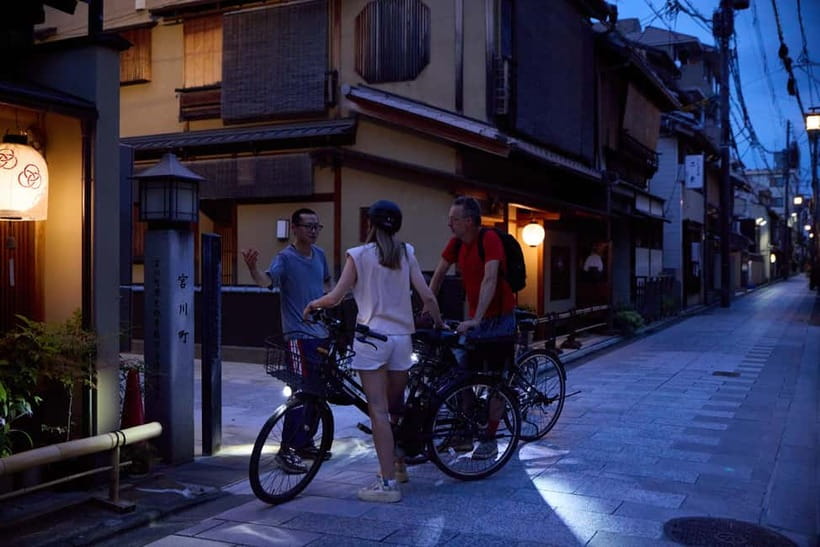
You’ll move through Ninenzaka with a visit and guided time. This is one of those “Kyoto postcard” areas, but the value on this tour is how you experience it within a nighttime flow—less heat, fewer crowds, and more breathing room.
Then there’s a break at Maruyama Park, with both photo time and guided explanation. A built-in pause matters on a bike tour. It keeps the ride from feeling like constant motion, and it gives you a moment to reset your legs and eyes before the final stretches.
This is also where nighttime Kyoto feels less like a sightseeing checklist and more like a place you’re passing through slowly—quiet enough to hear your own conversations over the normal city noise level.
Toyokuni Shrine and Furukawacho Shopping Street: Where the Backstreets Shine
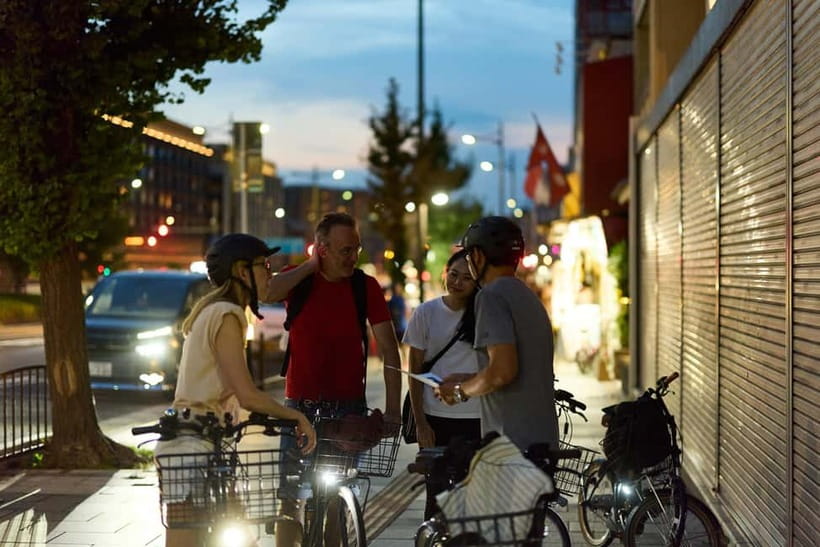
The highlights mention stops around Toyokuni Shrine and Furukawacho Shopping Street, and that’s the heart of why this tour feels different from the standard “big temple loop.”
These areas help you see the city’s cultural texture beyond the most famous names. Shrine visits at night tend to feel more intimate, and shopping streets feel more local once the main crowds thin out. You’re still doing big landmarks, but you’re also getting that lived-in Kyoto feeling.
Riding Rules, Weather Plans, and What You Should Bring
A night bike tour is fun—until the wrong details trip you up. Here’s what matters from the rules:
- You must be comfortable riding an e-bike. The tour isn’t suitable if you can’t ride a bike.
- Not for back problems.
- Minimum age is 12, and height must be over 145 cm.
- Smoking isn’t allowed.
- The tour runs even in light rain. Ponchos are available, so you won’t be stranded if clouds roll in.
What to bring is simple: comfortable shoes. Skip anything slippery or delicate. And if you’re worried about cooling temperatures at night, dress in layers so you can adjust while you’re stopped for photos.
What You’re Paying $64 For (And Why It’s Fair)
At $64 per person for about 2 hours, you’re paying for three things:
- An e-bike with helmet (so you don’t spend time renting and sorting gear).
- A live English guide (so you get context and pacing, not just transportation).
- A small group capped at 6 (less crowd friction, more attention).
If you were to try to DIY this route, you’d still have to figure out bike logistics, pick good night photo areas, and manage the backstreet timing. Here, the tour bundles the planning into a guided ride that’s built for after-dark sightseeing.
It’s not a “cheap” activity, but it also doesn’t feel like you’re overpaying for the basics. You’re buying convenience plus guidance, and that’s often where the value shows up.
Who This Night E-Bike Tour Is Best For
This one fits best if you want:
- A night-focused Kyoto experience with fewer crowds and calmer streets.
- The freedom to see multiple areas without burning a full day walking.
- A guide to point out what you’re seeing, not just where you’re going.
It’s less ideal if you:
- Have mobility or comfort limits that make riding hard.
- Hate being on a bike at all (even with electric assist).
- Want a long temple-by-temple walking plan with lots of inside time—this tour is paced for motion and photo stops.
Should You Book This Kyoto Night E-Bike Ride?
If you’re looking for an efficient, fun, after-dark way to see Kyoto—especially Gion, temple approaches like Kiyomizuzaka, and photo-worthy nighttime spots like Yasaka Pagoda—I think this tour is a strong choice. The small group size, the included helmet and e-bike, and the guide-driven route make it feel worth the price, not just a transfer from one attraction to another.
Just be honest about your comfort level first. If you can ride an e-bike calmly, you’ll likely enjoy the ride rhythm and the quieter streets. If you’re on the fence, consider it a sign to do a walking-focused tour instead.
FAQ
Where is the meeting point?
Meet in front of Kyoto Tourist Lounge Gion.
How long is the tour?
The tour lasts about 2 hours.
What’s included in the price?
Included are the e-bike rental, a helmet, and a live tour guide (English).
Do I need to know how to ride a bicycle?
You should be comfortable riding a bike and an e-bike. The tour isn’t suitable for people who can’t ride a bike.
What are the age and height requirements?
Minimum age is 12 years old, and height must be over 145 cm.
Will the tour run in light rain?
Yes. The tour proceeds in light rain, and ponchos are available.
What should I bring?
Wear comfortable shoes. (You’ll also have helmet and the e-bike provided.)
Is pickup from my hotel included?
No. Hotel pickup and drop-off are not included.