REVIEW · KYOTO
Kyoto: Nijo Castle and Kyoto Imperial Palace Guided Tour
Book on GetYourGuide →Operated by Trip with Goku · Bookable on GetYourGuide
Two palaces, one sharp history lesson. On this 3-hour Kyoto walking tour, I love how the guide connects Nijo Castle to Tokugawa-era power, and then pivots to the emperor’s world at the Kyoto Imperial Palace. You’ll also get that special Kyoto moment when the palace gardens’ seasonal beauty shows up right in the flow of the visit.
One caution: on some days you may see Imperial Palace exteriors more than interior rooms, and it’s a walking-focused tour with a strict no-shorts rule (it also isn’t suitable for pregnant women).
In This Review
- Key highlights to know before you go
- Meeting at Nakadachiuri Gate: start where the palace story begins
- Kyoto Imperial Palace: gardens and architecture built for season-to-season meaning
- The walk between sites: street-level Kyoto, townhouses, and a cherry blossom stop
- Nijo Castle: Tokugawa power made visible in wood, space, and detail
- Ninomaru Palace and the included art gallery: where the details pay off
- Guide-led clarity: why the same castles feel different with different people
- Price and value: is $63 for three hours a good deal?
- Who this tour fits best (and who should skip it)
- Should you book this Kyoto Nijo Castle and Imperial Palace guided tour?
- FAQ
- How long is the Kyoto Nijo Castle and Kyoto Imperial Palace guided tour?
- Where do I meet for the tour?
- What is included in the price?
- What languages are available for the guide?
- Are shorts allowed?
- Is the tour suitable for pregnant women?
Key highlights to know before you go
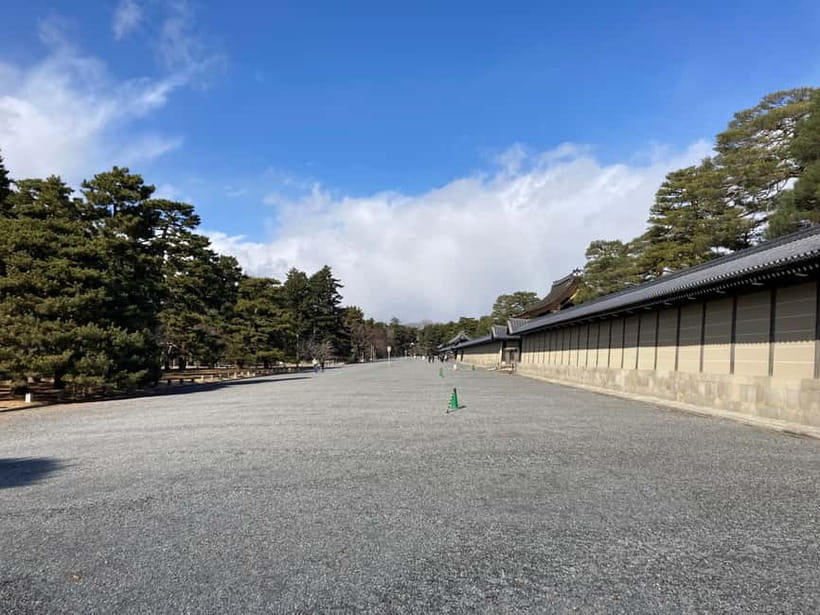
- Two iconic sites in 3 hours: Nijo Castle plus Kyoto Imperial Palace, both with guided context
- Power and authority explained: how Tokugawa Ieyasu shaped the message of Nijo Castle’s design
- Palace politics in plain language: you’ll hear how the era’s political climate connects to what you see
- Seasonal gardens at the Imperial Palace: the grounds are built to show change with the seasons
- Small group up to 9: easier pacing, more chances to ask questions
- Your guide matters: names like Kayo, Nene, Taku, and Goku appear in the guide lineup, with consistent praise for clarity and fun
Meeting at Nakadachiuri Gate: start where the palace story begins
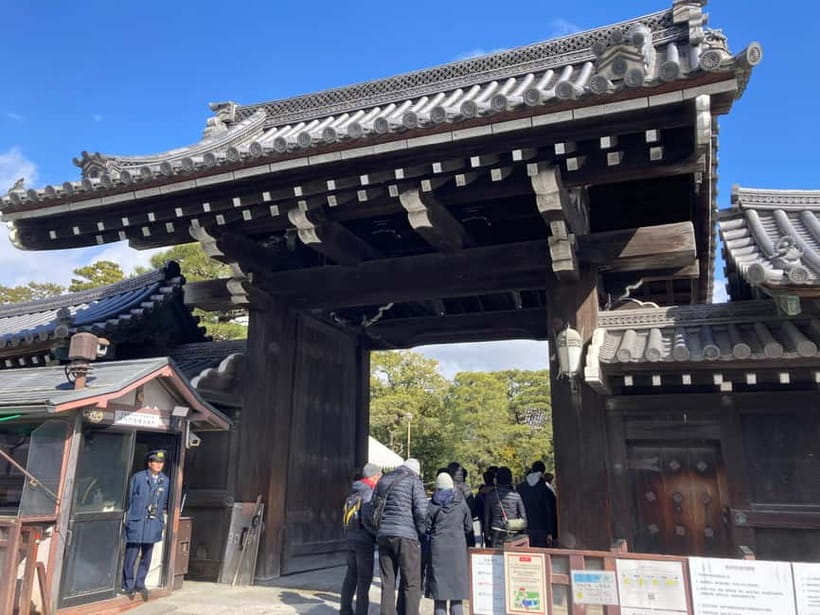
This tour’s meeting point is the Nakadachiuri Gate of the Kyoto Imperial Palace. It’s a smart place to start because you’re not easing into history—you’re stepping right into the emperor’s address, right at the perimeter where the palace begins to feel real.
A detail I really appreciate: the operator contacts you in advance with a description of what your guide will look like and what they’ll be wearing. In Kyoto, that kind of clarity saves time and stress, especially if you’re arriving a bit early and don’t want to wander around gates guessing.
Once you’re with the group, the guide frames what you’re about to see. That matters here. Nijo Castle and the Imperial Palace are both famous, but the real value comes from understanding what each place was designed to communicate—power, legitimacy, control, culture—through architecture and setting.
You can also read our reviews of more guided tours in Kyoto

Kyoto Imperial Palace: gardens and architecture built for season-to-season meaning
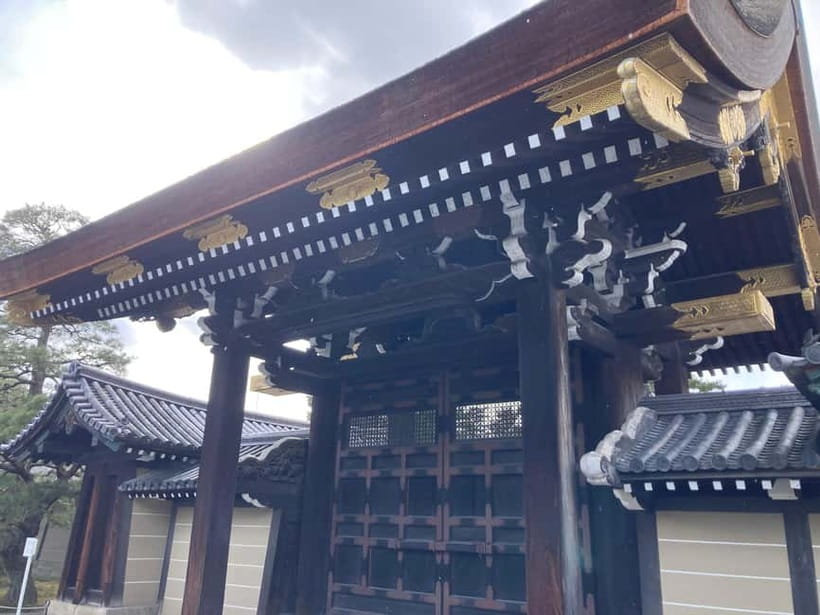
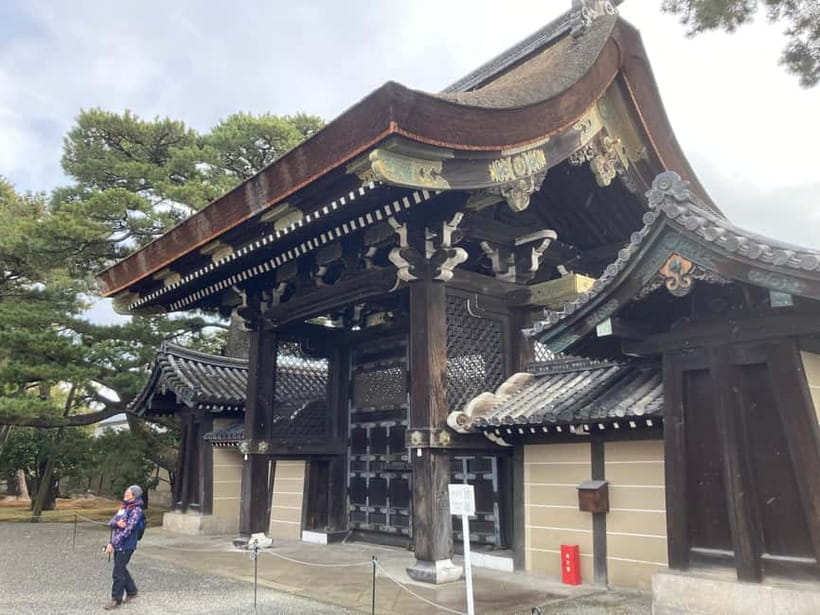
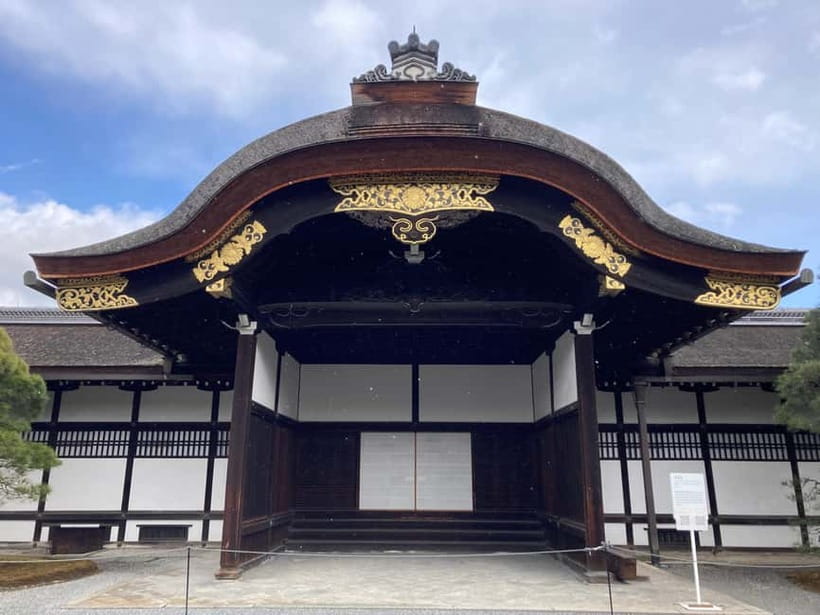
Your first big experience is the Kyoto Imperial Palace. Think of this as the “why Kyoto looks and feels like Kyoto” stop, because the palace is tied to refined Japanese aesthetics. The architecture and the gardens are presented as part of one idea: how beauty, order, and seasonality work together.
The gardens are a highlight, especially because they’re designed to showcase seasonal beauty. If you’re here in spring or fall, you’ll be paying extra attention to how plantings and layouts change the mood as you move through the grounds. Even if you’re not a garden person, you’ll likely start noticing how placement and pacing do the storytelling.
Your guide also puts the palace into context by connecting the site to the political atmosphere of its time. That’s a big deal, because without context, a palace visit can turn into “pretty buildings and photos.” With context, you start seeing how design choices are political choices.
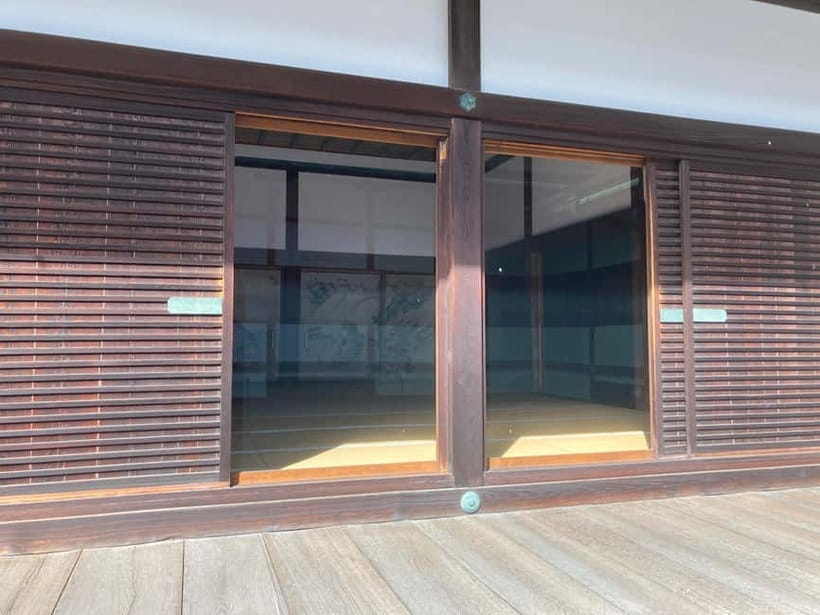
One more practical point: some palace visits may be more exterior-focused. So if you’re hoping for a lot of indoor room time, keep expectations flexible and focus on what you can see and understand outside.
The walk between sites: street-level Kyoto, townhouses, and a cherry blossom stop
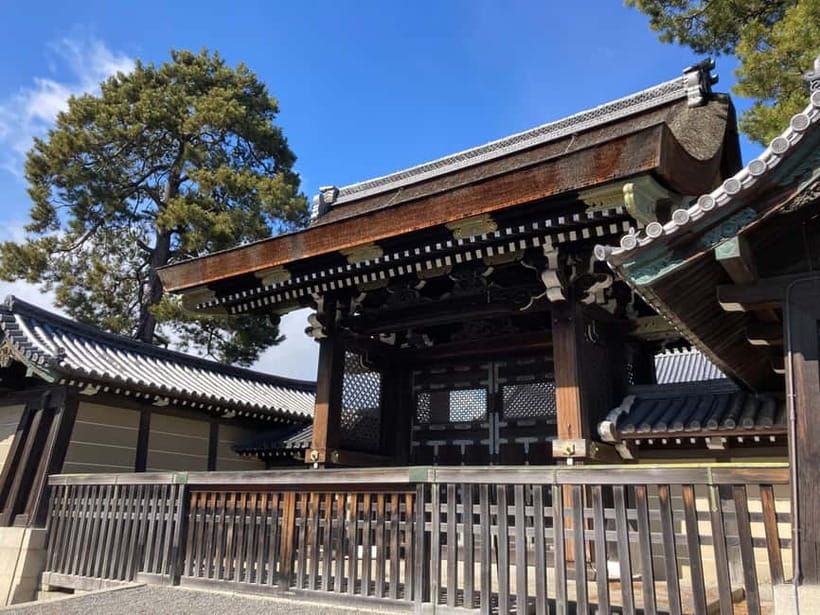
This is a walking tour, and that’s part of what makes it work. You’re not just hopping between ticket gates—you get a chunk of Kyoto you can actually feel at walking speed.
Along the route, the tour includes time where you can spot traditional Kyoto townhouses and a spot known for cherry blossoms. Even if it’s not peak bloom, those notes help you look at the streets differently. You start noticing why certain streets and corners feel photogenic: scale, materials, and the way the city holds onto older forms.
There’s also at least one stretch that people describe as about 20 minutes of walking from the palace area toward the next stop. That’s not extreme, but it is real. Wear comfortable shoes and treat the walking as part of the experience, not just the “in-between.”
If you’re the type who gets restless waiting for trains or buses, this route style can feel refreshing. You get stories plus scenery, in the same motion.
Nijo Castle: Tokugawa power made visible in wood, space, and detail
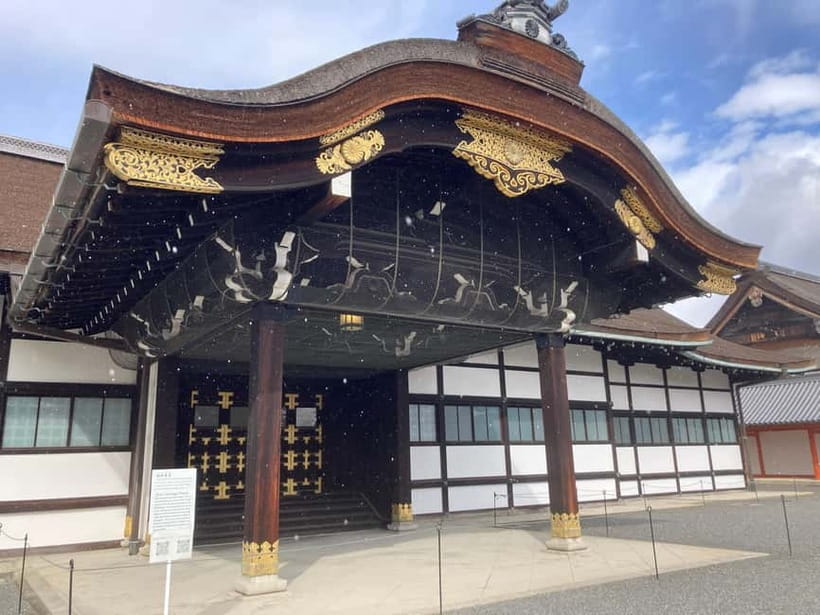
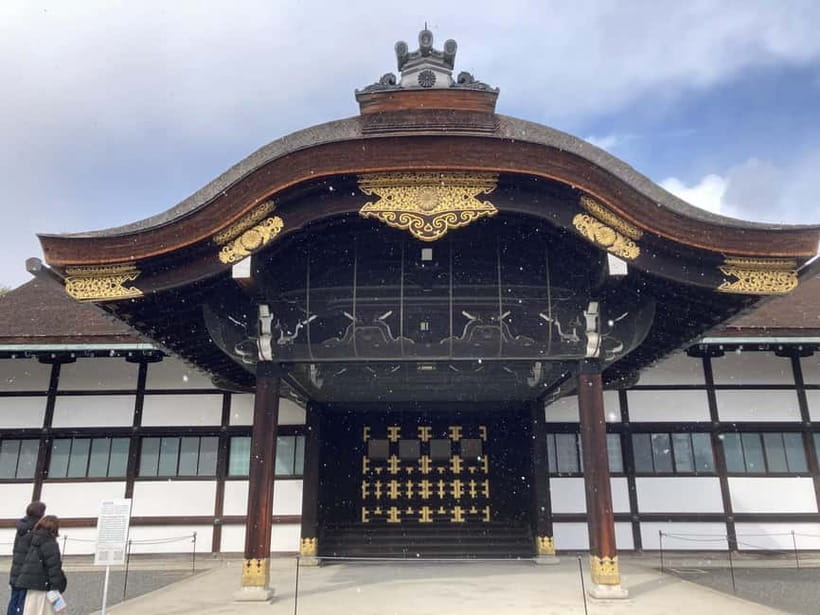
Then you reach Nijo Castle, one of Kyoto’s most important symbols of authority. Built by Tokugawa Ieyasu, it’s not just a historic building. It’s a statement—designed to show status, control, and the weight of power through how the spaces are arranged and decorated.
What I like about this stop is how the guide explains the link between politics and design. You’re not only walking through rooms and corridors; you’re learning how the shogunate’s authority was communicated by lavish interiors and intricate details. That turns the experience from sightseeing into interpretation.
You’ll also hear about the political climate of the era, which helps you understand why the castle looks the way it does and why it mattered. When a guide connects “what you see” to “what it meant,” the castle becomes easier to read, even if you don’t speak the language.
And yes, it’s still impressive on its own. You’ll be looking at a site that feels official and intentional. Nijo Castle is the kind of place where details catch your eye once someone points out what you should be noticing.
Ninomaru Palace and the included art gallery: where the details pay off
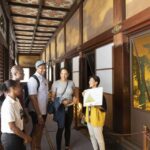
Nijo Castle visits here include admission tickets for Nijo Castle and the Ninomaru Palace, plus an art gallery ticket. That’s a meaningful inclusion. The castle isn’t only about the main structure; the tour ensures you reach the spaces that deepen the story.
The Ninomaru Palace area is highlighted as part of how the castle communicates power and authority. With guidance, you’re more likely to pick up on how the interiors are meant to project status. This is one of those experiences where lighting, layout, and decoration choices become part of the lesson.
The art gallery inclusion also helps balance the architecture-heavy day. If you’re the type who likes a few calmer stops to reset between visual intensity, this can work nicely. It’s also a good way to keep the visit from feeling like one long “buildings only” checklist.
One thing to keep in mind: your time is limited to about three hours total. That’s not a long time for two major sites, so the guide’s pacing matters. The small group size (up to 9) helps here, because you’re less likely to feel rushed by crowds.

Guide-led clarity: why the same castles feel different with different people
The guides behind this experience are a major reason it gets strong feedback. Names like Kayo, Nene, Taku, and Goku show up again and again in the guide lineup, and the common thread is how they explain what you’re seeing.
I’d particularly watch for guides who connect multiple dots at once—history, architecture, art, and politics—without drowning you in dates. Several people highlight that the explanations are clear and engaging, and that the guide keeps things moving at a comfortable pace for mixed interests in the group.
If you’re traveling solo, that can also be useful. One consistent theme from the experiences shared is that guides help with practical moments like taking photos, so you’re not stuck asking strangers all day.
Also, if you’re the curious type who asks lots of questions, you’ll likely appreciate guides who answer quickly and go beyond the surface. Some guides even share local suggestions after the tour, like where to eat nearby—helpful when you’re done and want something good without Googling while tired.
Price and value: is $63 for three hours a good deal?
At $63 per person for about 3 hours, this is priced like a guided combo that saves you time. You’re paying for three main things: a professional English-speaking guide, admission for the included sites, and the structure of a walking route that connects the two big landmarks.
If you tried to do this on your own, you’d likely spend money anyway on tickets plus time sorting out where to go and what matters. The value here is the guide’s ability to make the sites easier to read—especially for Nijo Castle, where the power message can feel abstract unless it’s explained.
The small group size (up to 9) is another value signal. You’re not standing shoulder-to-shoulder with dozens of people while listening for key points. That makes it more likely you’ll get real conversation instead of just hearing history at full volume.
So for most visitors—especially first-timers to Kyoto—this price tends to make sense. It’s a compact way to get two landmark visits with interpretation, not just two photo stops.
Who this tour fits best (and who should skip it)
This tour is a strong fit if you want a guided walk through Kyoto’s two power centers: the shogunate’s show of authority at Nijo Castle and the emperor’s cultural and political world at the Imperial Palace.
It’s also a good fit if you like architecture and cultural storytelling, because the guide connects design choices to the era’s political climate and style. If you’re more casual, the garden and street-level Kyoto elements still give you enough visual variety to keep it interesting.
On the other hand, it’s not for everyone. Shorts aren’t allowed, and it’s specifically noted as not suitable for pregnant women. Also, since it’s a walking tour with a couple of longer stretches, anyone with mobility limits should think carefully before booking.
If you’re the kind of traveler who loves slow, self-guided wandering, you might find three hours feels tight. But if you want clarity fast—one guide, two major sites—this format works.
Should you book this Kyoto Nijo Castle and Imperial Palace guided tour?
If your goal is to understand Kyoto’s power story without spending hours building context, I think you should book it. The combination of Nijo Castle and the Kyoto Imperial Palace in a small group gives you a high information-to-time ratio, and the guide-led focus on politics plus architecture helps the visit stick.
If you’re sensitive to walking, plan extra time for comfortable shoes and expect you’ll spend plenty of time on your feet. If you’re hoping for lots of interior access at the Imperial Palace, keep expectations flexible because viewing can be more exterior-focused on some days.
Overall, this is a smart choice for first-timers and culture-minded travelers who want a guided route that actually explains what you’re looking at.
FAQ
How long is the Kyoto Nijo Castle and Kyoto Imperial Palace guided tour?
It lasts 3 hours.
Where do I meet for the tour?
The meeting point is the Nakadachiuri Gate of the Kyoto Imperial Palace.
What is included in the price?
You get a professional English-speaking guide, admission tickets (Nijo Castle, Ninomaru Palace, and the Art Gallery), and the walking tour experience.
What languages are available for the guide?
The guide is available in English, French, Spanish, Japanese, Portuguese, and Russian.
Are shorts allowed?
No. Shorts are not allowed.
Is the tour suitable for pregnant women?
No. It is not suitable for pregnant women.