REVIEW · KYOTO
Kyoto Udon & Tempura Cooking Class with Professional Chefs
Book on GetYourGuide →Operated by MagicalTrip · Bookable on GetYourGuide
There’s a calm joy in making dinner by hand. This Kyoto cooking class takes flour and water and turns it into chewy udon, plus rice shaping for Inari sushi and golden tempura. You also get a mini sake moment and a take-home English recipe set, so you don’t just leave hungry—you leave with a plan.
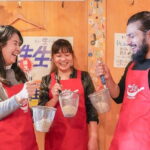
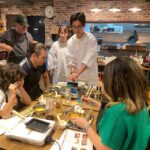
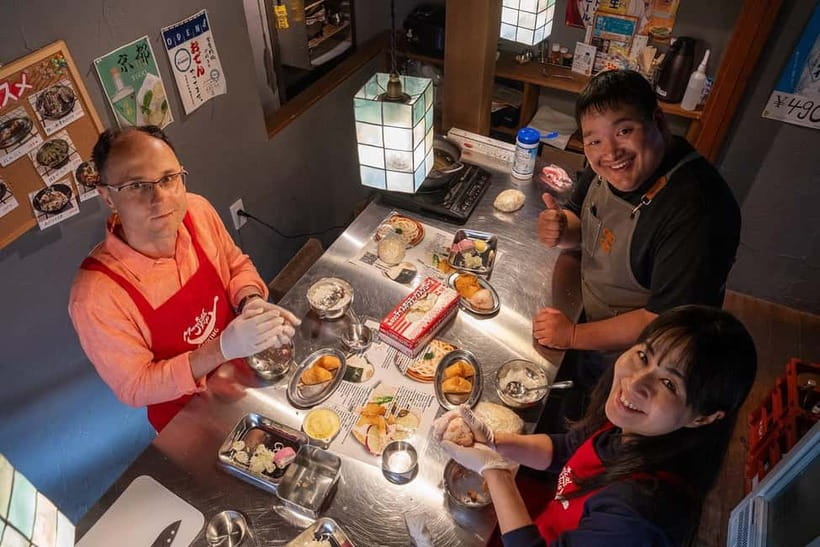
What I like most is how hands-on it is. You knead and roll udon dough yourself, then shape seasoned rice into Inari sushi/onigiri-style bites, and finally fry tempura with guidance from a professional chef and an English-speaking guide. I also like the small-group feel—limited to 8—because you’re more likely to get real help instead of watching from the sidelines.
One consideration: the class timing and “from scratch” details can shift depending on what the chef focuses on that day. In at least one similar class format, the experience leaned more toward dough work than finishing every step like broth or fully mixing batter, so keep expectations flexible and come for the core skills.
In This Review
- Key highlights worth showing up for
- Turning Kyoto classics into your own meal
- Finding the meeting point without stress
- From flour to udon noodles: the core skill
- Inari sushi and rice shaping: where technique becomes art
- Tempura: turning heat and batter into crisp
- Eating what you made, plus sake pairing
- The $83 value: paying for technique and take-home skills
- Timing realities and what to plan for
- Who this class suits best (and who might not love it)
- A smooth home kitchen takeaway: your English recipe set
- Should you book the Kyoto Udon & Tempura cooking class?
- FAQ
- Do I need any prior cooking experience?
- What dishes will I make in the class?
- Is the class taught in English?
- How many people are in the group?
- What is included in the price?
- Where is the meeting point?
- How long is the class?
- Is the activity suitable for children or all ages?
- Is there a cancellation option?
Key highlights worth showing up for
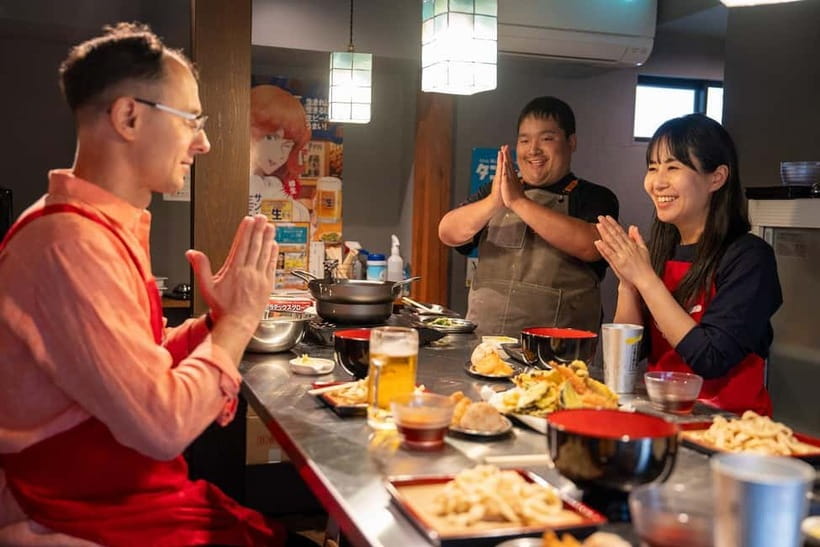
- Chef-led udon noodle making: knead, roll, and get that satisfying stretch of homemade dough
- Inari sushi and rice shaping: learn how to season steamed rice and form your bites
- Tempura technique with a fry test: follow step-by-step instructions to get crisp, not soggy
- Mini sake tasting plus two drinks: a small pairing that fits the meal you made
- Take-home English recipe set: helps you recreate the dishes later with ingredients you can find
Turning Kyoto classics into your own meal
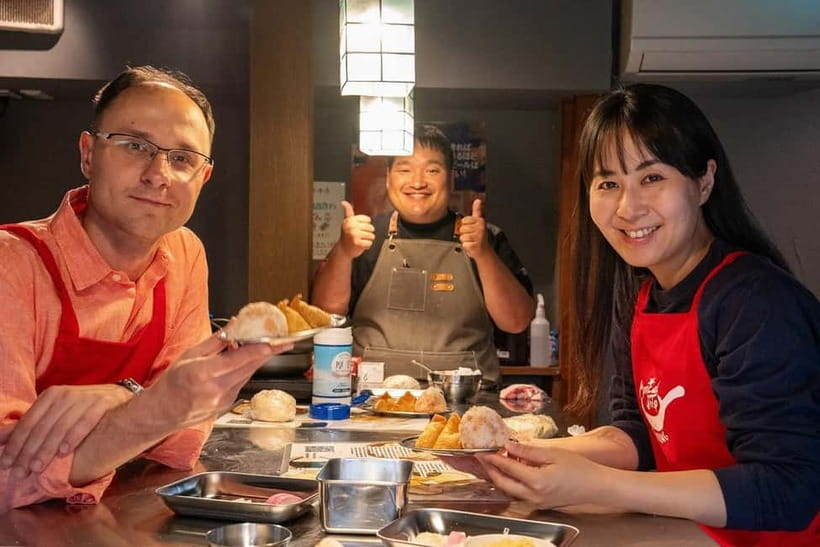
Kyoto food classes work best when they teach you skills, not just choreography. This one is built around three core Japanese comfort hits: udon, Inari sushi, and tempura. The big idea is simple: you learn the steps from the foundation (dough and rice) and end with food you shaped, fried, and ate.
At $83 per person and about 2 hours on the schedule, it isn’t the cheapest way to eat in Kyoto. But you’re paying for guided technique, ingredients being provided, chef time, and the fact that you’ll actually produce multiple dishes. If you like interactive experiences—where you leave with both a meal and an ability—you’ll likely feel good about the value.
The group is small (up to 8), and the instruction is in English. That matters here because noodle dough and frying technique don’t read well from a pamphlet—you need a person to correct your grip, thickness, and timing.
You can also read our reviews of more cooking classes in Kyoto
Finding the meeting point without stress
You meet at 7-Eleven – Kyoto Kawaramachi-Takoyakushi. It’s a short walk from Kyoto-Kawaramachi Station (Keihan Kyoto Line), Exit B3 (about 3 minutes), or from Gion-Shijo Station (Keihan Main Line), Exit 3 (about 9 minutes).
This is the kind of meeting spot that works well in Kyoto. You’re not hunting in a maze of side alleys with one vague landmark. Still, I suggest you arrive a few minutes early—cooking classes run best when everyone starts together and no one misses the safety and workflow briefing.
If your day is packed, plan this as a focused block. You’ll be kneading and shaping, then eating what you made, so you want your energy level to be steady.
From flour to udon noodles: the core skill
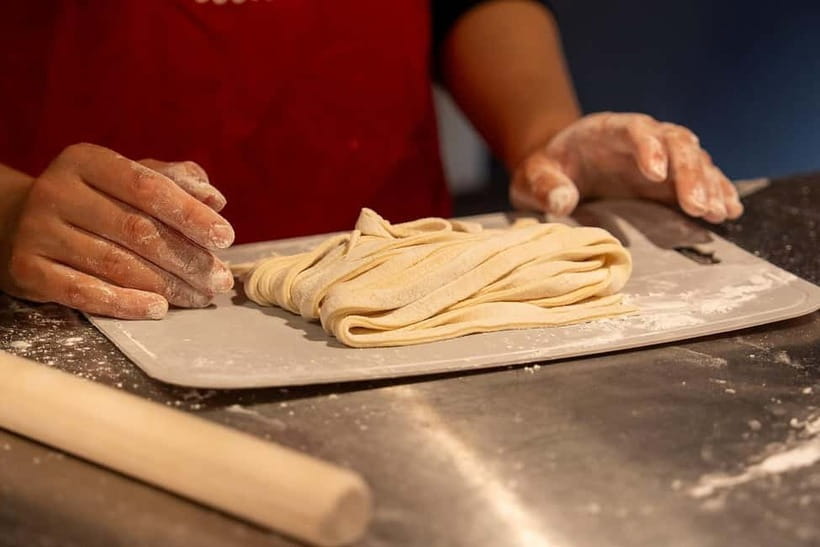
The most satisfying part of the class is the udon section. You start with flour and water, then learn how to turn that basic combo into noodles with the right texture. You’ll mix, knead, and roll by hand under the direction of a udon master, with an English-speaking guide helping you understand each step.
Why this matters: udon isn’t just “noodles.” It’s texture. The right stretch and chew come from how you handle the dough. When you knead yourself, you feel what “elastic” means in a way watching a chef do it never teaches.
Here’s what to expect in a practical sense:
- You’ll work your dough until it reaches a consistent feel (not sticky, not dry).
- You’ll roll it to a thickness that makes cutting and shaping easier later.
- You’ll learn the small cues chefs look for—visual and tactile checks that keep the dough workable.
A realistic heads-up: the marketing emphasizes going from dough to full udon cooking and broth. In one similar class experience, the focus landed more heavily on dough preparation and kneading, rather than finishing every component like broth. So if you’re hoping for a full “complete udon bowl from scratch” moment, keep expectations flexible. The upside is you still walk away with the most transferable skill: making dough that behaves.
Inari sushi and rice shaping: where technique becomes art
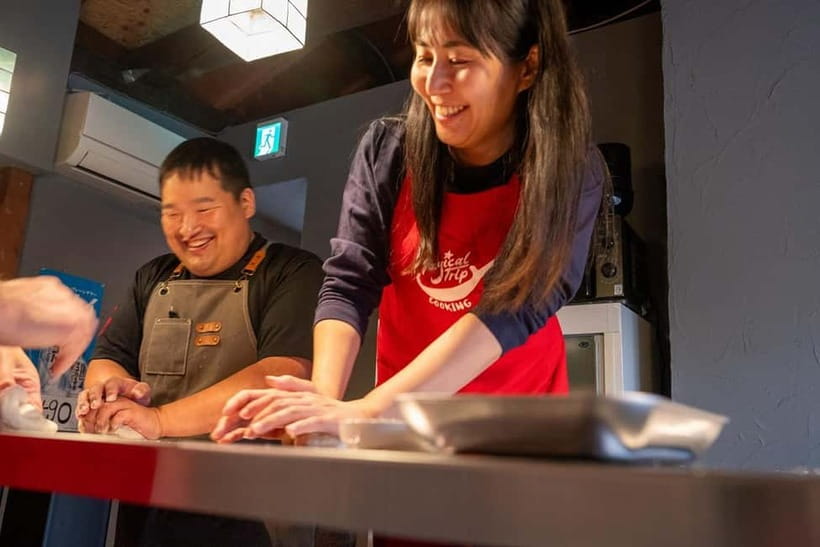
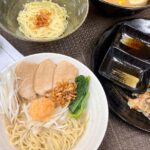
After you’ve done the noodle work, the class shifts to rice dishes. You’ll learn how to prepare freshly steamed rice, then how to season it for Inari sushi. You’ll also practice shaping rice into bite-size forms, described as onigiri and inari sushi-style shapes.
This section is valuable for two reasons. First, it teaches you that seasoned rice is a flexible base—same idea, different forms. Second, Inari sushi has a signature structure, and shaping it correctly is where a lot of the “looks simple” challenge hides.
In practical terms, you’ll:
- Work with rice that’s steamed for serving (so it’s soft and manageable).
- Learn seasoning for Inari sushi flavor.
- Shape the rice into the right forms for your dish.
What I like here is that it’s hands-on without requiring advanced knife skills or complicated ingredients. You’re learning how to handle rice—timing, moisture level, and gentleness—so it sticks and holds shape without becoming a paste.
If you’ve only ever eaten Inari sushi at convenience stores or in a bento box, you’ll probably be surprised by how much technique is behind that neat, consistent bite.
Tempura: turning heat and batter into crisp
Then comes tempura. This is where the class turns from “craft” to “quick reactions.” Crisp frying is mostly timing and heat control. Even when you’re not making every component from absolute scratch, you’re still learning the process that leads to crisp results.
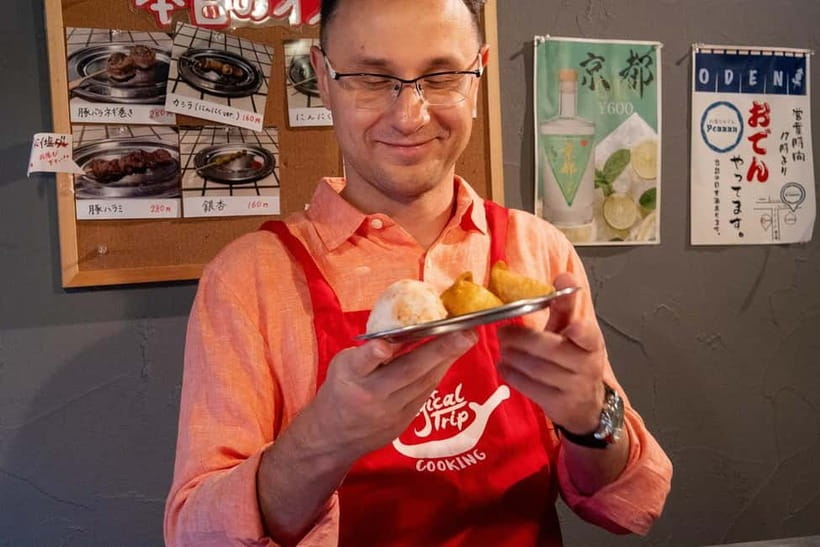
Your guide and professional chef demonstrate the steps so you can fry your own tempura. You’ll be eating what you make, so it’s not just practice for practice’s sake. The goal is those golden bites that crunch when you take them.
One caution: in at least one similar experience, tempura batter preparation didn’t fully match the idea of mixing everything from scratch. Instead, ingredients were dipped and fried. That doesn’t automatically make the experience less fun, but it can change what you learn if you’re expecting a detailed batter-mixing lesson.
Either way, the core value remains:
- You’ll get coached on how to handle ingredients for frying.
- You’ll see how quickly tempura changes as it fries.
- You’ll taste the difference immediately.
My advice: focus on the cues you can control—drying moisture, gentle coating, and not overcrowding. Those are the things that tend to make or break tempura in any kitchen.
You can also read our reviews of more tours and experiences in Kyoto



Eating what you made, plus sake pairing
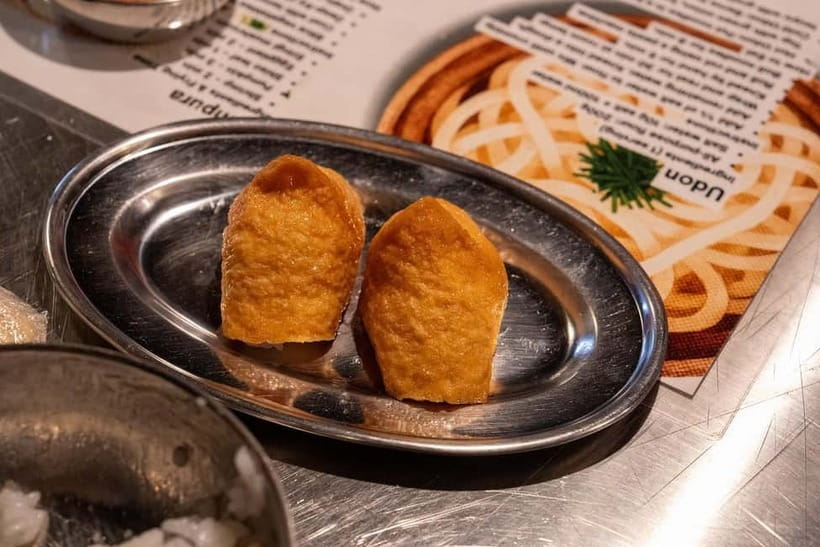
After cooking, you sit down with your creations: your handmade udon, Inari sushi, and tempura. This is usually the moment where everything clicks. Dough work becomes comfort food. Shaping becomes a bite you can hold with pride. Tempura becomes proof that you really were running a hot pan safely and correctly.
You’ll also get a mini sake tasting, plus two drinks total. That’s a nice pairing because it fits the theme: light, snack-friendly bites and Japanese alcohol in a small, low-pressure way. You don’t need to be a sake expert to enjoy it. The main point is context—how Japanese food is often experienced as a meal of multiple parts, not one single dish.
If you’re the type who forgets to eat when you’re sightseeing, this is helpful. You’re spending the first chunk of the class actively cooking, then the meal is already organized. Less searching. More time enjoying the flavors you made.
The $83 value: paying for technique and take-home skills
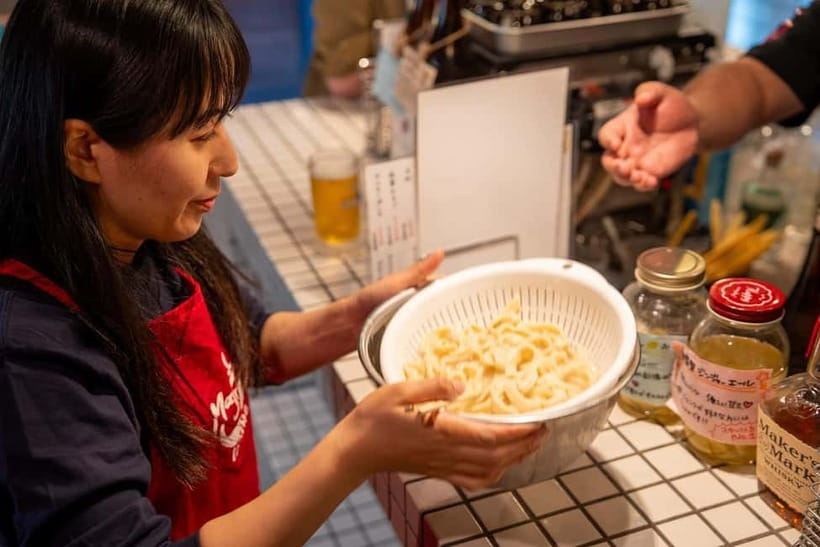
Let’s talk value. $83 for a 2-hour, English-guided class sounds like a splurge—until you break down what’s included.
You’re getting:
- Multiple dish outputs: udon noodles, Inari sushi, and tempura
- Ingredients provided for the class
- A udon master plus a local English guide
- Two drinks and a mini sake tasting
- An English recipe set designed to use ingredients you can find at home
- Tour photos
That recipe set is a big deal. Cooking classes can be fun in the moment and forgettable later if they leave you with nothing but memories. Here, you’re bringing home instructions that can help you recreate the dishes without guessing.
Also, the small group (up to 8) changes the experience. With fewer people, you’re more likely to get help when something is off—like dough thickness, rice shaping, or frying timing. That kind of coaching is hard to replicate with self-guided YouTube cooking at home.
If you’re watching costs, I’d compare this to what you’d pay for a guided experience plus a meal. The lesson part is the differentiator. You’re not just eating—you’re learning repeatable food prep.
Timing realities and what to plan for
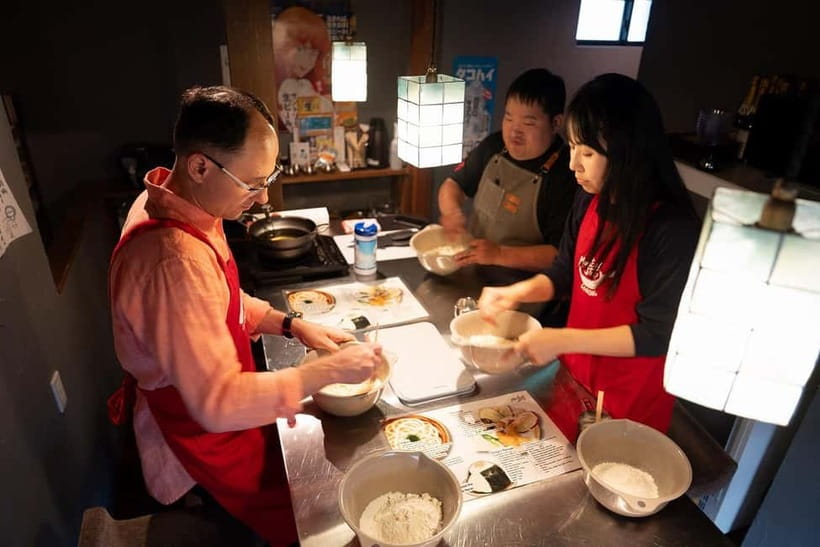
The schedule says 2 hours. In one similar experience format, the total time for the hands-on portion plus the meal ran closer to 1 hour and 20 minutes, with an emphasis on dough creation and fewer steps like full udon broth cooking. That kind of variation can happen with class flow, timing, and what the chef prioritizes.
So here’s the practical way to plan:
- Treat it as a morning or afternoon activity block, not something you wedge between tight reservations.
- Expect that some “from scratch” steps may be partially streamlined so everyone finishes and eats while the food is at its best.
- If you’re going specifically for noodle dough technique, you’re in the right place. If you want every last stage (broth, batter mixing from zero) in extreme detail, keep expectations flexible.
The good news is the class still centers on core skills: dough handling, rice seasoning, and guided frying.
Who this class suits best (and who might not love it)
This is a strong fit if you:
- Want a hands-on food experience in Kyoto that goes beyond sightseeing photos
- Like learning by doing—kneading, shaping, frying
- Prefer smaller groups with English guidance
- Eat with curiosity and want something you can recreate later
It might be less ideal if you:
- Only want a very long, slow class with every single step fully expanded and cooked in detail
- Prefer low-contact experiences (since you’ll be actively handling dough and rice)
- Are in a rush and need a strict, fixed timeline down to the minute
For most people, though, the balance is good: quick enough to fit a travel day, structured enough to feel like real instruction, and fun enough that you’ll talk while you cook.
A smooth home kitchen takeaway: your English recipe set
One of the best “after the class” perks is the English recipe set made to work with ingredients you can find at home. That removes a common frustration. Many cooking classes end with a folder of photos and vague memories. This one aims to help you repeat the dishes without hunting niche items.
If you’re staying in Kyoto for a few days, you’ll also find it useful for planning what to buy at the market afterward. Even if you don’t cook right away, having instructions lets you turn your experience into a future night at home.
And if you’re traveling with friends or family, it’s a great souvenir. You can cook it later and compare notes. Nothing bonds like arguing about noodle thickness.
Should you book the Kyoto Udon & Tempura cooking class?
I’d book it if you want a practical, hands-on Kyoto meal experience built around three iconic dishes and guided by a real chef team. The small group size, English instruction, and the take-home English recipes make it feel like more than a one-time activity. You’ll leave with food in your hands, and skills you can actually use again.
Skip it or keep expectations flexible if you’re very strict about “every step fully from scratch” and a precise runtime. Cooking classes sometimes adjust pacing so everyone eats while things are fresh, and some days may focus more on dough and shaping than on finishing every final component in-house.
If you want the most reliable outcome, go for the spirit of the class: learn the core techniques, taste what you make, then use the recipe set to bring it home.
FAQ
Do I need any prior cooking experience?
No. The class says no prior cooking experience is required, and ingredients are provided.
What dishes will I make in the class?
You’ll learn to make udon noodles, Inari sushi (with seasoned rice), and tempura.
Is the class taught in English?
Yes. The instructor/teaching is listed as English.
How many people are in the group?
It’s a small group limited to 8 participants.
What is included in the price?
Udon, tempura, and inari sushi are included, along with two drinks, the udon master and local guide, recipes, and tour photos.
Where is the meeting point?
Meet at 7-Eleven – Kyoto Kawaramachi-Takoyakushi. It’s about a 3-minute walk from Kyoto-Kawaramachi Station Exit B3, or about a 9-minute walk from Gion-Shijo Station Exit 3.
How long is the class?
The duration is 2 hours (you can check availability for starting times).
Is the activity suitable for children or all ages?
Yes. It’s listed as suitable for all ages.
Is there a cancellation option?
Yes. Free cancellation is available up to 24 hours in advance for a full refund.