REVIEW · KYOTO
Discovering Kyoto A Tailored Private Tour of the City’s Treasures
Book on Viator →Operated by Konnichiwa-japan · Bookable on Viator
Kyoto in three hours, your way. This tailored private tour lets you pick what you care about while a local guide connects the dots between famous sights and smaller, everyday Kyoto corners around Gion and beyond.
I especially like the pacing and comfort: it feels like a relaxed walk with smart context, not a rushed checklist. I also like that the tour mixes big-name stops with flavor stops, including time at Izutsu Yatsuhashi Honpo and a proper visit to Kiyomizu-dera with admission included.
One thing to consider: with a roughly 3-hour window (and a morning time slot), you’re moving. If you want long, slow temple time or extra neighborhoods, you may need a bigger plan for the rest of your day.
In This Review
- Key highlights you’ll actually care about
- Why a tailored Kyoto tour works better than a fixed bus plan
- From Kyoto Station to Gion: making the morning count
- Gion and the iconic sights your guide can fit in
- Izutsu Yatsuhashi in Gion: a Kyoto snack break done right
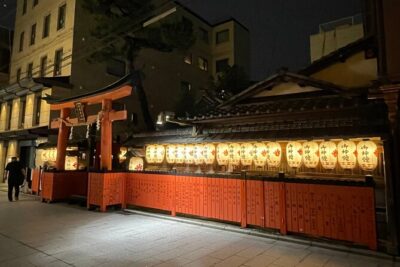
- Shirakawa and the shrine-corridor feel of old Kyoto
- Yasui-Konpiragu and the stone-monument vibe
- Yasakanoto in Gion: the pagoda moment with easy payoff
- Izumo no Okuni and the kabuki origin story
- Kiyomizu-dera Temple: the main event and how to use your hour
- Price and logistics: is $95 per person good value?
- What to expect from the guide experience (and why it matters)
- Small planning tips before you go
- Should you book this private Kyoto tour?
- FAQ
- How long is the tour?
- Where does the tour start and where does it end?
- Is pickup included?
- What is included in the price?
- Is this a private tour?
- What stops are included?
- What time does the tour run?
- What’s the cancellation deadline for a full refund?
- Is this tour suitable for everyone?
Key highlights you’ll actually care about
- Private and customizable: you can steer where you want to go, instead of following a fixed script
- Gion-first approach: you start in the Gion area and get context for what you’re seeing in real time
- Food stop included: Izutsu Yatsuhashi at the Gion store is built into the route
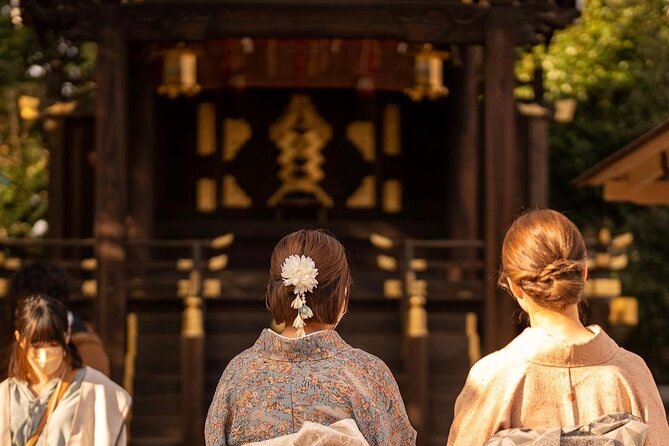
- Shrines and rituals: you’ll see multiple sacred spots like Yasui-Konpiragu and Tatsumi Daimyojin Shrine
- Kiyomizu-dera time with admission: the tour gives you a full hour at one of Kyoto’s top temples
- Pickup plus transport: you’re not left solo between far-apart points
Why a tailored Kyoto tour works better than a fixed bus plan
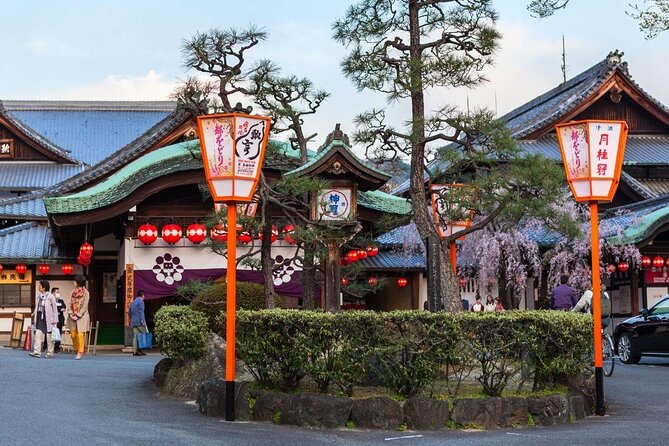
Kyoto can feel like a choose-your-own-adventure, and that’s exactly why this tour format is so useful. You’re not stuck with a route that someone else decided. Instead, you’re working with an experienced local guide who can shape the day toward what you want most, whether that’s temples, street atmosphere, food, or shrine stops.
The other advantage is context. Kyoto’s sights can look similar at first glance—stone steps, lanterns, wooden halls—until someone explains the purpose behind the details. A good guide helps you notice what matters: why a particular shrine is important, how a neighborhood like Gion functions, and what you’re looking at when you see the classic structures and gates.
For me, the best part is the balance. You get to see headline places like Kiyomizu-dera, but you also get time for Kyoto’s everyday textures—market streets, side lanes, and small scenes that don’t fit neatly into a photo-only itinerary. And because it’s private, the day feels personal rather than mass-produced.
You can also read our reviews of more city tours in Kyoto

From Kyoto Station to Gion: making the morning count
Most Kyoto tours start with a cold scramble. This one starts at Kyoto Station, at Higashishiokoji Kamadonocho (Shimogyo Ward). From there, pickup is offered, and transport is included, so you’re not spending half your tour time figuring out how to hop between areas.
That matters because the tour runs in the morning window (listed as 9:00 AM to 11:30 AM). In Kyoto, the morning is where you get nicer walking conditions and fewer late-day crushes. Still, you’ll want to treat this like a real morning plan, not a leisurely brunch start.
When you’re picked up and moved efficiently, you arrive ready to walk and look. You can also save energy for the hands-on parts of the day—temple steps, shrine paths, and neighborhood streets—without turning your legs into a public transportation schedule.
Gion and the iconic sights your guide can fit in
Your first anchor is Gion, and the route is designed to showcase Kyoto’s most important and unique aspects. In practice, this means your guide can weave in major landmarks you’ve likely heard about—like Fushimi Inari Shrine, Kiyomizu-dera Temple, and Arashiyama Bamboo Grove—depending on what you choose and what fits your timing.
This is where the private, customizable format shines. If you’re more into spiritual Kyoto, you can lean toward shrines and temple approaches. If you’re more into street culture and atmosphere, your guide can focus the walking portion toward Gion’s lanes and the surrounding neighborhoods.
You also get time to visit the kind of places you’d miss if you were only following big-name maps. You may see lesser-known shrines, local markets, and small neighborhoods that feel lived-in rather than museum-still. One review noted that the tour included comfortable walking down the street of restaurants in Gion that feel private and secluded—exactly the kind of detail that adds real texture when you’re there in person.
Practical note: even with transport, expect a fair amount of walking in the Gion area. Wear shoes you’d happily walk in for an hour or two, because the point is to see the place, not just point at it.
Izutsu Yatsuhashi in Gion: a Kyoto snack break done right
Kyoto food culture isn’t only about full meals. It’s about what you nibble, what you carry, and what you buy when you pass a shop that’s been part of the neighborhood for ages. This tour builds that into the route with a stop at Izutsu Yatsuhashi Honpo Gion store, specifically the Kyogoku Ichibangai area.
Yatsuhashi is one of those Kyoto staples you see everywhere, but the experience changes when you’re at the shop in the actual Gion setting. You’re not just tasting dessert; you’re tying the flavor to the place and the local tradition that surrounds it.
One of the route details that I like is the time shape of the stop. It’s not a rushed stop where you’re forced to buy immediately. You get around 20 minutes, which is enough to take in the shop, try what you want, and keep moving without dragging the whole tour to a halt.
Shirakawa and the shrine-corridor feel of old Kyoto
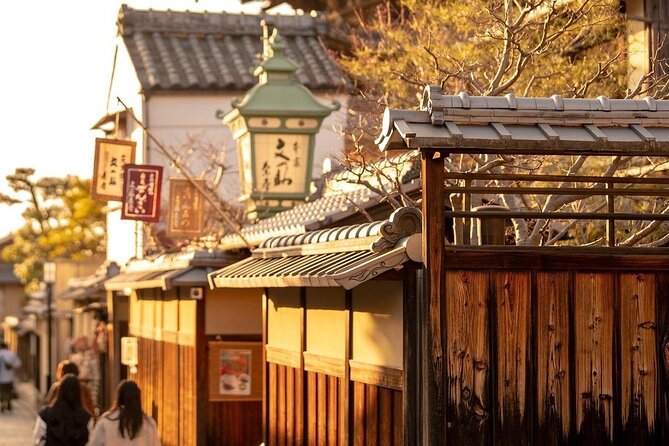
After Gion’s bigger energy, the tour continues with a more time-travel feeling, including Gion Shirakawa. This area is known for its scenic, old-style streetscape, and it’s the kind of spot where you’ll see Kyoto’s “quiet beauty” in real life rather than in a postcard.
Then you switch gears to spiritual stops, including Tatsumi Daimyojin Shrine. A guided stop here makes sense because shrines aren’t just buildings. They’re practices, symbols, and local belief. Even if you don’t read Japanese, you’ll likely pick up the logic behind the layout and what visitors typically do.
The route keeps a steady rhythm: walking, looking, short stops, then back out into the streets. That’s a good match for a morning tour because you keep your attention sharp. You also avoid the problem of spending the whole day in one area that starts to feel repetitive.
You can also read our reviews of more private tours in Kyoto



Yasui-Konpiragu and the stone-monument vibe
Yasui-Konpiragu is listed as a shrine stop with admission ticket included. It’s also specifically noted for its stone monuments and rituals, so it’s more than a quick photo stop.
This is the kind of stop I recommend if you want more than the iconic temple exteriors. You’ll get a chance to experience a shrine environment where small details and ritual objects matter. Your guide can help you interpret what you’re seeing, which turns the stop from “standing in front of something” into “understanding why it’s there.”
Also, because it’s part of the same neighborhood circuit as other Gion-area sights, you avoid wasting time crossing the city. You’re building one coherent morning story instead of jumping between unrelated locations.
Yasakanoto in Gion: the pagoda moment with easy payoff
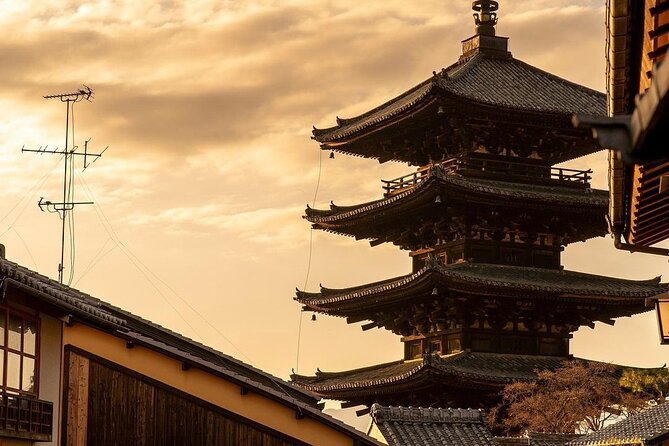
The tour includes Yasakanoto, described as a towering pagoda in Kyoto’s Gion district with a history dating back centuries. Pagodas often look impressive from a distance, but they’re even more interesting when you learn what role they played in the neighborhood and how they function visually in the streetscape.
This short stop format works well for this site. If it were a long detour, you’d lose time and energy. Here, it’s framed like a “showpiece” moment: you get to see it, absorb the scale, and then move on while the rest of your morning still feels full.
Izumo no Okuni and the kabuki origin story
If you like culture history, there’s a clever stop in the mix: the Statue of Izumo no Okuni. This is connected to the origins of kabuki theater and honors its legendary founder.
This stop is a good reminder that Kyoto isn’t only shrines and temples. It also holds stories of performance and urban culture. When you connect that statue to what you’re already seeing in Gion, you start to understand how neighborhoods shape arts and vice versa.
Even if you’re not a theater superfan, it’s an easy, meaningful way to broaden the tour beyond the usual sacred-route script. It also helps break the monotony of similar-looking street corners.
Kiyomizu-dera Temple: the main event and how to use your hour
Then you reach the big one: Kiyomizu-dera Temple. You’ll have about an hour here, with admission included. This temple is known for the viewing platform, a three-storey Koyasu pagoda, and the Otowa Spring, famous for medicinal pure waters.
The hour is enough time to do the essentials without feeling like you’re sprinting. You can start by taking in the overall complex, then focus on the key structures you came to see. After that, you can slow down around the areas linked to the Otowa Spring, where the temple’s identity comes alive.
One smart way to use your hour is to watch how the space funnels people. Kiyomizu-dera has a flow: you move from one visual focal point to another. With a guide, you can also learn what to look for as you go—so you’re not relying on random signage.
If you’re the kind of visitor who likes to take photos, this is your best time for it. But don’t treat it like a photo-only mission. The real win is understanding what you’re standing in front of and why it’s still one of Kyoto’s most famous spiritual stages.
Price and logistics: is $95 per person good value?
At $95 per person for an approximately 3-hour private tour, the value depends on how you like to travel.
This price can be a strong buy if:
- you want a private guide rather than a group bus setup
- you care about customizing where you go (so you’re not paying for stuff you don’t like)
- you prefer having transport handled, especially in a city where routes can get confusing
It can be less of a steal if:
- you’re traveling solo with a tight budget and don’t care about a personalized route
- you already have a plan that covers Gion, shrines, and Kiyomizu-dera perfectly on your own
What’s included is also worth noting. You get a local guide and transportation to attractions. Admission tickets are included for key stops like Kiyomizu-dera and some other temple/shrine moments. Brunch and alcohol aren’t included, so plan on snacks or shopping stops on your own.
One more point: private tours tend to “pay back” when you’re tired. If you’re walking all day, the time you save from not mapping and coordinating between locations is real value, not just convenience.
What to expect from the guide experience (and why it matters)
You’re not just paying for walking and tickets. You’re paying for interpretation. In the reviews connected to this style of tour, a standout theme is that the guides are English-speaking and friendly, with the ability to explain what you’re seeing in a way that feels casual and comfortable.
That style matters because Kyoto can be overwhelming if you’re unsure what to prioritize. A strong guide helps you avoid the common mistake of chasing every landmark without understanding why any of them matter.
If you’re lucky with your guide, you also get better-than-average street-level knowledge. One review highlighted that the route included interesting insights in Gion, plus time along market streets and quiet areas connected to the Geisha district atmosphere. Even when you’re not trying to do a “performance culture” deep dive, that kind of context makes the streets feel less like a set and more like a living neighborhood.
Small planning tips before you go
- Build your footwear plan around walking. Even in a short tour, you’ll be moving through shrine steps and neighborhood streets.
- Come with at least a rough preference list. When you know whether you want temples, food, shrines, or scenery, customization becomes easier and faster.
- Don’t plan a heavy lunch immediately afterward. You’ll likely want a real meal after Kiyomizu-dera and the Gion walking. (Brunch isn’t included, and alcohol isn’t either.)
- If weather is turning, stay flexible. The tour is noted as requiring good weather, which means your experience may be adjusted if conditions aren’t ideal.
Should you book this private Kyoto tour?
I’d recommend it if you want a Kyoto morning that feels intentional instead of chaotic. This is a great fit for couples, small families, and anyone who wants Gion atmosphere plus temple highlights without micromanaging transit.
You should think twice if you’re the type who wants to linger for hours in one complex, or if you already have a full-day plan that doesn’t benefit from a guided route. The tour is designed for momentum and variety, not for slow, deep temple immersion.
If you’re booking for your first Kyoto trip, this kind of private guide-driven outline can also be a smart way to learn what you want to return to later on your own—especially after seeing Kiyomizu-dera and then tracing how Gion’s streets connect to the wider cultural story.
FAQ
How long is the tour?
The tour is approximately 3 hours.
Where does the tour start and where does it end?
It starts at Kyoto Station (Higashishiokoji Kamadonocho, Shimogyo Ward, Kyoto) and ends back at the same meeting point.
Is pickup included?
Pickup is offered, and transport to attractions is included.
What is included in the price?
A local guide and transportation to attractions are included. Admission tickets are included for some stops, including Kiyomizu-dera Temple and Yasui-Konpiragu.
Is this a private tour?
Yes. It’s a private tour/activity, and only your group participates.
What stops are included?
Stops include the Gion area, Izutsu Yatsuhashi Honpo Gion store (Kyogoku Ichibangai), Gion Shirakawa, Tatsumi Daimyojin Shrine, Yasui-Konpiragu, Yasakanoto, the Statue of Izumo no Okuni, and Kiyomizu-dera Temple.
What time does the tour run?
The listed opening hours run Monday through Sunday from 9:00 AM to 11:30 AM.
What’s the cancellation deadline for a full refund?
You can cancel up to 24 hours in advance for a full refund.
Is this tour suitable for everyone?
Most travelers can participate. Service animals are allowed, and it’s near public transportation.