Kyoto without the crush feels possible. This private walk threads together Sagano’s aristocratic past, quiet temple corners, and the famous bamboo grove at a human pace, starting right at Saga-Arashiyama Station. I like that you get a real local guide shaping what you notice, not just a list of stops, and I also love how the route mixes famous names (Tenryu-ji, Togetsukyo Bridge) with lesser-seen detours in Sagano. One thing to plan for: the bamboo section can get busy later in the day, so your timing really matters.
You’ll also feel the value in the details: some sites are free, others have entrance fees you pay on arrival, and the guide helps you make sense of what you’re looking at. I especially like the contrast between the straight-up photo drama of the bamboo and the calmer, contemplative stops like Otagi Nenbutsu-ji and Tenryu-ji. The only real drawback is simple—temple entrance fees aren’t included, so bring a bit of extra cash or a card you can use at those sites.
In This Review
- Key Highlights You’ll Actually Care About
- Sagano: Old Kyoto’s Aristocrat Side of Arashiyama
- Seiryōji (Saga Shakadō): A 9th-Century Start with Free Calm
- Saga Toriimoto: Traditional Buildings and the Atago Fire-Prevention Story
- Otagi Nenbutsu-ji: 1200 Hand-Carved Rakan Statues in a Peaceful Setting
- Bamboo Forest Street: Gorgeous, Famous, and Crowd-Smart Timing
- Tenryu-ji Temple: Zen Garden Energy After the Bamboo
- Togetsukyo Bridge: The Moon-Crossing Moment at River’s Edge
- Price and Value: Why $85.87 Feels Reasonable Here
- Timing and Logistics: How to Plan Your Day Around Crowds
- What You’ll Learn and Why It Matters
- Who Should Book This Private Walk
- Should You Book This Private Walking Tour?
- FAQ
- How long is the Private Walking Tour in Bamboo Forest & Hidden Spots in Arashiyama?
- Is this tour private or shared?
- Where does the tour start and end?
- What’s included in the price?
- Are temple entrance fees included?
- Can I cancel for a full refund?
Key Highlights You’ll Actually Care About
- Sagano’s old-world vibe: 9th-century temple origins and aristocratic-resort history, right next to Arashiyama
- A practical private route: your guide keeps you moving through famous spots without turning it into a sprint
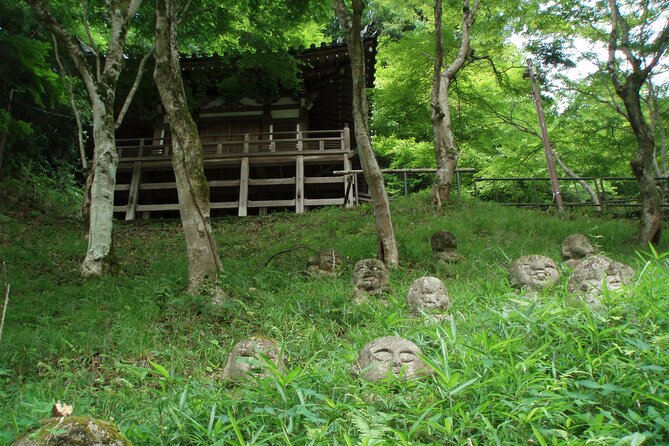
- Otagi Nenbutsu-ji’s 1200 Rakan statues: a weirdly moving stop that’s more than a quick photo
- Bamboo Forest Street strategy: start early and keep your photo plan tight when crowds swell
- Tenryu-ji’s Zen garden mood: a calmer follow-up after the bamboo grove
- Finish at Togetsukyo Bridge: you’re dropped near Monkey Park for an easy add-on walk
Sagano: Old Kyoto’s Aristocrat Side of Arashiyama
This tour is built around Sagano, the part of western Kyoto that feels like it’s been living alongside the river for centuries. Sagano was once a resort area for aristocrats, and the route leans into that theme with temple-and-neighborhood stops that don’t feel like a theme park.
The meeting point is Saga-Arashiyama Station (9:00 am). That matters because you’re already in the right place early, and you avoid losing half your morning to logistics. It’s also a nice reminder that Arashiyama isn’t only bamboo and selfies—you can walk into a quieter Kyoto layer if you pick the right route.
You can also read our reviews of more walking tours in Kyoto


Seiryōji (Saga Shakadō): A 9th-Century Start with Free Calm
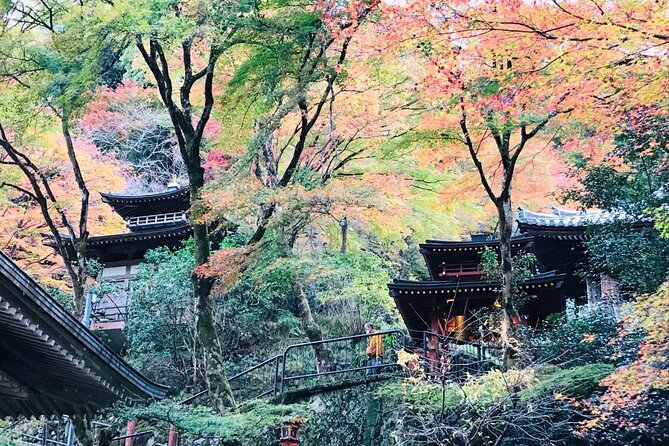
Your first stop is Seiryōji (Saga Shakadō), also known as Saga Shakadō. The key detail here is that it dates back to the 9th century and is tied to an aristocrat’s villa, which sets the tone for why this area mattered long before it became a visitor magnet.
Admission is free, and that’s a genuine value win on a tour where some later stops cost extra. Expect a quiet entry where you can slow down for a minute and let the guide frame what you’re seeing—age, patronage, and how Kyoto’s temple culture grew around elite estates.
Saga Toriimoto: Traditional Buildings and the Atago Fire-Prevention Story
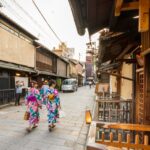
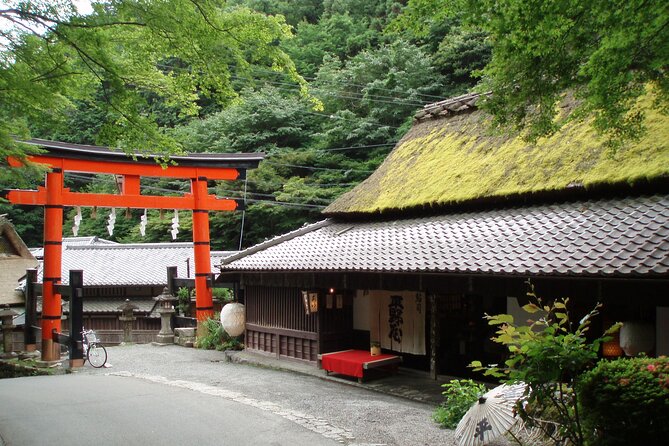
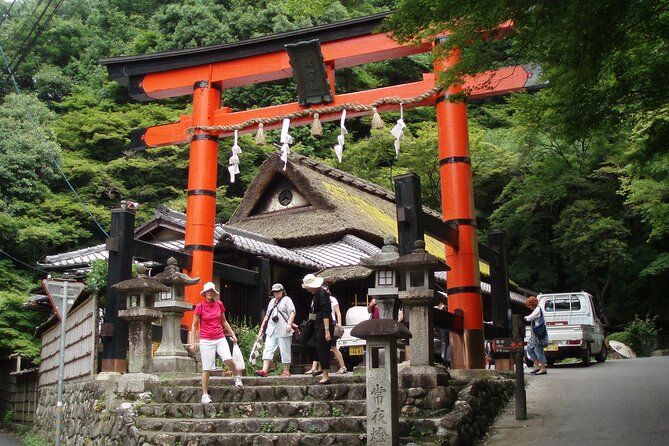
Next you’ll head to Saga Toriimoto Traditional Buildings Preservation Area. This is designated as one of Kyoto’s town preservation areas, so the goal isn’t spectacle—it’s continuity. It used to be called the Atago highway, leading toward Mt. Atago, where the Shinto enshrines a god tied to fire prevention.
What I like about this stop is that it gives context for the neighborhood around Arashiyama. Instead of thinking of it as one attraction after another, you start seeing it as a route people used for centuries, with beliefs and daily life folded into the geography.
Admission is free, and the short time here keeps it from turning into a detour that steals time from the highlights. You get enough to understand the place, then you move on.
Otagi Nenbutsu-ji: 1200 Hand-Carved Rakan Statues in a Peaceful Setting
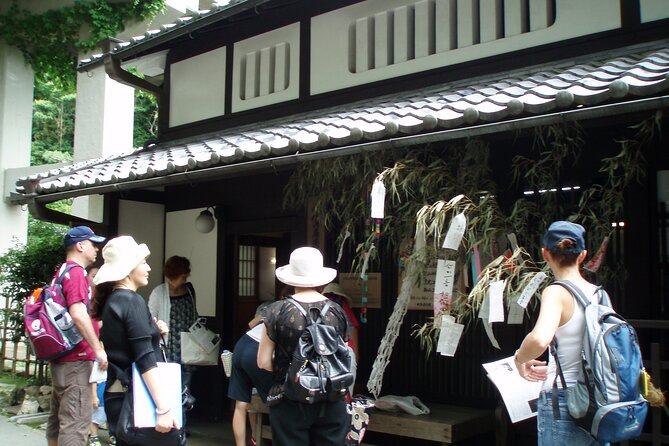
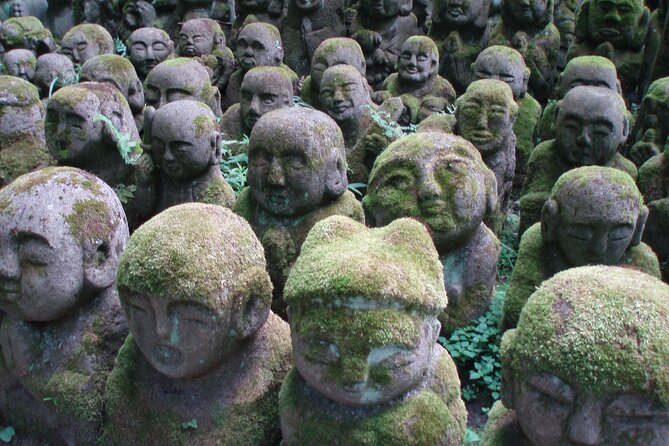
Then comes a stop that’s usually the one people remember even when the bamboo fades from memory: Otagi Nenbutsu-ji. The headline is simple and eye-catching—there are 1,200 stone statues of Rakan, Buddha’s disciples. The tour info also points out something unusual: the statues were hand carved by 1,200 individuals, which gives the site a distinctly human scale. It’s not mass-made; it’s made by many hands.
This is where the walk shifts from “look at this” to “notice how quiet can feel.” You’ll have about 20 minutes, and it’s long enough for a slow circuit without rushing through the details. The admission fee isn’t included, so treat it as part of your planning budget.
One other practical note: this temple is often described as peaceful. That means you’ll get more out of it if you’re not trying to squeeze it into a frantic photo schedule.
Bamboo Forest Street: Gorgeous, Famous, and Crowd-Smart Timing
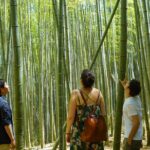
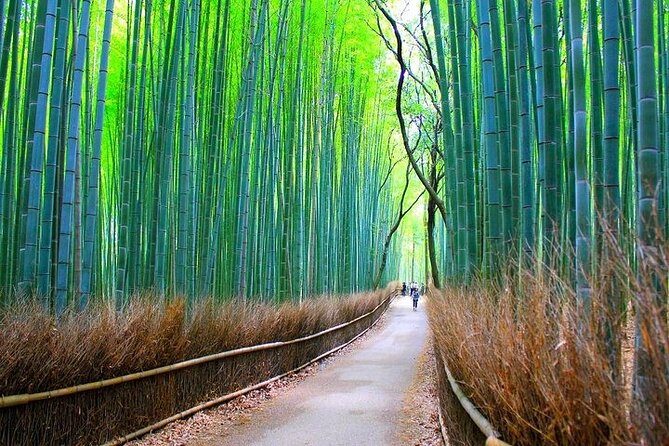
Let’s talk bamboo. The tour includes Bamboo Forest Street, the signature grove path people travel across the world to walk. Here the guide’s job becomes extra important, because bamboo isn’t just decoration—it’s a plant that has been cherished and used in Japan in practical ways. You’ll get commentary that helps you move beyond “pretty stalks” and toward how bamboo fits into Japanese life.
The most important reality: the bamboo area can get very crowded later in the day. That’s exactly why this tour starts at 9:00 am and keeps your morning anchored. If you want the grove to feel magical instead of crowded, you need to be there when it’s still more walkable than photo-queue.
Bring a small dose of patience. The path is wide enough to move, but people stop, pose, and cluster. I suggest you keep your shot list simple: take the wide bamboo framing quickly, then spend the rest of the time looking up and letting the light do the work.
Also, bugs can happen in green spaces. I’d rather you be annoyed than itchy, so pack bug spray if you’re traveling in warmer months or you know you’re prone to bites.
You can also read our reviews of more private tours in Kyoto
Tenryu-ji Temple: Zen Garden Energy After the Bamboo
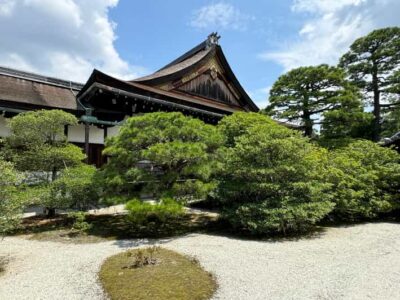
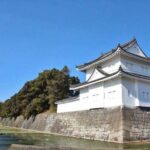
After the grove, you’ll head to Tenryu-ji, a Zen Buddhist temple founded in the 14th century. It’s designated as a World Cultural Heritage site, and that label matters less than what you’ll actually feel: the guide’s explanation helps you read the garden like a quiet conversation, not like a checklist.
You’ll have about 20 minutes here, and this is where the tour earns its balance. Bamboo is sensory and visual; Tenryu-ji is slower and mental. It’s an intentional contrast that keeps your brain from burning out on Kyoto’s most photographed views.
Entrance isn’t included, so factor that in. If you’re trying to keep costs tight, go with the strategy of arriving ready: your morning includes free stops, and you’re paying for the two major temple experiences that bookend the mood.
Togetsukyo Bridge: The Moon-Crossing Moment at River’s Edge
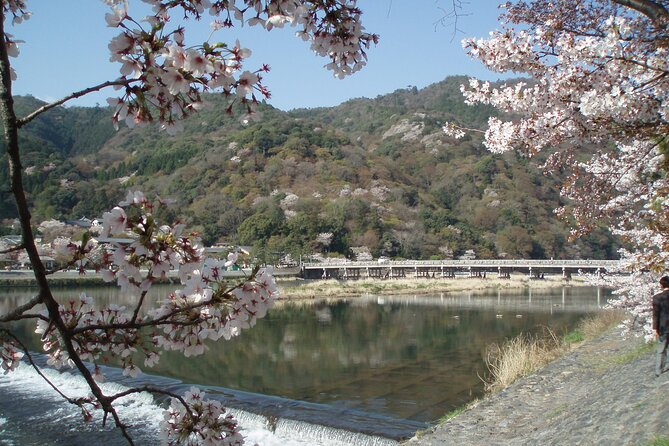
You finish at Togetsukyō Bridge, and this stop is quick—around five minutes. But it’s memorable because of the story tied to its name. The bridge was built to reach the temple across the river, and an ancient emperor named it Moon Crossing Bridge after seeing the moon appear as if it were crossing.
That kind of poetic framing is worth slowing down for, even if you don’t know the details. I like that the tour ends with something easy: no extra gates, no long entrance process, just a classic Kyoto river scene.
Your tour ends near Togetsukyō Bridge, close to Monkey Park. The route choice makes it easy to tack on more walking without going back to square one.
Price and Value: Why $85.87 Feels Reasonable Here
The price is $85.87 per person for a 4-hour private walking tour. At first glance, that can sound like a lot until you break down what you’re getting.
You’re paying for a professional guide and a private group experience that stays flexible enough to feel personal. You’re also getting a route where multiple stops are free (Seiryōji, Saga Toriimoto, Bamboo Forest Street, Togetsukyō Bridge). Only certain temples require entrance fees, and the tour doesn’t hide that—so you’re not getting surprised at the moment it’s most annoying.
A big value point: you’re not paying for hotel pickup or included transport to attractions. That might sound like a minus if you want door-to-door convenience, but it usually means the guide time goes toward guiding, not toward logistics. If you can reach Saga-Arashiyama Station on your own (and the tour notes you’re near public transportation), this is a cost-smart way to get depth.
Timing and Logistics: How to Plan Your Day Around Crowds
Start time is 9:00 am, and that’s your best tool. The bamboo grove is the one spot that can turn from serene to crowded. Early arrival won’t guarantee empty paths, but it gives you a real chance to experience the bamboo without spending your entire time negotiating around stopped groups.
This tour lasts about four hours, so it’s designed for a morning or early afternoon block. Keep the rest of your day lighter. You’ll want time afterward to linger near the river or continue around Arashiyama.
Don’t forget what you pay for. Entrance fees aren’t included for Otagi Nenbutsu-ji and Tenryu-ji. Other stops are free. The simplest mindset: think of it as a guided walk with two ticketed temple experiences.
What You’ll Learn and Why It Matters
A lot of Kyoto walking tours tell you what things are. This one tries to help you understand why they’re there and what to notice.
You’ll get temple context that connects to the area’s aristocratic roots. You’ll learn the significance of a preservation district and how older routes—like the Atago highway—were tied to Shinto beliefs. Then you’ll shift into bamboo, where the guide’s commentary helps you see the grove as more than a photo set.
Finally, you’ll end in Zen territory at Tenryu-ji and close with a river legend at Togetsukyō Bridge. That arc matters because it turns a series of stops into a story you can remember.
Who Should Book This Private Walk
This is a great fit if you want Kyoto with less rushing and more attention to what you’re seeing. It’s also ideal if you enjoy slower temple settings where a guide’s interpretation adds meaning.
It’s not the best match if you want to do everything independently at your own pace without any planning. The tour is private and guided, so you should expect to follow the group timing, and the entrance fees for certain temples are on you.
Should You Book This Private Walking Tour?
If you like the idea of Sagano’s quieter side plus a bamboo grove you can actually enjoy, then yes, book it. The combination of private guiding, a route that mixes free and ticketed highlights, and the early start gives you strong odds of avoiding the worst crowd pressure.
I’d book especially if you’re the type who wants details—like why Seiryōji matters, what Otagi’s Rakan statues represent, or why Tenryu-ji’s Zen mood hits differently after bamboo.
Skip or reconsider if you’re trying to keep the day ultra-budget and hate adding entrance fees for temples. Also reconsider if crowds will ruin your day; you can’t control other people, but you can control your start time, and this tour is set up to help you.
FAQ
How long is the Private Walking Tour in Bamboo Forest & Hidden Spots in Arashiyama?
It runs for about 4 hours.
Is this tour private or shared?
It’s private. Only your group participates.
Where does the tour start and end?
It starts at Saga-Arashiyama Station and ends at Togetsukyō Bridge.
What’s included in the price?
A professional guide is included, and you’ll have a mobile ticket.
Are temple entrance fees included?
Some are free (like Seiryōji and Saga Toriimoto), but entrance fees for certain temples are not included, such as Otagi Nenbutsu-ji and Tenryu-ji.
Can I cancel for a full refund?
Yes. You can cancel up to 24 hours in advance of the experience start time for a full refund.