REVIEW · KYOTO
[2.3km / 1.43mi] Kyoto East Early Morning Walking Tour
Book on GetYourGuide →Operated by Oh! Oh!kini Tours · Bookable on GetYourGuide
Kyoto feels calmer before the crowds. This 2-hour, 2.3 km early-morning walk through Higashiyama gives you classic sights with a local English guide and stories you can actually use as you wander. I like that it’s a small group capped at six, so questions feel easy, not forced.
What I love most is how you get more than sightseeing. You’ll visit Kiyomizu-dera Temple, Yasaka Shrine, and Sannenzaka, and you’ll hear why each place matters, plus how to think about Kyoto beyond the postcard. The other big plus is the morning timing: one review called it the best time in hot summer weather, and that logic holds.
One consideration: this is an on-foot route with slopes and steps. If you want low-effort walking or have mobility limits, this tour may feel like too much, since it’s not suitable for wheelchair users or people needing strollers.
In This Review
- Key points before you go
- Why an early-morning Higashiyama walk makes sense
- Small group pace with local guide Akari
- The route: 2.3 km of backstreets, slopes, and story stops
- Kiyomizu-dera Temple: seeing a major landmark with context
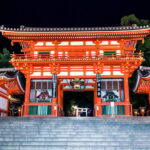
- Yasaka Shrine: a change of mood in the Kyoto morning
- Sannenzaka: slow down for the lanes (and the steps)
- Hidden spots and local stories that make the walk feel longer
- Getting local tips for food and shopping right after
- Price and value: why $20 can actually be a good deal
- What to bring, and what to skip
- Who this Kyoto East tour is best for
- Who should skip it
- Should you book the Kyoto East Early Morning Walking Tour?
- FAQ
- How long is the Kyoto East Early Morning Walking Tour?
- How far do I walk?
- What group size is this tour?
- Which stops are included?
- Is this a Gion geisha walking tour?
- What should I bring?
Key points before you go
![[2.3km / 1.43mi] Kyoto East Early Morning Walking Tour - Key points before you go](https://l.discoveringkyoto.com/wp-content/uploads/2-3km-1-43mi-kyoto-east-early-morning-walking-tour-1.jpg)
- Small group up to 6 keeps the pace friendly and the explanations personal.
- English guide from Kyoto shares on-the-ground context, not just basic facts.
- Kiyomizu-dera, Yasaka Shrine, and Sannenzaka cover three big Higashiyama stops in one morning walk.
- A 2h walk over 2.3 km is short enough to stay fresh, but long enough to feel like a real neighborhood stroll.
- Morning hours are a practical win for comfort, especially in warmer months.
- Local tips for food and shopping help you turn the tour into a full day plan.
Why an early-morning Higashiyama walk makes sense
![[2.3km / 1.43mi] Kyoto East Early Morning Walking Tour - Why an early-morning Higashiyama walk makes sense](https://l.discoveringkyoto.com/wp-content/uploads/2-3km-1-43mi-kyoto-east-early-morning-walking-tour-2.jpg)
Kyoto changes character depending on the hour, and this tour is built for the earlier version. You’ll be out while streets are still waking up, which makes the walking feel less crowded and more relaxed than the later crush at the famous sights.
It’s also a very manageable format. You’re walking about 2.3 km over roughly 2 hours, which is long enough to see real neighborhood lanes and slopes, but not so long that you’ll be cooked afterward. Think of it as a smart way to “set your bearings” for Kyoto East without spending your whole day in transit.
The focus is on movement plus meaning. You’re not just collecting temples in a checklist. You’ll hear local stories for the places you visit and you’ll get guidance on what to notice, which helps you see more in less time.
You can also read our reviews of more walking tours in Kyoto


Small group pace with local guide Akari
![[2.3km / 1.43mi] Kyoto East Early Morning Walking Tour - Small group pace with local guide Akari](https://l.discoveringkyoto.com/wp-content/uploads/2-3km-1-43mi-kyoto-east-early-morning-walking-tour.jpg)
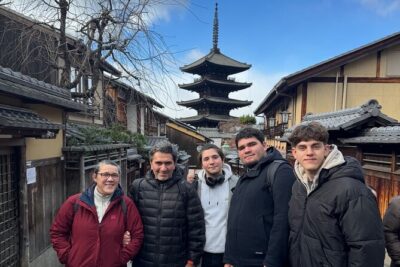
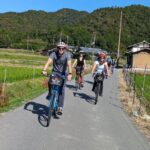
This is where the tour earns its value. With a limit of max six guests, you’re more likely to get a true conversation than a rapid-fire lecture. That matters because the best part of the experience is the storytelling: it becomes easier to ask follow-up questions when the group is small.
The guide you might meet, Akari, is specifically noted for being patient and having strong English. That sounds like a small detail until you’re standing at a shrine or temple entrance, trying to understand what you’re looking at. You want explanations that land the first time, and having a guide with an awesome English level makes the difference.
Another practical bonus from the reviews: you’ll get local, personalized recommendations after the tour. I like that the tour doesn’t end at the last photo stop. Your guide helps you translate what you’ve just learned into concrete plans for food, shopping, and what to do next.
The route: 2.3 km of backstreets, slopes, and story stops
![[2.3km / 1.43mi] Kyoto East Early Morning Walking Tour - The route: 2.3 km of backstreets, slopes, and story stops](https://l.discoveringkyoto.com/wp-content/uploads/2-3km-1-43mi-kyoto-east-early-morning-walking-tour-4.jpg)
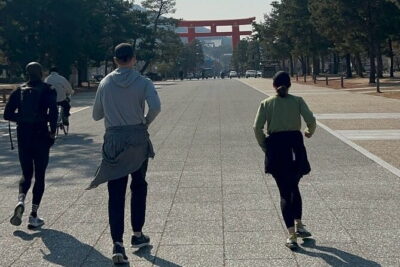
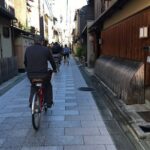
The tour is designed around walking streets you’d likely miss if you only take the main tourist paths. You’ll move through charming backstreets and you’ll deal with the Kyoto East reality: slopes and steps. That’s not a flaw here; it’s part of what makes Higashiyama feel like Higashiyama.
Even though the total distance is modest, the terrain can make it feel more active than you’d guess. Wear shoes you trust. If you’re someone who usually walks fine for an hour but hates stairs, you might want to plan breaks into your expectations.
Also, note what this tour is not. It’s not a Gion geisha walking tour. If you’re hoping for a cultural district deep-dive specifically focused on geisha culture, you’ll be in the wrong neighborhood theme. This experience is about early-morning Kyoto East highlights and the stories behind them.
Kiyomizu-dera Temple: seeing a major landmark with context
You’ll visit Kiyomizu-dera Temple, one of the best-known names in Kyoto East. The key is how you experience it: not as a rushed stop with no context, but as part of an early-walk flow that builds understanding as you go.
Morning timing helps because it changes your pace. You’re more likely to notice small details when you’re not fighting crowds for a view. More importantly, your guide connects the place to Kyoto history and culture through stories, so you’re not just looking at a structure—you’re learning how people relate to it.
A practical tip: if you want photos, hold your energy for the walking segments too. The value isn’t only at the main entry moments; it’s also in the atmosphere as you approach and the way the guide sets up what you’re about to see.
Yasaka Shrine: a change of mood in the Kyoto morning
Next up is Yasaka Shrine. This is another anchor stop, and it works well after Kiyomizu-dera because the experience shifts. You move from one famous landmark into another part of the Higashiyama pattern, and your guide’s storytelling helps you connect the dots.
One thing I appreciate about shrine visits on foot is that you can feel the neighborhood around them. You’re walking through local space, not just entering a single attraction bubble. The tour structure keeps you moving, so you avoid the common problem of spending too much time in the wrong place at the wrong hour.
The tour is also explicitly English guided, so explanations come in a way that doesn’t require guesswork. If you want Kyoto that feels readable—like it makes sense—this style helps.
You can also read our reviews of more tours and experiences in Kyoto
Sannenzaka: slow down for the lanes (and the steps)
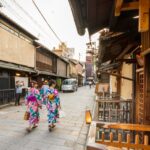
Then comes Sannenzaka, often recognized as a signature part of the Higashiyama streetscape. This stop is where the tour leans hardest into the walking experience itself: the steps, the slopes, and the smaller lanes that create the Kyoto “feel.”
I like this kind of segment because it changes your pace from landmark mode to neighborhood mode. You’re not sprinting between big sights. You’re moving through the parts of the area that help Kyoto look like Kyoto—especially early in the day, when the mood tends to be gentler.
One realistic drawback: Sannenzaka and the surrounding streets can be harder on your legs if you’re not used to stairs. Bring comfortable shoes and plan for the fact that your body—not your calendar—sets the pace. Your guide will keep you oriented, but you still need to be physically ready for steps.
Hidden spots and local stories that make the walk feel longer
The tour promises not just famous stops, but also hidden spots full of stories along the route. That’s a smart approach, because you get moments that are memorable even if you’re not at the biggest-name location.
The value here is understanding. When your guide shares context about what you’re seeing, your brain starts to categorize and connect things. Instead of a pile of separate attractions, you experience a neighborhood with a point of view.
This is also where the small group helps again. In a group of six, it’s easier to ask for guidance like what to notice next, or what kind of Kyoto you might want to explore later. That’s not extra; it directly improves your self-guided wandering after the tour.
Getting local tips for food and shopping right after
One of the most practical parts of the tour is that your guide gives local tips and recommendations for food and shopping after the walking portion. I value this because early morning tours can leave you with a question: what now?
You’ll still be in Kyoto East, primed to wander with better instincts. A guide who knows Kyoto city-level details can point you toward places that fit your tastes and time. It’s the kind of advice that can save you from eating somewhere convenient but bland, or shopping in the wrong zone where prices feel off.
If you like to turn a tour into a plan, treat the guide like your first-day translator. Ask for a route idea and then follow up with what you should avoid based on your interests and energy level.
Price and value: why $20 can actually be a good deal
At $20 per person, this tour sits in the budget-friendly category for guided experiences in Kyoto. The key question is what you get for that cost.
You’re paying for:
- A local English-speaking guide (storytelling and context matter)
- A small group (max six)
- Multiple major stops in one morning walk
- Built-in local recommendations for afterward
What you don’t get is also important:
- Entrance fees are not included
- Food and drinks are not included
- You don’t get hotel pickup or drop-off, since it’s a walking tour
That means you should budget a little extra for entrances and snacks, but you’re not paying a premium just to have someone guide you between the dots. In other words, you get the guidance and context, then you cover your own ticket items. For a morning experience that helps you understand where you are, that’s strong value.
What to bring, and what to skip
This tour is straightforward, but it asks for the basics.
Bring:
- Comfortable shoes
- Water
Skip or plan alternatives if you are:
- Using a baby stroller (not allowed)
- Carrying luggage or large bags (not allowed)
- Relying on wheelchairs or other equipment like non-folding or electric wheelchairs (not suitable)
This is the kind of tour where packing light is not just convenient; it’s part of how the walking experience stays smooth.
Who this Kyoto East tour is best for
This tour fits best if you:
- Enjoy morning starts and want to see Kyoto before it fully wakes up
- Like walking enough to cover 2.3 km with slopes and steps
- Want history and culture stories rather than only photos
- Are a first-time visitor who wants your bearings fast, or a repeat visitor who wants more meaning than the usual highlight circuit
The reviews underline both sides of that audience: first-timers get the structure, and repeat travelers get added depth. I also like that it stays focused on Higashiyama highlights, not a generic “see everything” sprint.
Who should skip it
If you need a low-steps route or you’re a wheelchair user, this one likely won’t work. The tour is not suitable for mobility impairments, and strollers are not allowed. If that describes you, you’ll have a better time choosing an option designed for your pace and physical needs.
Also skip it if you’re looking for a Gion geisha-focused tour. This experience is explicitly not that. You’ll be spending your energy on Kyoto East landmarks and streets instead.
Should you book the Kyoto East Early Morning Walking Tour?
I’d book it if you want a guided Higashiyama morning that feels human-sized. Small group size, strong English guidance, and a local guide like Akari who shares local tips make it more than a simple sightseeing walk.
I would think twice if you hate stairs or if your mobility needs a more accessible plan. The distance is short on paper, but the terrain is still terrain.
If you’re the kind of traveler who likes to understand what you’re seeing and then use that understanding for the rest of your day, this tour is a smart start.
FAQ
How long is the Kyoto East Early Morning Walking Tour?
It’s a 2-hour English guided walking tour.
How far do I walk?
You’ll walk about 2.3 km (1.43 miles).
What group size is this tour?
The tour is limited to a maximum of 6 guests.
Which stops are included?
You’ll visit Kiyomizu-dera Temple, Yasaka Shrine, and Sannenzaka, plus other Higashiyama highlights along the route.
Is this a Gion geisha walking tour?
No, this is not a Gion geisha walking tour.
What should I bring?
Wear comfortable walking shoes and bring water.