REVIEW · KYOTO
Full-Day Kyoto Walking Tour: Most Iconic Landmarks & Monkeys
Book on GetYourGuide →Operated by Japan Tour Adventure · Bookable on GetYourGuide
Few places in Kyoto hit so many icons.
This full-day route is built around efficient public transit and a smart walking pace, so you get the classic photo moments plus quiet temple time. I especially love the Fushimi Inari torii-gate tunnel stop for those instantly recognizable red-pillared pictures. I also like how the day balances crowd magnets with calmer pauses in Arashiyama and Zen gardens. One thing to plan for: it is a long walking day, and the Monkey Park hill is steep enough that leg/knee issues can be a deal-breaker.
The payoff is the lineup. You’ll move from the bamboo calm to Tenryuji’s UNESCO Zen setting, then up to the Iwatayama overlook for wild Japanese macaques. And you finish at Kinkaku-ji, the Golden Pavilion, where the gold leaf look and pond reflection can feel like Kyoto’s “main character” moment. The only real drawback I’d flag is physical, not cultural: you’ll be on your feet for most of the day, and the schedule can run a bit longer by about 30 minutes.
In This Review
- Key highlights you’ll feel in the day
- Starting at Kitsunezo: how the day actually begins
- Fushimi Inari Taisha: torii tunnels and photo stops that make sense
- Taking the train to Saga-Arashiyama without wasting your Kyoto day
- Arashiyama Bamboo Forest: where to slow down and take better photos
- Nonomiya Shrine: a small stop with big Kyoto flavor
- Tenryuji Temple: UNESCO Zen gardens and the calm you came for
- Iwatayama Monkey Park: the steep part, the payoff, and who should skip it
- Arashiyama lunch and free time: what to do with your downtime
- Randen to Kinkaku-ji: the Golden Pavilion timing that works
- Getting value from $96: what’s included and what you’ll pay on your own
- Group size, guide quality, and why the day feels organized
- Who should book this Kyoto icons day (and who should reconsider)
- Should you book this full-day Kyoto walking tour?
- FAQ
- How long is the Kyoto walking tour?
- Where do I meet the guide?
- Is this a group tour or a private tour?
- What’s included in the tour price?
- Do I need to buy tickets separately?
- Is lunch included?
- What about transportation during the day?
- What should I bring?
- Is the Monkey Park hike difficult?
- FAQ
- What languages are available for the guide?
- What time should I arrive at the meeting point?
- Is this tour mostly walking?
Key highlights you’ll feel in the day
- Fushimi Inari Taisha: thousands of vermilion torii gates and the classic tunnel photo route
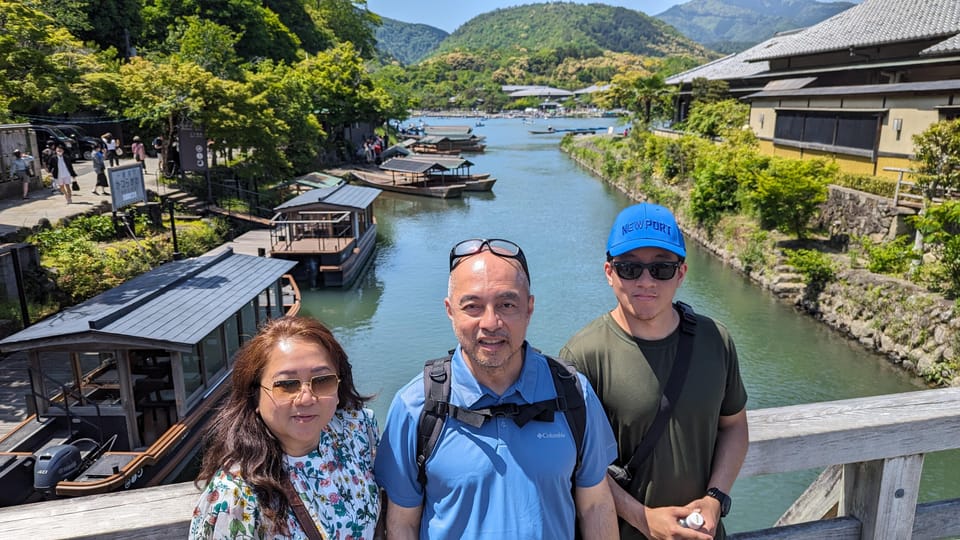
- Arashiyama Bamboo Forest: a peaceful walk that’s easy to slow down in and photograph
- Tenryuji Temple: UNESCO Zen temple gardens with guided context
- Iwatayama Monkey Park: a short but steep hill and a panoramic view over Kyoto
- Kinkaku-ji Golden Pavilion: gold-leaf temple floors plus pond reflections near afternoon light
Starting at Kitsunezo: how the day actually begins
The tour starts at Kitsunezo, a fox Kitsune statue right across from the JR Inari Train Station. That matters more than it sounds, because Kyoto days go better when you begin with the simplest possible meeting point—no hunting, no guesswork, and fewer transit headaches before you even start walking.
From there, your guide keeps the rhythm: you’ll do guided time at the first stop, then hop onto trains that keep you moving across town without paying for a private car. The whole tour is designed as a walking + transit day, not a bus tour. That means you’re trading some comfort for efficiency and a more local feel.
Practical tip: show up about 10 minutes early. With shared group timing, starting on schedule is part of the plan, and being late can cut you out of the tour.
You can also read our reviews of more walking tours in Kyoto


Fushimi Inari Taisha: torii tunnels and photo stops that make sense
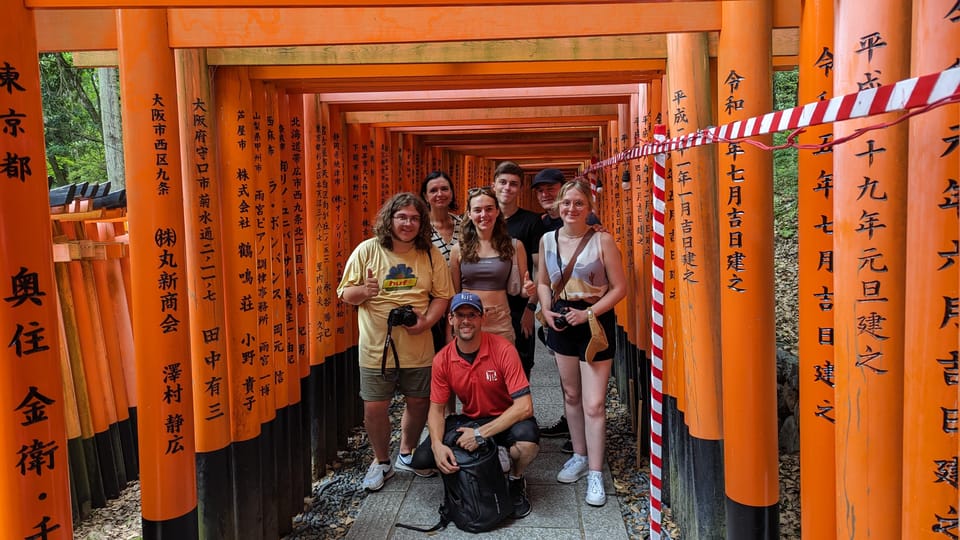
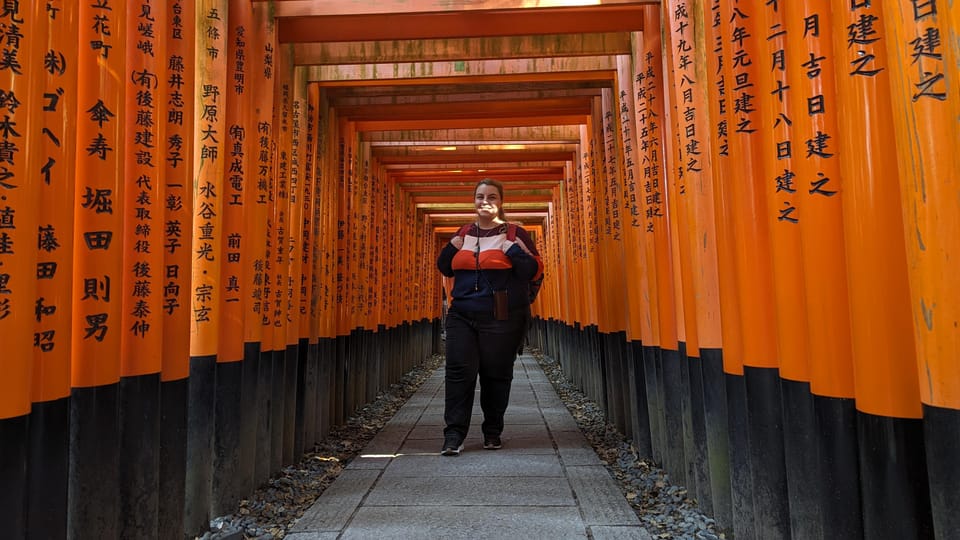
Your first big icon is Fushimi Inari Taisha, where the famous vermilion torii gates climb Mount Inari in long, repeating lines. The best part of this stop is not just seeing the gates—it’s walking through the tunnel effect with your guide, who helps you time your pauses for photos and keeps you pointed at the most photogenic angles.
You get roughly an hour here, including a guided visit and a photo stop. That pacing is smart. If you only sprint through, you miss the feeling of repetition—each gate slightly reframes where you’re heading. If you linger too long, you risk feeling rushed later, so the guided timing helps you stay in control.
One more practical point: this area can be busy, so your best photos often come from stepping aside and letting a flow of people pass. Wear comfortable shoes and treat the walk up as part of the experience, not something to “endure.”
Taking the train to Saga-Arashiyama without wasting your Kyoto day
After Fushimi Inari, you travel by train (about 30 minutes in the flow of the day). You’ll connect via JR Nara Line to Kyoto Station, then transfer to the JR Sagano Line and get off at Saga-Arashiyama Station.
This is the kind of logistics that can make or break a long tour. Doing it with a guide means you don’t waste mental energy figuring out stations, transfers, and platform changes. It also keeps you from losing half your day to “getting there” time.
Once you arrive, there’s a short break and a short walk to the next area. That’s intentional: Arashiyama becomes easier when you’re not immediately rushing from transit to another climb.
Arashiyama Bamboo Forest: where to slow down and take better photos
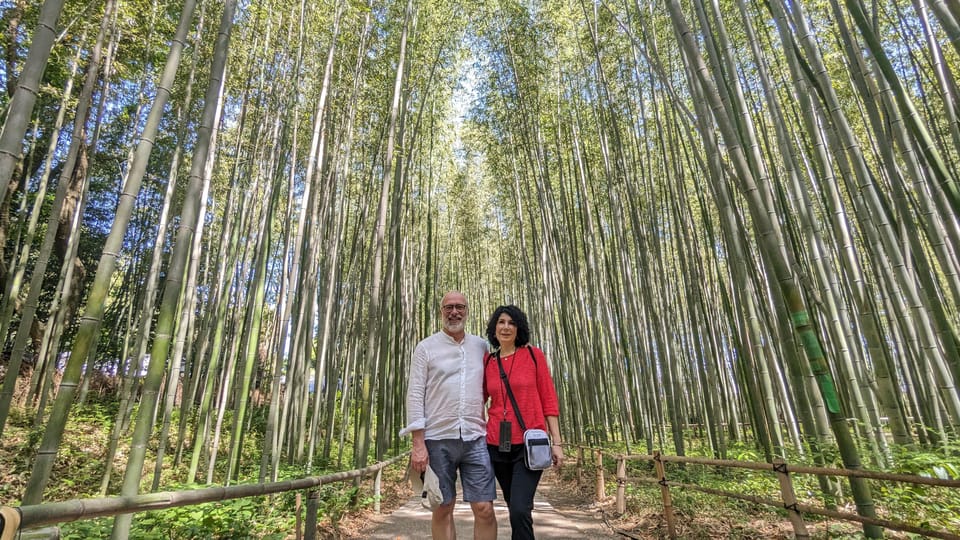
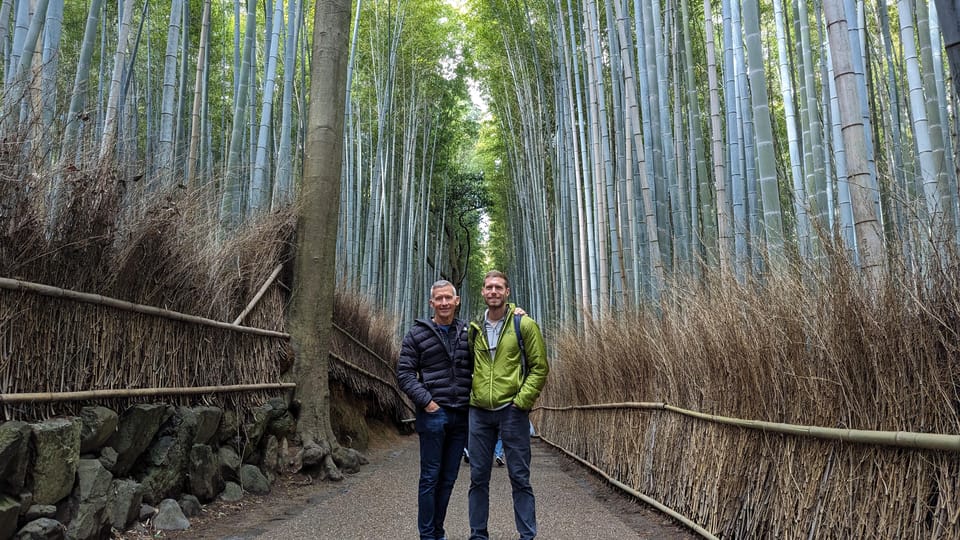
Next comes the Arashiyama Bamboo Forest stop, about 45 minutes total including guided time and free time. The bamboo grove works because it’s both scenic and quietly atmospheric. Even when it’s crowded, the thin light through stalks gives you that Kyoto mood people talk about.
I like this stop because it doesn’t force you to run. You’ll get guided context and then breathing room to wander. If you’ve ever seen bamboo photos that look staged, this is the opposite: you’re moving through a real walkway, with real people stepping in and out of your frame.
A useful photo strategy: don’t only shoot straight down the path. Try a few angles that include bamboo layers so your picture shows depth. Also, pause when the air feels calm—if a wave of visitors passes, you can often get cleaner shots without waiting forever.
Nonomiya Shrine: a small stop with big Kyoto flavor
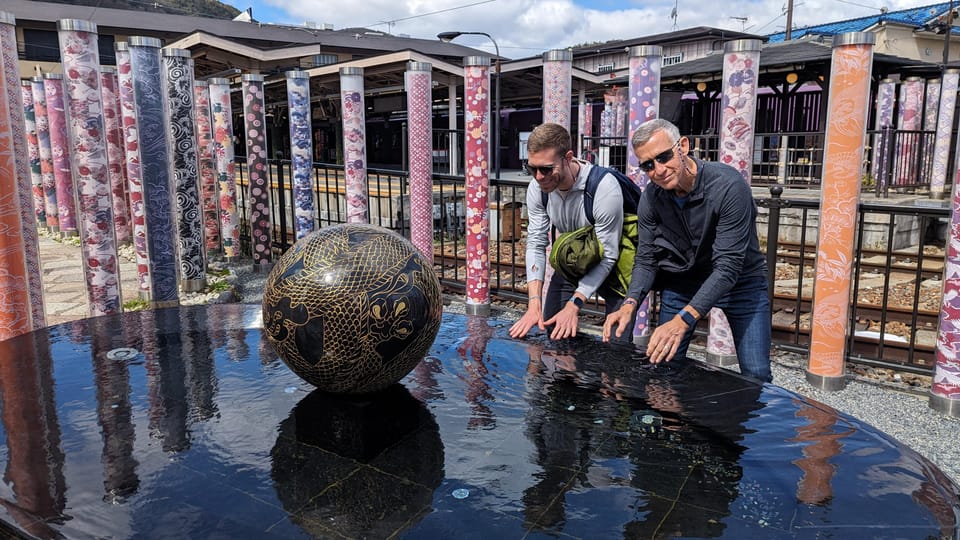
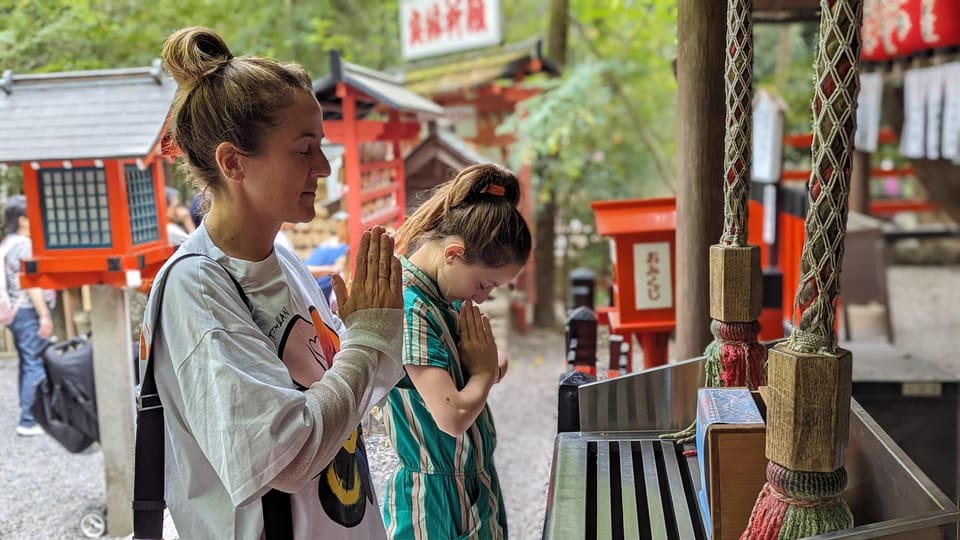
You’ll make a photo stop and guided visit at Nonomiya Shrine (about 15 minutes). This is the kind of add-on that makes a guided day feel richer than a checklist. Instead of only hitting the biggest names, you get a smaller shrine moment that fits the rhythm of Arashiyama.
Because it’s short, it won’t steal time from the major sights. It also gives your eyes a rest from bamboo and lets you reset before Tenryuji.
If you’re the kind of traveler who likes texture—wood, stone, small details, and the sense that Kyoto isn’t only about one famous photo—this stop helps.
You can also read our reviews of more tours and experiences in Kyoto

Tenryuji Temple: UNESCO Zen gardens and the calm you came for
After Arashiyama, you reach Tenryuji Temple, a UNESCO site and one of Kyoto’s major Zen temples. You’ll spend about 30 minutes here, with guided time plus some free time.
This is where the tour adds real balance. Bamboo is a visual experience; Tenryuji gives you the sense of Japanese garden design and Zen pacing. Your guide’s job here is to point out contrasts: architecture vs. greenery, crafted lines vs. natural growth, and how the space is meant to be read slowly rather than consumed quickly.
You’re also close enough to feel the shift in atmosphere. Even if you’re still surrounded by people, the garden layout changes how sound travels and how long a moment feels. That’s valuable on a day that’s otherwise packed.
If you’re visiting in warmer months, take advantage of the shaded areas during your Tenryuji time. The tour is long, and this is one of the stops where you can genuinely cool down without feeling like you’re stepping away from the sights.
Iwatayama Monkey Park: the steep part, the payoff, and who should skip it
Then it’s up the hill to Iwatayama Monkey Park, home to wild Japanese macaques. The walk from the area to the viewpoint is described as a short but steep climb—around 20 minutes, and it can take longer depending on your pace and condition. It’s also noted as not recommended for people with leg/knee injuries.
This is the only part of the day where you truly have to think about your body first. You’re not just walking on flat paths; you’re climbing. If you’re comfortable with that kind of effort, the reward is worth it: a fun encounter with macaques and a wide panoramic view of Kyoto.
A smart way to approach it: go steady. Don’t race upward. If you arrive winded, you’ll enjoy the monkeys less because you’ll be thinking about your breathing.
And a gentle reminder: these macaques are wild. Keep distance and follow your guide’s instructions, especially around feeding and close contact. The goal is memorable wildlife, not risky behavior.
Arashiyama lunch and free time: what to do with your downtime
You’ll have free time on Arashiyama’s main street for lunch (about 40 minutes). Lunch itself is not included in the tour price. That said, the tour includes an option where your guide can support you with a proper lunch meal plan, including tables/chairs and hot or cold food choices, and there are vegetarian options for kids.
If you’re traveling as a couple, friends, or family, use this time strategically. Don’t rush back to sightseeing right away; treat lunch as recovery. This is also a good window to refill water and plan your last stretch.
You’ll also get another self-guided break back around Arashiyama later (about 1 hour). Having that flexibility is a big deal on a long itinerary. It means you can revisit something you enjoyed more than you expected, or you can just take a slower stroll without feeling behind.
Randen to Kinkaku-ji: the Golden Pavilion timing that works
For Kinkaku-ji (the Golden Pavilion), you’ll head toward it using the local tram line (Randen Arashiyama Station area), which helps you stay in the “real Kyoto” mode rather than only moving through tourist transport.
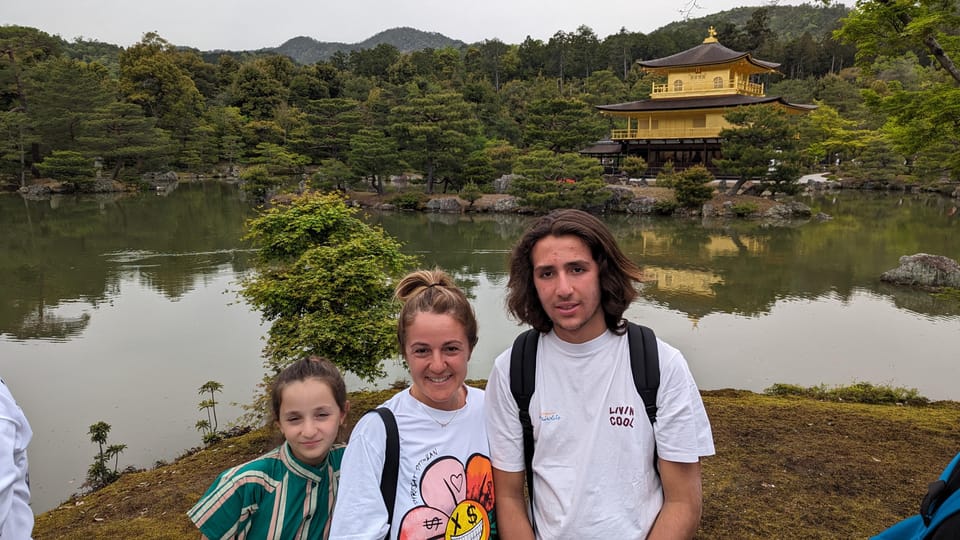
You’ll spend about 45 minutes at Kinkaku-ji, including a photo stop and guided visit plus free time. The headline here is simple: the top two floors are covered in gold leaf, and the pond reflection can be stunning, especially in afternoon light.
I like this finish because it ties the day together visually. You started with repeating torii gates and ends with a mirrored gold temple scene. The pond reflection adds another layer—you’re not only looking at the building; you’re reading the whole composition.
When you walk the paths around the pavilion, you’ll notice how the view shifts with your angle. If you take a few minutes to stand, not just walk, you’ll get better “I remember that” images.
Getting value from $96: what’s included and what you’ll pay on your own
At $96 per person for about 8 hours, the value comes from what the tour handles for you. Tickets for key stops are included: Tenryuji Temple, Monkey Park, and Kinkakuji. You also get souvenir pictures downloadable from a private drive, plus a guide in English and Japanese (with additional languages available on request).
You’re also told this tour helps you skip the ticket line, which can save a lot of time in Kyoto. Time is the real currency on a day like this.
What’s not included is also clear and easy to plan around:
- Transportation (you’ll want a Suica or ICOCA IC card for trains and buses)
- Lunch, plus any personal food and shopping
So the practical way to think about the price is: you’re paying to buy back time and reduce friction. You’re not just paying admission costs—you’re paying for route planning, guiding, and a full-day structure that keeps the day from turning into chaotic wandering.
Group size, guide quality, and why the day feels organized
This is a shared group tour that can have up to 10 people, with a private group option available. For a long day, that size matters. Too many people and you lose control; too few and the tour may feel less efficient. Up to 10 is often a sweet spot for keeping moving while still hearing the guide.
The reviews strongly emphasize guide clarity and organization. Guides like Tom, Agustin, and Rémi have been praised for being easy to understand and for keeping the day running smoothly. That shows in how they time photo stops, guide you through key areas, and handle transit connections so you’re not guessing.
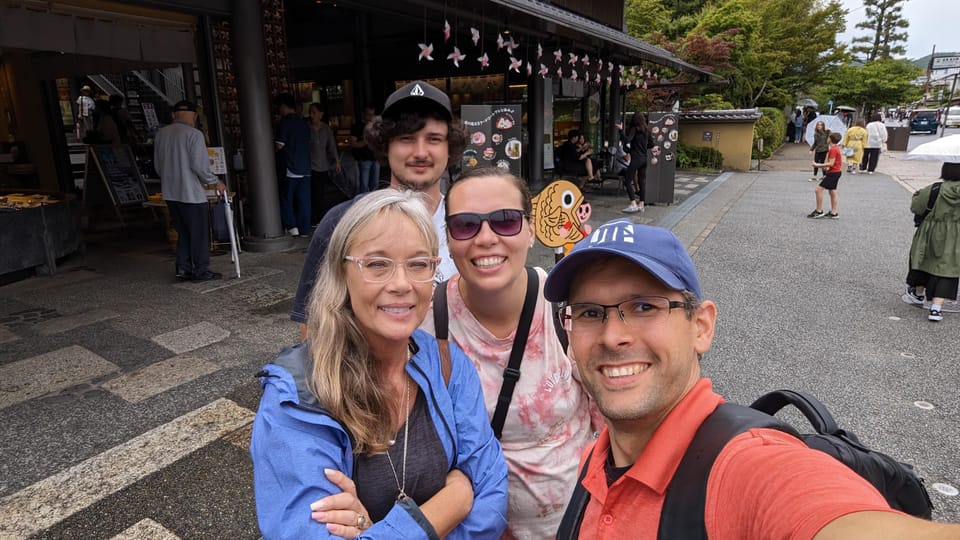
Also, you’ll likely appreciate the picture element. Several reviews mention guides taking great photos of the group even in crowded areas. That’s a real convenience when you want good shots without holding up your own travel time.
Who should book this Kyoto icons day (and who should reconsider)
This tour is a strong match if you want:
- A full-day plan that hits Fushimi Inari, Arashiyama, Tenryuji, Monkey Park, and Kinkakuji without stitching together multiple separate bookings
- A mix of guided temple context and freer photo/walk time
- Convenient public transit rather than paying for a private vehicle
- A tour style that works for families, including kids around pre-teen to teen age (one review specifically mentions a family with kids aged 11 and 15 enjoying it)
You should reconsider if you:
- Have leg/knee injuries or low tolerance for steep climbing, because the Monkey Park hill is described as steep and can be longer than the expected time
- Prefer a shorter day with fewer walking hours, since this one runs about 8 hours and can vary by around 30 minutes
If you’re visiting Kyoto for the first time and want the headline icons plus real Zen calm, this route is hard to beat.
Should you book this full-day Kyoto walking tour?
Yes, if you want a structured, iconic day that’s built around practical movement and real stops with meaning. The included tickets, skip-the-line advantage, and guided visits at Fushimi Inari, Tenryuji, and Kinkakuji turn this from a sightseeing day into a smoother Kyoto experience.
Book it with confidence if you’re comfortable walking for most of the day and you’re okay with one steep climb for the monkeys. Skip it (or choose a different option) if your knees or legs can’t handle that hill.
FAQ
How long is the Kyoto walking tour?
It runs for about 8 hours, with timing that may vary by roughly 30 minutes.
Where do I meet the guide?
Meet in front of Kitsunezo, a fox Kitsune statue across the street from the JR Inari Train Station.
Is this a group tour or a private tour?
It’s a shared group tour (up to 10 people). Private group options are also available.
What’s included in the tour price?
A guide (English/Japanese), tickets for Tenryuji Temple, Monkey Park, and Golden Temple, plus downloadable souvenir pictures from the private drive. It also includes help with skipping ticket lines.
Do I need to buy tickets separately?
The entrance tickets for the main sights listed above are included, and ticket lines are handled as part of the tour.
Is lunch included?
Lunch is not included in the tour price. You’ll have free time for lunch, and the guide can support you with a lunch option.
What about transportation during the day?
Transportation is not included. You’re advised to use a Suica or ICOCA card for trains and buses.
What should I bring?
Bring a passport, comfortable shoes, comfortable clothes, and cash.
Is the Monkey Park hike difficult?
The climb is described as steep but short (about 20 minutes). It is not recommended for people with leg/knee injuries, and it may take longer depending on your physical condition.
FAQ
What languages are available for the guide?
The guide can work in English and Japanese, and other languages such as French, Spanish, or German are available.
What time should I arrive at the meeting point?
Arrive about 10 minutes early so the group can depart on time. Late arrivals cannot join the tour and won’t receive a refund.
Is this tour mostly walking?
Yes. It’s a walking tour that uses public transportation rather than a bus tour.